

Introduction
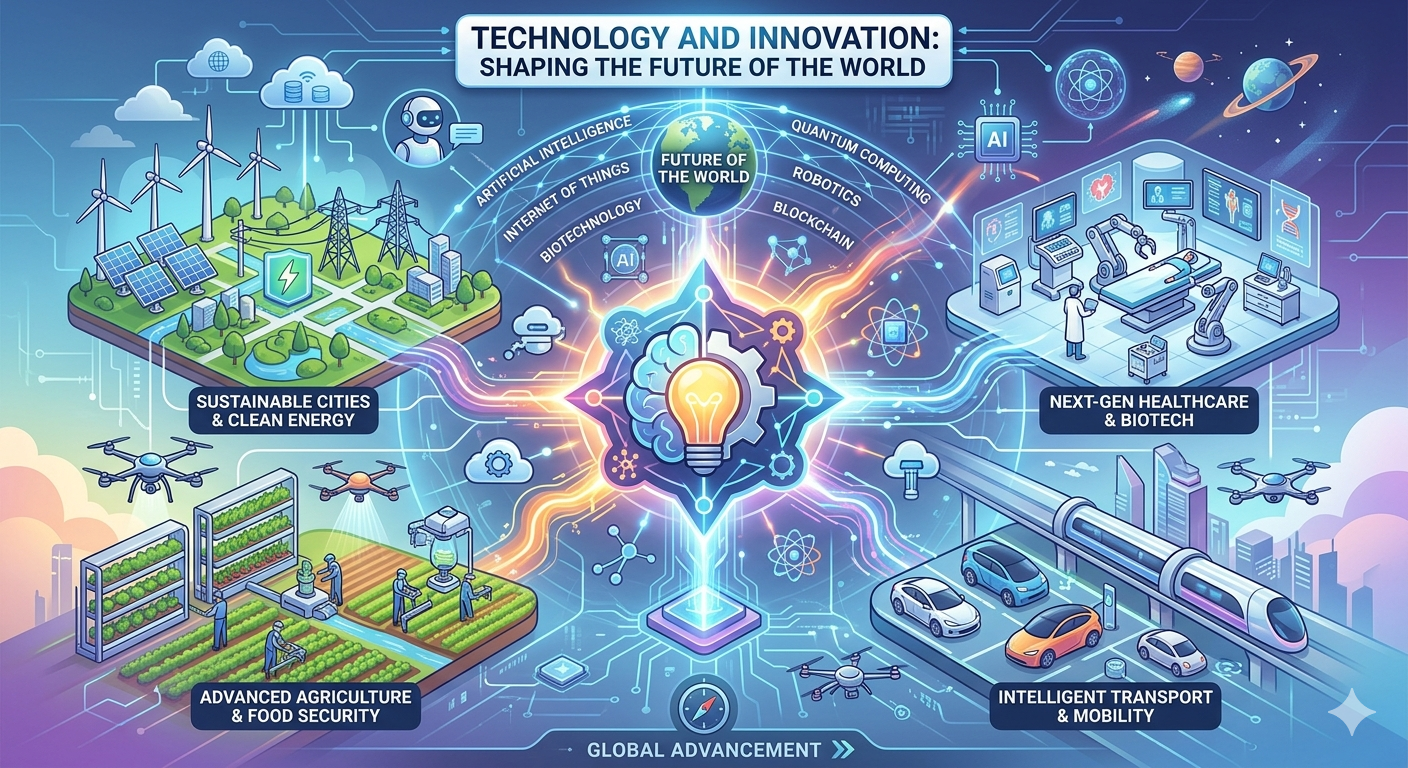
Technology and innovation are the driving forces behind modern civilization. From the invention of the wheel to artificial intelligence, human progress has always been connected with new ideas and technological advancements. In today’s world, technology is evolving faster than ever before, transforming industries, economies, education systems, healthcare, communication, and daily life.
In the United States and across the globe, technology is not just a tool anymore-it has become a foundation of how society operates. Businesses rely on digital systems, students depend on online learning platforms, and individuals use smart devices for almost every aspect of life.
This article explores the meaning of technology and innovation, their importance, key areas of development, real-world applications, benefits, challenges, and future trends that will shape the coming decades.
What is Technology?
Technology refers to the application of scientific knowledge to solve real-world problems and improve human life. It includes tools, machines, systems, software, and processes that help people perform tasks more efficiently.
Technology can be as simple as a hammer or as complex as artificial intelligence systems. The main goal of technology is to make life easier, faster, safer, and more productive.
In modern society, technology is deeply integrated into every industry, including:
- Healthcare
- Education
- Transportation
- Business
- Entertainment
- Communication
What is Innovation?
Innovation is the process of creating new ideas, methods, products, or services that improve existing systems or introduce something completely new. While technology refers to tools and systems, innovation focuses on improvement and creativity.
Innovation can be:
- Incremental Innovation: Small improvements in existing products
- Disruptive Innovation: Major changes that transform industries
- Radical Innovation: Completely new inventions that change the world
Successful economies like the United States depend heavily on innovation to maintain global leadership in technology and business.
Relationship Between Technology and Innovation
Technology and innovation are closely connected. Innovation leads to new technologies, and technology enables further innovation.
For example:
- The invention of smartphones combined hardware innovation and software technology
- Artificial intelligence is improving due to continuous innovation in machine learning
Without innovation, technology would remain stagnant. Without technology, innovation would have no practical implementation.
Importance of Technology and Innovation in Modern Society
Technology and innovation play a critical role in shaping the modern world.
1. Economic Growth
Technology drives productivity and economic development. Countries that invest in innovation experience faster growth and global competitiveness.
2. Improved Communication
Technology has transformed communication through:
- Social media platforms
- Video conferencing tools
- Instant messaging applications
People can now connect globally within seconds.
3. Better Healthcare
Medical technology has improved diagnosis, treatment, and patient care.
4. Education Transformation
Digital learning platforms allow students to access education from anywhere in the world. Online courses, virtual classrooms, and AI-based learning systems are making education more accessible.
5. Convenience in Daily Life
Smartphones, smart homes, and digital services make everyday tasks easier, such as:
- Online shopping
- Digital payments
- Navigation systems
- Home automation
Key Areas of Technological Innovation
Artificial Intelligence (AI)
Artificial intelligence is one of the most powerful innovations of the modern era. AI systems can analyze data, recognize patterns, and make decisions with minimal human input.
Applications include:
- Chatbots
- Recommendation systems
- Autonomous vehicles
- Healthcare diagnostics
AI is expected to revolutionize almost every industry.
Machine Learning and Data Science
Data science helps organizations analyze large datasets to make better decisions.
These technologies are widely used in:
- Finance
- Marketing
- Healthcare
- Cybersecurity
Internet of Things (IoT)
The Internet of Things connects everyday devices to the internet, enabling them to communicate and share data.
Examples include:
- Smart thermostats
- Wearable fitness trackers
- Smart home systems
- Industrial sensors
IoT is making homes and cities smarter and more efficient.
Blockchain Technology
It is used in:
- Cryptocurrency
- Supply chain management
- Digital identity verification
- Financial services
Cloud Computing
Cloud computing allows users to store and access data over the internet instead of physical storage devices.
Benefits include:
- Scalability
- Cost efficiency
- Remote access
- Data security
Major companies like Amazon, Microsoft, and Google are leaders in this field.
Robotics and Automation
Automation reduces human effort and increases productivity.
Industries using robotics include:
- Manufacturing
- Healthcare
- Agriculture
- Logistics
5G and Advanced Connectivity
5G technology is revolutionizing internet speed and connectivity. It enables:
- Faster downloads
- Low latency communication
- Improved IoT performance
- Better streaming quality
Impact of Technology on Business
Technology has completely transformed how businesses operate.
1. Digital Transformation
Businesses are shifting from traditional systems to digital platforms.
2. E-Commerce Growth
Online shopping platforms have expanded global trade opportunities.
3. Automation of Processes
Companies use automation tools to reduce manual work and improve efficiency.
4. Data-Driven Decision Making
Businesses rely on data analytics to understand customer behavior and market trends.
5. Remote Work Revolution
Technology has enabled employees to work from anywhere using digital collaboration tools.
Role of Innovation in Economic Development
Innovation is the backbone of strong economies like the United States.
Countries that invest in research and development benefit from:
- Job creation
- Higher productivity
- Global competitiveness
- Improved living standards
Startups and tech companies in Silicon Valley are prime examples of innovation-driven growth.
Challenges in Technology and Innovation
Despite its benefits, technology also presents challenges.
1. Cybersecurity Threats
Data breaches and cyberattacks are increasing worldwide.
2. Job Displacement
Automation may replace certain traditional jobs.
3. Privacy Concerns
Digital systems collect large amounts of personal data.
4. Digital Divide
Not everyone has equal access to modern technology.
5. Overdependence on Technology
Excessive reliance on technology can reduce human skills and interaction.
Future of Technology and Innovation
The future of technology is expected to be more advanced and transformative.
Artificial Intelligence Expansion
AI will become more intelligent and integrated into daily life.
Fully Autonomous Systems
Self-driving cars and automated industries will become more common.
Smart Cities
Urban areas will use technology for efficient energy, transport, and infrastructure management.
Biotechnology Advancements
Medical innovation will lead to personalized treatments and genetic engineering.
Space Exploration
Private companies and governments are investing in space travel and exploration technologies.
Technology Trends in the United States
The United States remains a global leader in technology and innovation.
Key trends include:
- Growth of Silicon Valley startups
- Expansion of AI research
- Leadership in cloud computing
- Strong investment in cybersecurity
- Rapid development of electric vehicles
Major tech companies continue to shape global digital transformation.
Benefits of Embracing Technology and Innovation
Adopting modern technology offers several advantages:
- Increased efficiency
- Better communication
- Higher productivity
- Global connectivity
- Improved quality of life
Innovation ensures continuous improvement and competitiveness in a fast-changing world.
Conclusion
Technology and innovation are essential pillars of modern society. They have transformed the way people live, work, communicate, and think. From artificial intelligence to cloud computing, every innovation contributes to a smarter and more connected world.
The United States and other developed nations continue to lead technological advancement by investing in research, startups, and digital transformation.
However, with great power comes responsibility. It is important to address challenges such as cybersecurity, privacy, and job displacement while continuing to innovate.
The future belongs to those who embrace technology and innovation with creativity, responsibility, and vision. As technology continues to evolve, it will open new opportunities that will redefine human potential and shape the future of generations to come.

