

Introduction
In today’s fast-moving digital world, the way people send, receive, and manage money has completely changed. From online shopping to bill payments and international transfers, digital payments have become an essential part of modern life.
Whether you are buying groceries, subscribing to online services, or running an e-commerce business, digital payments make transactions seamless and efficient.
This article explores everything you need to know about digital payments, including how they work, types, benefits, challenges, security measures, and future trends shaping the global financial system.
What Are Digital Payments?
These payments are made through digital devices such as smartphones, computers, or point-of-sale systems.
Digital payments include a wide range of financial activities such as:
- Online shopping payments
- Mobile wallet transactions
- Bank transfers
- Contactless card payments
- Peer-to-peer money transfers
In simple terms, digital payments allow money to move electronically from one account to another.
How Digital Payments Work
Digital payment systems operate through a combination of financial institutions, payment gateways, and secure networks.
Step 1: Initiation
The customer selects a product or service and chooses a digital payment method.
Step 2: Authentication
The system verifies the user’s identity using methods like OTP, biometrics, or passwords.
Step 3: Transaction Processing
The payment gateway communicates with banks to approve or decline the transaction.
Types of Digital Payments
Digital payment systems come in various forms, each serving different purposes.
1. Credit and Debit Cards
One of the most common digital payment methods worldwide.
2. Mobile Wallets
Mobile wallets store digital money on smartphones. Popular examples allow users to send money, pay bills, and shop online easily.
Features include:
- Fast transactions
- QR code payments
- Cashback offers
- Easy recharge options
3. Bank Transfers
Direct transfers between bank accounts are widely used for personal and business transactions. These include:
- Online banking transfers
- Real-time payment systems
- Wire transfers
4. UPI and Instant Payment Systems
Unified payment systems allow instant bank-to-bank transfers using mobile apps.
Advantages include:
- No need for card details
- Fast processing
- Low or zero fees
5. Cryptocurrency Payments
Digital currencies like Bitcoin and Ethereum enable decentralized transactions without traditional banking systems.
Although still evolving, crypto payments are gaining popularity globally.
6. Contactless Payments
Using NFC (Near Field Communication) technology, users can simply tap their card or phone to complete payments.
Benefits of Digital Payments
Digital payments have transformed the global economy by offering several advantages.
1. Speed
Transactions are completed in seconds, making financial activities faster and more efficient.
2. Security
Advanced encryption and authentication methods reduce the risk of fraud and theft.
3. Transparency
Every transaction is recorded digitally, making tracking and auditing easier.
4. Global Accessibility
Digital payments allow cross-border transactions without physical currency exchange.
5. Cost Efficiency
Businesses save money on handling cash, storage, and manual accounting.
6. Better Financial Management
Users can track spending patterns and manage budgets through digital records.
Challenges of Digital Payments
Despite their advantages, digital payments also face certain challenges.
1. Cybersecurity Risks
Hackers and fraudsters may target weak systems or users with poor security practices.
2. Internet Dependency
Digital payments require stable internet connections, which may not always be available.
3. Technical Issues
System outages or app failures can temporarily disrupt transactions.
4. Digital Literacy
Some users still struggle to understand or trust digital financial systems.
5. Transaction Fees
Certain payment methods may include processing fees, especially for international transfers.
Security in Digital Payments
Security is one of the most important aspects of digital financial systems.
To protect users, payment platforms use:
Encryption Technology
Data is encoded to prevent unauthorized access.
Two-Factor Authentication (2FA)
Users must verify identity using multiple steps.
Tokenization
Sensitive card data is replaced with secure tokens during transactions.
Role of Digital Payments in E-Commerce
Digital payments are the backbone of modern e-commerce platforms.
They enable:
- Smooth checkout experiences
- Faster order processing
- International sales
- Customer trust
Without digital payments, online shopping would not be as efficient or scalable as it is today.
Impact on Businesses
Digital payments have significantly transformed business operations.
1. Increased Sales
Faster and easier payments improve conversion rates.
2. Global Expansion
Businesses can sell products internationally without barriers.
3. Improved Cash Flow
Instant transactions improve financial stability.
4. Automation
Accounting and record-keeping become automated.
5. Customer Satisfaction
Multiple payment options improve user experience.
Impact on Consumers
Consumers also benefit greatly from digital payment systems.
- No need to carry cash
- Faster checkout process
- Easy bill payments
- Access to discounts and cashback offers
- Better financial tracking
Future of Digital Payments
The future of digital payments is expected to be even more advanced and innovative.
1. Artificial Intelligence Integration
AI will improve fraud detection and personalized financial services.
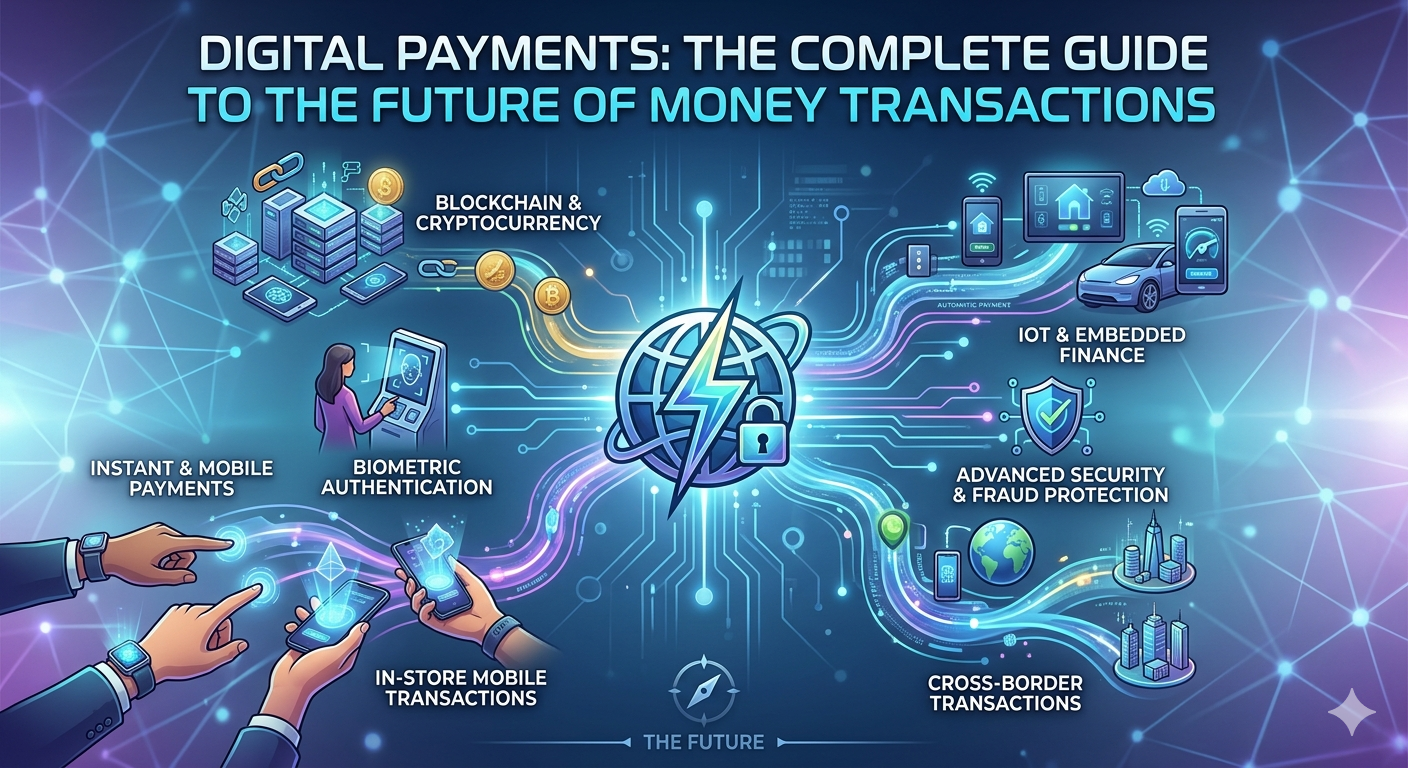
2. Blockchain Technology
Blockchain will make transactions more transparent and secure.
3. Biometric Payments
Face recognition and fingerprint scanning will replace passwords.
4. Cashless Societies
Many countries are moving toward fully cashless economies.
Common Mistakes Users Should Avoid
To ensure safe digital transactions, users should avoid:
- Using weak passwords
- Clicking suspicious links
- Sharing OTPs
- Using unsecured Wi-Fi for payments
- Ignoring software updates
Awareness is key to staying safe in digital financial environments.
Why Digital Payments Are Growing Rapidly
Several factors contribute to the global growth of digital payments:
- Increased smartphone usage
- Expansion of internet access
- Growth of online shopping
- Government support for cashless systems
- Technological advancements
These trends indicate that digital payments are not just a trend but the future of global finance.
Conclusion
Digital payments have revolutionized the way the world handles money. They offer speed, convenience, security, and global accessibility, making them an essential part of modern life.
From individuals to large corporations, everyone benefits from digital financial systems. While challenges such as cybersecurity risks and technical issues exist, continuous innovation is making systems safer and more efficient.
As technology continues to evolve, digital payments will become even more integrated into daily life, leading us toward a truly cashless global economy.
For businesses and individuals alike, adopting digital payments is no longer optional-it is a necessity for growth, efficiency, and success in the modern digital era.
FAQs
What are digital payments?
Digital payments are electronic transactions made without physical cash.
Are digital payments safe?
Yes, most systems use encryption, authentication, and fraud detection tools.
What are examples of digital payments?
Credit cards, mobile wallets, bank transfers, and contactless payments.
Why are digital payments important?
They make transactions faster, easier, and more efficient.
What is the future of digital payments?
The future includes AI, blockchain, and fully cashless economies.

