

Introduction
The digital economy has transformed how businesses operate, sell products, and interact with customers. Today, companies no longer need expensive physical stores to reach global audiences. Instead, businesses can create online stores, sell products worldwide, and manage operations digitally using e-commerce platforms.
As online shopping continues to grow, choosing the right e-commerce platform has become one of the most important decisions for entrepreneurs, startups, and established companies.
Whether you are starting a small business, launching a dropshipping store, or building a large online marketplace, understanding e-commerce platforms can help you make smarter decisions.
This guide explains what e-commerce platforms are, how they work, their benefits, challenges, features, and how to select the best solution for long-term growth.
What Are E-Commerce Platforms?
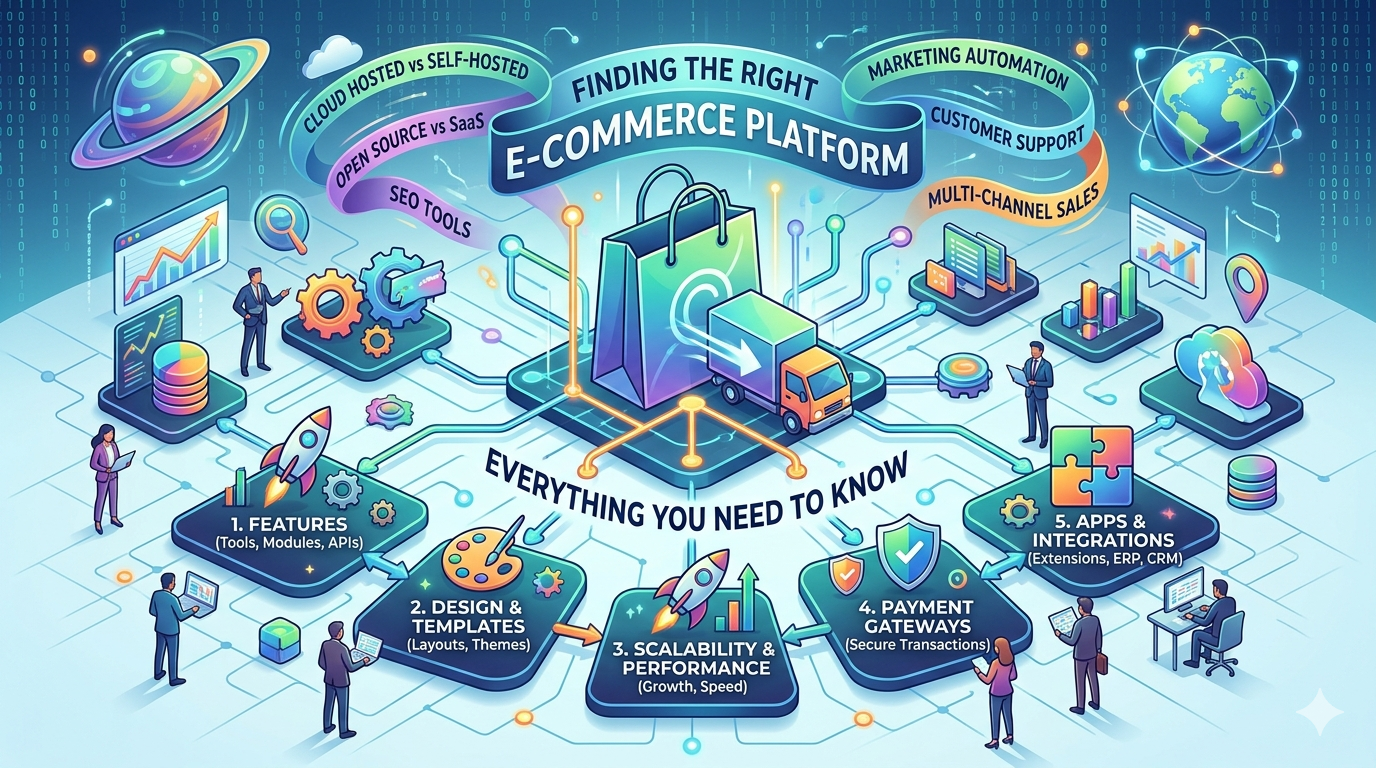
An e-commerce platform is software that allows businesses to create, manage, and operate online stores.
These platforms provide tools for:
- Product management
- Payment processing
- Inventory tracking
- Order management
- Customer communication
- Website customization
- Marketing integration
Simply put, e-commerce platforms provide everything needed to sell products or services online.
Without these platforms, building an online store would require significant technical expertise and development resources.
Why E-Commerce Platforms Are Important
Online shopping has changed customer expectations.
Consumers now expect:
- Fast checkout experiences
- Mobile-friendly websites
- Multiple payment methods
- Easy product searching
- Quick delivery tracking
E-commerce platforms help businesses meet these expectations without building everything from scratch.
Some major benefits include:
Faster Business Launch
Businesses can create stores much faster compared to custom development.
Lower Costs
Pre-built solutions reduce technical expenses.
Better Customer Experience
Modern features improve shopping experiences.
Scalability
Businesses can grow without constantly rebuilding infrastructure.
Types of E-Commerce Platforms
Not every platform works for every business. Understanding different categories helps businesses choose correctly.
Hosted E-Commerce Platforms
Hosted solutions manage technical aspects for users.
Advantages:
- Easy setup
- Lower maintenance
- Automatic updates
- Security management
Disadvantages:
- Less customization
- Platform limitations
Best for:
- Beginners
- Small businesses
- Fast-growing startups
Self-Hosted Platforms
Self-hosted solutions give businesses complete control.
Advantages:
- Greater flexibility
- Full customization
- More ownership
Disadvantages:
- Higher maintenance
- Technical complexity
- Security responsibilities
Best for:
- Developers
- Large businesses
- Advanced customization needs
Open-Source Platforms
Open-source solutions provide access to source code.
Advantages:
- Flexible customization
- Large developer communities
- Lower licensing costs
Disadvantages:
- Technical expertise required
- Maintenance challenges
Best for:
- Technical teams
- Custom projects
Headless Commerce Platforms
Headless commerce separates front-end design from backend operations.
Advantages:
- Faster performance
- Better customization
- Multi-channel selling
Disadvantages:
- Complex implementation
- Higher development costs
Best for:
- Large enterprises
- Advanced digital experiences
Essential Features Every E-Commerce Platform Should Have
Choosing a platform requires evaluating important features.
User-Friendly Dashboard
Store management should be simple.
Complicated interfaces increase operational difficulties.
Mobile Responsiveness
Mobile traffic dominates modern shopping behavior.
Websites must perform properly across devices.
Payment Integration
Customers expect multiple payment options.
Support for:
- Credit cards
- Digital wallets
- Bank transfers
- Local payment systems
can improve conversions.
Security Features
Security protects:
- Customer information
- Payment data
- Business reputation
Strong security features are critical.
Inventory Management
Tracking products manually creates mistakes.
Automated inventory systems improve efficiency.
SEO Capabilities
Search traffic remains one of the largest traffic sources.
Good platforms should support:
- Custom URLs
- Meta descriptions
- Fast loading speeds
- Structured pages
Marketing Tools
Built-in marketing helps businesses grow faster.
Useful features include:
- Email marketing
- Discounts
- Promotions
- Customer segmentation
How E-Commerce Platforms Work
Most platforms follow a similar process.
Step 1: Store Setup
Businesses create products, categories, and pages.
Step 2: Customer Visits Store
Visitors browse products.
Step 3: Checkout Process
Customers complete purchases.
Step 4: Payment Processing
Payments are securely processed.
Step 5: Order Fulfillment
Businesses ship products.
Step 6: Customer Support
Post-purchase experiences maintain loyalty.
Benefits of Using E-Commerce Platforms
Businesses increasingly move online because of major advantages.
Global Reach
Online stores remove geographical barriers.
Customers can purchase from anywhere.
Lower Operating Costs
Digital stores often cost less than physical locations.
24/7 Sales Opportunities
Stores remain available continuously.
Revenue generation becomes more flexible.
Better Analytics
Businesses can track:
- Visitor behavior
- Conversion rates
- Product performance
- Customer preferences
Automation
Automation reduces repetitive work.
Examples include:
- Order notifications
- Inventory updates
- Marketing emails
Common Challenges Businesses Face
Despite advantages, challenges still exist.
Competition
Thousands of stores compete for attention.
Customer Acquisition Costs
Advertising expenses may increase.
Technical Problems
Website downtime affects sales.
Security Risks
Cyber threats remain ongoing concerns.
Customer Expectations
Modern consumers expect fast service.
Meeting expectations requires continuous improvement.
How to Choose the Right E-Commerce Platform
Choosing incorrectly can create expensive problems later.
Consider these factors:
Business Size
Small businesses and enterprises often require different solutions.
Budget
Costs may include:
- Monthly fees
- Development costs
- Apps
- Marketing expenses
Growth Plans
Choose systems capable of scaling.
Technical Skills
Some platforms require advanced knowledge.
Product Type
Physical products, subscriptions, and digital products have different needs.
SEO and E-Commerce Platforms
Search engine optimization remains critical for online success.
Strong SEO helps businesses:
- Increase visibility
- Reduce advertising dependency
- Build long-term traffic
Important SEO elements include:
Fast Loading Speed
Slow websites reduce rankings.
Clean URLs
Simple URLs improve usability.
Mobile Optimization
Mobile experiences affect rankings.
Content Strategy
Blogs and educational content attract visitors.
Product Optimization
Detailed product pages improve discoverability.
Future Trends in E-Commerce Platforms
Technology continues changing online commerce.
Several trends are shaping the future.
Artificial Intelligence
AI improves:
- Recommendations
- Support systems
- Personalization
Voice Commerce
Voice shopping continues growing.
Social Commerce
Social platforms increasingly drive purchases.
Personalized Experiences
Customers expect customized shopping experiences.
Faster Checkout Systems
Reducing checkout friction increases conversions.
Mistakes Businesses Should Avoid
Many online stores fail because of avoidable mistakes.
Common examples include:
- Choosing platforms without research
- Ignoring SEO
- Poor mobile experiences
- Weak product descriptions
- Complicated checkout processes
Avoiding these mistakes improves success probability.
Why E-Commerce Platforms Continue Growing
Consumer behavior continues shifting toward digital purchasing.
Businesses recognize benefits such as:
- Greater reach
- Lower barriers
- Improved flexibility
- Better customer data
These factors explain why e-commerce growth continues worldwide.
Final Thoughts
E-commerce platforms have fundamentally changed modern business.
They allow companies to create online stores faster, reduce technical barriers, and reach customers globally.
However, selecting the right platform requires careful thinking.
Businesses should focus on:
- Long-term growth
- Customer experience
- SEO capabilities
- Scalability
- Operational efficiency
The best platform is not always the most expensive or most popular.
Instead, the right solution is the one that supports business goals, customer expectations, and future expansion.
As online commerce continues evolving, businesses that invest in the right foundation today will be better prepared for tomorrow’s opportunities.
Frequently Asked Questions
What is an e-commerce platform?
An e-commerce platform is software used to build and manage online stores.
Why are e-commerce platforms important?
They simplify selling products online and reduce technical complexity.
Are e-commerce platforms expensive?
Costs vary depending on features, scale, and customization requirements.
Can small businesses use e-commerce platforms?
Yes, many solutions are designed specifically for small businesses.
Which features matter most?
Security, payment integration, SEO tools, scalability, and ease of use are among the most important features.

