

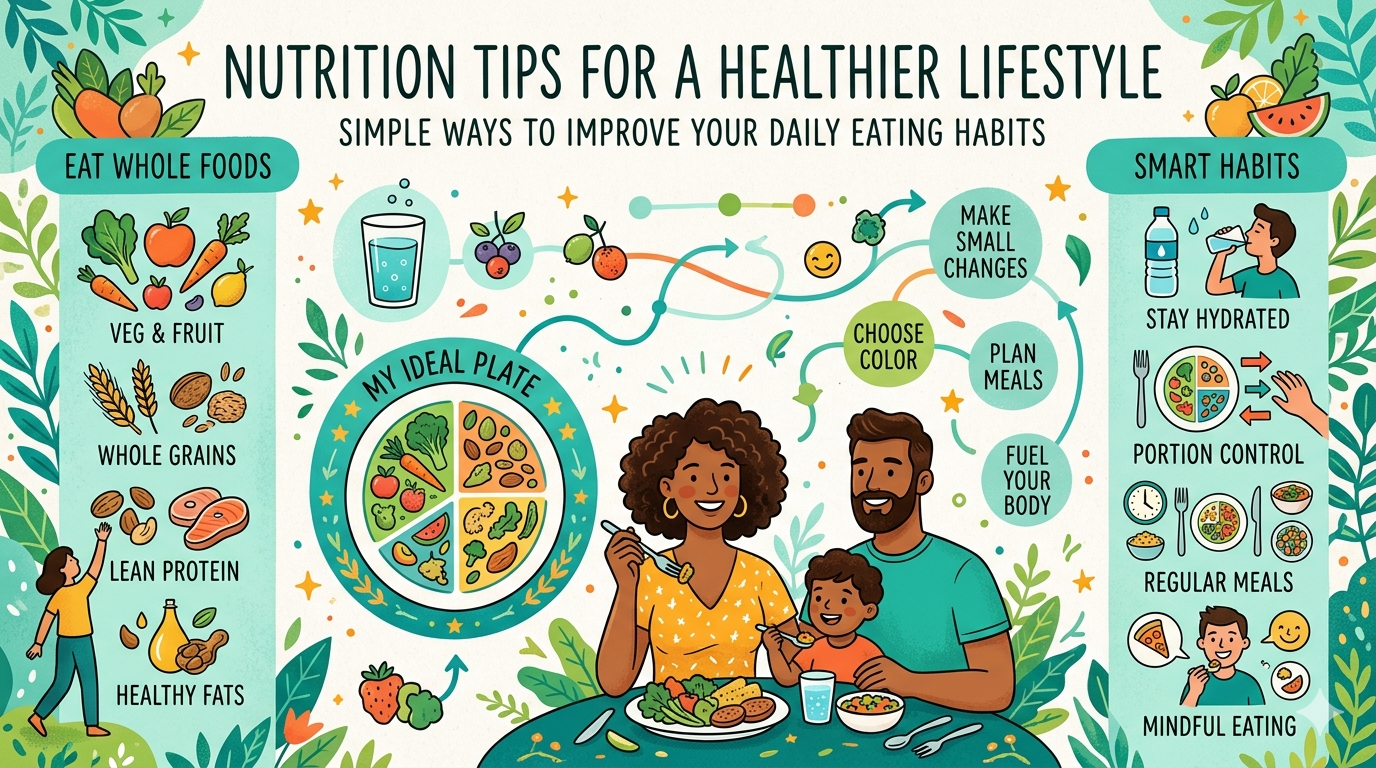
Nutrition Tips for a Healthier Lifestyle
Good nutrition is one of the most important foundations of a healthy life. The foods we consume every day directly affect our energy levels, physical health, mental performance, and overall well-being. However, with fast food culture, busy schedules, and misleading diet trends, maintaining proper nutrition has become increasingly challenging.
Fortunately, healthy eating does not have to be complicated. Small improvements in daily habits can create significant long-term benefits. By understanding basic nutrition principles and making smarter food choices, anyone can develop healthier eating patterns.
This guide explores practical nutrition tips that can help improve your lifestyle while supporting better physical and mental health.
Why Nutrition Matters
Nutrition provides your body with essential nutrients required for growth, repair, and energy production. A balanced diet supports:
- Strong immune function
- Better brain performance
- Improved digestion
- Healthy weight management
- Increased energy levels
- Reduced risk of chronic diseases
Poor nutrition, on the other hand, can contribute to fatigue, obesity, heart disease, diabetes, and weakened immunity.
Understanding the importance of nutrition is the first step toward making healthier decisions.
1. Start Your Day with a Balanced Breakfast
Breakfast is often called the most important meal because it provides fuel after long hours of fasting during sleep.
A balanced breakfast should include:
- Protein sources
- Healthy carbohydrates
- Fiber-rich foods
- Healthy fats
Examples include:
- Oatmeal with fruits and nuts
- Eggs with whole-grain toast
- Greek yogurt with berries
- Smoothies containing fruits and protein
Skipping breakfast may lead to excessive hunger later in the day and poor food choices.
2. Prioritize Whole Foods
Whole foods include:
- Fruits
- Vegetables
- Whole grains
- Nuts and seeds
- Lean proteins
- Legumes
These foods naturally contain vitamins, minerals, antioxidants, and fiber.
Processed foods often contain:
- Excess sugar
- High sodium
- Unhealthy fats
- Artificial ingredients
Choosing whole foods helps improve nutrient intake while reducing unnecessary calories.
3. Increase Your Water Intake
Hydration plays a major role in nutrition and overall health.
Water helps:
- Transport nutrients
- Regulate body temperature
- Improve digestion
- Support brain function
- Prevent fatigue
Many people confuse thirst with hunger, leading to unnecessary eating.
Simple hydration tips:
- Carry a water bottle
- Drink water before meals
- Replace sugary beverages
- Track daily intake
Most adults benefit from drinking adequate water consistently throughout the day.
4. Include More Fruits and Vegetables
Fruits and vegetables are nutritional powerhouses.
Benefits include:
- High vitamin content
- Better digestion
- Increased fiber intake
- Lower calorie density
- Reduced disease risk
Nutrition experts commonly recommend filling a large portion of your plate with vegetables and fruits.
Try:
- Adding vegetables to lunch and dinner
- Snacking on fruit
- Using salads regularly
- Including colorful produce varieties
Different colors often provide different nutrients.
5. Focus on Protein Intake
Protein is essential for:
- Muscle growth
- Tissue repair
- Hormone production
- Immune function
- Satiety
Healthy protein sources include:
- Fish
- Eggs
- Chicken
- Beans
- Lentils
- Dairy products
- Nuts
Protein-rich meals may help reduce unnecessary snacking and maintain stable energy levels.
6. Reduce Added Sugar Consumption
Excess sugar intake has been linked to multiple health problems.
High sugar consumption may contribute to:
- Weight gain
- Diabetes risk
- Dental problems
- Energy crashes
- Inflammation
Common hidden sugar sources:
- Soft drinks
- Flavored yogurt
- Sauces
- Breakfast cereals
- Processed snacks
7. Practice Portion Control
Even healthy foods can contribute to excessive calorie intake when portions become too large.
Useful portion strategies:
- Use smaller plates
- Eat slowly
- Avoid distractions while eating
- Learn hunger signals
- Avoid oversized servings
Mindful eating often improves satisfaction and prevents overeating.
8. Choose Healthy Fats
Not all fats are harmful.
Healthy fats support:
- Brain health
- Hormone production
- Nutrient absorption
- Heart health
Good fat sources include:
- Avocados
- Nuts
- Seeds
- Olive oil
- Fatty fish
Limit trans fats and highly processed oils whenever possible.
9. Avoid Extreme Dieting
Many popular diets promise rapid results but fail long term.
Extreme diets may cause:
- Nutrient deficiencies
- Low energy
- Muscle loss
- Poor sustainability
Instead, focus on:
- Balanced eating
- Gradual improvements
- Consistency
- Long-term habits
Sustainable nutrition delivers better long-term results.
10. Plan Meals Ahead
Meal planning reduces poor food choices.
Benefits include:
- Better nutrition control
- Reduced stress
- Lower food waste
- Improved budgeting
Meal planning tips:
- Prepare ingredients early
- Create weekly menus
- Keep healthy snacks available
- Cook larger batches
Preparation makes healthy choices easier.
11. Read Nutrition Labels
Understanding labels helps consumers make informed decisions.
Pay attention to:
- Calories
- Protein content
- Sugar levels
- Fiber
- Sodium
- Ingredients
12. Build Healthy Eating Habits Slowly
Changing everything at once often fails.
Start with small actions:
- Add one vegetable daily
- Increase water intake
- Replace sugary drinks
- Cook more meals at home
Small improvements create sustainable habits over time.
Common Nutrition Mistakes to Avoid
Some common mistakes include:
Skipping Meals
This may increase hunger and lead to overeating later.
Following Social Media Diet Trends
Not every trend is scientifically supported.
Ignoring Sleep
Poor sleep affects hunger hormones and eating behavior.
Eating Too Quickly
Fast eating often leads to excessive calorie intake.
Awareness of these mistakes helps improve nutrition success.
The Relationship Between Nutrition and Mental Health
Nutrition influences more than physical health.
Healthy eating patterns may support:
- Improved concentration
- Better mood
- Reduced fatigue
- Higher productivity
Nutrients such as omega-3 fats, vitamins, minerals, and protein contribute to proper brain function.
Balanced eating supports both body and mind.
Final Thoughts
Good nutrition is not about perfection. It is about creating habits that support long-term health and sustainability.
The best nutrition tips are often simple:
- Eat balanced meals
- Stay hydrated
- Choose whole foods
- Control portions
- Plan ahead
Healthy eating is a lifelong process. Small daily decisions eventually create meaningful improvements in overall well-being.

