

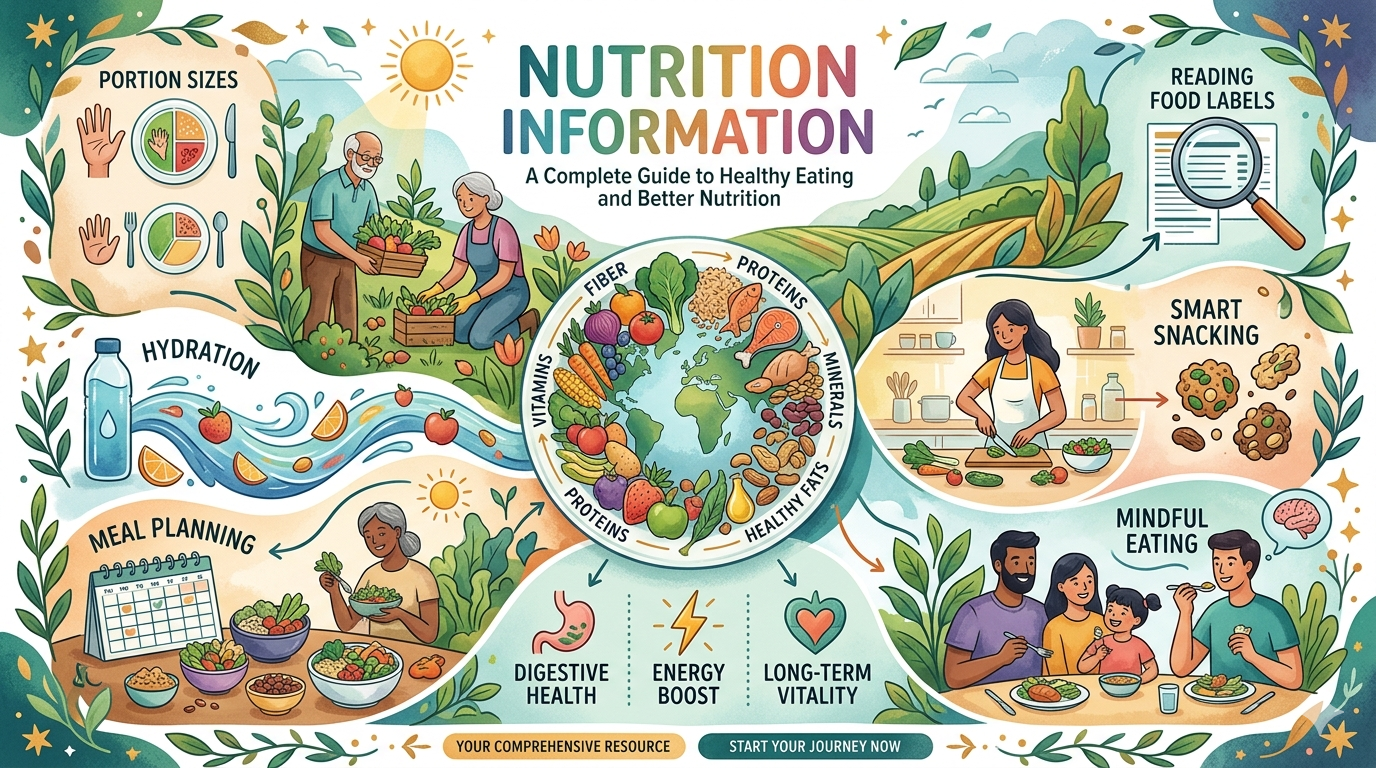
Nutrition Information: Understanding the Foundation of Healthy Living
Nutrition plays a central role in maintaining physical health, mental performance, energy production, and overall well-being. Every food choice contributes to how the body functions, recovers, and performs daily activities. Despite growing awareness about health, many people still struggle to understand proper nutrition information and how to apply it effectively.
Nutrition is not simply about calories or restrictive dieting. It involves understanding nutrients, food quality, meal balance, and long-term eating habits. Learning basic nutrition principles allows individuals to make smarter decisions that support healthier lifestyles.
This guide explores essential nutrition information, covering nutrients, healthy eating habits, balanced diets, and practical approaches for improving daily nutrition.
What Is Nutrition?
Nutrition refers to the process through which the body obtains and uses nutrients from food to support growth, repair tissues, produce energy, and maintain bodily functions.
Good nutrition helps the body:
- Produce energy efficiently
- Maintain healthy organs
- Support immune function
- Improve mental performance
- Build muscles and tissues
- Promote overall wellness
Poor nutrition can contribute to various health problems including fatigue, nutrient deficiencies, obesity, and chronic diseases.
Understanding nutrition basics creates a strong foundation for healthier choices.
Why Nutrition Information Matters
Many people consume food daily without fully understanding what their bodies require.
Proper nutrition information helps individuals:
- Make informed food choices
- Understand nutrient requirements
- Avoid nutritional deficiencies
- Improve long-term health outcomes
- Support healthy weight management
Knowledge allows people to move beyond marketing claims and diet trends toward evidence-based eating habits.
Essential Nutrients the Body Needs
The human body requires multiple nutrients to function properly.
These nutrients are generally divided into two categories:
Macronutrients
These include:
Carbohydrates
Carbohydrates are the body’s primary energy source.
Common carbohydrate sources include:
- Fruits
- Vegetables
- Whole grains
- Rice
- Oats
- Legumes
Complex carbohydrates generally provide more sustained energy than highly processed options.
Protein
Protein supports:
- Muscle growth
- Tissue repair
- Hormone production
- Immune health
Protein sources include:
- Eggs
- Fish
- Meat
- Beans
- Dairy products
- Nuts
Fats
Healthy fats help:
- Support brain function
- Produce hormones
- Absorb vitamins
- Provide energy
Healthy fat sources include:
- Nuts
- Seeds
- Olive oil
- Avocados
- Fish
Balanced intake of macronutrients supports optimal health.
Micronutrients
Micronutrients are needed in smaller amounts but remain essential.
These include:
Vitamins
Vitamins support numerous body processes.
Examples include:
- Vitamin A
- Vitamin C
- Vitamin D
- Vitamin E
- B-complex vitamins
Minerals
Minerals help regulate body functions.
Examples include:
- Calcium
- Iron
- Zinc
- Magnesium
- Potassium
Even small deficiencies may negatively affect health.
Understanding Calories and Energy
Calories measure energy obtained from food.
The body uses calories for:
- Breathing
- Movement
- Organ function
- Exercise
- Recovery
Consuming more calories than needed may contribute to weight gain, while consistently consuming fewer may result in weight loss.
However, calorie quality matters alongside quantity.
For example:
- 300 calories from vegetables and protein provide different nutritional value than 300 calories from highly processed snacks.
Nutrition focuses on both energy and nutrient density.
The Importance of Balanced Eating
Balanced eating means consuming foods from multiple categories to provide sufficient nutrients.
A balanced diet typically includes:
- Fruits and vegetables
- Whole grains
- Lean proteins
- Healthy fats
- Adequate hydration
Balance helps prevent excessive consumption of any single nutrient category.
Restrictive eating patterns often create nutritional gaps.
Healthy Eating Habits for Better Nutrition
Nutrition involves habits, not only food choices.
Useful habits include:
Practice Portion Control
Large portions may contribute to excessive calorie intake.
Eat Slowly
Slow eating allows better recognition of fullness signals.
Stay Hydrated
Water supports digestion, nutrient transport, and body regulation.
Prepare Meals at Home
Cooking at home provides greater control over ingredients and portion sizes.
Small habits often create long-term improvements.
Serving Size
Nutritional values depend on serving amounts.
Calories
Shows energy provided.
Added Sugars
High sugar intake may negatively affect health.
Protein and Fiber
These nutrients contribute to satiety.
Ingredient Lists
Shorter ingredient lists often indicate less processing.
Learning label reading improves food choices.
The Role of Fiber in Nutrition
Fiber is often overlooked despite its importance.
Benefits of fiber include:
- Better digestion
- Improved fullness
- Blood sugar support
- Heart health support
Fiber-rich foods include:
- Fruits
- Vegetables
- Beans
- Oats
- Whole grains
Many people consume less fiber than recommended.
Common Nutrition Mistakes
Understanding mistakes helps improve dietary habits.
Relying Too Much on Processed Foods
Highly processed foods may contain excessive:
- Sugar
- Sodium
- Unhealthy fats
Following Extreme Diet Trends
Highly restrictive diets are often difficult to maintain.
Ignoring Meal Quality
Focusing only on calories may overlook nutrient density.
Inadequate Water Consumption
Hydration remains essential for overall nutrition.
Awareness supports better choices.
Nutrition and Physical Activity
Nutrition and exercise work together.
Proper nutrition supports:
- Recovery
- Performance
- Energy production
- Muscle repair
Physical activity also improves how the body utilizes nutrients.
Combining healthy eating with movement creates stronger results.
Nutrition and Mental Well-Being
Food influences mental performance and mood.
Proper nutrition may support:
- Better concentration
- Stable energy levels
- Reduced fatigue
- Improved productivity
Balanced diets contribute to both physical and mental health.
How to Build Better Nutrition Habits
Improving nutrition does not require immediate perfection.
Start with simple actions:
- Add vegetables to meals
- Drink more water
- Eat more whole foods
- Reduce sugary drinks
- Increase protein intake
- Prepare meals ahead
Consistency matters more than rapid changes.
The Future of Nutrition
Nutrition science continues evolving.
Current trends focus increasingly on:
- Personalized nutrition
- Preventive health
- Whole-food approaches
- Sustainable eating patterns
Final Thoughts
Nutrition information provides the knowledge needed to make healthier decisions and improve overall quality of life.
The foundation of good nutrition remains simple:
- Eat balanced meals
- Focus on whole foods
- Stay hydrated
- Understand nutrients
- Build sustainable habits
Healthy nutrition is not about perfection or strict rules. It is about consistently making choices that support long-term physical and mental well-being.
Small improvements today can create meaningful health benefits for years to come.

