

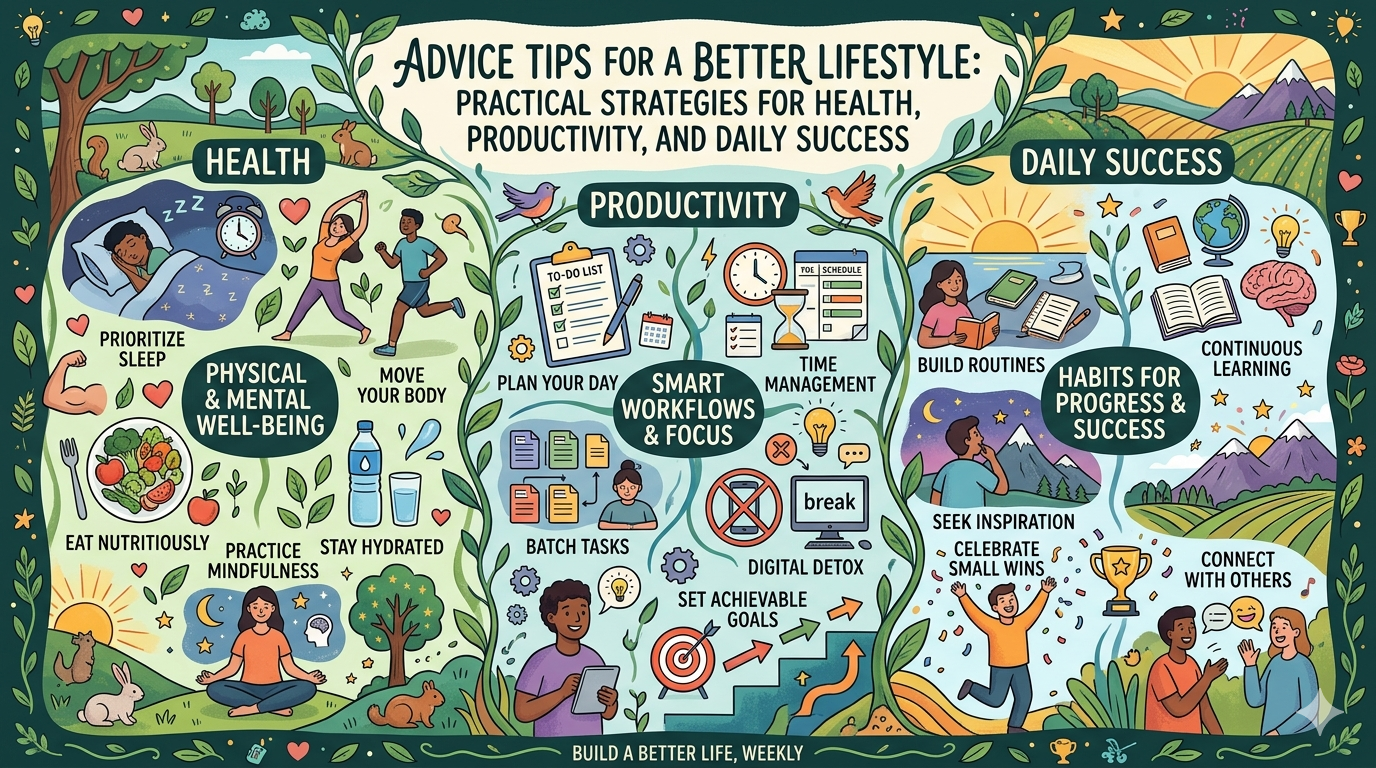
Advice Tips for a Better Lifestyle: Small Changes That Create Big Results
Everyone wants a healthier, happier, and more successful life, but many people believe major transformations require complicated strategies. In reality, long-term improvement usually comes from small, consistent actions repeated over time. The right advice tips can help individuals improve their routines, build better habits, and create lasting positive changes.
Modern lifestyles often create challenges such as stress, poor eating habits, lack of exercise, sleep problems, and reduced productivity. Fortunately, practical daily advice can make these problems easier to manage.
This guide explores useful advice tips for improving physical health, mental well-being, productivity, relationships, and overall quality of life.
Why Practical Advice Matters
Advice is valuable when it leads to action.
Useful advice helps people:
- Make better decisions
- Build healthier habits
- Improve productivity
- Reduce unnecessary stress
- Achieve long-term goals
The best advice is often simple enough to apply consistently.
Small improvements frequently create larger results than dramatic changes.
Begin Your Day with a Structured Routine
Benefits of structured mornings include:
- Improved focus
- Better time management
- Lower stress levels
- Increased productivity
Simple morning habits may include:
- Waking up consistently
- Drinking water
- Moving your body
- Planning priorities
- Avoiding immediate distractions
A productive morning often creates momentum.
2. Prioritize Your Physical Health
Good health affects nearly every aspect of life.
Important health habits include:
Stay Active
Regular movement supports:
- Heart health
- Mental health
- Energy levels
- Weight management
Eat Balanced Meals
Nutrition influences:
- Concentration
- Mood
- Recovery
- Productivity
Get Sufficient Sleep
Sleep supports:
- Brain performance
- Immune function
- Stress regulation
Physical health creates the foundation for everything else.
3. Learn Time Management Skills
Many people feel overwhelmed because tasks compete for limited attention.
Helpful time management tips include:
- Use daily task lists
- Prioritize important work
- Break large tasks into smaller steps
- Reduce unnecessary multitasking
- Schedule breaks
Managing time effectively reduces stress and improves efficiency.
4. Build Better Habits Slowly
People often fail because they try changing everything simultaneously.
Better strategies include:
- Start small
- Focus on consistency
- Track progress
- Build one habit at a time
Examples:
- Walk for 10 minutes daily
- Drink more water
- Read for 15 minutes
- Reduce screen time gradually
Small habits become sustainable habits.
5. Improve Your Communication Skills
Strong communication improves both personal and professional relationships.
Useful communication advice includes:
Listen More Carefully
Active listening improves understanding.
Speak Clearly
Simple communication reduces confusion.
Ask Questions
Questions improve conversations and learning.
Avoid Emotional Reactions
Pause before responding during difficult situations.
Better communication strengthens relationships.
6. Manage Stress More Effectively
Healthy stress-management strategies include:
- Exercise regularly
- Take breaks
- Maintain sleep routines
- Spend time outdoors
- Practice relaxation techniques
Ignoring stress often creates bigger problems later.
Managing stress improves overall quality of life.
7. Learn Continuously
Continuous learning creates long-term advantages.
Benefits include:
- Better career opportunities
- Improved confidence
- Stronger problem-solving skills
- Increased adaptability
Learning opportunities may include:
- Reading books
- Online courses
- Podcasts
- Professional development
Growth usually comes from ongoing learning.
8. Develop Financial Awareness
Financial habits affect daily life significantly.
Useful financial advice tips:
Track Spending
Understanding expenses improves control.
Build Savings Habits
Small savings accumulate over time.
Avoid Impulse Purchases
Thoughtful spending supports financial goals.
Create Budgets
Budgets provide direction and structure.
Financial organization reduces unnecessary stress.
9. Protect Your Mental Health
Mental well-being deserves equal attention.
Important practices include:
- Setting boundaries
- Limiting unnecessary negativity
- Taking breaks when needed
- Building supportive relationships
- Seeking balance
Mental health influences decision-making, productivity, and relationships.
10. Reduce Digital Distractions
Technology offers benefits but also creates distractions.
Helpful strategies:
- Disable unnecessary notifications
- Limit excessive social media use
- Schedule focused work periods
- Create device-free routines
Reducing distractions increases productivity and focus.
11. Build Strong Relationships
Healthy relationships contribute significantly to happiness.
Relationship advice includes:
Spend Quality Time
Presence matters more than quantity.
Practice Appreciation
Small acts of gratitude strengthen connections.
Support Others
Strong relationships involve mutual support.
Resolve Conflict Respectfully
Healthy conflict management improves long-term relationships.
Social connections strongly affect overall well-being.
12. Focus on Consistency Rather Than Motivation
Motivation changes frequently.
Consistency creates progress.
Examples:
- Exercise even when motivation decreases
- Continue healthy eating habits
- Maintain routines during busy periods
Systems outperform temporary enthusiasm.
Common Mistakes People Make
Understanding common mistakes helps avoid unnecessary setbacks.
Waiting for Perfect Conditions
Perfect timing rarely exists.
Setting Unrealistic Goals
Overly ambitious goals reduce consistency.
Comparing Yourself Constantly
Comparison often creates frustration.
Ignoring Recovery
Rest remains important for long-term performance.
Progress usually involves patience.
Creating a Balanced Lifestyle
Balance does not mean perfection.
A balanced lifestyle often includes:
- Physical health
- Mental well-being
- Relationships
- Work productivity
- Personal interests
- Rest and recovery
Balance creates sustainability.
How Small Improvements Create Big Results
Many people underestimate small actions.
Examples:
- Reading 10 pages daily
- Walking regularly
- Drinking more water
- Sleeping consistently
Small improvements compound over time.
Large transformations usually begin with small steps.
Final Thoughts
The most valuable advice tips are usually practical, realistic, and sustainable.
Long-term improvement does not require dramatic changes.
Instead, focus on:
- Building healthy habits
- Staying consistent
- Managing stress
- Learning continuously
- Improving daily routines
Success in health, productivity, and personal growth often comes from repeated small actions rather than major temporary efforts.
Start small, remain consistent, and allow progress to build naturally over time.

