

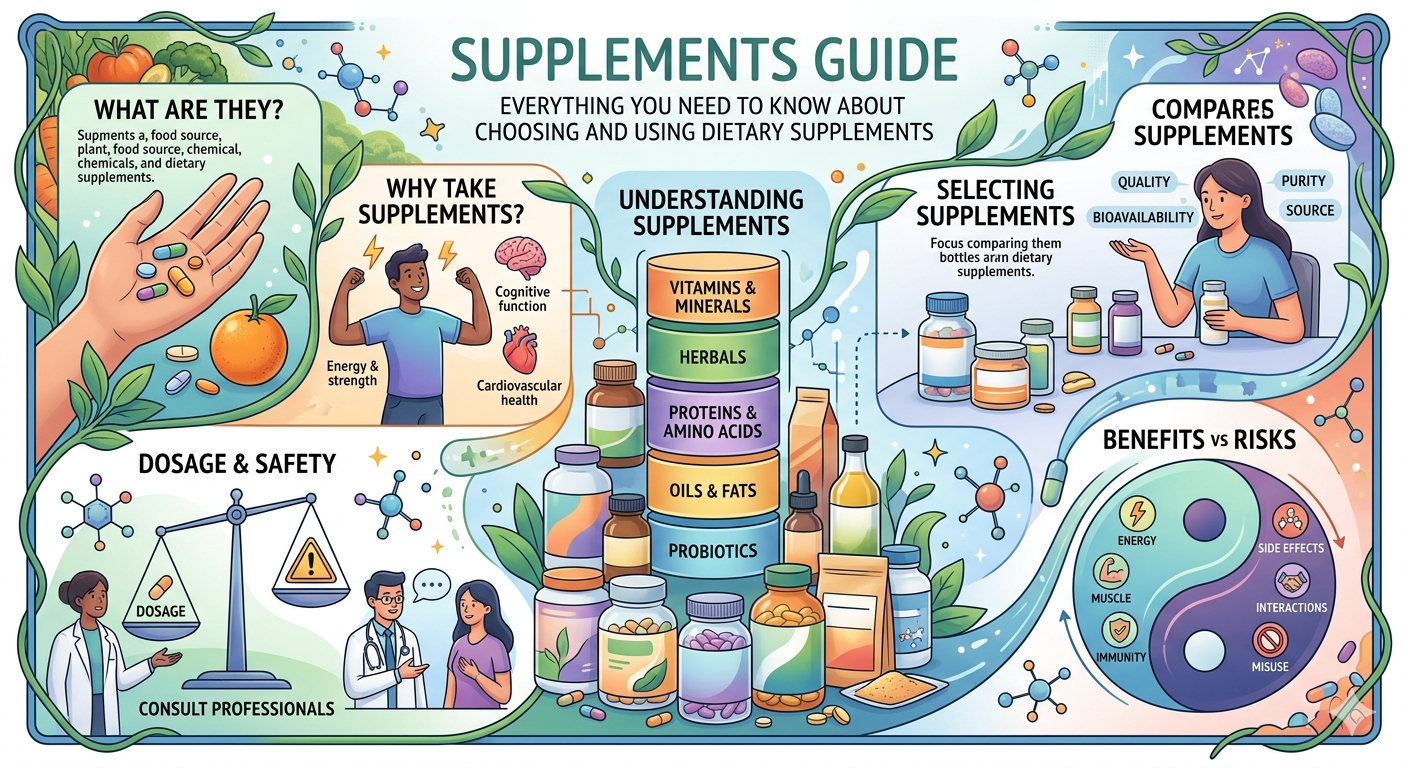
Supplements Guide: Understanding Dietary Supplements for Better Health
Dietary supplements have become a major part of modern health and wellness routines. From vitamins and minerals to protein powders and herbal products, millions of people use supplements to support fitness goals, improve nutrition, or maintain overall health. However, with thousands of products available, understanding supplements can become confusing.
Many consumers purchase supplements based on advertising, social media trends, or recommendations without fully understanding what these products actually do.
This comprehensive guide explains what supplements are, their benefits, potential risks, and practical strategies for choosing them responsibly.
What Are Dietary Supplements?
Dietary supplements are products designed to provide nutrients or substances that may support normal body functions and overall wellness.
They are commonly available as:
- Capsules
- Tablets
- Powders
- Softgels
- Gummies
- Liquids
Supplements may contain:
- Vitamins
- Minerals
- Protein compounds
- Amino acids
- Herbal ingredients
- Plant extracts
- Specialized nutritional compounds
The primary goal of supplements is to complement nutrition rather than replace healthy eating habits.
Why People Use Supplements
People choose supplements for many different reasons.
Common motivations include:
Supporting Nutritional Intake
Busy lifestyles sometimes make balanced nutrition difficult.
Fitness and Exercise Goals
Many active individuals use supplements to support performance and recovery.
Convenience
Supplements offer quick access to nutrients.
General Wellness
Some people use supplements as part of long-term health routines.
Age-Related Nutritional Needs
Changing nutritional requirements may influence supplement use.
Understanding personal goals helps determine whether supplementation is appropriate.
Major Categories of Supplements
Understanding supplement categories makes product selection easier.
1. Vitamin Supplements
Vitamins support numerous body processes.
Common vitamin supplements include:
- Vitamin A
- Vitamin C
- Vitamin D
- Vitamin E
- B-complex vitamins
These nutrients contribute to:
- Immune support
- Energy metabolism
- Vision health
- Skin maintenance
- Nervous system function
2. Mineral Supplements
Minerals help regulate important body functions.
Examples include:
- Calcium
- Iron
- Magnesium
- Zinc
- Potassium
Mineral intake influences:
- Bone health
- Muscle function
- Nerve signaling
- Oxygen transport
3. Protein Supplements
Protein supplements remain popular among:
- Athletes
- Active individuals
- Older adults
- Busy professionals
Protein products may support:
- Muscle recovery
- Protein intake goals
- Meal convenience
4. Herbal Supplements
Herbal products contain plant-derived ingredients.
Examples include:
- Turmeric products
- Green tea extracts
- Ginger preparations
- Botanical blends
Consumers should remember that natural ingredients still require careful use.
5. Specialty Supplements
These products target specific purposes such as:
- Sports performance
- Recovery support
- Energy support
- Digestive wellness
Specialized categories continue expanding as the supplement market grows.
Benefits of Supplements
Supplements may provide useful support when used appropriately.
Potential advantages include:
Nutritional Support
Supplements may help address dietary gaps.
Convenience
Modern schedules often limit meal quality.
Specific Health Goals
Certain products support targeted nutrition objectives.
Support During Increased Demands
Exercise, aging, and lifestyle factors sometimes increase nutrient requirements.
Supplements work best when combined with healthy habits.
Can Supplements Replace Healthy Foods?
No.
Whole foods provide nutritional advantages that supplements cannot completely replicate.
Whole foods contain:
- Fiber
- Phytonutrients
- Natural antioxidants
- Complex nutrient combinations
Healthy nutrition should remain the foundation of wellness.
Supplements should function as additions—not replacements.
Understanding Supplement Labels
Reading labels helps avoid confusion.
Important label sections include:
Serving Size
Nutrient amounts depend on serving recommendations.
Ingredient Lists
Check all active and inactive ingredients.
Daily Value Percentages
These percentages show how much nutrients contribute toward daily intake goals.
Added Ingredients
Look for:
- Sweeteners
- Fillers
- Artificial additives
Understanding labels improves purchasing decisions.
How to Choose the Right Supplements
Choosing supplements requires more than selecting popular products.
Identify Your Goals
Ask yourself:
- What am I trying to achieve?
- Does my diet already provide enough nutrients?
- Is supplementation necessary?
Avoid Marketing Hype
Be cautious of claims such as:
- Instant results
- Miracle solutions
- Guaranteed transformations
Research Ingredients
Understanding ingredients reduces poor decisions.
Focus on Quality
Higher-quality manufacturing often improves consistency.
Common Supplement Mistakes
Many people misuse supplements unintentionally.
Ignoring Nutrition
Supplements cannot compensate for consistently poor diets.
Following Trends Blindly
Social media recommendations are not always reliable.
Expecting Immediate Results
Nutrition changes usually require time.
Avoiding these mistakes improves outcomes.
Supplements and Fitness
Supplements are strongly associated with fitness culture.
Common fitness-related products include:
- Protein products
- Recovery formulas
- Performance support products
However, successful fitness results depend more heavily on:
- Training consistency
- Sleep quality
- Nutrition
- Recovery habits
Understanding Safety and Risks
Supplements are widely available, but responsible use remains important.
Potential concerns include:
Excessive Intake
Large doses may create unwanted effects.
Interactions
Certain ingredients may interact with medications.
Low Quality Products
Not all products maintain identical standards.
Misleading Claims
Advertising sometimes exaggerates benefits.
Education improves supplement safety.
Do Different People Need Different Supplements?
Nutritional requirements vary significantly.
Factors influencing supplement needs include:
- Age
- Diet quality
- Activity levels
- Lifestyle
- Health conditions
- Personal goals
Personalized approaches work better than copying others.
Building a Balanced Supplement Strategy
A balanced approach includes:
Prioritize Food First
Whole foods should remain primary.
Use Supplements When Necessary
Use products strategically rather than excessively.
Maintain Healthy Habits
Focus on:
- Exercise
- Sleep
- Hydration
- Nutrition
Healthy habits create better results than supplements alone.
Future Trends in Supplements
The supplement industry continues evolving.
Growing trends include:
- Personalized nutrition
- Evidence-based formulations
- Simplified ingredient lists
- Preventive wellness approaches
Consumers increasingly seek products supported by research and transparency.
Final Thoughts
Understanding supplements allows consumers to make more informed decisions and avoid unnecessary confusion.
The most effective supplement strategy remains simple:
- Prioritize nutrition
- Understand personal needs
- Research products carefully
- Use supplements responsibly
- Maintain realistic expectations
Supplements can become useful tools when integrated into healthy lifestyles, but they work best as support systems rather than shortcuts.
Long-term wellness comes from consistent habits-not from products alone.

