

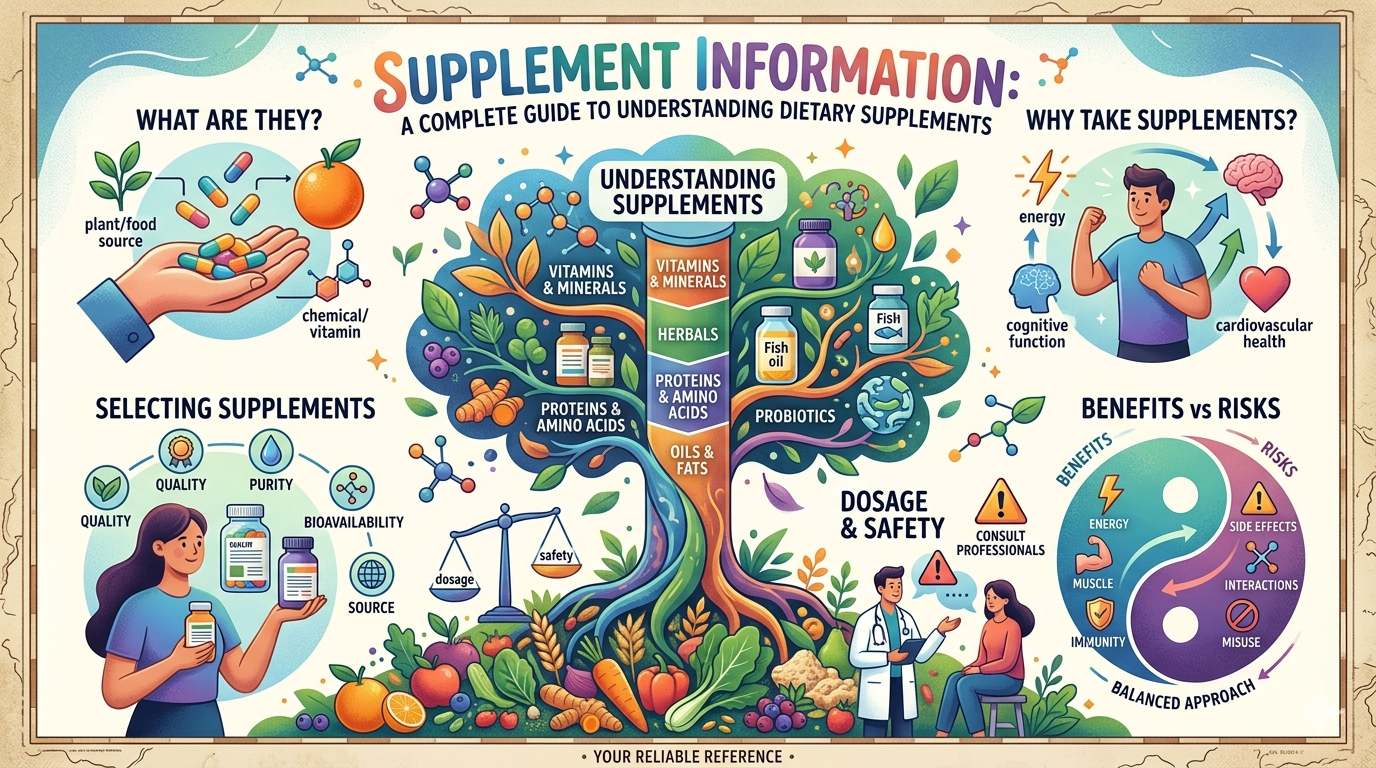
Supplement Information: Understanding Dietary Supplements and Their Role in Health
In recent years, dietary supplements have become increasingly popular among people looking to improve health, boost energy levels, enhance fitness performance, or fill nutritional gaps. With thousands of supplement products available in the market, understanding supplement information has become essential for making informed decisions.
Although supplements can support overall wellness, many people misunderstand their purpose, benefits, and limitations. Supplements are not magic solutions, nor should they replace healthy eating habits. Instead, they should be viewed as tools that may help support nutritional needs when used correctly.
This comprehensive guide explains everything you need to know about supplements, including their types, benefits, risks, safety considerations, and how to choose them wisely.
What Are Dietary Supplements?
Dietary supplements are products designed to provide nutrients or other substances that may support health and wellness.
Supplements commonly come in forms such as:
- Capsules
- Tablets
- Powders
- Gummies
- Liquids
- Soft gels
They may contain:
- Vitamins
- Minerals
- Herbs
- Amino acids
- Plant extracts
- Protein compounds
- Specialized nutrients
The purpose of supplements is usually to complement—not replace—a healthy diet.
Why People Use Supplements
People take supplements for various reasons depending on their health goals and lifestyle needs.
Common reasons include:
Filling Nutritional Gaps
Many individuals struggle to meet nutrient requirements through food alone.
Improving Athletic Performance
Some supplements are used to support exercise recovery and physical performance.
Supporting Overall Wellness
People may use supplements to maintain general health.
Age-Related Nutritional Support
Older adults sometimes require additional nutrients due to changing dietary needs.
Convenience
Supplements provide a quick way to consume nutrients when daily routines become busy.
However, taking supplements without understanding actual needs may lead to unnecessary consumption.
Common Types of Supplements
Understanding supplement categories helps consumers make smarter choices.
1. Vitamin Supplements
Vitamin supplements provide essential nutrients that the body requires for normal function.
Examples include:
- Vitamin A
- Vitamin C
- Vitamin D
- Vitamin E
- B vitamins
These nutrients play important roles in immunity, metabolism, vision, and energy production.
2. Mineral Supplements
Minerals support multiple body functions.
Common mineral supplements include:
- Calcium
- Iron
- Magnesium
- Zinc
- Potassium
Mineral deficiencies may affect bones, muscles, nerves, and metabolism.
3. Protein Supplements
Protein supplements are commonly used by:
- Athletes
- Fitness enthusiasts
- Busy professionals
- Older adults
Protein powders can help individuals increase protein intake more conveniently.
4. Herbal Supplements
Herbal products contain plant-based ingredients.
Examples include:
- Green tea extracts
- Ginger products
- Turmeric compounds
- Various botanical blends
5. Omega Fatty Acid Supplements
These products are often used to support:
- Heart health
- Brain function
- Joint health
Healthy fats remain important for overall wellness.
6. Specialty Supplements
These products target specific goals such as:
- Energy support
- Sports nutrition
- Recovery
- Digestive health
Specialized supplements have become increasingly common in modern health markets.
Benefits of Supplements
Supplements may offer advantages when used appropriately.
Potential benefits include:
Nutritional Support
They may help address dietary shortages.
Convenience
Busy lifestyles sometimes make balanced eating difficult.
Targeted Health Goals
Supplements can support specific nutritional objectives.
Recovery Support
Certain nutrients may assist post-workout recovery.
Despite potential benefits, supplements work best alongside healthy lifestyle habits.
Can Supplements Replace Food?
The short answer is no.
Whole foods provide:
- Fiber
- Antioxidants
- Natural compounds
- Complex nutrient combinations
Foods contain thousands of beneficial compounds that supplements cannot fully replicate.
Healthy eating should remain the foundation of nutrition.
Supplements are additions—not replacements.
Risks of Taking Supplements
Many consumers assume supplements are automatically safe because they are widely available.
However, potential risks include:
Medication Interactions
Some supplements may interfere with medications.
Poor Quality Products
Not all products meet high manufacturing standards.
False Marketing Claims
Many supplement advertisements exaggerate benefits.
Being informed reduces unnecessary risks.
How to Choose Supplements Wisely
Choosing supplements requires careful evaluation.
Read Labels Carefully
Check:
- Ingredients
- Serving sizes
- Nutrient amounts
- Added substances
Avoid Unrealistic Claims
Be cautious of statements such as:
- “Instant results”
- “Miracle solution”
- “Guaranteed transformation”
Consider Your Actual Needs
Ask yourself:
- Am I deficient?
- Does my diet already provide this nutrient?
- Is supplementation necessary?
Prioritize Reputable Manufacturers
Quality matters when selecting products.
Understanding Supplement Labels
Labels provide important information.
Pay attention to:
Serving Size
Nutrient amounts depend on serving size.
Daily Value Percentages
These percentages show how much a nutrient contributes to daily requirements.
Ingredient Lists
Long lists of unnecessary additives may indicate lower-quality products.
Learning label reading improves purchasing decisions.
Supplements and Fitness
Many people associate supplements with exercise and bodybuilding.
Common fitness supplements include:
- Protein products
- Recovery formulas
- Energy-support products
While supplements may support fitness goals, proper training, sleep, hydration, and nutrition remain more important.
No supplement can replace consistency.
Supplements for Different Age Groups
Nutritional needs often change with age.
Children
Balanced nutrition remains most important.
Adults
Lifestyle factors influence nutritional requirements.
Older Adults
Certain nutrients sometimes require greater attention due to changing physiology.
Individual needs vary significantly.
How Lifestyle Affects Supplement Needs
Several factors influence whether supplementation may be useful.
Examples include:
- Diet quality
- Exercise habits
- Age
- Stress levels
- Sleep quality
- Medical conditions
A personalized approach works better than copying trends.
Common Supplement Myths
Myth 1: More Is Better
Excessive intake may create problems.
Myth 2: Natural Means Safe
Natural substances can still have side effects.
Myth 3: Supplements Work Instantly
Most nutritional improvements require consistency.
Myth 4: Everyone Needs Supplements
Individual needs vary.
Understanding these myths prevents poor decisions.
Creating a Balanced Approach
The healthiest approach combines:
- Balanced eating
- Regular exercise
- Proper sleep
- Stress management
- Supplementation when appropriate
Long-term habits produce better results than relying entirely on products.
Final Thoughts
Understanding supplement information is essential in today’s health-focused world.
However, they should never replace healthy eating habits or lifestyle choices.
The most effective strategy is simple:
- Focus on balanced nutrition
- Understand personal needs
- Research products carefully
- Use supplements responsibly
When combined with healthy habits, supplements can become supportive tools rather than unrealistic solutions.
Making informed decisions today can contribute to better long-term wellness tomorrow.

