

Modern businesses are under constant pressure to serve customers faster while keeping operations efficient. Airports need to move passengers through check-in without unnecessary delays. Healthcare providers want patients to complete registration quickly and accurately. Retailers need better ways to connect physical stores with digital experiences. Warehouses need reliable scanning technology that can operate under difficult conditions.
Aila Technologies has developed vision-based automation and self-service solutions designed to address these challenges. Its platform combines iOS devices, computer vision, scanning technology, kiosks, software, and managed services for enterprise environments. According to Aila, its technology supports more than 10 million transactions each day and is used by major organizations across healthcare, retail, travel, logistics, and other industries.
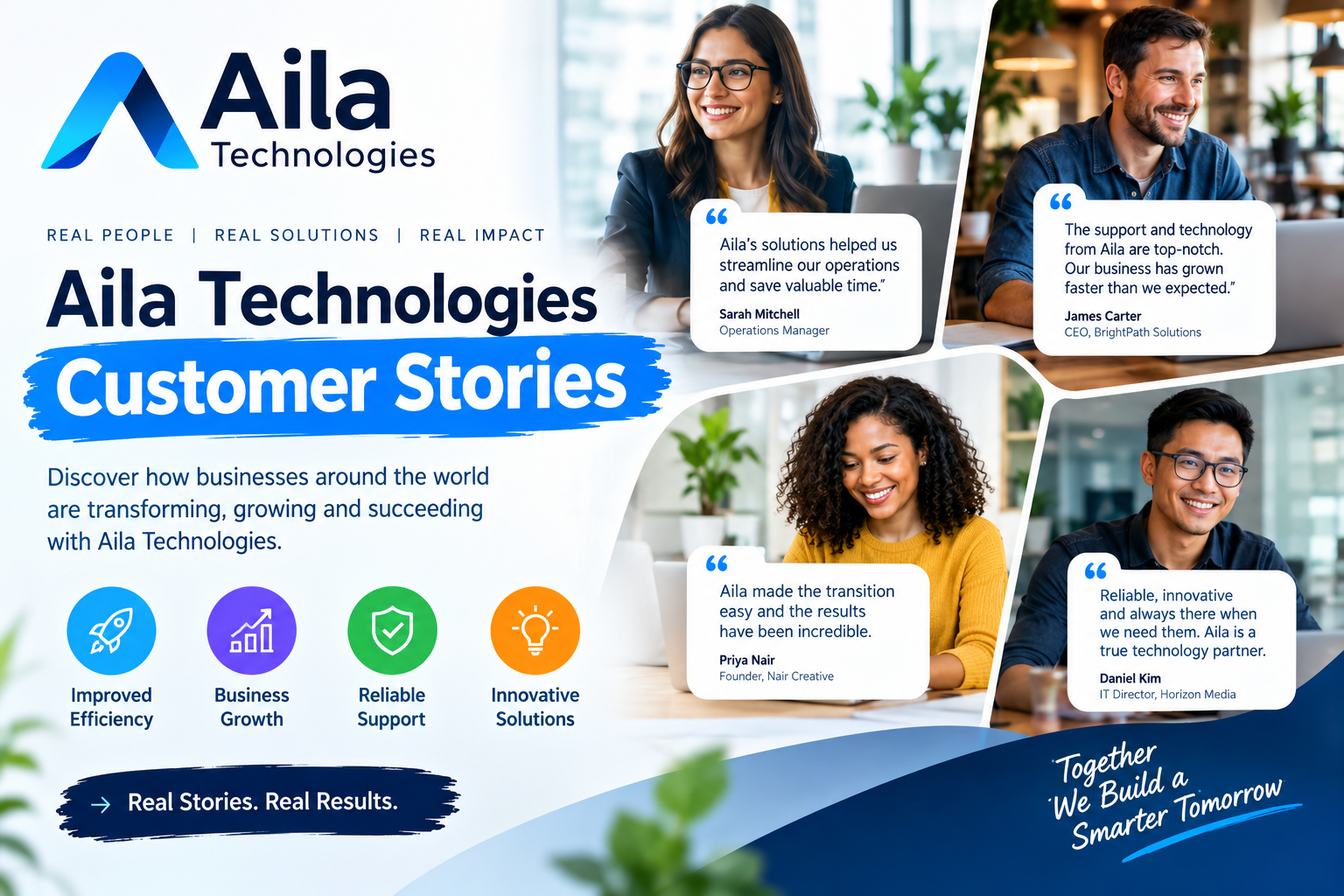
The company’s customer stories provide a useful way to understand how this technology is applied in real-world environments.
Rather than looking only at product specifications, customer stories show what organizations were trying to accomplish, what problems they faced, and how Aila’s technology was incorporated into their workflows.
What Makes Aila Customer Stories Useful?
A technology product can sound impressive on paper, but businesses ultimately want to know how it performs in practical situations.
Aila’s case studies cover several different industries and use cases. Healthcare organizations have used its kiosks to modernize patient check-in. Airlines have applied its technology to airport workflows. Retail companies have explored interactive fitting rooms, price checking, and customer engagement. Logistics organizations have used Aila’s scanning technology to improve warehouse workflows.
This variety is important because the same technology can have very different requirements depending on the environment.
A healthcare kiosk must prioritize patient convenience and accurate data capture. An airport solution needs speed and reliability. A warehouse scanner must work with damaged, dirty, or difficult-to-read barcodes.
The following customer stories illustrate those differences.
These real-world applications also demonstrate how Technology Exchange and innovation can contribute to greater efficiency, economic growth, and long-term business development.
Quest Diagnostics: Saving Staff Time
One of Aila’s healthcare stories involves Quest Diagnostics.
Quest needed a way to improve the patient check-in experience while reducing the amount of time that phlebotomists had to spend handling the administrative portion of patient interactions.
Aila’s Interactive Kiosk was used to automate elements of the check-in process.
This illustrates an important concept in healthcare automation.
The goal is not necessarily to remove human employees from the experience. Instead, automation can take repetitive administrative tasks away from employees so staff members can spend more time on responsibilities that require human interaction.
For a healthcare organization dealing with large numbers of patients, even small reductions in repetitive tasks can become meaningful when multiplied across thousands of interactions.
Aila’s patient check-in workflow can include three basic steps:
- Scan identification.
- Scan insurance information.
- Complete check-in.
The approach is designed to make registration more self-service while maintaining an enterprise-oriented workflow.
LabCorp: Improving Patient Check-In
LabCorp provides another healthcare example.
According to Aila, LabCorp selected its iPad-based Interactive Kiosk to provide an efficient and secure patient check-in experience at LabCorp locations in the United States, including selected locations within Walgreens pharmacies.
Aila reports a 94% patient satisfaction rate for the LabCorp implementation on its healthcare materials.
The significance of this story goes beyond simply installing a touchscreen.
Healthcare check-in involves multiple pieces of information, and manual data entry can create additional work for employees and opportunities for mistakes. A technology-supported workflow can help move more of that process into a consistent self-service environment.
For patients, the benefit can be convenience.
For staff, the benefit can be fewer repetitive administrative interactions.
For the organization, the objective is a smoother overall workflow.
Alaska Airlines: Faster Airport Processes
Airports create a completely different technology challenge.
Travelers often arrive with limited patience and strict schedules. A small delay in one part of the process can contribute to congestion elsewhere in an airport.
Aila’s customer story with Alaska Airlines focuses on airport check-in and baggage workflows.
The company’s travel materials currently highlight a 3X reduction in transaction times associated with Alaska Airlines. Aila also describes its Interactive Kiosk as a tool designed to make airport check-in easier and improve operational efficiency.
The underlying idea is straightforward: faster transactions can help move travelers through busy airport environments more efficiently.
Aila’s travel platform is designed to handle more than ordinary barcode scanning. Its current materials describe workflows involving barcodes, travel documents, and passport MRZ information, including difficult-to-read codes.
This matters because airport environments can contain a wide range of scanning conditions.
Passengers may present documents at different angles, under varying lighting conditions, or with codes that are not perfectly printed.
Technology that can reliably capture information under those circumstances has potential value for high-volume travel operations.
Locus Robotics: Warehouse Productivity
Locus Robotics demonstrates another side of Aila’s technology.
Warehouses can present difficult scanning conditions. Barcodes may be damaged, dirty, low-contrast, or partially affected by glare from packaging.
According to Aila’s case study, Locus Robotics uses Aila’s iOS-based scanning technology to scan more than 45 types of 1D and 2D barcodes in different conditions. The company uses autonomous mobile robots in retail, logistics, and omnichannel fulfillment environments.
The challenge here is fundamentally different from healthcare.
A patient checking into a medical facility wants an intuitive experience.
A warehouse worker needs a tool that performs reliably while moving quickly through a demanding environment.
Aila says Locus selected its SoftScan technology because of the need for high-volume scanning and reliability in challenging barcode conditions.
This story demonstrates why scanning performance can become an operational issue rather than merely a technical specification.
If a worker repeatedly struggles to scan an item, the problem can affect the entire fulfillment process.
American Eagle: Interactive Fitting Rooms
Retail customer experiences are another major area where Aila has been used.
American Eagle provides an interesting example because the company used Aila’s technology to create an interactive fitting-room experience.
According to Aila’s case study, American Eagle’s Interactive Fitting Room allowed shoppers to interact with inventory digitally while remaining inside the fitting room.
Customers could scan products and perform actions such as:
- Checking additional sizes
- Exploring other styles
- Viewing suggested products
- Requesting additional items
- Calling for assistance
- Monitoring their running cart total
The system could also notify store associates when customers requested assistance or additional products.
This creates a connection between the digital and physical sides of retail.
Instead of leaving the fitting room to find another size or locate an employee, shoppers can initiate requests through the interactive system.
For associates, the system provides visibility into customer requests.
For shoppers, it can reduce interruptions and make the fitting-room experience more convenient.
American Eagle’s CTO Dave Repp is quoted in Aila’s case study describing the partnership as a way to enhance the fitting-room experience while empowering associates to better serve customers.
Fabletics: Supporting Membership Growth
Fabletics provides another retail example, but its objective was somewhat different.
The fitness and athleisure brand wanted to connect its physical stores with its digitally focused business model.
One of its challenges involved making membership sign-ups and price checking easier inside stores.
Aila’s Interactive Kiosk was incorporated into the customer-facing experience, using Apple’s iPad platform and Fabletics’ application. Aila’s case study describes positive feedback from staff and customers, along with plans for additional deployment at the time of the case study.
The broader lesson is that kiosks do not have to be limited to self-checkout.
They can also become customer-engagement tools.
A retailer can use an interactive screen to:
- Present product information
- Support membership registration
- Provide price information
- Encourage customer interaction
- Connect online and offline experiences
For digitally native brands expanding into physical retail, this type of technology can help make stores feel more consistent with the company’s online experience.
Ahold Delhaize: Improving Grocery Deli Service
Grocery stores have another common challenge: customers often want quick service but may encounter lines at popular departments.
Ahold Delhaize provides an example involving deli ordering.
According to Aila’s case study, the retailer wanted to modernize existing deli kiosks and reduce lines and wait times. Aila’s Interactive Kiosk allowed shoppers to place orders while shopping and collect them later.
The customer workflow included options such as scanning a loyalty card or entering a phone number, browsing deli products, viewing offers and previous purchases, and adding items to a cart.
Meanwhile, deli employees could begin preparing the order while the customer continued shopping.
Aila reports that the solution was deployed across more than 600 locations following a successful pilot.
This illustrates how self-service technology can fit into an existing human-operated environment.
Customers did not necessarily need to abandon traditional service. Instead, the kiosk created another option.
That flexibility can be important in grocery environments because different customers prefer different levels of self-service.
Big Lots: Helping Customers Find Prices
Price checking is another retail use case highlighted by Aila.
The company’s current retail materials say that Aila transformed price checking at Big Lots, with the goal of saving staff time, reducing costs, and improving customer satisfaction.
Aila’s homepage also features a quote attributed to a Big Lots store manager saying that customers can quickly obtain prices without searching for a store associate.
This is a relatively simple problem, but it can create unnecessary friction in a busy store.
If customers cannot easily find a price, they may have to locate an employee. Employees then have to stop their current task to answer a basic question.
A self-service price-checking system can shift that interaction to the customer while allowing associates to focus on more valuable tasks.
Brookline Dental Specialists: Modern Dental Check-In
Aila’s case-study library also includes Brookline Dental Specialists.
The practice partnered with CERTIFY Health and Aila Technologies to modernize patient check-in. Aila describes the practice as technology-focused and serving a younger, digitally oriented patient base.
This story highlights another important consideration for healthcare organizations: patient expectations.
People are accustomed to using smartphones, tablets, online forms, and self-service technology in many areas of daily life.
A modern healthcare facility may therefore want its administrative experience to feel similarly straightforward.
A digital check-in process can help bridge that expectation.
What These Stories Have in Common
Although the industries are different, several themes appear repeatedly throughout Aila’s customer stories.
Reducing Repetitive Work
Healthcare staff, retail employees, airport workers, and warehouse teams can all spend time on repetitive information-capture tasks.
Automation can shift some of those activities into self-service or machine-assisted workflows.
Improving Speed
In many of these environments, speed directly affects customer experience.
A faster airport transaction can help reduce congestion.
A faster healthcare check-in can reduce waiting.
A faster retail interaction can improve convenience.
A faster warehouse scan can support productivity.
Supporting Employees
Aila’s case studies generally do not present automation simply as replacing people.
Instead, the technology often works alongside employees.
Customers can complete routine actions themselves while staff members receive notifications, handle exceptions, or focus on more complex interactions.
Creating Consistent Experiences
Large enterprises often operate across many locations.
Consistency can therefore become an important goal.
A standardized kiosk or scanning workflow can potentially make processes more predictable across different sites.
Why Enterprise Scale Matters
A solution that works in one location is not necessarily easy to deploy across hundreds of locations.
Enterprise technology must account for:
- Hardware management
- Software updates
- Security
- Device monitoring
- Connectivity
- Maintenance
- Employee training
- Customer usability
- Integration with existing systems
Aila says its platform is designed for enterprise-scale deployments and currently highlights a 99% uptime SLA guarantee and 96% customer satisfaction.
The company also describes managed services intended to help organizations deploy, support, and scale their solutions.
This becomes particularly important when kiosks or scanners are part of a mission-critical workflow.
Aila’s Broader Customer Base
The company’s current website highlights more than 50 global brands and organizations using its solutions. It also identifies applications across healthcare, travel and hospitality, banking, retail, quick-service restaurants, grocery, and warehouse and distribution operations.
Its customer-story library includes organizations such as:
- Alaska Airlines
- Locus Robotics
- LabCorp
- Quest Diagnostics
- American Eagle
- Fabletics
- Ahold Delhaize
- Brookline Dental Specialists
These examples demonstrate that Aila is not limited to one particular industry.
Instead, its technology is positioned around a broader concept: using vision, scanning, iOS hardware, and automation to simplify frontline workflows.
What Businesses Can Learn From Aila’s Stories
The most useful lesson from these customer stories is that successful automation usually begins with a specific operational problem.
A business should not adopt a kiosk simply because kiosks are popular.
It should ask:
What problem are we trying to solve?
For one organization, the answer might be long patient lines.
For another, it might be slow airport transactions.
For a retailer, it might be difficulty providing customers with product information.
For a warehouse, it might be unreliable barcode scanning.
Once the problem is clearly defined, the technology can be evaluated against measurable outcomes.
That approach is more useful than purchasing technology first and searching for a purpose afterward.
Measuring the Results
Customer stories become more meaningful when results can be measured.
Potential measurements include:
- Average transaction time
- Customer wait time
- Employee productivity
- Error rates
- Customer satisfaction
- Number of transactions
- Self-service adoption
- Labor requirements
- Processing capacity
- Return on investment
Aila’s published stories provide examples of this approach, including its reported 3X reduction in Alaska Airlines transaction time, 94% patient satisfaction for a LabCorp case study, and deployment of Ahold’s deli kiosks across more than 600 locations.
These numbers should be understood within the context of their individual case studies rather than treated as universal results for every organization.
Final Thoughts
Aila Technologies’ customer stories demonstrate how the same underlying technologies can address very different business problems.
Quest Diagnostics and LabCorp show how self-service can support healthcare check-in. Alaska Airlines demonstrates the potential value of faster airport workflows. Locus Robotics highlights high-volume barcode scanning in logistics. American Eagle shows how interactive technology can connect physical retail with digital inventory. Fabletics demonstrates how kiosks can support customer engagement and membership. Ahold Delhaize illustrates how self-service can improve grocery deli ordering.
The common thread is not simply the kiosk or scanner.
It is the workflow surrounding the technology.
When automation is designed around a real operational challenge, it can help customers complete routine tasks more conveniently while allowing employees to spend more time on work that requires human attention.
For organizations evaluating enterprise automation, Aila’s case studies therefore provide useful examples of how vision-based technology can be applied in real environments.
The strongest takeaway is simple: successful automation is not about adding technology for its own sake. It is about removing friction from important everyday processes.
Frequently Asked Questions
What is Aila Technologies?
Aila Technologies develops vision-based automation, interactive kiosks, scanning technology, and related enterprise solutions designed to modernize frontline workflows.
Which companies use Aila Technologies?
Aila’s published customer stories include organizations such as Alaska Airlines, Quest Diagnostics, LabCorp, Locus Robotics, American Eagle, Fabletics, and Ahold Delhaize.
How does Aila help healthcare organizations?
Aila provides patient check-in kiosks and scanning solutions designed to automate parts of registration, reduce repetitive administrative work, and improve the patient experience.
How is Aila used in retail?
Retail applications include price checking, self-service, interactive fitting rooms, loyalty and membership experiences, and other customer-facing workflows.
Does Aila work with airlines?
Yes. Aila publishes a customer story involving Alaska Airlines and describes airport applications including check-in and baggage-related workflows.
Can Aila technology be used in warehouses?
Yes. Locus Robotics is one example. Aila says its scanning technology supports high-volume barcode scanning in demanding warehouse conditions.
Are these customer stories official?
The examples discussed above come from Aila Technologies’ own website and its published case-study materials. They should therefore be understood as company-published customer stories rather than independent reviews.

