

Introduction
Finding fashionable clothing at affordable prices can be challenging, especially when shoppers want outfits that look stylish without stretching their budgets. Online fashion stores have made it easier to explore different styles, compare designs, and discover clothing for everyday wear, special occasions, and seasonal trends. Dear Lover is one name that attracts attention in this space, particularly among boutique owners, online retailers, and shoppers interested in contemporary women’s fashion.
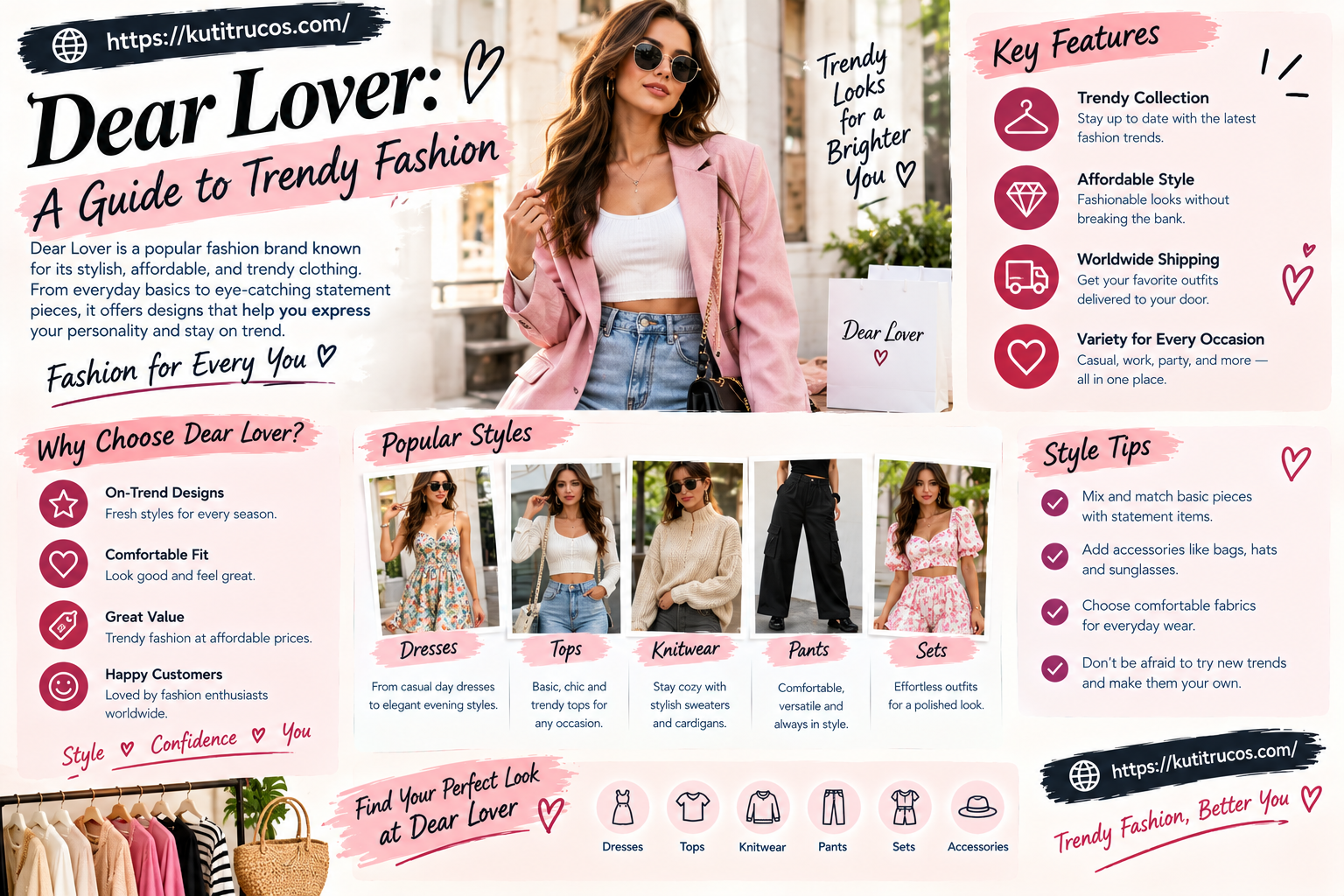
Dear Lover, also known as Dear-Lover, operates as a wholesale clothing supplier offering a broad selection of women’s apparel and accessories. Its product range includes dresses, tops, bottoms, matching sets, swimwear, activewear, outerwear, loungewear, and other fashion items. The company primarily serves boutiques and online businesses looking for a variety of styles at wholesale prices. Its official website also provides product categories designed to help buyers browse collections according to clothing type and current trends.
For boutique owners and online retailers, building a strong digital presence is just as important as choosing the right clothing collections. Exploring useful online platforms such as Blank Posticy can be part of a broader effort to discover digital resources and opportunities that support an online business. Alongside product quality and pricing, retailers should focus on creating a reliable shopping experience and reaching their target audience effectively.
For shoppers in the United States, understanding how this retailer operates is important before making a purchase. Wholesale pricing does not always mean that every item is available at the same price or that shipping and other expenses are included. Buyers should also consider sizing, fabric descriptions, delivery estimates, return conditions, and the purpose of their order.
This guide explores Dear Lover’s clothing selection, its potential benefits for boutique owners, ways to evaluate products, and practical tips for shopping online. Whether you are building a small clothing business or looking for fresh outfit ideas, knowing what to check before ordering can help you make more informed fashion decisions.
What Is Dear Lover?
Dear Lover is an online wholesale fashion supplier that focuses on women’s clothing and accessories. Rather than operating only as a conventional fashion retailer, the business positions itself as a source for boutiques, online stores, and other resellers seeking merchandise for their customers.
The company lists several clothing categories, allowing buyers to explore products based on style, season, garment type, and intended use. These categories can include casual tops, dresses, denim, matching outfits, sweaters, sweatshirts, swimwear, plus-size clothing, and outerwear. The available selection may change as new products are introduced and seasonal collections are updated.
Wholesale suppliers serve a different purpose from many traditional retail stores. A regular shopper might purchase one outfit for personal use, while a boutique owner may be looking for multiple products that fit a particular customer group. Dear Lover’s wholesale-oriented model can be useful for businesses that want to compare different designs without developing their own clothing line from scratch.
However, shoppers should understand the purchasing terms before assuming that wholesale products work exactly like standard retail purchases. Minimum order requirements, shipping charges, product availability, and business-oriented discounts can influence the final cost.
Exploring Dear Lover’s Clothing Collection
One of the main attractions of an online fashion supplier is the ability to browse different product categories in one place. Dear Lover offers a range of women’s apparel that can suit different preferences, climates, occasions, and customer demographics.
Dresses for Different Occasions
Dresses remain a popular choice because they can create a complete outfit with relatively little styling effort. Depending on the available collection, buyers may find casual dresses, floral designs, fitted silhouettes, maxi dresses, midi styles, and options intended for more formal occasions.
When choosing a dress, consider its intended use. A lightweight casual dress may work well for warm-weather outings, while a long-sleeved style could be more appropriate for cooler temperatures. Formal events may call for a different fabric, cut, or length.
Product photographs can help buyers understand a design, but the written description is equally important. Check the material, lining, closure, garment length, and care instructions. These details can influence comfort and appearance once the clothing arrives.
Boutique owners should also think about their customers’ preferences. A collection that combines everyday pieces with a few statement designs may appeal to a wider audience than a selection built around only one trend.
Tops, Blouses, and Everyday Shirts
They can be worn with jeans, trousers, skirts, shorts, or layered beneath jackets and cardigans. Dear Lover’s range includes categories such as tops, tees, tank tops, long-sleeved shirts, blouses, and sweatshirts.
Basic tops can be useful for customers who prefer simple, repeatable outfits. More decorative blouses may appeal to shoppers looking for something suitable for dinners, celebrations, or work settings that allow expressive clothing.
Before selecting a top, check the neckline, sleeve length, fabric thickness, and fit. A loose-fitting design may create a relaxed appearance, while a structured cut can look more polished. Buyers should also consider whether a fabric is breathable enough for the intended season.
For boutique retailers, offering a mixture of neutral colors and distinctive patterns can help serve customers with different fashion preferences.
Matching Sets and Coordinated Outfits
Matching sets are popular because their individual pieces are designed to work together. A coordinated outfit can simplify dressing for shoppers who want a put-together appearance without spending time matching separate garments.
Depending on the collection, sets may include tops and trousers, shorts and shirts, or other coordinated combinations. Some are appropriate for casual activities, while others have a more polished or fashion-forward look.
One practical advantage is versatility. If the pieces can be worn separately, customers may be able to create several outfits from a single purchase. A matching top might work with denim, while the bottoms could pair with a plain T-shirt or another blouse.
When evaluating a set, confirm whether all pieces are included in the listed price. Also check whether sizing applies to the complete set or whether the individual components have separate measurements.
Denim and Casual Clothing
Denim remains a familiar part of American casual fashion. Jeans, denim shirts, skirts, and jackets can be styled in many ways, making them useful products for retailers serving customers who want everyday clothing.
When shopping for denim, look beyond the product image. Fabric composition, stretch, rise, leg shape, inseam, and waistband measurements can all affect the fit. Two pairs of jeans labeled with the same size may feel different because their cuts and materials are not identical.
Casual clothing also includes T-shirts, comfortable trousers, sweatshirts, and lightweight layers. These items can form the foundation of a practical wardrobe because they are often easy to combine with existing pieces.
For boutique owners, casual products may offer repeat-purchase potential when customers find the fit and quality suitable. Still, it is wise to test selected products before committing to a large inventory order.
Plus-Size Fashion Options
Inclusive sizing matters because customers have different body shapes and fit preferences. Dear Lover lists plus-size clothing categories, which can help boutique owners explore a broader range of apparel for their audiences.
A useful size range is only one part of an inclusive shopping experience. Garment proportions, sleeve construction, fabric stretch, waist placement, and length also affect how an item fits. A product may be labeled with a particular size but still have a cut that does not suit every body shape.
Customers should use the measurements supplied for each individual product rather than relying entirely on the size label. Boutique owners can also examine whether the product photography and descriptions provide enough information to explain the garment’s shape and fit.
For retailers, offering varied sizes can help make a collection more accessible. The best approach is to choose items based on actual customer demand, accurate product information, and consistent quality.
Is Dear Lover Suitable for Boutique Owners?
Dear Lover may be worth evaluating for boutique owners who want to source fashionable products without manufacturing every design themselves. A wholesale supplier can simplify product discovery by providing access to multiple categories through one platform.
Nevertheless, a supplier’s suitability depends on more than the number of products available. Business buyers should evaluate the commercial terms, quality consistency, fulfillment process, and expected profit margins before placing a substantial order.
A Broad Selection of Products
A broad catalog allows retailers to explore different clothing categories without having to contact a separate supplier for every product type. This may be helpful for boutiques that sell dresses, tops, coordinated outfits, seasonal clothing, and accessories.
However, a large catalog can also make product selection more difficult. Retailers should avoid buying inventory simply because an item looks fashionable or has an attractive wholesale price.
Instead, examine the audience the boutique serves. Consider customer age groups, local climate, price expectations, preferred colors, and the styles that have sold successfully in the past.
Wholesale Pricing and Profit Margins
Wholesale pricing can give retailers room to establish their own selling prices. But the difference between a wholesale price and a retail price is not automatically profit.
A realistic cost calculation should include:
- The product’s purchase price.
- International or domestic shipping charges.
- Import duties and applicable taxes.
- Packaging, storage, and fulfillment expenses.
- Payment processing costs.
- Advertising and customer acquisition.
- Potential returns, damaged items, and unsold inventory.
For example, an item purchased for $12 may cost considerably more after shipping, duties, and other expenses are included. A retailer should calculate the actual cost per sellable item before deciding on a retail price.
Buyers should also verify whether discounts depend on order size, customer status, or other conditions. The supplier’s current checkout information and published terms should take priority over outdated promotional claims.
Testing Products Before Scaling
A small test order can help a boutique understand how products perform in real conditions. It provides an opportunity to inspect the material, stitching, fit, packaging, and overall appearance.
Once the retailer has assessed the products, the results can inform a larger purchasing decision. This approach reduces the risk of committing too much money to a design that does not meet customer expectations.
Where samples are unavailable or minimum order conditions make testing difficult, request additional product information and review the available policies carefully.
Shopping From the United States
American shoppers and boutique owners should pay particular attention to shipping, total cost, and delivery timing when ordering from an overseas supplier.
International orders may involve additional transit time, customs processing, and charges that are separate from the displayed product price. Delivery estimates can also vary according to the shipping method, destination, warehouse arrangements, and time of year.
Before submitting an order, review the shipping information available on the official Dear Lover website. Confirm the destination country, estimated delivery window, tracking availability, and responsibility for any applicable import charges.
If the products are intended for a specific event or business launch, allow extra time for unexpected delays. A shipment that arrives later than expected can affect inventory planning and customer commitments.
Retailers should also establish a clear process for communicating delivery estimates to their own customers. Avoid promising a delivery date unless the shipping information supports that commitment.
Understanding Dear Lover’s Sizing Information
Sizing is one of the most important considerations when buying clothing online. Customers cannot try on garments before ordering, so accurate measurements become especially valuable.
Dear Lover’s official FAQ directs buyers to the size chart provided on individual product pages. It also describes the use of a standardized US sizing system and product measurements. Buyers should still review each listing because garment construction and fit can vary by style. Official Dear Lover FAQ
Measure Before Ordering
If you are shopping for yourself, use a measuring tape to record the measurements relevant to the garment. Depending on the item, these may include bust, waist, hips, shoulder width, sleeve length, and inseam.
Compare your measurements with the product’s chart rather than selecting a size solely because you usually wear it at other stores.
For example, a fitted top may require closer attention to bust measurements, while trousers may depend heavily on waist, hip, and inseam measurements. A loose-fitting garment may allow more flexibility than a structured dress.
Consider Fabric and Fit
Fabric affects the way clothing fits and moves. Stretch materials may accommodate movement differently from woven fabrics with little elasticity. A garment made from lightweight material can also drape differently from one made with a thicker structure.
Read the product description to identify the listed material and any information about stretch. If the fabric composition is not clear, ask the seller for clarification before placing a large order.
Read Product Reviews Carefully
Customer reviews can sometimes provide additional context about fit, comfort, color, and fabric. However, individual experiences are not universal, and reviews may refer to different products or order conditions.
Look for specific details rather than relying only on star ratings. Comments that explain a customer’s measurements, selected size, and experience may be more useful than a brief statement that an item fits well.
For business buyers, maintain notes about the sizing and quality of products that have been tested. This information can help with future purchasing decisions.
Evaluating Fabric Quality and Construction
A product photograph can show the general design, but it cannot reliably establish every aspect of garment quality. Fabric feel, stitching, lining, seam construction, and finishing are easier to evaluate when an item is physically available.
If you are ordering for personal use, examine the product description and any available reviews before purchasing. For a boutique, inspect a sample or small order whenever practical.
Pay attention to the following details:
Fabric composition: Check whether the material is cotton, polyester, viscose, denim, a blend, or another textile. Different materials have different care requirements and characteristics.
Stitching and seams: Look for even stitching and secure seams when inspecting a delivered item. Loose threads or irregular construction may warrant further attention.
Color accuracy: Screen settings and lighting can affect how colors appear online. Product photographs should be treated as a guide rather than a guarantee of an exact color match.
Lining and transparency: Lightweight or pale fabrics may require lining or suitable undergarments. Check the product description where this information is provided.
Care instructions: Washing temperature, drying methods, and ironing requirements can affect a garment’s lifespan. Follow the instructions supplied with the item.
No supplier’s entire catalog should automatically be assumed to have identical quality. Each product should be assessed on its own merits.
What Do Customer Reviews Say?
Customer reviews can help shoppers understand how other buyers describe their experiences, but they should not replace a careful examination of the supplier’s terms and products.
At the time of research, Dear Lover’s Trustpilot profile displayed a high overall rating and more than a thousand reviews. Many recent reviewers praised the clothing selection, pricing, and shipping experiences. Other reviews describe problems, including delivery or refund concerns. These are customer-reported experiences, not an independent guarantee of future results. Read Dear Lover customer reviews on Trustpilot
When assessing reviews, consider the following:
- Read recent reviews rather than relying entirely on older feedback.
- Look for recurring patterns involving sizing, product quality, shipping, or support.
- Consider negative reviews as well as positive ones.
- Check whether a review relates to wholesale purchasing or an individual consumer order.
- Remember that delivery experiences can vary by destination and shipping method.
A high rating may be encouraging, but it cannot guarantee that every order will be problem-free. Likewise, one negative review does not necessarily represent every customer’s experience.
The most useful approach is to combine review research with a clear understanding of payment terms, shipping conditions, and return procedures.
Returns, Refunds, and Customer Support
Before purchasing clothing online, understand what happens if an item arrives damaged, differs significantly from its description, or does not meet your expectations.
Wholesale and retail purchasing arrangements may have different conditions. A supplier may also distinguish between product defects, sizing issues, cancellations, and ordinary change-of-mind returns.
Review the current return and refund policy before checking out. Pay attention to eligibility deadlines, the condition required for returned products, any exclusions, and the process for requesting assistance.
For an international order, confirm who pays return shipping and whether duties or other charges are refundable. These costs can affect the practical value of returning an item.
Keep your order confirmation, payment record, tracking details, and relevant product photographs. If an issue arises, this information can help you explain the situation clearly to customer support.
For boutique owners, it is especially important to understand supplier policies before promising customers a particular return arrangement. Your store’s own return policy should be consistent with the obligations that apply to your business.
How to Choose Fashion Items That Offer Value
Affordable fashion is most useful when clothing meets your needs and remains wearable beyond a single occasion. Choosing products based on a practical plan can help shoppers avoid unnecessary purchases.
Start by identifying the purpose of the item. Are you looking for everyday basics, workwear, vacation clothing, a special-event outfit, or products for resale? A clear purpose makes it easier to compare relevant styles.
Next, consider versatility. Neutral tops, classic trousers, and simple dresses can often be combined with clothing you already own. Statement pieces may provide more visual interest, but they can be harder to style repeatedly.
Think about seasonal needs as well. Lightweight pieces may be useful during warm American summers, while sweaters, sweatshirts, and outerwear can be more practical in colder regions. Weather and personal comfort should influence purchasing decisions.
Finally, compare the total cost with the expected value. A low initial price is less attractive if the garment has an unsuitable fit or requires special care that you do not want to provide.
For boutique owners, value should also be measured against customer demand, product consistency, and the likely time needed to sell the inventory.
Fashion Styling Ideas for Everyday Wear
A varied clothing collection makes it easier to build outfits for different activities. You do not need a completely new wardrobe to create fresh combinations.
Create Casual Everyday Outfits
Pair a simple top with denim or comfortable trousers for an easy everyday look. Add sneakers, flats, or casual sandals according to the weather and occasion.
A lightweight jacket or cardigan can add another layer without making the outfit feel overly formal. Neutral colors can also make it easier to reuse the same pieces in different combinations.
Style Matching Sets Separately
A coordinated set does not always need to be worn as a complete outfit. Try pairing its top with jeans or styling the bottoms with a plain shirt.
This approach can make a single purchase more versatile. It is particularly useful when traveling because several combinations can be created from a relatively small selection of clothing.
Dress Up Simple Pieces
A basic dress or blouse can look more polished with suitable accessories, shoes, and outerwear. The exact combination depends on the event, the garment’s design, and your personal style.
For work-related occasions, consider the dress code before selecting a neckline, length, or silhouette. For casual gatherings, comfort and individual expression may be more important.
Choose Comfort for Travel
Travel clothing should suit the destination’s climate and planned activities. Breathable fabrics, comfortable footwear, and easy-to-layer pieces can make packing simpler.
Before traveling, consider whether the garment wrinkles easily, requires special washing, or takes a long time to dry. Practical details can matter as much as appearance when you are away from home.
Common Mistakes to Avoid When Shopping Online
Even an attractive fashion collection can lead to disappointing purchases if shoppers overlook important details. A few simple precautions can help reduce unnecessary risk.
Ignoring the size chart: Standard size labels are not identical across all brands or garment styles. Review product-specific measurements.
Choosing only by photographs: Images show design and styling, but they cannot confirm fabric feel, durability, or exact color reproduction.
Overlooking shipping charges: A low listed price may not reflect the complete cost of an international order. Check shipping and potential import expenses.
Assuming every item has the same quality: Different materials, construction methods, and product designs can produce different results.
Buying excessive inventory too soon: Boutique owners should validate product quality and customer demand before committing to large quantities.
Skipping the return policy: Understanding the process before purchasing can help prevent confusion if an order does not meet expectations.
Relying on a single review: Customer experiences vary. Look for consistent information across multiple sources and read the supplier’s own terms.
Is Dear Lover Worth Considering?
Dear Lover may be worth considering for shoppers and business buyers who want to explore a broad selection of women’s clothing through a wholesale-focused platform. Its catalog covers several familiar fashion categories, while its business model may appeal to boutiques and online retailers seeking multiple styles from one supplier.
Whether it is the right choice depends on your goals. An individual shopper may prioritize fit, fabric, price, and delivery. A boutique owner must also consider inventory costs, resale margins, customer preferences, and the reliability of the supply process.
Before making a decision, compare the available products with alternatives, examine the current purchasing terms, and read customer feedback critically. If possible, evaluate a small order before committing to a larger purchase.
It is also important to distinguish between a supplier’s advertised product selection and the experience you can reasonably expect from a particular order. Availability, delivery estimates, and prices may change, so verify the details that matter to you directly with the supplier.
Final Thoughts
Dear Lover is a wholesale-oriented fashion supplier offering women’s apparel across categories such as dresses, tops, matching sets, denim, outerwear, and plus-size clothing. Its range may be useful for boutique owners looking to explore different styles, as well as shoppers interested in discovering contemporary fashion options.
However, a good purchasing decision involves more than choosing an attractive design or finding a low price. Buyers should review product measurements, fabric details, shipping charges, delivery estimates, customer feedback, and return conditions before placing an order.
For American boutique owners, careful inventory planning and cost calculations are particularly important when purchasing internationally. Testing products where practical can help establish whether the fit, quality, and overall value meet customer expectations.
Ultimately, the best clothing supplier is one that fits your budget, offers products suitable for your audience, and provides terms you understand. Researching Dear Lover carefully and comparing its offerings with your needs can help you decide whether it belongs in your personal wardrobe or your business’s sourcing strategy.

