

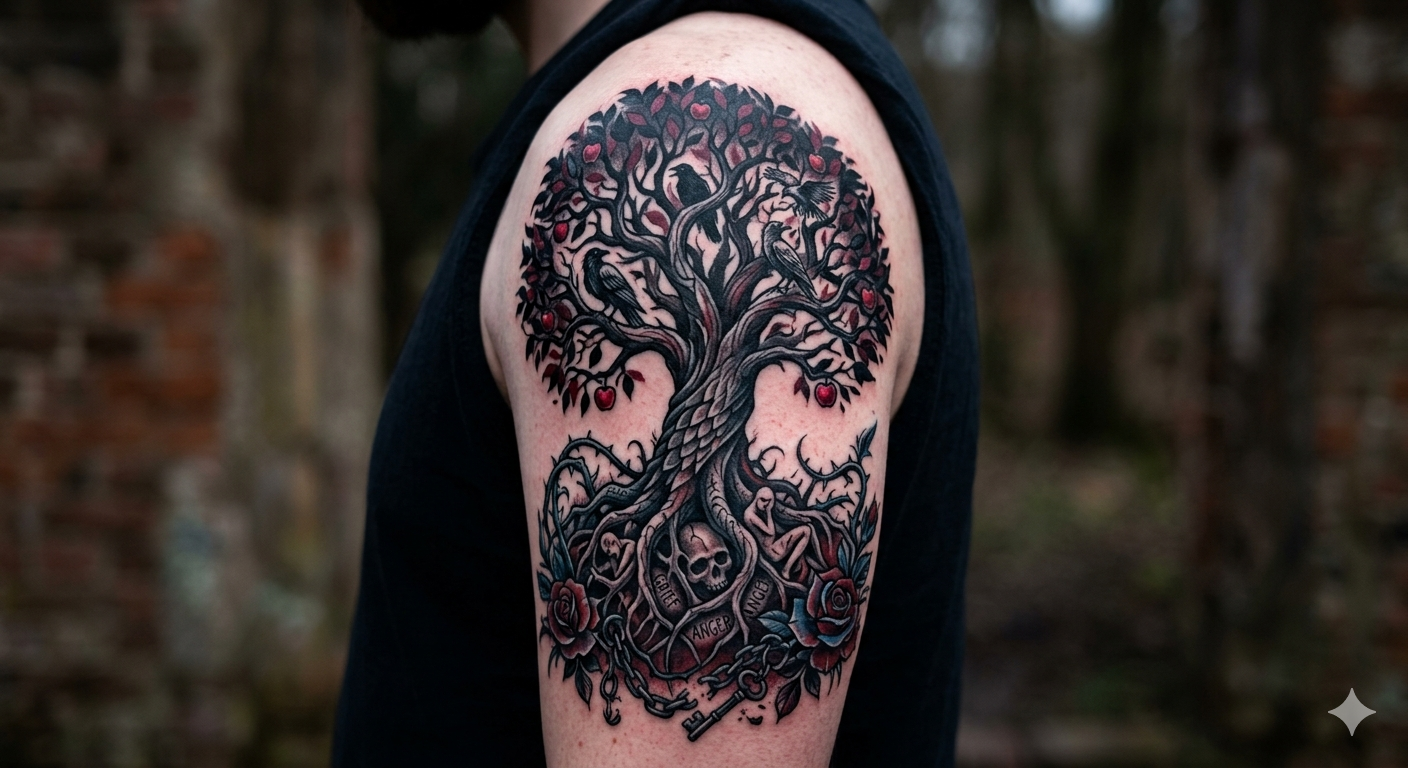
A Poison Tree tattoo is a deeply symbolic design that usually represents emotions such as anger, betrayal, revenge, hidden pain, and emotional growth. The meaning often comes from the famous poem “A Poison Tree” by William Blake, where suppressed anger grows like a poisonous tree and eventually leads to destruction.
Because of this connection, the tattoo is often chosen by people who want to express emotional struggles, inner darkness, personal transformation, or lessons learned from past experiences.
Connection to William Blake’s Poem
A Poison Tree is one of the most famous poems from Songs of Experience. In the poem, the speaker hides anger instead of expressing it honestly. Over time, that anger grows into a symbolic poisonous tree that produces deadly fruit.
The poem teaches that:
- Hidden anger can become dangerous
- Suppressed emotions may lead to harm
- Revenge and bitterness can destroy relationships
- Honest communication is healthier than silent resentment
Because of these themes, many people choose a Poison Tree tattoo as a reminder of emotional truth and self-awareness.
Symbolic Meanings of a Poison Tree Tattoo
Hidden Anger and Resentment
The tattoo often symbolizes emotions that were buried for a long time. It may represent painful memories, betrayal, or unresolved conflicts.
Revenge and Consequences
Some people associate the design with revenge and the destructive power of negative emotions. The poisonous fruit in the poem symbolizes how bitterness can eventually harm both others and oneself.
Emotional Growth
Not every Poison Tree tattoo has a dark meaning. For some, it represents overcoming toxic emotions and learning from past mistakes.
Dual Nature of Beauty and Danger
A tree may appear beautiful and peaceful on the outside, while secretly carrying poison within. This creates a strong symbol for hidden pain or deceptive appearances.
Common Poison Tree Tattoo Designs
Dead or Dark Tree
A leafless black tree often represents sadness, emotional damage, or unresolved pain.
Tree with Poisonous Fruit
This design directly references William Blake’s poem and symbolizes temptation, revenge, or dangerous emotions.
Snake Around the Tree
Snakes are commonly added to increase themes of danger, betrayal, temptation, or hidden evil.
Gothic or Dark Art Style
Many Poison Tree tattoos use dark shading, ravens, skulls, or storm imagery to emphasize emotional intensity.
Minimalist Tree Tattoo
Some people choose a simpler design that focuses more on personal symbolism rather than dramatic visuals.
Psychological and Emotional Interpretation
A Poison Tree tattoo can also reflect psychological experiences such as:
- Emotional trauma
- Toxic relationships
- Suppressed feelings
- Personal healing
- Learning emotional control
For many individuals, the tattoo becomes a reminder not to let anger grow silently inside.
Spiritual and Philosophical Meaning
In some interpretations, the Poison Tree represents the darker side of human nature. It reflects how negative thoughts, jealousy, or hatred can grow if not addressed properly.
Spiritually, the tattoo may symbolize:
- The battle between good and evil
- Inner conflict
- Karma and consequences
- Emotional purification after suffering
Popular Placement Ideas
People commonly place Poison Tree tattoos on:
- Forearm
- Back
- Chest
- Shoulder
- Sleeve designs
Larger tattoos allow detailed branches, roots, and symbolic elements like fruit, snakes, or ravens.
Why People Choose This Tattoo
People choose Poison Tree tattoos for many personal reasons:
- To symbolize surviving betrayal
- To represent emotional transformation
- To remember the consequences of anger
- To express a dark artistic style
- To connect with literature and poetry
The tattoo often carries deeply personal meaning rather than just aesthetic value.
Conclusion
A Poison Tree tattoo is more than a dark tree design. It carries strong emotional, literary, and psychological symbolism connected to anger, hidden emotions, revenge, and personal growth. Inspired by William Blake and his famous poem A Poison Tree, the tattoo reminds people of the dangers of suppressed emotions and the importance of emotional honesty.
For some, it symbolizes pain and betrayal. For others, it represents healing, self-awareness, and transformation after difficult experiences.

