

Introduction
A kids makeup kit can be a fun way for children to explore creativity, experiment with colors, and enjoy imaginative play. From pretend beauty salons to dress-up parties, makeup-themed toys allow children to copy everyday activities they see around them while developing their own sense of style. However, choosing the right kit involves more than finding attractive colors and cute packaging. Parents should also consider age recommendations, ingredient transparency, product quality, and the possibility of skin irritation.
Creative play often allows children to explore colors, textures, and different styles through imaginative activities. Learning about fabrics used in clothing and costume design can also introduce children to the creative side of fashion. For example, illusion mesh fabric is commonly used in costumes and special-occasion outfits to create delicate, sheer effects.
Whether you are shopping for a birthday present, a holiday surprise, or a creative activity at home, understanding the different types of kids makeup kits can help you make a more informed decision. This guide explains what to look for, which features matter most, and how to encourage safe and enjoyable play.
What Is a Kids Makeup Kit?
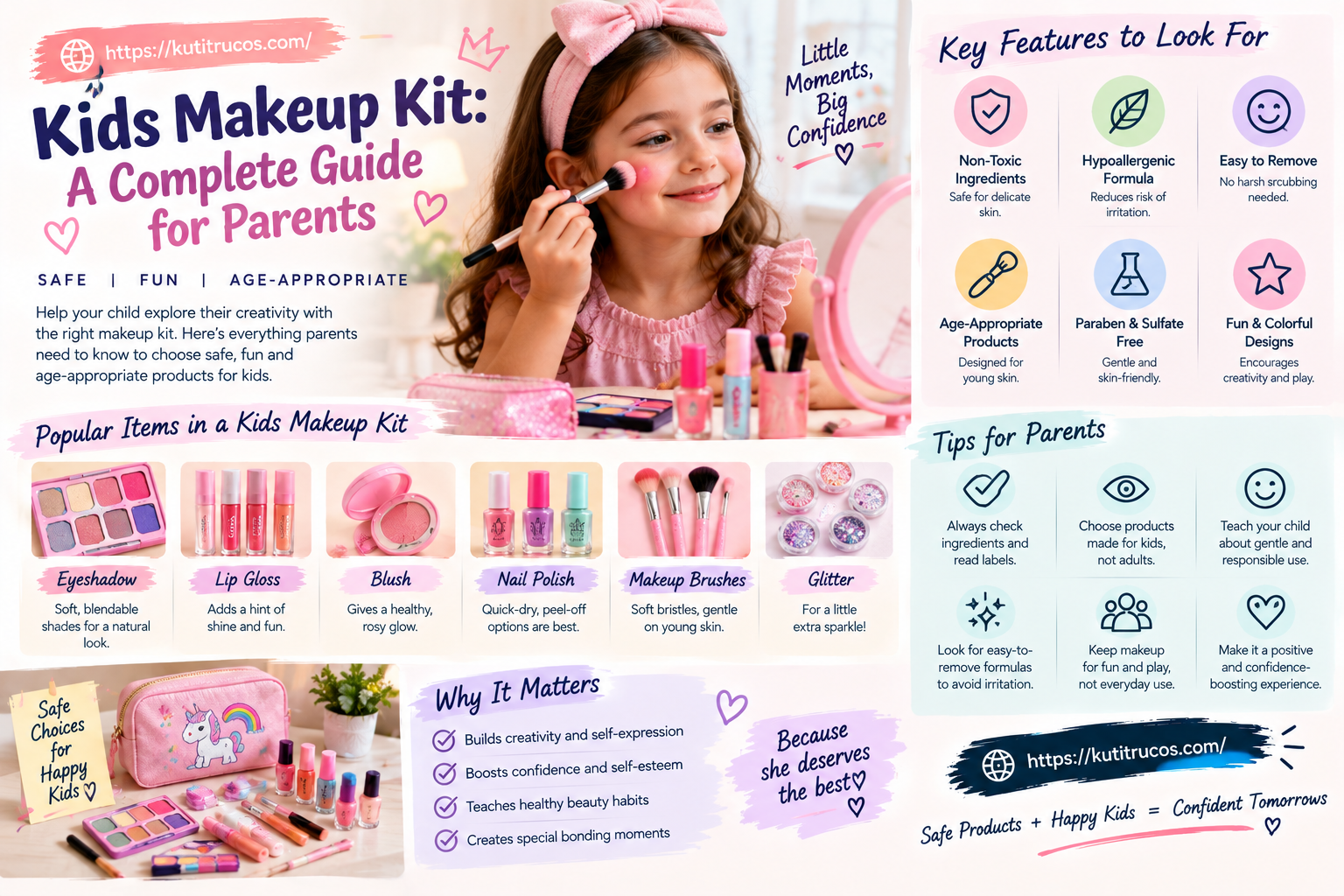
A kids makeup kit is a collection of cosmetic-style products or pretend beauty accessories designed for children’s play. Depending on the set, it may include eyeshadow, lip gloss, blush, brushes, mirrors, nail polish, and small storage cases.
Some kits contain real cosmetic products intended for use on the skin, while others are designed exclusively for pretend play. These categories should not be confused. A toy makeup set may look realistic but might not be formulated for application to the face.
Popular kit styles include:
- Pretend makeup sets: Plastic accessories and imitation cosmetics for imaginative play.
- Washable makeup kits: Products marketed as easy to remove with water or a mild cleanser.
- Colorful cosmetic sets: Small collections containing products such as lip gloss, blush, and eyeshadow.
- Nail art kits: Child-oriented nail colors, stickers, and decorative accessories.
- Travel makeup cases: Compact sets that store accessories in a portable case.
- Dress-up beauty kits: Makeup-themed accessories designed for role-play, costumes, and special occasions.
That distinction affects how the kit should be used and supervised.
Benefits of Makeup Kits for Children
When age-appropriate and used responsibly, makeup-themed play can provide several opportunities for learning and creativity.
1. Encourages Creative Expression
Children often enjoy mixing colors, creating imaginative looks, and experimenting with different styles. A makeup kit can provide an outlet for artistic expression without requiring expensive art supplies.
Kids can invent characters, create themed looks for costumes, or design pretend beauty routines. The activity can be especially enjoyable when children are allowed to explore ideas without pressure to achieve a particular appearance.
2. Supports Imaginative Role-Play
Pretending to run a beauty salon, prepare for a party, or style a character encourages children to invent stories and act out everyday situations.
Role-play may also support communication and cooperation when children play together. They can take turns choosing colors, sharing accessories, and describing their creative ideas.
3. Helps Develop Fine Motor Skills
Opening small containers, holding brushes, placing stickers, and arranging accessories can give children opportunities to practice hand coordination.
Younger children should use larger, age-appropriate accessories because tiny parts can present choking hazards.
4. Creates Opportunities for Parent-Child Bonding
A makeup-themed activity can become a relaxed family experience. Parents can help children organize their accessories, explain hygiene habits, and talk about personal preferences.
The activity can also be an opportunity to discuss how makeup is used for creativity, performance, or personal style rather than suggesting that anyone needs cosmetics to look attractive.
What Should a Good Kids Makeup Kit Include?
The best kit depends on the child’s age, interests, and whether the products are intended for real cosmetic use.
Age-Appropriate Accessories
Always review the manufacturer’s recommended age range. A kit with numerous small containers and detachable parts may be unsuitable for toddlers or young children.
For younger kids, pretend makeup accessories are often a more appropriate starting point. Older children may be interested in simple cosmetic products, but parental supervision and careful product selection remain important.
Clearly Identified Ingredients
For products intended for skin application, look for a complete ingredient list, clear manufacturer information, usage instructions, and warnings. Avoid products with missing or unreadable labeling.
Terms such as natural, gentle, or hypoallergenic should not be treated as a guarantee that a product cannot cause a reaction. Even products marketed for children can contain ingredients that irritate sensitive skin.
Easy-to-Clean Accessories
Brushes, applicators, and storage containers should be easy to maintain. Reusable tools need regular cleaning, and cosmetics should not be shared between children.
A kit that includes a dedicated storage case can help keep accessories organized and reduce contact with dust and other contaminants.
Simple and Practical Design
A good kit does not need dozens of colors or accessories.
Parents should also check that the packaging closes securely and that any mirror or decorative components are suitable for the intended age group.
How to Choose a Safe Kids Makeup Kit
Safety should be a central consideration whenever a product is intended for use on children’s skin.
Check the Recommended Age
Read the packaging before buying. Age recommendations can indicate whether a product contains small parts or requires a level of coordination and supervision that younger children may not have.
Do not assume that a product is suitable for children simply because the packaging features cartoon characters or bright colors.
Buy From a Reputable Seller
Be cautious about counterfeit products, unsealed cosmetics, and kits with no identifiable ingredients or responsible company information.
If a product’s origin or labeling is unclear, choose another option.
Read the Ingredient List
Review the listed ingredients before using actual cosmetics.
Avoid applying products around the eyes unless they are specifically formulated and labeled for that use.
Test Carefully and Supervise
For a new cosmetic product, follow the manufacturer’s directions and consider testing a small amount on a limited area of skin. A small test cannot guarantee that a reaction will not occur later.
Seek appropriate medical advice if symptoms are severe or persistent.
Keep Products Clean
Teach children to wash their hands before using cosmetics and to avoid sharing lip products, brushes, or applicators.
Close containers after use, store products according to the manufacturer’s instructions, and discard items that change in smell, texture, or appearance. Pay attention to expiration dates and any period-after-opening guidance.
Pretend Makeup vs. Real Cosmetics
One of the most important decisions is whether a child needs actual makeup or simply enjoys pretending to use it.
Pretend makeup kits generally contain toy accessories rather than usable cosmetics. They can provide a similar imaginative experience without introducing cosmetic ingredients to the skin.
Real cosmetic kits contain products designed for application, such as lip gloss or eyeshadow. These require more attention to ingredients, hygiene, storage, and proper use.
Neither category is automatically suitable for every child. A pretend kit may still contain small parts, while a real cosmetic product may be unsuitable for a child with particular sensitivities.
A practical approach: For children who mainly enjoy role-play, start with pretend accessories. Consider real cosmetics only when appropriate for the child’s age, with careful product selection and adult guidance.
Popular Types of Kids Makeup Kits
Different sets appeal to different interests. Understanding the options can make shopping easier.
Mini Makeup Sets
Mini sets usually contain a limited selection of colors and accessories. They can be a practical option for beginners who want to experiment without managing a large collection.
Look for straightforward packaging and clearly labeled contents. If the kit includes actual cosmetics, review the ingredients and usage instructions.
Makeup Kits With Carrying Cases
A carrying case keeps accessories together and makes cleanup easier. Some designs resemble small suitcases, handbags, or vanity cases.
Check whether the case is sturdy and whether its compartments hold products securely. A decorative case is useful only if it also makes the set easier to organize.
Princess and Character-Themed Sets
Character-themed kits are popular as birthday presents and dress-up accessories. Their appeal often comes from colorful packaging and familiar designs.
Parents should assess the actual contents rather than relying on the theme. Attractive packaging does not establish product safety or age suitability.
Nail Art Sets
Nail art kits may include nail stickers, decorative tools, or nail color. Some are designed for pretend play, while others contain real polish or adhesive products.
Check the manufacturer’s instructions and age guidance. Keep small decorations away from young children, and avoid products that are not intended for use on natural nails or skin.
Pretend Beauty Salon Sets
Beauty salon sets may include toy brushes, mirrors, imitation makeup, and other role-play accessories. They can be suitable for children who enjoy storytelling and imaginative games.
Before purchasing, check for small detachable parts, sharp edges, and other age-related hazards.
How Much Does a Kids Makeup Kit Cost?
The price of a kids makeup kit varies by brand, materials, number of accessories, and whether the set contains real cosmetics.
Basic pretend sets are often less expensive than larger cases with multiple accessories. Branded gift sets and products with additional storage or nail art components may cost more.
Rather than choosing the largest set available, compare the following features:
- Number and type of accessories.
- Whether the products are toys or actual cosmetics.
- Ingredient and manufacturer information.
- Recommended age and safety warnings.
- Durability of the case and accessories.
- Seller reputation and return policy.
A lower-priced kit may offer excellent value if it meets the child’s needs. However, missing labels, questionable product origins, or unclear safety information are reasons to avoid a purchase regardless of price.
Creative Activities to Try With a Makeup Kit
A kids makeup kit can be used for more than simply copying adult beauty routines. With a little imagination, it can become part of several creative activities.
Create a Pretend Beauty Salon
Children can take turns being the stylist and customer using clean, age-appropriate accessories. They can invent salon names, create appointment cards, or design a menu of pretend services.
For younger children, use toy products rather than actual cosmetics.
Explore Color Matching
Ask children to group accessories by color, create patterns, or select colors that fit a particular costume. This introduces simple concepts such as color families, contrast, and visual coordination.
Plan a Costume Look
A makeup-themed kit can complement dress-up clothes for a pretend theatrical performance. Children can choose a character and explain how their accessories fit the story.
Actual cosmetics should only be used when appropriate and supervised.
Design a Gift or Storage Box
Children can decorate a separate storage box with drawings, stickers, or labels. This gives them another creative activity while helping them keep their accessories organized.
Avoid allowing children to decorate cosmetic containers in ways that obscure ingredient lists, warnings, or other important labeling.
Teaching Children Healthy Attitudes About Makeup
Adults play an important role in how children understand cosmetics and appearance. Makeup can be presented as an optional form of creativity rather than something required to be attractive or accepted.
Encourage children to explore colors, enjoy pretend play, and appreciate different styles. Avoid suggesting that particular facial features need to be changed or that beauty depends on wearing makeup.
It is also helpful to explain that people make different choices about cosmetics. Some enjoy using makeup, while others prefer not to use it. Both preferences deserve respect.
For younger children, keep the activity focused on imagination, colors, costumes, and play. This helps create a positive environment without putting unnecessary pressure on appearance.
Common Mistakes to Avoid
Parents can make the experience safer and more enjoyable by avoiding a few common mistakes.
- Buying based only on packaging: Check the actual contents, ingredient list, and age recommendation.
- Assuming washable means harmless: Washability does not guarantee that a product will not irritate skin.
- Using craft products as makeup: Art glitter, paints, and craft pigments are not necessarily formulated for cosmetic use.
- Sharing applicators: Shared brushes and lip products can transfer germs.
- Ignoring reactions: Stop using a product if irritation appears.
- Leaving small accessories within reach of toddlers: Store detachable pieces safely.
- Allowing unsupervised application: Children may accidentally put products in their eyes or mouth.
A few basic precautions can help make cosmetic-themed play more manageable for both children and parents.
Frequently Asked Questions
What age is appropriate for a kids makeup kit?
It depends on the product and the child’s development. Pretend makeup accessories may be suitable for younger children when the manufacturer confirms the age range and the set has no inappropriate small parts. Actual cosmetics require more careful selection and supervision.
Are kids makeup kits safe for sensitive skin?
Not necessarily. Products marketed for children can still cause irritation or allergic reactions. Check the ingredient list, avoid known triggers, and discontinue use if symptoms develop.
Can a kids makeup kit be a birthday gift?
Yes. A pretend beauty set, character-themed kit, or compact carrying case can make a fun gift for a child who enjoys imaginative play. Choose the set according to the child’s age and interests.
Should children share makeup with friends?
It is best to avoid sharing cosmetics and applicators, particularly lip products and eye makeup. Each child should use their own clean accessories.
Is pretend makeup better than real makeup?
For children who mainly enjoy role-play, pretend makeup can be a sensible starting point because it provides a similar imaginative experience without requiring cosmetic application. The best choice depends on the child’s age, interests, and the specific product.
Final Thoughts
A kids makeup kit can be an enjoyable gift that encourages imagination, color exploration, and creative role-play. The most suitable option is not necessarily the biggest or most colorful set; it is the one that matches the child’s age, interests, and intended use.
Before purchasing, check the recommended age, inspect the contents, and review ingredient information if the kit contains real cosmetics. Keep accessories clean, supervise younger children, and encourage a healthy attitude toward appearance.
With thoughtful selection and sensible precautions, a kids makeup kit can become a fun addition to dress-up activities, creative play, and family time.

