

Introduction
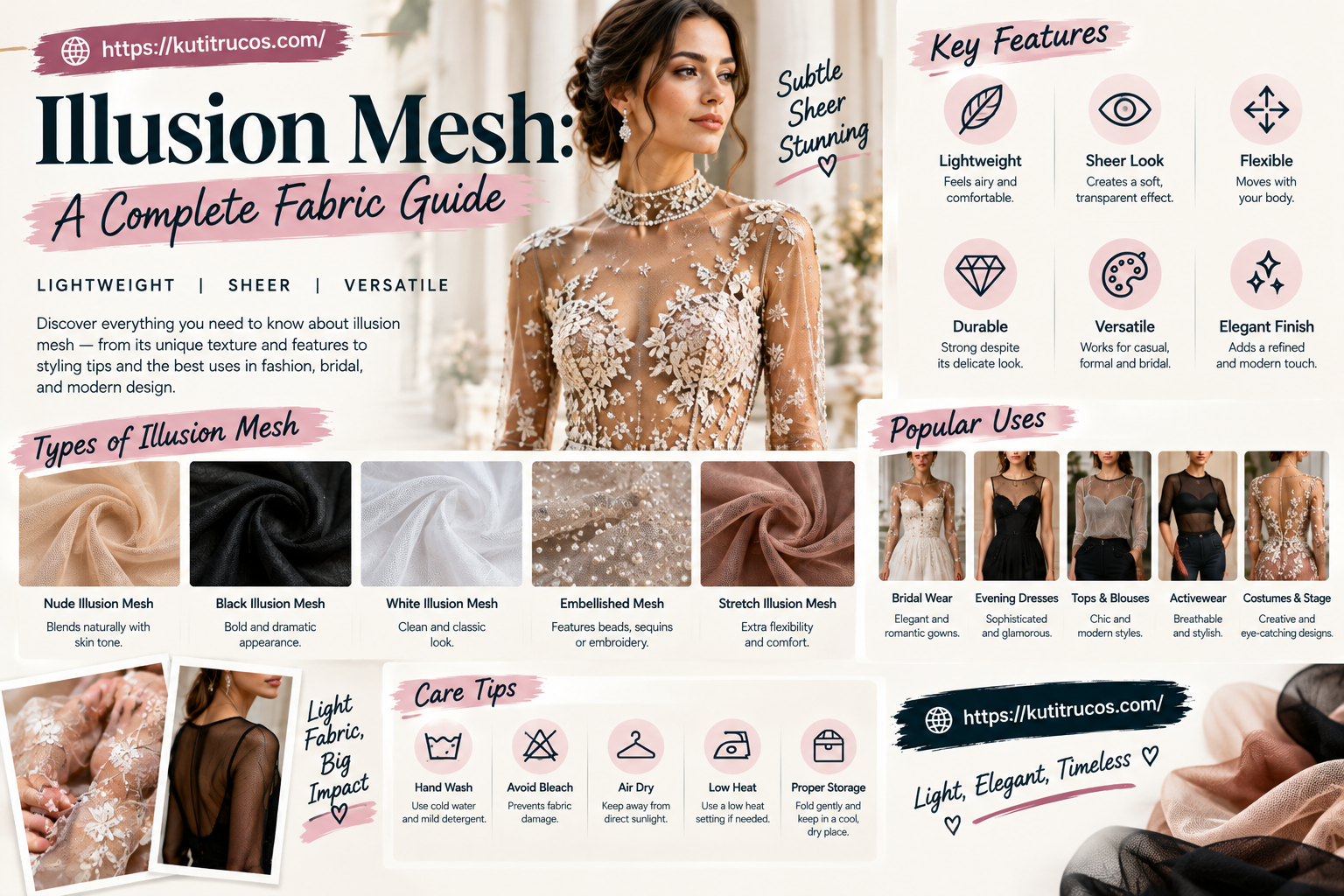
Illusion mesh is a lightweight, sheer fabric widely used in fashion design to create delicate, elegant, and nearly invisible effects. Its transparent appearance allows designers to add coverage, structure, and decorative details without making a garment look heavy. From bridal gowns and evening dresses to dance costumes and fashionable tops, illusion mesh has become a popular choice for creating sophisticated designs.
This versatile textile is especially useful when designers want embellishments to appear as though they are floating directly on the skin. When matched closely to the wearer’s skin tone, illusion mesh can create the appearance of a transparent neckline, open back, or delicate sleeve while still providing support.
Illusion mesh can also be paired with decorative embellishments to create eye-catching designs for special occasions and stagewear. Rhinestone fabric is another option for adding sparkle and glamour to garments, making it suitable for embellished gowns, performance costumes, and statement fashion pieces.
Understanding the different types of illusion mesh, its common applications, and the best ways to select and care for it can help you achieve beautiful results in sewing and fashion projects.
What Is Illusion Mesh?
Illusion mesh is a fine, lightweight textile with an open or semi-transparent structure. It is commonly made from nylon, polyester, or a blend of synthetic fibers. Some varieties include elastane or spandex to provide stretch and improve flexibility.
The fabric’s defining feature is its transparency. When chosen in a color similar to the skin, it can visually blend into the background and create an illusion of exposed skin while maintaining a layer of fabric.
Illusion mesh is available in different levels of transparency, stretch, softness, and durability. Some varieties are designed for delicate bridal garments, while others are intended for performance costumes, fitted clothing, or decorative overlays.
Although the terms are sometimes used interchangeably, illusion mesh is not always identical to tulle or netting. Tulle often has a more structured, net-like appearance, whereas illusion mesh is generally selected for its fine texture and ability to blend into a garment.
Why Is Illusion Mesh Popular?
A Nearly Invisible Appearance
One of the main reasons designers choose illusion mesh is its ability to create a sheer effect without leaving a garment completely unsupported. When the fabric color closely matches the wearer’s skin tone, it can become less noticeable from a distance.
This makes it useful for creating illusion necklines, sheer sleeves, and transparent-looking bodice panels.
Lightweight and Comfortable Construction
Many illusion mesh fabrics are lightweight and allow some airflow because of their open structure. This can make them suitable for garments that require sheer coverage without adding substantial bulk.
Comfort depends on the fiber content, weave, fit, and finish.
Flexible Design Possibilities
It can be combined with lace, embroidery, sequins, beads, and rhinestones to create detailed designs.
Its transparency also allows designers to create contrast between opaque fabrics and sheer panels without dramatically increasing the garment’s weight.
Suitable for Different Occasions
Illusion mesh is common in wedding dresses, formalwear, dance costumes, stage outfits, and contemporary fashion. Depending on its color and construction, it can support both understated elegance and dramatic styling.
Popular Types of Illusion Mesh
Different types of illusion mesh offer different levels of stretch, softness, and transparency. Choosing the right one depends on the garment and the desired finish.
Stretch Illusion Mesh
Stretch illusion mesh contains elastic fibers or uses a construction that allows the material to stretch. It is frequently used for fitted sleeves, bodices, dancewear, and garments that need to move with the body.
The fabric can provide a close fit while maintaining a sheer appearance. However, stretching may change how transparent the material looks, so it is important to test it at the level of tension expected in the finished garment.
Non-Stretch Illusion Mesh
Non-stretch illusion mesh provides a more stable structure. It can be useful for carefully shaped panels, decorative overlays, and garments that require less flexibility.
Because it does not stretch significantly, accurate measurements and pattern placement are especially important. A garment made from non-stretch mesh may need additional ease or carefully designed closures for comfortable movement.
Skin-Tone Illusion Mesh
Skin-tone illusion mesh is designed to blend visually with the wearer’s complexion. It is available in various shades, from light beige to deeper brown tones, although the range varies by supplier.
Choosing the right shade can make a major difference to the final appearance. Whenever possible, compare fabric samples against the skin in natural and indoor lighting rather than relying only on online photographs.
Bridal Illusion Mesh
Bridal illusion mesh is commonly used in wedding dresses, veils, bodices, necklines, and sleeves. It may be selected for its fine texture, softness, or ability to support delicate embellishments.
Some bridal designs combine the mesh with lace appliqués, embroidery, pearls, or crystals. The appropriate fabric depends on the weight of the decorations and the structure of the gown.
Embellished Illusion Mesh
It can create a detailed appearance while allowing parts of the base fabric to remain transparent.
This variety is popular for evening dresses, stage costumes, and special-occasion garments. Because embellishments can add weight, check whether the mesh can support them without sagging or tearing.
Common Uses of Illusion Mesh
Wedding Dresses
Illusion mesh is widely used in bridal fashion because it can create sheer details while supporting the overall design of a wedding gown.
For a polished finish, the mesh should closely match the intended skin tone and blend naturally with the surrounding materials.
Evening Gowns and Formal Dresses
Formal dresses often incorporate illusion mesh to create elegant necklines, fitted sleeves, or decorative bodice panels. It can provide a balance between coverage and transparency.
This contrast can make the design look intricate without requiring heavy layers throughout the garment.
Dancewear and Performance Costumes
Dance costumes, skating outfits, and stage clothing often require fabrics that combine flexibility with a secure fit. Stretch illusion mesh can help create the appearance of uninterrupted skin while supporting movement.
For these applications, the fabric must withstand repeated stretching, bending, and performance activity. The seams, embellishments, and attachment points should be tested before the costume is used.
Sheer Sleeves and Necklines
Sleeves made from illusion mesh can also provide a lightweight alternative to heavier materials, although their warmth and durability depend on the fabric’s construction.
Fashion Tops and Bodysuits
Modern fashion frequently uses sheer mesh in tops, bodysuits, and layered garments. Illusion mesh can be incorporated into selected sections to create visual contrast or add decorative detail.
For everyday clothing, designers can combine sheer panels with lining or opaque fabric to achieve the desired balance between transparency and coverage.
Lingerie and Specialty Apparel
Some illusion mesh fabrics are used in lingerie and specialty apparel because of their lightweight texture and flexibility. Softness, breathability, and stretch are particularly important in garments worn close to the skin.
Not every mesh is suitable for this purpose. Check the fabric’s composition, surface texture, and intended use before selecting it for intimate clothing.
How to Choose the Right Illusion Mesh
Selecting illusion mesh requires attention to several details that can influence the finished garment.
Choose the Correct Color
Color is especially important when the goal is to create an invisible or skin-like effect. A mesh that is too light or too dark may remain noticeable against the skin.
Compare samples in different lighting conditions and consider how the fabric will look alongside the garment’s other materials. If a seamless illusion is not the goal, a contrasting color may instead create an intentional design feature.
Check the Stretch
Determine whether the fabric stretches in one direction or both directions. This information helps you decide whether it is suitable for fitted sleeves, bodices, or structured panels.
Stretch mesh is often useful for garments requiring flexibility, while non-stretch mesh may be preferable when shape stability is more important.
Evaluate Transparency
Transparency varies by fiber, mesh construction, color, and tension. A fine mesh may look almost invisible when relaxed but become more noticeable when stretched.
Hold a sample against the skin and examine it from different distances. If the fabric will be used over a lining, test the complete combination rather than assessing the mesh alone.
Consider Softness and Comfort
The fabric should feel comfortable in areas where it touches the skin. Rough edges, stiff fibers, or poorly finished seams can cause irritation.
For sleeves, necklines, and bodices, consider the sensitivity of the wearer and whether the finished garment will be worn for several hours.
Assess Strength and Durability
Lightweight mesh can be delicate, particularly when it is stretched or decorated. Examine the fabric for uneven areas, weak sections, and signs of damage.
If the design includes heavy lace appliqués or rhinestones, confirm that the mesh can support the added weight. Reinforcement may be necessary in certain areas.
Calculate the Required Quantity
Before purchasing fabric, review the sewing pattern, fabric width, stretch direction, and placement of sheer panels.
For garments featuring matching sleeves or symmetrical designs, allow enough material to position each section correctly. If the mesh has embroidery or a repeating pattern, additional fabric may be needed to align the design.
Illusion Mesh vs. Tulle
Illusion mesh and tulle are both lightweight, sheer textiles, but they serve somewhat different purposes.
Illusion mesh is commonly chosen for fine, skin-like panels, fitted sleeves, and sheer bodices. Its texture and stretch depend on the specific construction, but it is often selected when a close visual blend is important.
Tulle generally has a more recognizable net structure and is frequently used for veils, skirts, tutus, decorative overlays, and garments that need volume.
Neither fabric is automatically better than the other. Illusion mesh is often suitable for fitted, nearly invisible details, while tulle may be preferable when the design requires fullness or a more visibly netted appearance.
Always compare individual products because their characteristics can overlap.
Illusion Mesh vs. Power Mesh
Power mesh is generally designed to provide more support, compression, or recovery than delicate illusion mesh. It is commonly used in shapewear, activewear, supportive panels, and selected lingerie designs.
Illusion mesh is more often selected for its transparency and subtle appearance, especially in formalwear and bridal clothing.
However, the names alone do not guarantee specific performance characteristics. Some illusion mesh products offer substantial stretch, while some power mesh fabrics are relatively sheer. Check the manufacturer’s specifications for stretch, weight, and intended use.
Sewing Tips for Illusion Mesh
Illusion mesh requires careful handling because its lightweight construction can shift, stretch, or snag during sewing.
Prepare the Fabric Carefully
Lay the fabric on a clean, flat surface and avoid pulling it unnecessarily. If the material is very fine, placing it over tissue paper during cutting may help stabilize it.
Use sharp fabric scissors or a suitable rotary cutter to create clean edges. Test your cutting method on a scrap before working on the final piece.
Select an Appropriate Needle
A fine, sharp sewing-machine needle is often a good starting point for delicate mesh, but the ideal needle depends on the fiber and construction. Use a suitable thread and test the combination on a small sample.
If the needle damages the mesh or causes skipped stitches, adjust the needle type, thread, or machine settings.
Use a Suitable Stitch
Fine mesh may require a narrow seam allowance and a stitch appropriate for the material’s stretch. Stretch mesh generally needs a seam that can move with the fabric without breaking.
Test the seam by gently stretching the sample in the direction the finished garment will move. Avoid excessive tension that could distort or pucker the mesh.
Stabilize Seams When Necessary
Very lightweight mesh can stretch while being sewn. Temporary stabilizers, careful pinning, or suitable sewing clips may help maintain alignment.
Avoid placing pins where they could create visible holes in delicate mesh. For important garments, test the stabilization method on a scrap first.
Finish Edges Neatly
The best edge finish depends on the garment’s design and the type of mesh. Some edges can be enclosed in seams, while others may require a narrow hem or specialized finishing technique.
For illusion necklines and sleeves, neat finishing is particularly important because the fabric is highly visible against the skin.
How to Care for Illusion Mesh
Illusion mesh can be delicate, so proper care helps preserve its shape and transparency.
Follow the Care Label
Cleaning instructions vary by fiber, dye, and embellishment. Some garments may be hand-washable, while others require professional cleaning.
Do not assume that every mesh fabric can be machine washed. Follow the supplier’s instructions, especially when the material includes lace, beads, sequins, or adhesive decorations.
Avoid Snagging
Keep illusion mesh away from rough surfaces, sharp jewelry, hooks, and other items that may catch its fine threads.
When storing a garment, place it in a clean garment bag or separate it from clothing with zippers and sharp embellishments.
Use Gentle Handling
Avoid twisting, wringing, or pulling the fabric during cleaning. If hand washing is permitted, use the recommended detergent and handle the material gently.
Support the garment while moving it, particularly if the mesh carries heavy decorative elements.
Be Careful With Heat
High heat may damage synthetic fibers or distort delicate mesh. Follow the manufacturer’s instructions before ironing or steaming.
If pressing is permitted, test a hidden area first and use the recommended temperature. Never assume that a low setting is safe for every synthetic fabric.
Common Mistakes to Avoid
When purchasing or working with illusion mesh, avoid these common errors:
- Choosing the wrong shade: A color mismatch can make the mesh more noticeable than intended.
- Ignoring stretch direction: The wrong orientation can affect the fit and appearance of a garment.
- Using an unsuitable needle: A poorly matched needle may damage delicate threads.
- Adding too much weight: Heavy embellishments can distort or tear lightweight mesh.
- Skipping a sample test: Testing helps identify issues with transparency, seams, comfort, and stretch.
- Using incorrect cleaning methods: Excessive heat or aggressive washing can damage the material.
Planning these details before starting a project can help produce a cleaner and more professional result.
Where to Buy Illusion Mesh
Illusion mesh is available from specialist fabric shops, bridal-material suppliers, online sewing stores, costume suppliers, and textile wholesalers.
When shopping online, review the fabric’s fiber composition, width, stretch, transparency, color options, and care instructions. Product photographs may not accurately show how the material looks against the skin, so ordering a sample can be especially useful.
For bridal gowns or formalwear, ask whether the fabric is intended for fitted panels, sleeves, or embellishment. If you are purchasing in bulk, confirm that the supplier can provide consistent colors and construction across the quantity you need.
Prices vary according to the fiber, quality, stretch, color, embellishments, and supplier. Compare specifications rather than choosing based only on the product name or photograph.
Is Illusion Mesh Worth Using?
Illusion mesh is a useful material for designers who want to combine sheer coverage with a lightweight, delicate appearance. It can support intricate bridal designs, elegant eveningwear, fitted performance costumes, and contemporary fashion.
Its suitability depends on the project. Stretch mesh may work well for close-fitting garments, while a stable non-stretch option may be better for carefully shaped panels. The right shade, comfortable texture, and appropriate construction are essential for a successful result.
With careful selection and proper handling, illusion mesh can help create garments that look refined without adding unnecessary bulk.
Final Thoughts
Illusion mesh is valued for its transparency, versatility, and ability to create subtle yet striking fashion details. Whether it is used for a bridal neckline, sheer sleeves, a stage costume, or a modern layered top, this fabric offers creative possibilities across many types of clothing.
Before buying, consider the color, transparency, stretch, softness, and strength of the material. Test a sample and follow suitable sewing and care instructions to help maintain the fabric’s appearance.
Choosing the right illusion mesh can make a significant difference to both the comfort and finish of your final design.

