

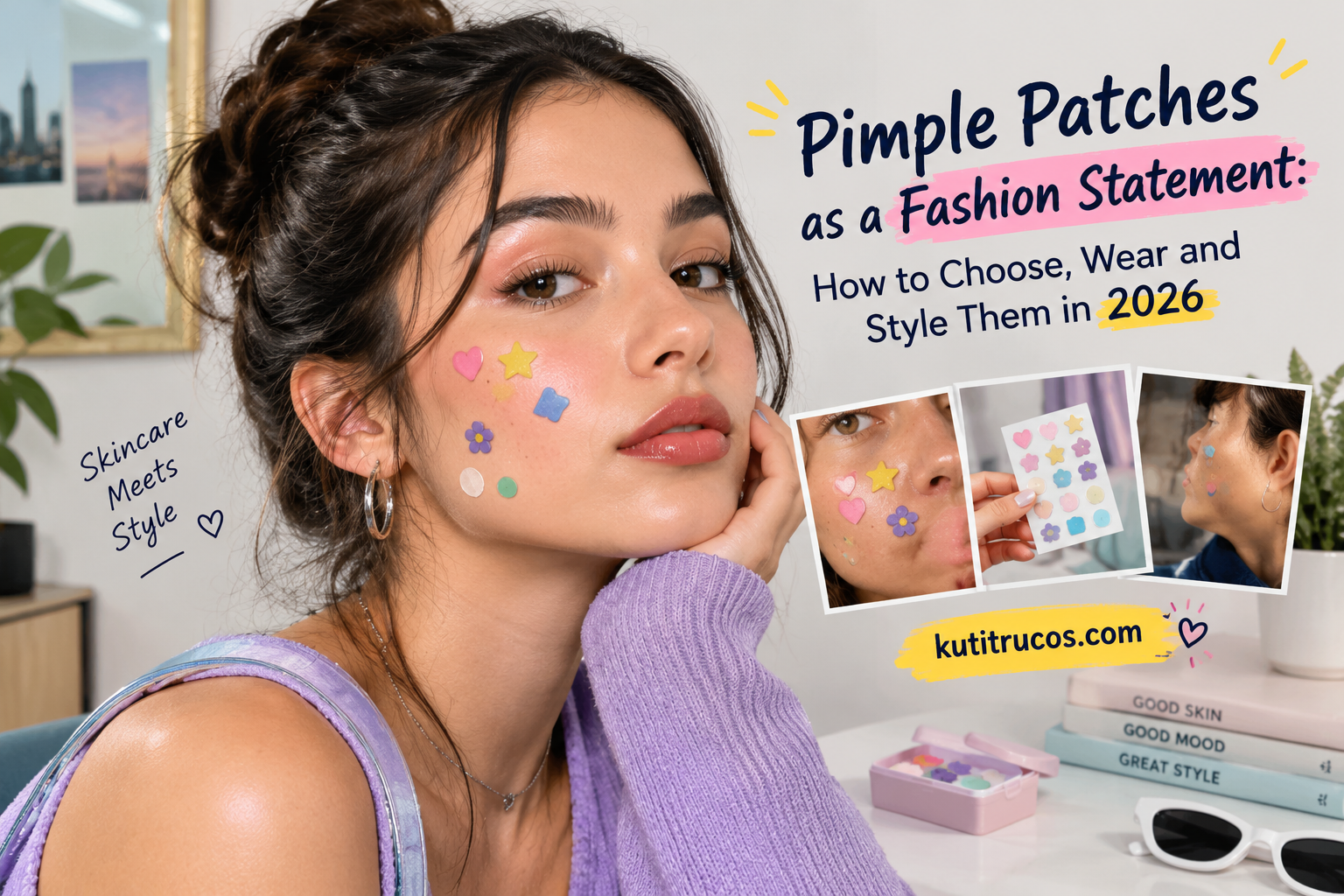
Not long ago, a blemish was something to hide at all costs, usually under a thick layer of concealer. Then pimple patches arrived in bright stars, hearts and lightning bolts, and a breakout became something people wore openly on the subway, at brunch and in street style photos. At the same time, a second group of patches went the opposite direction, shrinking to near-invisible films that disappear under foundation.
That split is what makes pimple patches interesting in 2026. They sit right where skincare meets personal style, and choosing one now means deciding whether you want your skin care seen or unseen. Fashion’s embrace of visible, imperfect details shows up on runways too, as our coverage of New York Fashion Week 2026 street style makes clear.
How Pimple Patches Became a Beauty Staple
Pimple patches began as wound care. Hydrocolloid dressings, made from gel-forming materials such as carboxymethylcellulose and gelatin under a thin waterproof film, have been used in hospitals for decades to keep wounds moist and protected while they heal. Dermatologists and beauty editors noticed that small pieces of the same material worked well on popped or draining blemishes.
The research is small but consistent. A 2006 randomized, double-blind pilot study by dermatologists at Tri-Service General Hospital in Taipei, published in the *Journal of Cosmetic Science*, compared a hydrocolloid acne dressing with ordinary skin tape on 20 patients with mild to moderate inflamed acne. Over seven days, the hydrocolloid group showed greater improvement in overall severity, redness and oiliness, with no significant side effects reported.
A larger 14-day randomized trial published in the *Journal of the American Academy of Dermatology* in 2024 followed participants aged 12 to 35. Lesions that had already been opened improved as early as the first day, with better smoothness, less redness and less crusting than untreated sites. Closed blemishes also improved, though more slowly. Dermatologists point to one more benefit that is easy to overlook: a patch stops you from touching and picking, which lowers the chance of lingering marks.
Social media did the rest. Brands such as Starface, which launched its yellow star-shaped patches in 2019, reframed the patch as an accessory rather than a bandage, and the “wear it proudly” approach spread quickly across TikTok and Instagram.
Types of Pimple Patches and What Each Does
The word “patch” now covers several very different products. Knowing which type you are buying matters more than the shape on the front.
| Patch type | How it works | Best for | Visibility |
|---|---|---|---|
| Plain hydrocolloid | Absorbs fluid and protects the spot | Popped or draining blemishes | Visible, often decorative |
| Medicated patch | Delivers actives such as salicylic acid, sulfur or niacinamide | Emerging blemishes and oily skin | Varies; thin versions nearly invisible |
| Micropoint patch | Tiny dissolving points deliver actives into the spot | Early, deeper bumps before they surface | Visible |
| Dark spot patch | Brightening actives on marks left after a blemish | Post-blemish marks and uneven tone | Usually thin and discreet |
Hydrocolloid patches do their best work on whiteheads that have come to a head or been opened. On a closed bump with nothing to absorb, a medicated or micropoint patch is the better choice. Deep, painful cysts are a different matter altogether and are best discussed with a dermatologist.
Visible Versus Invisible Pimple Patches
The style decision comes down to where you are wearing them.
Statement Patches
Colorful shapes suit weekends, school, running errands and casual outfits where a playful detail fits the look. They also send a simple message: skin with texture is normal. Some people deliberately coordinate patch colors with an outfit or nail polish, turning a breakout into part of the styling.
Invisible Patches
For work, events and anything involving photos up close, thinner patches win. The newest generation is measured in hundredths of a millimeter, so the edges blend into skin and foundation sits on top without a visible ridge.
Korean derma brand Dr.Melaxin is one example of this shift. Its ZERO FIT patches are just 0.013mm thick and come in two versions: an S-ZINC patch with sulfur, zinc PCA and salicylic acid for emerging blemishes, and a Mela-C·E patch with vitamin C, niacinamide and tranexamic acid for the marks a breakout leaves behind. Paired together, the two cover a blemish from the first bump to the fading mark, a practical option for anyone looking for ultra-thin pimple patches that stay discreet under makeup.
How to Wear Pimple Patches Under Makeup
A patch only stays invisible if the base underneath is right. These steps help it hold all day:
- Start on bare, dry skin – cleanse, then apply the patch before serums or moisturizer so the adhesive grips the skin, not a layer of product.
- Press for a few seconds – gentle pressure with a clean fingertip seals the edges and warms the adhesive.
- Work around it with skincare – apply moisturizer and sunscreen around the patch rather than over it.
- Stipple, do not swipe – tap foundation and concealer over the patch with a sponge or brush so the edges do not lift.
- Set lightly – a thin veil of powder over the area keeps the finish consistent with the rest of the face.
For more base-building techniques, our guide to applying Laura Geller makeup walks through foundation and concealer application step by step.
Swap patches at least once a day, or sooner once a hydrocolloid patch turns white and opaque, which means it has absorbed as much as it can. Overnight wear gives any patch the longest uninterrupted time on the skin.
Pimple Patches FAQ
Can pimple patches cause breakouts around the edges?
They can for some people. Adhesive and trapped sweat can irritate skin that is already sensitive, especially in hot weather. Apply patches to clean skin, remove them gently by lifting from one corner and give the area a break if you notice redness around the outline.
Are pimple patches suitable for teenagers?
Yes, plain hydrocolloid patches are among the gentlest blemish options available, and the 2024 trial included participants as young as 12. Medicated patches contain active ingredients, so younger users should check the label and patch test first.

