

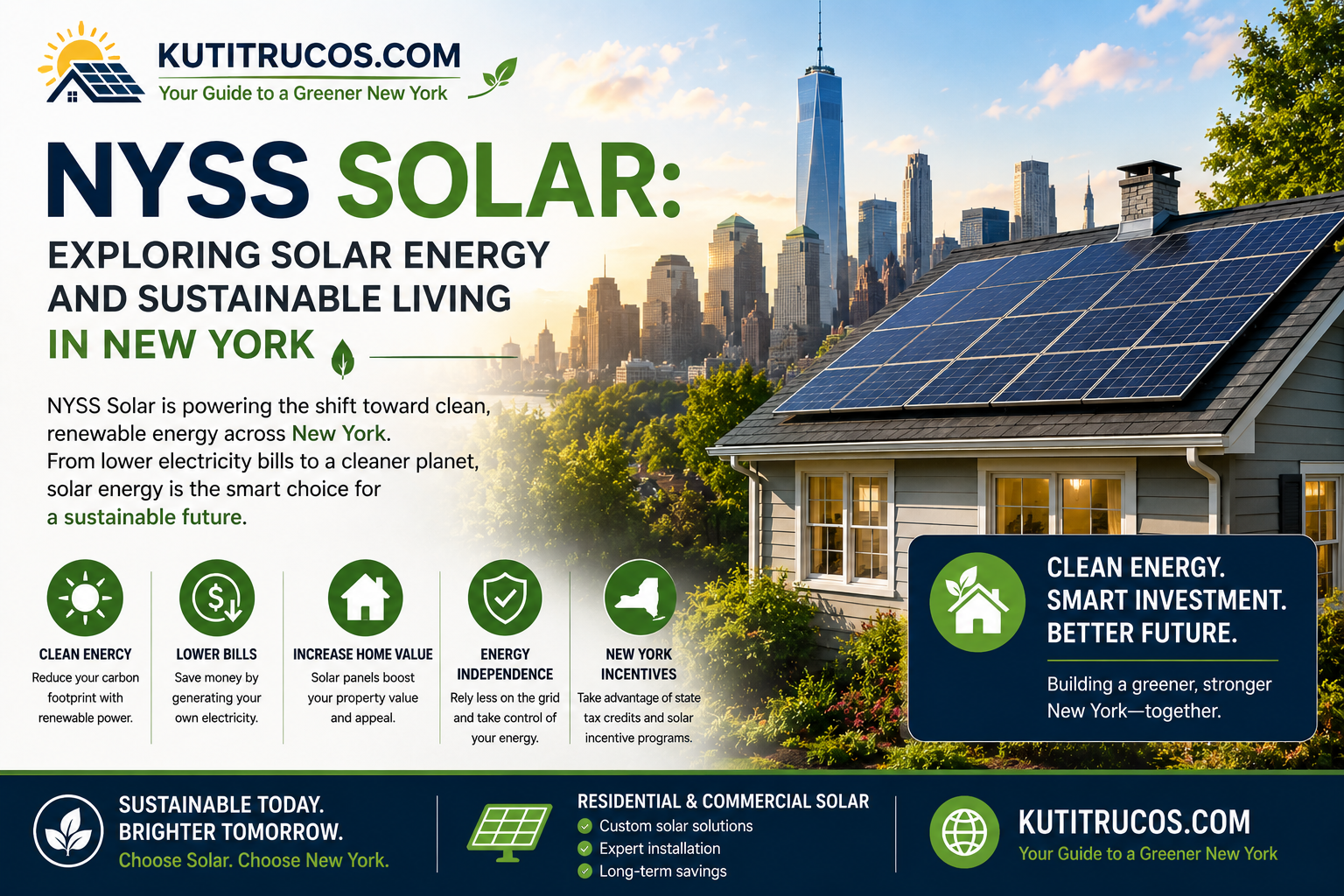
NYSS Solar and the Growing Interest in Renewable Energy
New York has always been a state associated with innovation, changing lifestyles, and new ideas. In recent years, energy has become another area where residents and businesses are looking for modern solutions. Solar power has gained attention as homeowners explore ways to generate electricity, manage energy consumption, and make their properties more environmentally responsible.
The term NYSS Solar can be understood in the broader context of solar energy services and solar adoption in New York State. Whether someone is researching residential solar panels, commercial installations, energy storage, or renewable-energy options, understanding how solar works is an important first step.
Solar energy has become increasingly accessible to American consumers. Improvements in photovoltaic technology, installation practices, monitoring systems, and battery storage have helped make solar a practical consideration for many properties.
For New York residents, however, the decision to install solar should be based on the characteristics of the individual property, local utility rules, current incentives, energy usage, and long-term financial goals.
What Is Solar Energy?
Solar energy is electricity generated from sunlight. Most residential solar systems use photovoltaic panels that convert sunlight into electrical energy.
A typical system includes panels installed on a roof or another suitable location, an inverter, mounting equipment, wiring, and connections to the property’s electrical system.
When sunlight reaches the panels, they generate direct-current electricity. The inverter converts that electricity into alternating-current power that household appliances can use.
If the system produces more electricity than the home needs at a particular moment, the treatment of that excess power depends on the system and applicable utility arrangements.
Solar Does Not Require Constant Heat
A common misunderstanding is that solar panels only work well in very hot climates.
Solar photovoltaic technology needs sunlight rather than high temperatures.
New York experiences cold winters, cloudy days, rain, and snow, but photovoltaic systems can still generate electricity whenever suitable sunlight reaches the panels.
The actual amount of electricity produced depends on factors such as sunlight availability, shading, panel orientation, system design, and weather.
Why New York Homeowners Are Considering Solar
Energy is an important part of household expenses, and many homeowners want greater control over their electricity consumption.
Solar can potentially reduce the amount of electricity a household purchases from the grid by generating some power on-site.
Environmental considerations can also influence the decision. Solar electricity does not require burning fuel at the point of generation, making it an attractive renewable-energy technology for consumers interested in reducing their dependence on conventional electricity sources.
Energy Independence
Solar can give homeowners greater visibility and control over where part of their electricity comes from.
However, a standard grid-connected solar system does not necessarily make a property completely independent of the utility grid.
For homeowners seeking additional resilience, battery storage may be considered. The ability to operate during an outage depends on the system’s design and equipment.
Solar Panels for New York Homes
Residential solar systems can be installed on many different types of properties.
A suitable roof generally needs adequate space and appropriate structural characteristics. Shading from trees or nearby buildings can also affect potential electricity production.
Before installation, a professional assessment can help determine whether a property is appropriate for solar.
Roof Condition and Solar Installation
The condition of the roof is an important consideration.
If a roof is nearing the end of its useful life, installing solar panels immediately may create complications if the roof later needs replacement.
Homeowners should discuss roof condition with qualified professionals before signing an installation agreement.
Addressing necessary roofing work beforehand may prevent the additional cost and inconvenience of removing and reinstalling panels later.
Solar Energy in New York’s Different Regions
New York State includes major cities, suburbs, rural communities, and coastal areas.
Energy needs and property characteristics can differ significantly between these locations.
Urban properties may have limited roof space or shading from surrounding buildings. Suburban homes may have larger roofs but significant tree coverage. Rural properties may have more flexibility for ground-mounted solar systems.
The same solar system design cannot necessarily be applied to every location.
Urban Solar Opportunities
New York’s cities also offer opportunities for renewable energy.
Commercial rooftops, multifamily properties, public buildings, and community solar projects can all contribute to solar development.
Community solar is particularly interesting for consumers who cannot install panels on their own homes.
Understanding Community Solar
Community solar allows multiple customers to benefit from electricity generated by a shared solar project.
This approach can be useful for renters, apartment residents, homeowners with unsuitable roofs, or people who simply prefer not to install equipment on their property.
The exact financial structure varies between programs and providers.
Consumers should carefully review subscription terms, fees, cancellation policies, eligibility requirements, and how credits appear on their utility bills before enrolling.
Who May Benefit From Community Solar?
Community solar can potentially expand access to renewable energy beyond traditional homeowners.
It allows solar participation without requiring every customer to own a suitable roof.
This makes it an important part of the broader renewable-energy conversation in densely populated areas.
Battery Storage and NYSS Solar
Solar panels generate electricity when sunlight is available, but household electricity consumption continues after sunset.
Battery storage can help bridge this difference.
A battery can store some electricity generated during periods of solar production and make it available later, depending on the system configuration.
Benefits of Energy Storage
Energy storage can potentially help homeowners:
- Use more of their own solar-generated electricity
- Reduce reliance on grid electricity at certain times
- Maintain selected loads during some power outages
- Better manage when stored energy is used
However, batteries increase the overall cost of a solar installation and have their own operating lifespan.
Therefore, homeowners should evaluate storage based on their specific energy needs rather than assuming every solar system requires a battery.
The Financial Side of Solar
Solar is a significant investment, and consumers should evaluate the complete financial picture.
Installation costs vary according to system size, equipment, roof complexity, electrical requirements, labor, permits, and whether storage is included.
Homeowners may encounter different purchasing and financing arrangements.
Solar Incentives
Federal, state, and local programs can affect the economics of solar.
Tax incentives, rebates, utility programs, and other financial opportunities may be available depending on current rules and individual eligibility.
Because incentives can change, consumers should verify current information through official government and utility sources before making financial decisions.
A solar proposal should also be reviewed carefully to understand what is included in the advertised price.
Choosing a Solar Company
Selecting an experienced installer is an important part of the process.
Homeowners should research the company’s reputation, experience, warranties, insurance, certifications where applicable, installation practices, and customer service.
Comparing several proposals can provide a better understanding of the local market.
Questions to Ask an Installer
Before signing a contract, homeowners can ask:
- What size solar system is being proposed?
- How much electricity is it expected to generate?
- What equipment brands and models will be used?
- What warranties are included?
- Who handles permits and inspections?
- How will the system connect to the utility grid?
- What happens if the roof requires repairs?
- What are the financing costs?
- Is battery storage included?
- What happens if the property is sold?
Getting clear answers can help consumers avoid unexpected costs or misunderstandings.
Solar and Energy Efficiency
Solar panels are only one component of an efficient home.
Before increasing electricity generation, homeowners can also consider reducing unnecessary energy consumption.
Improved insulation, efficient heating and cooling systems, energy-efficient appliances, LED lighting, and smart energy management can all help reduce household electricity demand.
Why Efficiency Comes First
A home that wastes large amounts of electricity may require a larger solar system to offset its consumption.
Reducing energy waste can therefore make renewable-energy investments more effective.
For example, improving insulation or upgrading inefficient equipment can lower electricity demand before a homeowner determines the appropriate solar system size.
Maintaining a Solar System
Solar systems generally require relatively little routine maintenance compared with many other household technologies.
However, homeowners should monitor system performance and investigate significant changes in electricity production.
Panels may accumulate dirt, leaves, pollen, or other debris depending on their location.
Snow can also temporarily affect production in winter.
The correct cleaning and maintenance procedure should follow the equipment manufacturer’s recommendations and the installer’s guidance.
Solar’s Role in American Sustainable Living
Solar energy is part of a larger shift in American attitudes toward sustainability.
Consumers are increasingly interested in energy-efficient homes, electric vehicles, smart-home technology, and renewable electricity.
Solar can complement these technologies.
For example, a homeowner with an electric vehicle may use solar-generated electricity as part of a broader strategy for managing household energy.
Similarly, smart energy-management systems can potentially coordinate electricity consumption with solar generation and battery storage.
These developments are gradually changing how people think about residential energy.
The Future of Solar in New York
The future of solar in New York will likely involve more than traditional rooftop panels.
Energy storage, community solar, electric vehicles, smart meters, improved grid infrastructure, and more sophisticated energy-management systems are all contributing to the evolution of the energy sector.
Technological improvements may also increase the efficiency and flexibility of solar installations.
For consumers, this means renewable energy could become increasingly integrated into everyday household systems.
The transition will not happen identically everywhere, but solar is likely to remain an important component of discussions about America’s energy future.
Final Thoughts
NYSS Solar represents the broader opportunity to understand and participate in New York’s growing renewable-energy landscape. Solar power can offer homeowners and businesses a way to generate electricity on-site while potentially reducing dependence on conventional grid electricity.
However, installing solar requires careful planning. Property conditions, roof quality, shading, electricity usage, equipment, installation costs, financing, utility rules, and available incentives all deserve consideration.
For homeowners who cannot install rooftop panels, community solar may provide another potential pathway toward renewable-energy participation. Battery storage can also provide additional flexibility, particularly for households interested in using stored solar electricity or preparing for certain grid interruptions.
The smartest approach is to avoid treating solar as a universal solution. Every property is different, and a system that works well for one New York home may not be appropriate for another.
Researching reputable installers, comparing proposals, understanding contracts, and verifying current incentive information can help consumers make better-informed decisions.

