

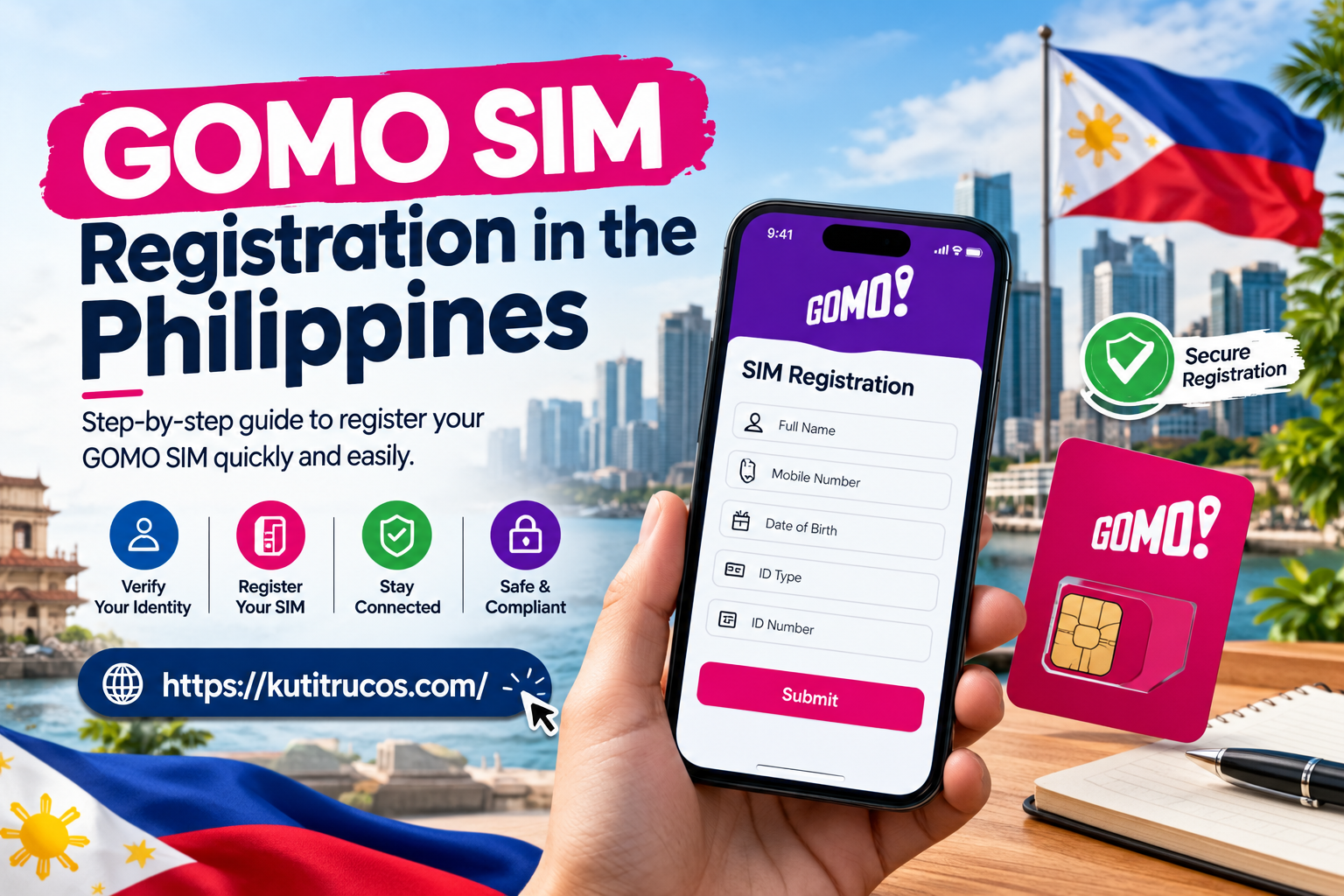
In the Philippines, mobile connectivity has become an important part of everyday life. People use their smartphones for communication, online banking, social media, shopping, work, education, entertainment, and many other activities. Because mobile numbers are closely connected with digital services, protecting SIM users and reducing the misuse of mobile communications have become important national concerns.
For GOMO users, SIM registration is an essential step toward keeping a mobile number active and compliant with Philippine regulations. Whether someone has recently purchased a GOMO SIM or has been using one for some time, understanding the registration process can make the experience easier and less stressful.
GOMO operates as a digital-focused mobile service in the Philippines, giving customers access to mobile connectivity and data services through a largely app-based experience. This digital approach means that customers may encounter registration and account-management procedures that are designed to be completed online or through digital channels.
This guide explains what GOMO SIM registration means, why it is required, what information users may need, how the registration process generally works, and what customers should remember when protecting their personal information.
What Is GOMO SIM Registration?
GOMO SIM registration is the process of associating a GOMO SIM card with the verified identity of its user. The requirement comes from the Philippines’ SIM Registration Act, which requires SIM users to register their mobile numbers under established identification and verification procedures.
Before SIM registration became mandatory, prepaid SIM cards could generally be purchased and activated without the same level of identity verification. This created concerns because anonymous mobile numbers could potentially be used for fraudulent messages, scams, harassment, and other unlawful activities.
The SIM Registration Act introduced a system in which mobile subscribers must provide identifying information to their telecommunications provider.
For GOMO customers, this means that owning a GOMO SIM involves more than simply inserting the SIM into a compatible smartphone. Users also need to complete the applicable registration requirements associated with their mobile number.
The process is intended to connect the SIM with a real and identifiable subscriber while providing telecommunications companies with the information required by Philippine law.
Why Is SIM Registration Required?
The primary purpose of SIM registration is to improve accountability in mobile communications.
Mobile phones are now used for much more than voice calls and text messages. A single mobile number can be connected to banking applications, social media accounts, email recovery systems, online shopping accounts, digital wallets, government services, and other important platforms.
When a mobile number is used anonymously, identifying the person behind suspicious activity can be more difficult.
The Philippine SIM Registration Act was introduced to address these concerns. Registration can help authorities investigate certain unlawful activities when proper legal procedures are followed.
SIM registration is also intended to help address problems such as:
- Fraudulent text messages
- Mobile-based scams
- Identity-related crimes
- Phishing attempts
- Unwanted promotional messages
- Harassment through mobile numbers
- Other forms of unlawful telecommunications activity
Registration does not mean that every message sent through a mobile network is automatically monitored. Instead, it establishes subscriber information that telecommunications providers are required to maintain according to applicable regulations.
For ordinary GOMO users, the practical result is simple: their SIM needs to be properly registered so they can continue using the service under Philippine rules.
Who Needs to Register a GOMO SIM?
GOMO SIM users in the Philippines are generally required to comply with the SIM registration requirements that apply to their subscriber category.
This can include prepaid users, postpaid users, new subscribers, and certain other categories of mobile users depending on their circumstances.
The exact information required may differ depending on whether the subscriber is:
- A Filipino citizen
- A foreign national
- A minor
- A business or organization
- A representative acting on behalf of another person
- A visitor or temporary mobile user
Because subscriber circumstances can vary, users should follow the registration instructions presented through GOMO’s official channels and provide information that accurately corresponds with their legal identity.
A person should not register a SIM using another individual’s identity unless the applicable legal procedure specifically allows it.
Using incorrect information can create problems later, especially if the number becomes connected to financial accounts, government services, or other important platforms.
What Information Is Usually Required?
SIM registration requires personal information so that the telecommunications provider can verify the identity of the subscriber.
For an ordinary individual subscriber, the information may include details such as:
- Full name
- Date of birth
- Sex
- Nationality
- Residential address
- Government-issued identification information
- A valid identification document
- Other information required by the registration system
The exact fields presented during registration can change based on regulatory requirements and the telecommunications provider’s current process.
Users should therefore rely on the current registration form or official instructions rather than an old checklist found elsewhere online.
One important point is that the information entered should match the identification document being submitted.
For example, differences in spelling, names, dates, or other identity information can potentially create verification difficulties.
Before beginning registration, users should keep their valid identification document available and make sure the information is readable.
Identification Documents for GOMO Registration
A valid government-issued identification document is generally an important part of SIM registration.
The Philippines recognizes various government identification documents for identity verification. Depending on the applicable registration rules, examples may include commonly accepted Philippine government IDs.
Users should check the current requirements displayed by the registration platform before submitting their application because acceptable identification documents and verification procedures can change.
The identification document should normally belong to the person whose name is being used for the SIM registration.
A blurry photograph, damaged document, expired identification, or information that does not match the registration details may cause verification problems.
It is also important to avoid sending identification documents through random individuals, unofficial social media accounts, or suspicious websites.
Personal identification information is highly sensitive. Users should provide it only through legitimate registration channels.
How GOMO SIM Registration Generally Works
The registration process is designed to be completed digitally for many subscribers.
Although the exact screens and instructions may change over time, the general process usually involves several stages.
Step 1: Prepare Your Information
Before starting, prepare the information that may be requested during registration.
This can include your full legal name, date of birth, address, nationality, and valid identification document.
Having these details ready can make the process faster.
You should also make sure that your phone has a reliable internet connection if the registration procedure requires online access.
Step 2: Access the Official Registration Channel
Users should begin the process through GOMO’s current official registration instructions.
Avoid clicking registration links sent through unexpected text messages or social media messages.
Scammers sometimes create fake registration pages that imitate legitimate telecommunications services.
A safe practice is to independently access the provider’s official application or official online channel instead of following an unfamiliar link.
Step 3: Enter Your Personal Details
The registration form will ask for the information required under the applicable SIM registration rules.
Enter your details carefully.
Your name should correspond to your identification document, and other personal information should be accurate.
Do not intentionally enter false information simply to complete the registration faster.
Step 4: Provide Identification
The registration system may require an image or other information from an accepted identification document.
Make sure the document is clearly visible.
If the system requests a photograph or selfie for identity verification, follow the instructions provided by the legitimate registration platform.
Avoid uploading identification documents to third-party websites that are not clearly associated with the telecommunications provider.
Step 5: Review the Information
Before submitting the registration form, carefully review every field.
Check:
- Your name
- Date of birth
- Address
- Nationality
- Identification details
- Contact information
- Other required fields
A small typing mistake can potentially cause verification issues.
Taking an extra minute to review the form can prevent unnecessary problems.
Step 6: Submit the Registration
After reviewing your information, submit the registration through the official system.
Depending on the system and verification requirements, the request may be processed immediately or may require additional verification.
Users should keep any confirmation message, reference number, or registration record provided after successful submission.
GOMO SIM Registration for New Users
New GOMO customers should pay attention to registration requirements when purchasing or activating a SIM.
A newly purchased SIM does not automatically mean that the user’s legal identity has been successfully registered.
The activation and registration process are related but can involve different steps.
If a customer buys a GOMO SIM from an authorized source, the SIM should still be registered according to the applicable rules.
New users should avoid purchasing SIM cards that are already registered under another person’s identity.
A mobile number connected to someone else’s identity can create serious complications.
For example, if the number is later used for banking verification, account recovery, or other services, the mismatch between the actual user and registered subscriber could become a problem.
The safest approach is to use a SIM registered under the correct subscriber information.
GOMO SIM Registration for Existing Users
Existing subscribers may also need to ensure that their SIM registration requirements have been fulfilled.
Users who registered their SIM previously should retain any confirmation or record associated with the registration.
If a customer is uncertain about whether the SIM is properly registered, the appropriate approach is to check through GOMO’s current official customer support or account-management channels.
Avoid relying on screenshots or messages from unofficial sources because registration procedures can change.
Existing users should also keep their account information updated when applicable.
If personal circumstances change, such as a change in contact information or another detail relevant to the account, the subscriber should follow the provider’s official procedure for updating their records.
What Happens If a SIM Is Not Registered?
SIM registration is not simply an optional account feature.
Under Philippine law, telecommunications providers have requirements concerning unregistered SIMs and their continued use.
The consequences can depend on the user’s situation and the applicable rules at the time.
A user whose SIM is not properly registered may experience restrictions or loss of service after applicable deadlines or regulatory requirements take effect.
This is particularly important for people who have used the same mobile number for years.
A mobile number can be connected to many services, so losing access to it can cause inconvenience.
For this reason, users should not wait until they experience service problems before checking their registration status.
Protecting Yourself From Registration Scams
SIM registration creates an opportunity for scammers because the process involves valuable personal information.
Fraudsters may attempt to imitate telecommunications companies by sending messages that ask users to click a link and enter personal details.
Some scams may claim that a SIM will immediately be blocked unless the recipient registers through a particular website.
Others may request passwords, one-time passwords, banking information, or payment details.
Users should be cautious.
A legitimate registration process should not require customers to reveal unrelated banking passwords or sensitive account credentials.
Never share an OTP simply because someone claims to be a telecommunications representative.
An OTP is designed to verify access to an account or transaction. Giving it to another person can allow unauthorized access.
Users should also be careful with QR codes, shortened links, and websites that imitate official telecommunications branding.
Common GOMO Registration Mistakes
Many registration problems can be avoided by paying attention to basic details.
One common mistake is entering a name differently from the identification document.
For example, a subscriber may accidentally omit part of their legal name or use an informal version.
Another problem can occur when the identification image is unclear.
A dark, blurry, cropped, or incomplete document may not provide enough information for verification.
Other common issues include:
- Incorrect date of birth
- Wrong address
- Poor internet connection
- Using an unsupported identification document
- Uploading an unreadable ID
- Registering under another person’s name
- Using unofficial registration links
- Submitting incomplete information
- Ignoring verification instructions
If the system does not accept the registration, users should carefully review the information before trying again.
Repeatedly submitting incorrect information may create additional complications.
Can One Person Have Multiple SIMs?
Mobile users can have multiple SIM cards for different purposes.
For example, a person might use one number for personal communication and another for work or data services.
However, each SIM is subject to the applicable registration requirements.
Having multiple SIMs does not mean that one registration automatically covers every number.
Users should make sure that each applicable mobile number is properly registered under the correct subscriber information.
This is especially important for people who frequently purchase replacement SIMs, additional numbers, or mobile data products.
SIM Replacement and Registration
Losing a SIM card can be stressful when the number is connected to important accounts.
A subscriber may use the same number for banking notifications, social media recovery, messaging applications, and other services.
If a registered GOMO SIM is lost or damaged, the user should contact the provider through its official support channels to learn about the current replacement procedure.
Users should not assume that purchasing another SIM automatically transfers the registration information.
Replacement procedures can involve identity verification to establish that the person requesting the replacement is the legitimate subscriber.
Keeping personal registration information accurate can therefore make account recovery easier.
Why Accurate Registration Matters
SIM registration is ultimately connected to identity and accountability.
A registered mobile number can become an important part of a person’s digital identity.
For example, a person may use a mobile number to receive verification codes for financial applications, online accounts, delivery services, employment platforms, and government-related services.
If the number is registered under the wrong person, recovering an account or proving ownership can become more difficult.
Accurate registration also helps ensure that telecommunications providers maintain the correct subscriber records.
For this reason, users should treat SIM registration information seriously rather than viewing it as a routine form that can be completed with random details.
GOMO and Digital-First Mobile Usage
GOMO has attracted users who prefer digital-oriented mobile services.
The concept fits the changing habits of Filipino consumers, particularly people who are comfortable managing mobile services through smartphones and online platforms.
Digital-first mobile services can make certain tasks more convenient because users can manage their services without always needing to visit a physical store.
However, digital convenience also means that users need to understand online security.
A customer who manages mobile services through an application should use a secure device, avoid suspicious links, and protect login credentials.
The same principle applies to SIM registration.
Convenience should not come at the expense of personal information security.
What Parents Should Know About Minor Users
SIM registration rules can include special procedures for minors.
Parents or legal guardians may need to participate when a SIM is being registered for a minor, depending on the applicable requirements.
Because minors may not have the same identification documents as adults, the registration procedure can differ.
Parents should follow the current instructions provided by the telecommunications provider and ensure that the information submitted accurately reflects the subscriber and the responsible parent or guardian.
They should also teach younger users not to share OTPs, passwords, identification documents, or personal information with strangers online.
Mobile safety is increasingly important because children and teenagers use smartphones for communication, education, entertainment, and social networking.
Foreigners Using GOMO in the Philippines
Foreign nationals who use mobile services in the Philippines may be subject to registration requirements that differ from those for Filipino citizens.
The documents required can depend on the person’s immigration status, length of stay, and other circumstances.
Foreign visitors should therefore check the current requirements applicable to their situation before attempting registration.
Using another person’s identity to obtain a mobile number is not an appropriate substitute for completing the correct registration process.
Foreign users should also keep relevant travel or identification documents available if the registration system requires them.
Keeping Your Mobile Information Secure
Completing SIM registration is only one part of mobile security.
Once a SIM is registered, users should take additional precautions to protect their number.
Avoid publishing your mobile number unnecessarily on public websites.
Be careful when entering your number into unfamiliar forms.
If you receive a message claiming to come from a bank, delivery company, telecommunications provider, or government agency, verify the request independently before providing information.
Users should also remember that scammers can combine information from different sources.
A phone number, name, birthday, and other publicly available information can sometimes be used to create convincing fraudulent messages.
Reducing unnecessary exposure of personal information can therefore improve digital security.
What to Do If You Receive Suspicious Messages
Filipino mobile users regularly encounter unwanted and fraudulent messages.
A suspicious message may contain an urgent warning, an unexpected prize, a fake account notification, or a request for personal information.
Users should avoid responding immediately.
Do not click suspicious links.
Do not provide passwords.
Do not share OTPs.
Do not send copies of identification documents to unknown contacts.
If a message claims to represent GOMO or another organization, independently verify the claim through the organization’s official customer support channels.
Taking a few extra minutes to verify a message can prevent a potentially costly mistake.
Frequently Asked Questions
Is GOMO SIM registration mandatory?
SIM registration requirements apply to mobile subscribers in the Philippines under the country’s SIM Registration Act. GOMO users should comply with the requirements applicable to their SIM and subscriber category.
What do I need for GOMO registration?
An individual subscriber generally needs personal information and an acceptable identification document. Exact requirements can vary, so users should follow the current registration instructions provided through official GOMO channels.
Can I register a GOMO SIM using someone else’s ID?
A subscriber should provide their own correct identity information unless a specific legal procedure permits registration by a parent, guardian, representative, or other authorized person.
Can I use a registered GOMO SIM on another phone?
A registered SIM can generally be moved between compatible devices, but users should follow applicable device, network, and account requirements.
The registration is associated with the SIM and subscriber information rather than simply with one particular handset.
What if my registration information is incorrect?
If you discover incorrect information, contact GOMO through its official support channels and ask about the current procedure for correcting subscriber information.
What if my GOMO SIM is lost?
Contact GOMO through its official customer support channels as soon as possible. You may need to complete identity verification before a replacement or recovery procedure can be processed.
Should I save my registration confirmation?
Yes. Keeping confirmation messages, reference numbers, or other registration records can be useful if you later need to verify or manage your mobile account.
Can scammers use fake SIM registration pages?
Yes. Any process involving personal information can attract scammers. Users should access registration through trusted official channels rather than links received from unknown sources.
Final Thoughts
GOMO SIM registration is an important part of using mobile services in the Philippines under the country’s SIM registration framework. For customers, the process is mainly about confirming their identity, providing accurate information, and completing the required verification through legitimate channels.
The most important thing is accuracy. Users should register their SIM using their correct personal information and an appropriate identification document. They should also keep registration records when available and follow the latest instructions from GOMO.
Security is equally important. A SIM number can be connected to banking services, social media accounts, digital wallets, email recovery, and other important platforms. Users should therefore protect their mobile number, avoid suspicious registration links, and never share passwords or OTPs with unknown individuals.
For new and existing GOMO subscribers, understanding the registration process can help prevent avoidable service and account problems. By keeping subscriber information accurate and using official channels for registration and support, Filipino mobile users can manage their GOMO services more confidently while following the requirements applicable to SIM ownership in the Philippines.

