

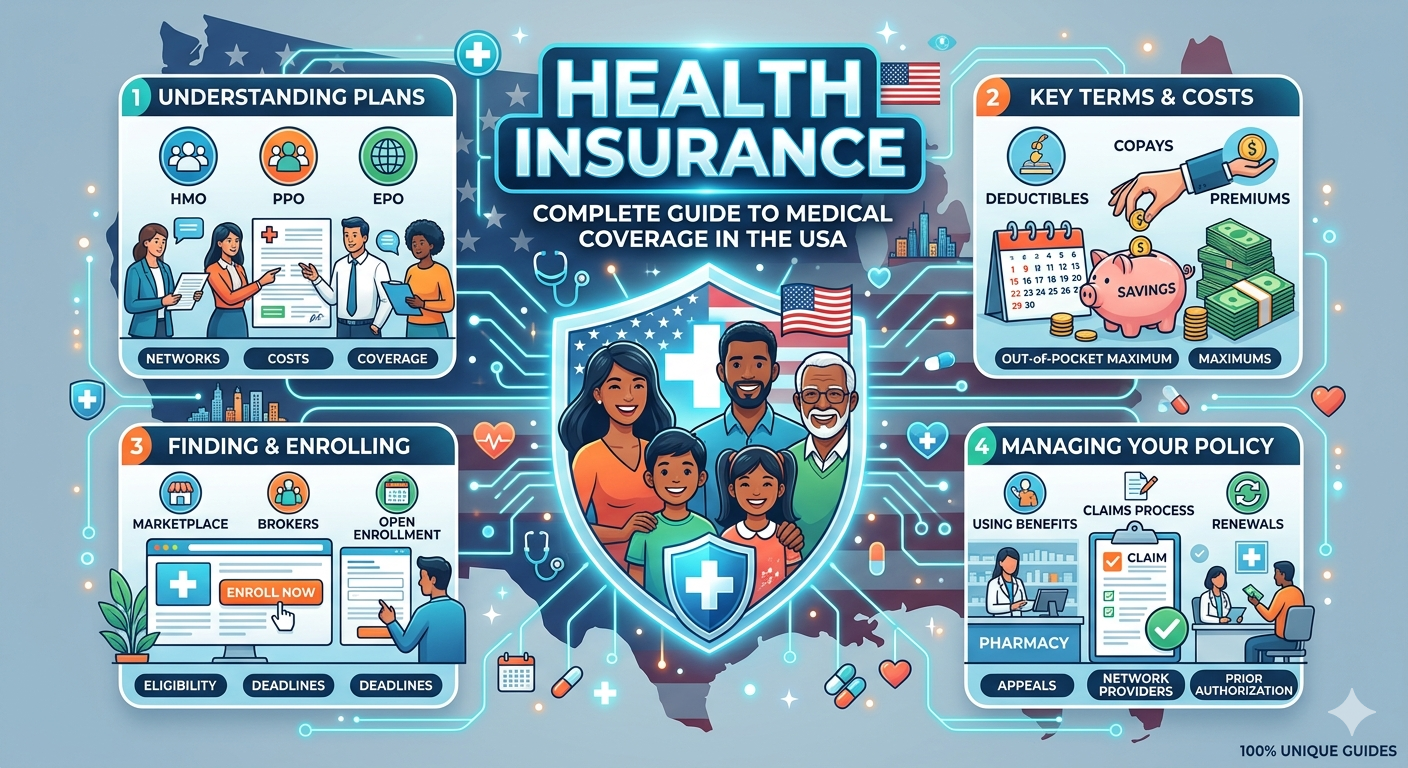
Health insurance is one of the most important financial protections available in the United States. Medical treatment in America can be extremely expensive, and even a simple hospital visit may cost thousands of dollars. Health insurance helps individuals and families manage these expenses by providing financial support for medical care, emergency treatment, surgeries, medications, and preventive healthcare services.
In today’s fast-changing world, healthcare costs continue to rise, making health insurance essential for long-term financial stability and personal well-being. Millions of Americans rely on private insurance companies, employer-sponsored plans, and government healthcare programs to access quality medical services without facing overwhelming financial pressure.
This article explains everything about health insurance, including how it works, major coverage types, benefits, costs, claim procedures, and tips for choosing the right policy.
What Is Health Insurance?
Health insurance is a contract between a policyholder and an insurance company. The individual pays regular premiums, and the insurer agrees to cover certain medical expenses according to the policy terms.
Health insurance helps pay for healthcare services such as:
- Doctor visits
- Emergency treatment
- Hospital stays
- Surgeries
- Prescription medications
- Preventive care
- Diagnostic tests
- Specialist consultations
The main purpose of health insurance is to reduce the financial burden of medical treatment and improve access to healthcare services.
Importance of Health Insurance
Healthcare expenses in the USA are among the highest in the world. Without insurance, medical emergencies can create serious financial problems for individuals and families.
Health insurance is important because it helps:
- Cover expensive medical treatments
- Reduce out-of-pocket healthcare costs
- Provide access to quality doctors and hospitals
- Protect savings and assets
- Support preventive healthcare
- Improve long-term health management
Many people also rely on health insurance for routine checkups, vaccinations, and ongoing treatment for chronic conditions.
How Health Insurance Works
Health insurance works through a cost-sharing system between policyholders and insurance providers.
Premiums
A premium is the monthly or yearly amount paid to maintain insurance coverage.
Deductibles
The deductible is the amount a policyholder must pay before the insurance company begins covering costs.
Copayments
A copayment is a fixed amount paid for specific medical services, such as doctor visits or prescription drugs.
Coinsurance
Coinsurance refers to the percentage of medical costs shared between the policyholder and the insurance provider after the deductible is met.
Out-of-Pocket Maximum
This is the maximum amount a person must pay in a year before the insurance company covers most additional expenses.
Understanding these terms is important when comparing health insurance plans.
Major Types of Health Insurance in the USA
Employer-Sponsored Health Insurance
Many Americans receive health insurance through their employers. Employers often pay part of the premium cost, making coverage more affordable for employees.
These plans usually include:
- Medical coverage
- Prescription benefits
- Preventive care
- Specialist services
Employer-sponsored plans are among the most common forms of health insurance in the United States.
Individual Health Insurance Plans
People who are self-employed or not covered through employers may purchase individual health insurance policies from private companies or healthcare marketplaces.
Coverage options and pricing vary depending on age, health status, and location.
Family Health Insurance
Family plans provide coverage for spouses and children under a single policy. These plans are often more affordable than purchasing separate policies for each family member.
Government Health Insurance Programs
The US government offers healthcare programs for eligible individuals.
Common programs include:
- Medicare for seniors and certain disabled individuals
- Medicaid for low-income individuals and families
- Children’s Health Insurance Program (CHIP)
These programs help millions of Americans access affordable healthcare services.
Short-Term Health Insurance
These plans generally offer limited benefits compared to comprehensive policies.
Benefits of Health Insurance
Financial Protection
Health insurance protects individuals from extremely high medical bills and unexpected healthcare expenses.
Access to Preventive Care
Most insurance plans cover preventive services such as vaccinations, annual checkups, and health screenings.
Better Healthcare Access
Insured individuals can access a wider network of hospitals, doctors, and specialists.
Emergency Coverage
Health insurance helps cover emergency room visits, ambulance services, and urgent medical procedures.
Prescription Drug Coverage
Many plans include financial assistance for medications and ongoing treatment costs.
Common Health Insurance Coverage Areas
Health insurance plans may cover various healthcare services, including:
- Primary care visits
- Emergency treatment
- Mental health services
- Maternity care
- Rehabilitation services
- Physical therapy
- Laboratory testing
- Pediatric care
Coverage details vary depending on the insurance provider and policy type.
Factors Affecting Health Insurance Costs
Age
Older individuals often pay higher premiums because of increased healthcare risks.
Location
Healthcare costs and insurance pricing differ between states and regions.
Coverage Level
Plans with broader benefits and lower deductibles usually cost more.
Tobacco Use
Smokers may face higher insurance premiums.
Family Size
Adding dependents to a policy can increase monthly costs.
Medical History
Some factors related to health conditions may affect plan options and expenses.
Common Challenges in Health Insurance
Although health insurance provides valuable protection, policyholders sometimes experience challenges.
High Premium Costs
Monthly insurance payments can be expensive for some families.
Complex Policy Terms
Insurance documents often contain technical language that may confuse consumers.
Limited Provider Networks
Certain plans only cover treatment from approved doctors and hospitals.
Claim Denials
Insurance companies may deny claims because of documentation issues or policy exclusions.
Out-of-Pocket Expenses
Deductibles and copayments can still create financial pressure despite having insurance coverage.
Carefully reviewing policy terms helps reduce misunderstandings and unexpected costs.
Tips for Choosing the Best Health Insurance Plan
Compare Multiple Plans
Researching several insurance providers helps identify better coverage and pricing options.
Evaluate Coverage Needs
Choose a plan that matches personal healthcare requirements and medical history.
Review Network Providers
Check whether preferred doctors and hospitals are included in the network.
Understand Policy Costs
Review premiums, deductibles, copayments, and out-of-pocket maximums before purchasing a policy.
Consider Prescription Coverage
Ensure the plan includes necessary medications and treatments.
Technology and the Future of Health Insurance
Technology is transforming the healthcare and insurance industries in the USA. Many insurance companies now offer digital tools that improve convenience and customer experience.
Modern features include:
- Online policy management
- Telemedicine services
- Mobile healthcare apps
- AI-powered customer support
- Digital claim processing
- Electronic medical records
Telehealth services have become especially popular, allowing patients to consult doctors remotely.
Artificial intelligence is also helping insurers improve fraud detection, customer service, and claim processing efficiency.
Why Health Insurance Is Essential Today
Unexpected medical emergencies can happen at any time. Without proper coverage, individuals may face serious financial hardship due to expensive hospital bills and ongoing treatment costs.
Health insurance provides:
- Financial security
- Better healthcare access
- Faster medical treatment
- Long-term wellness support
- Protection for families and dependents
For many Americans, health insurance is not only a financial tool but also an important part of overall life planning.
Final Thoughts
Health insurance is one of the most valuable forms of financial protection in the United States. From routine checkups to emergency surgeries, insurance coverage helps individuals manage healthcare expenses and access quality medical services.
Understanding how health insurance works, comparing plans carefully, and selecting appropriate coverage can help individuals protect both their health and financial future. While healthcare costs continue to rise, modern insurance services and digital healthcare solutions are making coverage more accessible and efficient for millions of Americans.
Choosing the right health insurance plan is an important step toward achieving long-term financial stability, medical security, and peace of mind for individuals and families alike.

