

Introduction
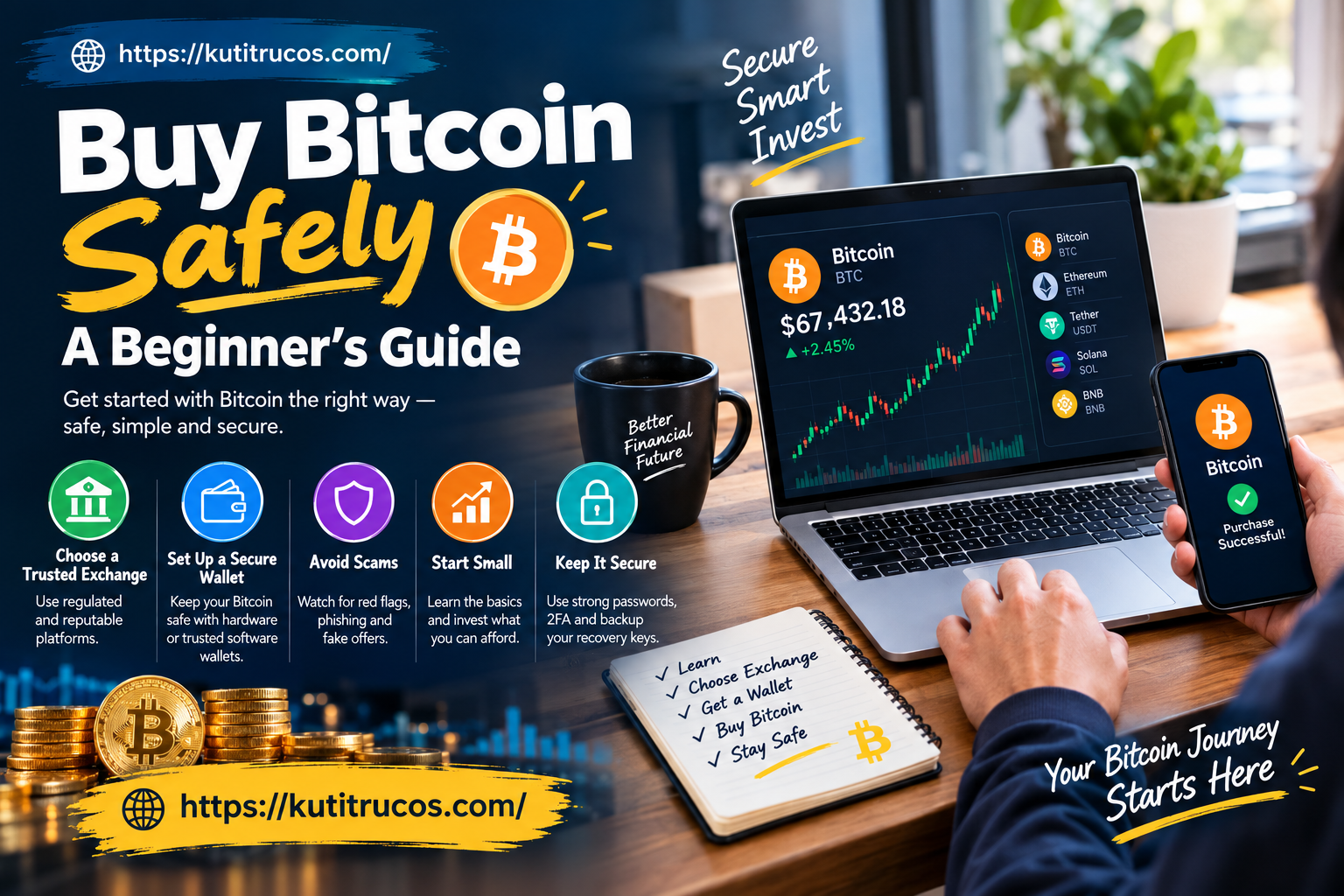
Buying Bitcoin for the first time can feel complicated. You may have questions about which platform to use, how to pay, where to store your coins, and what happens if your account gets hacked. With numerous cryptocurrency services, online advertisements, and investment recommendations competing for attention, knowing how to separate a legitimate service from a risky offer is essential.
For beginners in the United States, buying Bitcoin safely starts with a straightforward principle: protect your money and personal information before making a transaction. That means researching the platform, enabling strong account security, understanding transaction fees, and deciding how you will store your Bitcoin before you purchase it.
Bitcoin is a digital asset whose market price can rise or fall substantially. Buying it through a legitimate platform does not eliminate market risk, and secure storage cannot prevent an investment from losing value. The US Securities and Exchange Commission warns that crypto-related investments can involve significant losses, technical risks, and limited investor protections.
This guide explains the process in practical terms for US readers, from choosing a buying method to protecting a wallet and recognizing fraudulent offers. It is intended for education, not as a recommendation to buy Bitcoin or a prediction about its future price.
1. Understand Bitcoin Before Buying
Bitcoin is a digital currency that operates on a decentralized network. Transactions are recorded on a public blockchain, and ownership is controlled through cryptographic keys.
Unlike money held in a conventional bank account, Bitcoin does not come with the same deposit protections simply because it is stored in a digital wallet or on an exchange. If you lose access to a self-custody wallet or send Bitcoin to the wrong address, recovering the funds may be difficult or impossible. The SEC has also warned about volatility, theft, platform failures, and the potential lack of familiar financial protections.
Before purchasing, make sure you understand these basic points:
- Bitcoin’s price can change rapidly.
- Exchange accounts and personal wallets have different security responsibilities.
- Cryptocurrency transfers generally cannot be reversed like an ordinary card payment.
- Platform fees, network fees, and withdrawal costs can reduce the amount you receive.
- Laws and platform availability differ by location.
You do not need to become a blockchain expert before buying a small amount, but you should understand what you are purchasing and how you could lose money.
As digital currencies become part of broader conversations about financial technology, they also reflect the growing influence of innovation on modern life. From blockchain networks to digital wallets, emerging technologies are changing how people interact with digital assets and online services. For a broader perspective on the relationship between innovation, modern aesthetics, and advanced technology, explore this Futuristic Elegance, Modern Design, Technology and Luxury guide.
2. Choose a Reputable Bitcoin Platform
For many beginners, buying through an established cryptocurrency exchange or brokerage-style service is simpler than purchasing directly from an unfamiliar individual.
A platform typically lets users create an account, verify their identity, add funds, purchase Bitcoin, and view their holdings. The exact process depends on the service and the user’s location.
However, a familiar name or professional-looking website does not automatically establish that a platform is safe. Fraudulent websites can imitate legitimate businesses, and even genuine cryptocurrency companies can experience operational or financial problems.
What Should You Check?
Verify the website address. Find the platform through a trusted source and check its exact domain before entering login details. Avoid links sent by strangers in social media messages or unsolicited emails.
Research the company’s background. Look for its legal business name, available regulatory information, published fees, security documentation, and customer-support options.
Check availability in your state. Cryptocurrency services may have different operating permissions and product availability across the United States.
Read recent customer feedback. Look for repeated complaints about blocked withdrawals, unexplained fees, impersonation, or inaccessible support. Reviews can be incomplete or manipulated, so use them as one part of your research rather than as proof.
Understand how assets are held. Find out whether the platform holds Bitcoin on your behalf, what withdrawal options are available, and what happens if the company experiences financial difficulties.
Review the fee schedule. A low advertised trading fee may not include the spread, deposit charges, withdrawal costs, or network fees.
The CFTC advises consumers to research the legitimacy of cryptocurrency platforms and digital wallets before providing payment details or sensitive personal information.
3. Compare the Total Cost Before You Buy
The price displayed on a Bitcoin trading screen is not necessarily the complete cost of your purchase.
A platform may charge a transaction fee, incorporate a spread between its buying and selling prices, or apply different fees depending on the payment method. Sending Bitcoin to an external wallet may involve another withdrawal charge.
Consider a hypothetical example. You decide to spend $100 on Bitcoin. The platform charges a $2 purchase fee, leaving $98 available for the Bitcoin purchase before considering any additional spread or charges. If you later withdraw your Bitcoin, a separate withdrawal fee may apply.
The exact numbers vary by platform; this example simply illustrates why you should review the full transaction cost.
Before confirming your order, check:
- The amount you intend to spend.
- The estimated Bitcoin you will receive.
- Any transaction or service fee.
- The quoted buying price and any applicable spread.
- Whether the payment method adds a charge.
- Whether an external wallet withdrawal costs extra.
For a first purchase, a straightforward order using a payment method you understand is generally easier to evaluate than a complicated trading strategy.
4. Create an Account With Strong Security
Once you have researched a platform, protect the account before depositing money.
Use a Unique Password
Reusing passwords creates a risk: if one service is compromised, attackers may attempt to use the same credentials elsewhere.
Enable Multifactor Authentication
Multifactor authentication adds another verification step beyond your password. Depending on the platform, options may include an authenticator app, a security key, or other verification methods.
Follow the platform’s official security instructions, and never share one-time authentication codes with someone claiming to be customer support.
Secure Your Email Account
Protect it with a unique password and multifactor authentication as well.
Check the recovery email address and phone number associated with the account.
Enable Available Account Protections
Depending on the provider, security features may include withdrawal address allowlists, withdrawal delays, login alerts, device verification, and transaction notifications.
Review the available options and enable those that fit your needs. A withdrawal allowlist, for example, can limit transfers to previously approved addresses when implemented correctly.
Security settings are most useful when you configure them before an incident occurs.
5. Complete Identity Verification Carefully
Many legitimate cryptocurrency platforms require identity verification before allowing purchases or withdrawals. In the United States, a provider may request identifying details and documents to meet applicable legal and compliance requirements.
Only submit sensitive information through the platform’s verified website or official application. Check the domain carefully before uploading identification documents.
Be cautious if someone contacts you through an unsolicited message and asks you to send a passport, driver’s license, Social Security number, or financial documents through a private chat.
A fraudulent service may use a convincing interface and imitate a legitimate identity-verification process. Confirm the company’s identity independently before proceeding.
Never share your password, recovery phrase, or private wallet key to complete verification. A legitimate identity check does not require you to disclose the secret recovery phrase for a self-custody wallet.
6. Make Your First Bitcoin Purchase
After selecting a platform and securing your account, the purchasing process is generally straightforward.
<list marker=”number” gap={2}> <list-item>**Sign in to your verified account.** Check the website address or open the official application you obtained from a trusted source.</list-item> <list-item>**Add funds using an available payment method.** Depending on the provider, options may include a bank transfer, debit card, or other supported methods. Review the costs and processing times first.</list-item> <list-item>**Open the Bitcoin purchase screen.** Confirm that you are selecting Bitcoin (BTC), not another cryptocurrency with a similar name or symbol.</list-item> <list-item>**Enter the amount.** You can generally purchase a fraction of a Bitcoin. You do not need to buy one whole Bitcoin.</list-item> <list-item>**Review the order summary.** Check the quoted price, amount of BTC, fees, and payment details.</list-item> <list-item>**Confirm the purchase.** Proceed only when the transaction details match your expectations.</list-item> <list-item>**Save your confirmation.** Keep a record of the order, including its date, amount, and applicable fees.</list-item> </list>
A small initial purchase can help you learn how the platform works without committing a large amount of money. It does not make Bitcoin itself less volatile, but it limits how much you put at risk while learning the process.
7. Decide Where to Store Your Bitcoin
After buying Bitcoin, you need to understand where it is held and who controls the keys.
There are two broad approaches: leaving Bitcoin with a custodial service or using a self-custody wallet.
Custodial Storage
With custodial storage, a platform or service holds the private keys associated with your Bitcoin. You typically sign in with an account to view your balance, trade, or request a withdrawal.
This arrangement can be easier for beginners because the provider handles much of the technical wallet management.
However, you depend on the provider’s security, operational reliability, and withdrawal policies. A displayed account balance does not eliminate the possibility of platform outages, restrictions, or other problems.
Before leaving a substantial balance on an exchange, review its custody arrangements and the protections it actually provides. Do not assume that cryptocurrency holdings receive the same insurance protections as money deposited in an insured US bank account.
Self-Custody Wallets
A self-custody wallet gives you control over the private keys used to manage your Bitcoin. Depending on the wallet, it may be a mobile application, desktop program, hardware device, or another supported format.
Self-custody provides more direct control but also transfers responsibility to you. If you lose the necessary keys or recovery information, there may be no customer-support department able to restore access.
For larger long-term holdings, some users consider a hardware wallet that keeps private keys isolated from an internet-connected device. Hardware wallets still require careful setup, secure backup, and protection from tampering or fraudulent recovery instructions.
Choose a wallet based on your technical comfort, security needs, and the amount you intend to hold. Do not rush into self-custody without understanding the recovery process.
8. Protect Your Recovery Phrase and Private Keys
For wallets that use a recovery phrase, the phrase may be the critical information needed to restore access to your funds.
Treat it like the key to a valuable safe.
- Never send it to someone who contacts you unexpectedly.
- Do not enter it into a website because a message claims your wallet needs verification.
- Avoid storing an unencrypted copy in email, chat messages, or cloud documents.
- Keep an offline backup in a secure location appropriate to your circumstances.
- Follow the wallet manufacturer’s official backup instructions.
- Do not photograph or share the phrase casually.
A recovery phrase is not the same as an ordinary password. Someone who obtains it may be able to take control of the assets associated with the wallet.
Be particularly careful with fake support agents. Scammers may claim that they can fix a transaction, verify a wallet, or recover missing funds if you reveal your recovery phrase. Never provide it to them.
9. Learn How to Recognize Bitcoin Scams
Many cryptocurrency losses begin with deception rather than a technical failure. Scammers often exploit excitement about rising prices, trust built through online conversations, and the fear of missing an opportunity.
The SEC and FTC warn about fraudulent investment offers that promise unusually high returns, create urgency, or present fabricated account balances and testimonials.
Guaranteed Profit Promises
Bitcoin’s price can rise or fall, and no legitimate seller can guarantee that you will earn a particular return from buying it.
Be wary of anyone promising daily profits, risk-free growth, or a fixed percentage return from a Bitcoin investment.
Fake Investment Managers
A person may contact you through a social network or messaging app and offer to trade Bitcoin on your behalf. They may display screenshots of impressive earnings or direct you to a professional-looking website.
These displays can be fabricated. Never transfer Bitcoin to a stranger merely because they claim to have a successful trading record.
Romance and Friendship Scams
Some fraudsters build a friendship or romantic relationship before introducing an investment opportunity. They may encourage you to use a particular platform or send cryptocurrency to a wallet they control.
The SEC advises consumers to be cautious about investment opportunities introduced through unsolicited online contact, even when the person appears trustworthy.
Fake Support Messages
A scammer may impersonate an exchange, wallet company, or security team and claim that your account is in danger.
Instead of clicking the message’s link, open the verified application or type the known website address yourself. Contact support through the provider’s official channels.
Recovery Scams
If you lose Bitcoin, another person may claim they can recover it for an advance fee. They might pretend to be a lawyer, investigator, or cryptocurrency recovery specialist.
Be extremely cautious. The SEC warns that recovery scammers may target victims again by demanding additional payments to release supposedly recovered funds.
If you suspect a scam, stop sending money, preserve relevant messages and transaction records, and report the incident to the appropriate authorities.
10. Avoid Common Transaction Mistakes
Bitcoin transfers require attention to detail. Before moving funds between platforms or wallets, verify the destination and network information.
Check the receiving address. Compare the destination address carefully before sending. Malware or malicious software may replace a copied address with one controlled by an attacker.
Confirm compatibility. Ensure the receiving service or wallet supports the asset and network you intend to use. Bitcoin sent using an incompatible process may be difficult or impossible to recover.
Understand the withdrawal fee. The amount you receive can be lower than the amount sent if a fee is deducted.
Do not rush. Scammers often pressure victims to act immediately. Pause if someone insists that you must send funds right now to protect your account or unlock a reward.
Consider a small test transfer. For a larger withdrawal to a new self-custody address, a small test transfer may help you confirm that the destination works. However, it can involve an additional fee, and it does not eliminate all risks.
Once a Bitcoin transaction is confirmed on the network, it generally cannot be reversed by contacting a bank or asking the blockchain to cancel it.
11. How Much Bitcoin Should a Beginner Buy?
There is no universally correct starting amount. It depends on your financial situation, existing obligations, risk tolerance, and reasons for buying.
Before purchasing, make sure your essential expenses and emergency savings are accounted for. Do not use rent money, bill payments, borrowed money, or funds needed for near-term expenses to speculate on Bitcoin.
Because the price can fall sharply, consider what would happen if the amount you invest lost much or even all of its value. The SEC’s guidance is clear that speculative investments should only involve money an investor can afford to lose entirely.
Some beginners prefer to make one small purchase to understand the process. Others consider purchasing smaller amounts at intervals rather than investing everything at once. Neither approach guarantees a profit or prevents losses.
Avoid increasing your investment simply because the price is rising or because someone online claims that an opportunity will disappear soon. Make decisions based on your own financial circumstances rather than social pressure.
12. Understand Taxes and Recordkeeping in the USA
Buying Bitcoin can create tax and recordkeeping considerations, particularly when you later sell it, exchange it for another asset, or use it to pay for goods and services.
US tax treatment depends on the transaction and applicable rules. Purchasing Bitcoin with US dollars is different from selling Bitcoin for a gain or using it in a taxable transaction.
Keep records of:
- The date and amount of each purchase.
- The dollar value at the time of the transaction.
- Trading, transfer, and network fees.
- Sales, exchanges, and other disposals.
- Any relevant transaction confirmations.
Do not rely solely on a platform’s current account balance as a complete tax record. If you trade frequently or use several wallets, maintaining organized transaction records can make reporting easier.
Consult the IRS’s current digital-asset guidance or a qualified tax professional for advice on your specific circumstances. Do not assume that small transactions are automatically exempt from all tax obligations.
13. What to Do If Your Bitcoin Account Is Compromised
If you believe someone has accessed your exchange account or wallet, act quickly but avoid following instructions from unknown people who offer help.
- Use a trusted device. Avoid using a device you suspect is infected.
- Secure your email account. Change its password and enable stronger authentication.
- Contact the platform through official channels. Ask whether it can secure the account or restrict unauthorized activity.
- Review account activity. Record unfamiliar logins, withdrawals, and changes to security settings.
- Preserve evidence. Save emails, messages, wallet addresses, transaction IDs, and screenshots.
- Report suspected fraud. In the United States, the FTC and relevant law-enforcement or regulatory agencies provide reporting options for scams.
- Avoid recovery promises. Do not pay an unfamiliar person who guarantees that lost Bitcoin can be returned.
If a self-custody wallet’s recovery phrase has been exposed, treat the wallet as compromised. If you still control the funds and understand how to move them safely, seek guidance from the wallet’s verified documentation and transfer them to a newly secured wallet. Never share the old or new recovery phrase with a purported helper.
Frequently Asked Questions
What Is the Safest Way to Buy Bitcoin?
A sensible starting point is to research a reputable platform available in your state, secure your account with a unique password and multifactor authentication, review all fees, and make a purchase only after checking the transaction details. No method eliminates every risk.
Can I Buy Less Than One Bitcoin?
Yes. Bitcoin can be divided into smaller units, so you do not need to purchase an entire Bitcoin. The minimum order depends on the platform.
Is Bitcoin Guaranteed to Make Money?
No. Bitcoin’s price can fluctuate substantially, and investors can lose money. Be suspicious of anyone promising guaranteed returns or claiming that losses are impossible.
Should I Keep Bitcoin on an Exchange or in a Wallet?
That depends on your needs and your ability to manage private keys. Exchange storage may be easier to use, while self-custody gives you more direct control but greater responsibility for security and recovery.
Can Bitcoin Transactions Be Reversed?
Generally, confirmed Bitcoin network transactions cannot be reversed through a conventional bank-style dispute. Verify the destination address and amount before sending.
Do I Need a Special Computer to Buy Bitcoin?
No. Many platforms support ordinary computers and smartphones. What matters is using a trusted device, verified software, a secure internet connection, and strong account protection.
How Can I Tell Whether a Bitcoin Offer Is a Scam?
Be wary of guaranteed returns, pressure to act immediately, unsolicited investment messages, requests for your recovery phrase, and demands for additional money to release funds. Independently verify any company or service before transferring money.
Is Bitcoin Protected Like Money in a Bank?
Do not assume so. Bitcoin held in a wallet or cryptocurrency exchange does not automatically receive the same protections as eligible deposits at an insured US bank. Review the provider’s custody arrangements and the applicable protections carefully.
Final Thoughts
Learning how to buy Bitcoin safely involves more than finding a purchase button. You need to choose a platform carefully, protect your account, understand storage options, review fees, and recognize fraudulent offers.
For beginners in the United States, a cautious approach is more useful than rushing to invest. Start by learning how transactions work, secure your email and trading account, and consider only an amount you can afford to lose. If you use a self-custody wallet, understand the recovery process before transferring funds.
Bitcoin can be bought through legitimate services, but that does not make every investment, platform, or online offer trustworthy. Careful research and consistent security habits can reduce avoidable risks, even though they cannot guarantee that your investment will be safe or profitable.

