

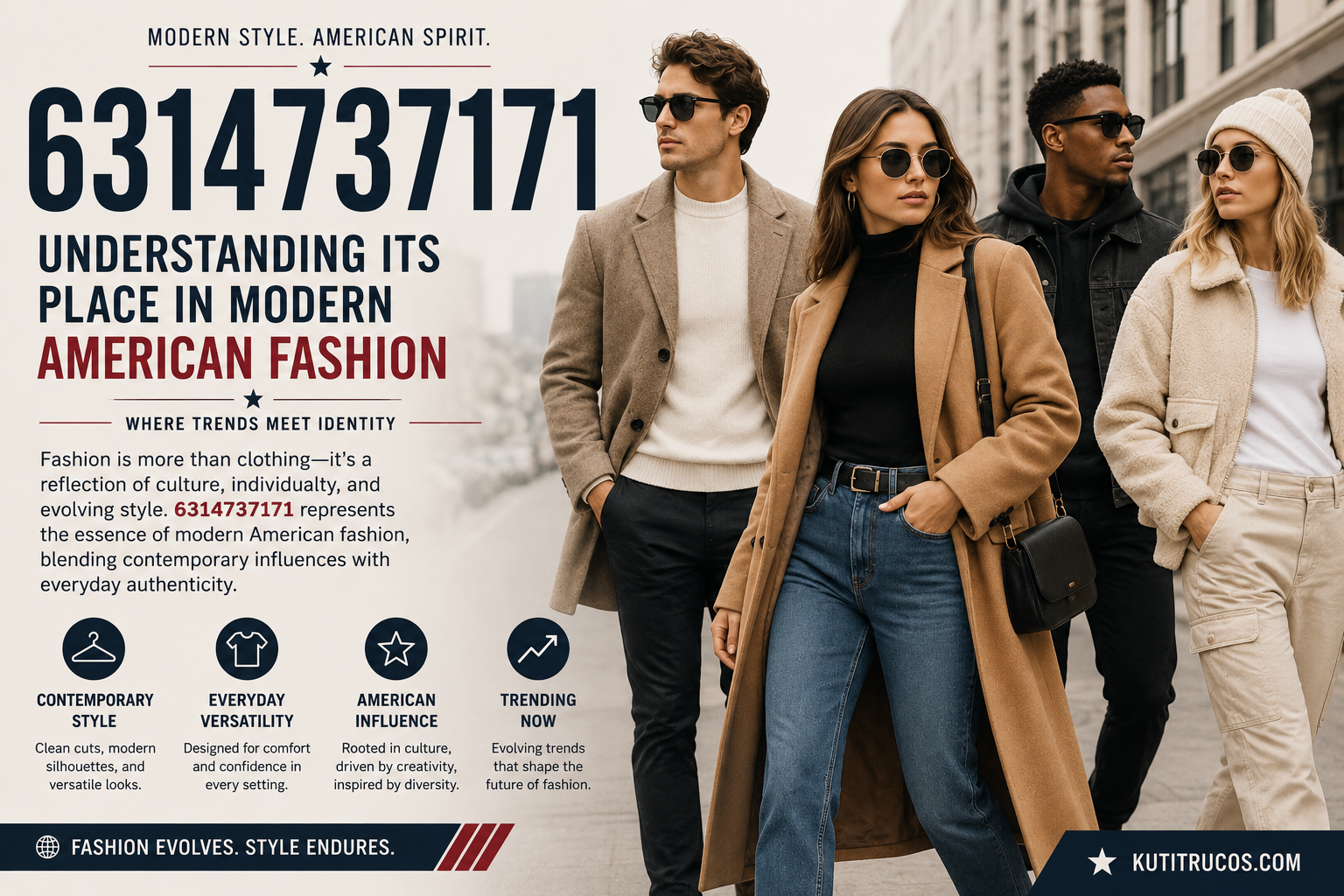
6314737171 and the Importance of Context in American Fashion
Fashion is a broad and constantly changing industry shaped by clothing, footwear, accessories, designers, retailers, cultural movements, and consumer behavior. When a term or number appears in a fashion-related search, understanding its context is essential before assigning it a specific meaning.
6314737171 is a numeric identifier rather than a recognizable American fashion brand, clothing style, or established product name. Because of that, it is more useful to approach the subject through the broader ideas that define modern American fashion: product identification, digital shopping, wardrobe organization, fashion discovery, and the relationship between consumers and clothing.
In today’s United States fashion market, numbers can appear in many places. They may represent product references, catalog identifiers, inventory codes, order references, or other internal information. A number by itself does not necessarily describe the design, material, fit, or cultural significance of a fashion product.
Understanding this distinction can help consumers make better decisions when researching clothing online.
Why Product Identification Matters in American Fashion
American fashion has become increasingly connected to e-commerce. Shoppers can discover clothing through online stores, social media, search engines, fashion publications, marketplaces, and brand websites.
With millions of products available, accurate product identification has become important.
A product may have a name, model number, SKU, style number, color code, or other identifier. These references help retailers and manufacturers organize products and allow consumers to locate specific items.
Numbers Are Common in Online Retail
A product number may look confusing to someone who is searching for a fashion item. However, retailers frequently use numerical systems to distinguish between similar products.
Two shirts might have almost identical names but different numbers because they have different colors, materials, seasons, or production versions.
This is especially important when shopping online because photographs alone may not provide enough information.
The Growth of Digital Fashion Shopping
The American fashion industry has experienced a major transformation through online shopping.
Consumers no longer have to visit a physical store to discover new clothing. They can browse collections, compare prices, read descriptions, examine photographs, and research sizing from home.
This convenience has changed how people approach fashion.
Instead of simply purchasing whatever is available locally, shoppers can search for very specific products and styles.
A numeric reference such as 6314737171 can therefore become relevant if it is connected to a particular retailer or product database. Without that additional context, however, the number cannot reliably identify a specific fashion item.
From Product Numbers to Personal Style
Modern fashion is ultimately about more than product identification.
Once consumers find a garment, the next question is how it fits into their personal wardrobe.
American style is known for its diversity. Someone in New York may prefer minimalist urban clothing, while a consumer in California may favor relaxed streetwear. Someone in Texas might incorporate Western influences, while another shopper may prefer traditional preppy fashion.
These different approaches demonstrate that there is no single American fashion identity.
Building a Versatile Wardrobe
A versatile wardrobe typically includes pieces that can be worn in multiple situations.
For men, this might include:
- Well-fitting denim
- Neutral T-shirts
- Button-down shirts
- Chinos
- Casual jackets
- Knitwear
- Sneakers
- Boots
- A versatile blazer
For women, useful wardrobe foundations may include:
- Denim
- Blouses
- Knit tops
- Dresses
- Tailored trousers
- Cardigans
- Jackets
- Sneakers
- Boots
- Versatile accessories
The goal is not to own the largest possible collection but to have clothing that works together.
The Role of Product Codes in Fashion Research
Product codes can be useful when researching a specific garment.
If a retailer provides a product number, consumers can use it to distinguish between similar styles. This can be particularly helpful when searching for an item that is no longer prominently displayed on a website.
Product identifiers can also help with customer service.
For example, if a shopper needs information about sizing, availability, color, replacement, or return options, providing the exact product reference can make communication easier.
What Information Should Be Checked?
When a numeric product reference is available, shoppers should look for supporting information such as:
Brand: Which company produced the item?
Product name: What is the garment called?
Category: Is it a blazer, hoodie, shirt, dress, shoe, or accessory?
Material: What fabrics were used?
Fit: Is the product slim, regular, relaxed, oversized, or tailored?
Color: What is the official color description?
Size: Which sizing system is used?
Retailer: Where is the item officially sold?
These details are far more useful than the number alone.
American Fashion and the Search for Authenticity
Online fashion has also increased the importance of authenticity.
Consumers may encounter the same-looking product across multiple websites, but the source and product information can differ.
Authenticity matters because counterfeit or incorrectly described products can create problems with quality, fit, returns, and customer expectations.
When researching a product using a number such as 6314737171, consumers should ideally connect that number with an official brand or retailer listing.
A reliable product page should provide clear information about the garment and the company selling it.
Why Official Information Matters
Official product information can help confirm important details.
This includes the actual materials, sizing, care instructions, available colors, and intended fit.
Third-party listings may contain incomplete or inaccurate information, particularly when products are resold.
For consumers interested in long-term wardrobe building, accurate information is an important part of making responsible purchasing decisions.
Fashion Trends in the United States
While product identification may begin with a number or name, the larger fashion story is about how consumers use clothing.
Current American fashion increasingly combines comfort with sophistication.
Relaxed tailoring, oversized sweatshirts, sneakers, denim, technical outerwear, vintage-inspired garments, and classic American basics can all appear in the same wardrobe.
This mixing of categories has made fashion more personal.
Casualwear Meets Tailoring
One of the strongest developments in men’s and women’s American fashion is the combination of casual and formal pieces.
A tailored blazer can be worn with jeans and sneakers. A hoodie can be layered underneath a structured coat. A casual dress can be styled with sneakers instead of traditional formal footwear.
These combinations create outfits that are practical without appearing careless.
The Importance of Fit in American Fashion
Regardless of the product identifier, fit remains one of the most important aspects of clothing.
A garment can have an attractive design and high-quality materials but still look unsuitable if the size or silhouette is incorrect.
American consumers have increasingly embraced different fits, from slim and tailored styles to relaxed and oversized silhouettes.
Choosing Fit Based on Lifestyle
Someone who spends most of the day at an office may prefer structured clothing.
A person who works remotely might prioritize comfortable relaxed silhouettes.
Travelers may prefer lightweight layers and versatile footwear.
There is no universally correct fit. The best choice depends on the individual’s lifestyle and personal preferences.
Fashion and Seasonal Dressing in the USA
The United States includes a wide variety of climates.
New England can experience cold winters, while parts of California have mild weather throughout much of the year. Southern states can have hot and humid summers, while northern regions may require substantial winter layering.
This diversity strongly influences American fashion.
Spring and Summer
Lightweight fabrics, breathable shirts, dresses, shorts, sneakers, and relaxed trousers become particularly useful.
Neutral colors can create a simple foundation, while brighter shades can introduce seasonal personality.
Fall and Winter
Layering becomes increasingly important.
Sweaters, coats, jackets, boots, scarves, and heavier denim can help create practical outfits while providing opportunities to combine different textures.
This seasonal flexibility is one reason classic wardrobe staples remain important.
Sustainable Fashion and Smarter Shopping
Another major development in American fashion is growing interest in responsible consumption.
Consumers are increasingly asking how long an item will last and whether it can be worn with existing clothing.
This encourages a move away from purely impulse-driven shopping.
A versatile jacket that works with several outfits may provide more value than a highly specific trend piece that is only worn once.
Product identification also supports this process because accurate information allows consumers to research an item before purchasing.
How to Research an Unknown Fashion Number
If you encounter a number such as 6314737171 associated with a fashion product, the best approach is to avoid assuming what it represents.
Start by checking where the number appeared.
Was it on a product page, receipt, clothing label, email, social media post, or retailer listing?
Next, look for accompanying words, brand names, photographs, or descriptions.
A number combined with a brand name or product category becomes much easier to identify.
Check Multiple Details
Search for the exact number together with any available brand or product information.
For example, if the number appeared next to a jacket, the relevant search would ideally include both the identifier and the garment category.
This provides considerably more context than searching the number by itself.
The Future of Fashion Identification
Technology is likely to make product identification even easier.
Artificial intelligence, visual search, digital product databases, barcode scanning, and improved e-commerce systems are changing how shoppers discover clothing.
In the future, consumers may be able to photograph an item and quickly receive information about its brand, material, model, and availability.
This development could make fashion research faster while also helping shoppers make more informed decisions.
Final Thoughts
6314737171 does not, by itself, provide enough information to identify a particular fashion product, brand, or trend. It is best treated as a numerical reference that requires additional context.
That distinction is important in modern American fashion, where millions of products are sold through online retailers and marketplaces. Product numbers, SKUs, model references, and other identifiers help organize this enormous marketplace, but they need to be connected with reliable information before consumers can understand what they represent.
The broader lesson is that successful fashion shopping involves more than recognizing a product name or number. Consumers should consider brand authenticity, material, fit, quality, versatility, season, styling possibilities, and long-term value.
American fashion continues to evolve because consumers have more freedom than ever to combine different influences. Classic denim can be worn with contemporary sneakers, tailoring can be mixed with casualwear, and vintage-inspired designs can sit alongside modern technical clothing.
As digital shopping continues to grow, accurate product identification will become increasingly important. A number such as 6314737171 may be only a small piece of information, but when combined with the right brand and product context, it can help shoppers navigate the increasingly complex world of modern fashion.
Ultimately, great American style is not defined by a product number. It is defined by how thoughtfully a person chooses, combines, and wears the pieces that become part of their everyday life.

