

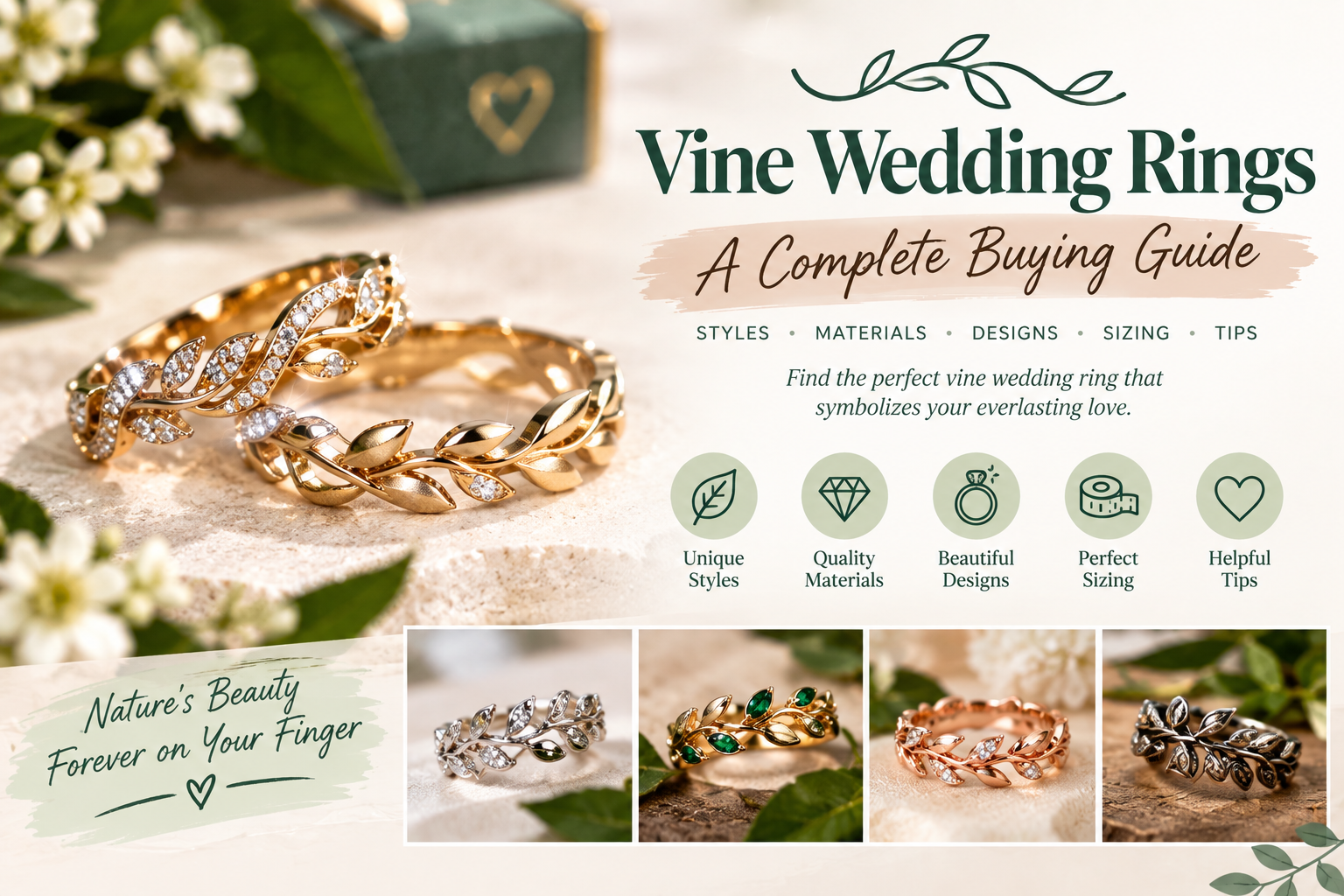
Vine wedding rings bring together the timeless meaning of marriage and the natural beauty of flowing botanical design. Instead of relying on a completely straight or traditional band, these rings often feature curved lines, leaves, branches, twisting details, or small floral elements that appear to grow around the finger.
For couples who want wedding jewelry with a romantic and organic character, vine-inspired rings offer an alternative to conventional plain bands. They can be delicate and understated or detailed and dramatic, depending on the metal, gemstones, engraving, and overall construction.
The appeal of a vine wedding ring is not only visual. The flowing design can also represent growth, connection, and two lives developing together. Botanical jewelry designers frequently use vines and branches to communicate ideas such as shared journeys and lasting growth.
Whether you are shopping for a wedding band, matching bridal set, or a custom ring, understanding the different styles can help you find a design that feels personal while remaining practical for everyday wear.
What Are Vine Wedding Rings?
Vine wedding rings are wedding bands inspired by vines, branches, leaves, flowers, and other natural forms.
The design may include a single vine traveling around the band or several branches that overlap and intertwine.
Some rings are highly realistic, with sculpted leaves and botanical textures. Others are more abstract, using gentle curves and small gemstones to suggest a growing vine without directly copying one from nature.
Common features include:
- Curved metal lines
- Leaf-shaped details
- Branch-inspired patterns
- Small flowers
- Twisted bands
- Diamond accents
- Engraved botanical textures
- Asymmetrical designs
- Interwoven elements
- Nature-inspired filigree
Because there is no single standard vine design, two rings can have completely different appearances while belonging to the same general style.
Why Choose a Vine Wedding Ring?
Traditional wedding bands are often symmetrical and relatively simple.
Vine rings provide another direction.
They can feel more artistic and personalized while still functioning as a traditional wedding band.
A vine-inspired design may appeal to someone who enjoys:
- Nature
- Gardening
- Flowers
- Outdoor settings
- Romantic jewelry
- Vintage-inspired fashion
- Handmade craftsmanship
- Botanical artwork
- Organic shapes
The design can also become part of the couple’s story.
For example, a couple who met while hiking might choose a ring featuring branches or leaves, while someone who loves flowers might select a design incorporating small floral details.
The Symbolism Behind Vine Rings
Vines naturally grow by extending, wrapping, and connecting with surrounding structures.
Because of this, vine-inspired jewelry is often associated with ideas such as:
- Growth
- Connection
- Partnership
- Continuity
- Strength
- New beginnings
- Lifelong relationships
The symbolism is personal rather than a fixed rule.
A couple can choose a vine ring simply because they love its appearance, or they can give the botanical details their own meaning.
Popular Vine Wedding Ring Styles
Vine wedding rings can be divided into several broad design categories.
Delicate Vine Bands
These rings use thin bands and subtle botanical details.
Small leaves may be positioned along one side of the ring or repeated around the entire band.
They work particularly well for people who prefer understated jewelry.
Twisted Vine Rings
A twisted design can create the impression of two branches winding around each other.
The flowing structure gives the ring movement and can symbolize two lives becoming connected.
Leaf Wedding Bands
Leaf designs are among the most recognizable botanical motifs.
Leaves can be:
- Engraved
- Sculpted
- Paved with diamonds
- Cut into the metal
- Positioned around gemstones
A simple leaf pattern can create a nature-inspired look without making the ring excessively ornate.
Floral Vine Rings
Floral designs add flowers to the branches and leaves.
The flowers can be tiny and subtle or large enough to become the main decorative element.
Vintage Vine Rings
Vintage-inspired designs may combine vines with:
- Milgrain
- Filigree
- Engraving
- Antique-style diamonds
- Scrollwork
These details can create an old-world appearance while using modern materials.
Modern Botanical Rings
Modern versions tend to simplify natural shapes.
Instead of realistic leaves, the designer may use smooth curves and geometric interpretations of vines.
This creates a botanical look without making the ring appear traditionally floral.
Choosing the Right Metal
The metal has a major influence on the final appearance of a vine wedding ring.
Popular choices include:
- Yellow gold
- White gold
- Rose gold
- Platinum
GIA notes that yellow gold, rose gold, white gold, and platinum are popular jewelry metals, with metal color affecting how the gemstone and overall ring appear.
Yellow Gold
Yellow gold gives a warm, traditional appearance.
It can work particularly well with botanical motifs because its color can complement the natural theme.
A sculpted leaf or branch can look especially distinctive against a warm gold background.
White Gold
White gold offers a bright, contemporary appearance.
It can make diamonds stand out and works well for couples who want a nature-inspired ring with a modern finish.
In the United States, 14K and 18K gold are common choices, with 14K being particularly popular for jewelry.
Rose Gold
Rose gold introduces a soft pinkish tone.
It can create a romantic appearance and pairs naturally with floral and botanical designs.
Rose gold can also make a vine ring feel more distinctive without requiring elaborate gemstone decoration.
Platinum
Platinum provides a naturally white appearance and is known for its strength and durability.
It can be especially attractive for detailed botanical designs where secure metalwork is important.
GIA describes platinum as a durable choice for engagement and wedding rings and notes its suitability for delicate design work and gemstone settings.
Diamond Vine Wedding Rings
A vine ring does not need diamonds to look beautiful, but gemstones can add sparkle to the botanical design.
Small diamonds can be placed:
- Inside leaves
- Along branches
- Between flowers
- Around the band
- Near the engagement-ring connection
This creates a balance between organic metalwork and traditional bridal sparkle.
A diamond vine wedding band can therefore work with both classic and unconventional engagement rings.
Choosing Diamond Placement
The location of the diamonds changes the overall appearance.
Diamonds on the Leaves
Small diamonds placed inside leaf shapes can make the botanical theme immediately recognizable.
Diamonds Along the Vine
Diamonds following the curved branch can create a continuous line of sparkle.
Diamond Flowers
Small stones can be arranged into flower shapes.
This creates a more decorative and romantic appearance.
Scattered Diamonds
Instead of following one continuous pattern, diamonds can be placed throughout the band.
This creates a more organic and less symmetrical appearance.
Prong, Bezel and Other Settings
The setting determines how gemstones are secured.
GIA explains that a ring setting includes the metal structure that holds the gemstone as well as the band, and different settings affect appearance, light performance, protection, and wearability.
Prong Setting
Small metal prongs hold the gemstone.
This can allow more of the diamond to remain visible and can maximize exposure to light.
However, exposed prongs should be checked periodically because wear can affect their security.
Bezel Setting
A bezel surrounds the edge of the gemstone with metal.
This provides a smooth appearance and additional protection around the stone.
Bezel settings can be particularly attractive in botanical rings because they can blend naturally into sculpted leaves and branches.
Pavé Details
Small diamonds are placed closely together along the surface of the ring.
Pavé can create significant sparkle while allowing the botanical structure to remain visible.
Vine Wedding Bands With Engagement Rings
One of the most important considerations is how the vine wedding band will sit beside the engagement ring.
A highly detailed vine band may not sit perfectly against every engagement ring.
The leaves, branches, flowers, or raised sections may interfere with the engagement-ring setting.
Before purchasing, test the two rings together.
Consider:
- Band height
- Band width
- Curvature
- Center-stone height
- Prong placement
- Leaf position
- Diamond placement
- Finger comfort
Wedding-ring guides similarly recommend checking how a wedding band sits beside an engagement ring when both will be worn together.
Curved Vine Wedding Bands
A curved wedding band can be particularly useful when pairing with an engagement ring.
Instead of following a completely straight path, the band can curve around the center stone.
This allows the botanical elements to create a more natural bridal stack.
Curved bands can also be used when a straight band would leave a noticeable gap.
Matching Wedding Sets
Some couples choose a coordinated engagement ring and wedding band.
A matching vine set may feature:
- The same leaf pattern
- Matching metal
- Similar diamond sizes
- Coordinated branches
- Complementary curves
A complete set can provide a cohesive appearance.
However, matching does not necessarily mean identical.
A simple vine wedding band can complement an elaborate botanical engagement ring without repeating every detail.
Custom Vine Wedding Rings
Custom jewelry can be particularly useful for vine-inspired designs.
Nature is irregular.
Leaves are not perfectly identical, branches curve naturally, and flowers vary in size.
A custom jeweler can incorporate specific elements into the design.
For example, the ring could feature:
- A favorite flower
- A meaningful plant
- Two intertwined branches
- Initials hidden within the leaves
- A wedding date
- A special gemstone
- A custom engraving
GIA notes that custom ring construction can allow buyers to choose metals, settings, gemstones, and other design components according to their preferences.
Engraving Ideas
The inside of the band provides a private location for personalization.
Possible ideas include:
- Wedding date
- Initials
- Short phrase
- Coordinates of a meaningful place
- Anniversary date
- Personal symbol
- A family saying
A vine design can also incorporate hidden engraving within the botanical pattern.
This gives the ring an additional personal layer without changing its overall appearance.
Choosing the Ring Width
Ring width affects both comfort and visual impact.
A narrow vine band can look delicate and elegant.
A wider ring provides more room for:
- Leaves
- Branches
- Gemstones
- Engraving
- Detailed textures
Think about how the ring feels after several hours of wear.
A beautiful ring that feels uncomfortable is unlikely to become a favorite everyday piece.
Comfort Matters
Wedding rings are normally worn frequently, so comfort should be part of the decision.
Look for:
- Smooth interior surfaces
- Rounded edges
- Comfortable width
- Proper sizing
- Secure gemstone settings
- Minimal snagging
Highly raised leaves or sharp decorative elements may catch on clothing.
GIA emphasizes that ring construction and finishing affect comfort and everyday wearability, particularly for detailed settings.
Choosing the Right Size
Accurate sizing is important for any wedding ring.
Finger size can change throughout the day because of temperature and other factors.
When possible, have your finger professionally measured.
If you are buying a ring online, carefully review the seller’s sizing and resizing policies before ordering.
A custom ring can be particularly complicated to resize if the design contains gemstones or intricate botanical elements around much of the band.
Vine Rings for Different Styles
The flexibility of botanical designs means they can work with different personal aesthetics.
Romantic Style
Choose:
- Rose gold
- Floral details
- Small diamonds
- Curved branches
Rustic Style
Consider:
- Yellow gold
- Organic textures
- Matte finishes
- Larger leaf details
Vintage Style
Look for:
- Filigree
- Milgrain
- Antique-inspired shapes
- Engraving
Modern Style
Consider:
- White gold
- Platinum
- Simplified leaves
- Geometric vines
- Minimal gemstones
Nature-Inspired Rings for Men
Vine wedding rings are not limited to traditionally feminine jewelry.
A men’s vine wedding band can use broader branches, subtle leaf engraving, or a textured botanical pattern.
Popular approaches include:
- Wide gold bands
- Matte finishes
- Blackened metal details
- Minimal leaf engraving
- Wood-inspired textures
- Interwoven branches
A couple can also choose rings that share a botanical theme while using different widths and levels of detail.
Matching Rings Without Identical Designs
Matching wedding rings do not have to be exact copies.
For example:
One ring might feature a delicate vine with diamonds.
The other might feature a wider band with engraved branches.
Both can use the same:
- Metal
- Leaf pattern
- Flower
- Engraving
- Design inspiration
This approach allows each person to maintain an individual style while still creating a connected bridal set.
Are Vine Wedding Rings Practical?
A vine wedding ring can be practical for everyday wear if it is well constructed.
The key is not simply the appearance of the design but its craftsmanship.
Check whether:
- Decorative elements are securely attached
- Gemstones are properly set
- Edges are smooth
- The band has adequate thickness
- The clasp is irrelevant because rings do not use one
- The ring does not snag easily
- The interior is comfortable
More intricate designs may require more cleaning and periodic inspection.
Caring for a Vine Wedding Ring
Botanical rings can contain small spaces where dirt and lotion accumulate.
Regular cleaning helps maintain their appearance.
For many jewelry pieces, gentle cleaning with warm water, mild soap, and a soft brush is appropriate, but the correct method depends on the metal, gemstones, and construction. GIA recommends regular cleaning and notes that intricate settings may need more attention.
Avoid exposing your ring unnecessarily to:
- Harsh chemicals
- Chlorine
- Abrasive cleaners
- Heavy impact
- Unnecessary heat
If the ring contains delicate gemstones, ask the jeweler for specific care instructions.
Professional Inspection
A professional inspection can help identify problems before they become serious.
Ask a jeweler to check:
- Loose gemstones
- Worn prongs
- Cracks
- Bent branches
- Damaged leaves
- Thin sections
- Scratches
- Overall structural condition
This is particularly important for intricate vine designs because decorative elements may experience more wear than a simple plain band.
Vine Wedding Rings and Sustainability
For couples concerned about sustainability, ask detailed questions about sourcing.
Depending on the ring, you may want to investigate:
- Recycled metal
- Responsible gemstone sourcing
- Laboratory-grown diamonds
- Vintage rings
- Recycled diamonds
- Local craftsmanship
The sustainability story of a ring depends on its actual materials and supply chain, so specific claims should be verified with the jeweler rather than assumed from the botanical design.
Buying a Vintage Vine Ring
Vintage and antique jewelry can provide another route to a botanical wedding ring.
Older rings may feature:
- Hand engraving
- Filigree
- Floral patterns
- Milgrain
- Unusual metalwork
- Historical design influences
The advantage is individuality.
The challenge is condition.
Inspect the ring carefully for:
- Worn settings
- Thin metal
- Previous repairs
- Missing stones
- Resizing marks
- Structural weakness
A qualified jeweler can evaluate whether a vintage ring is suitable for regular wear.
How Much Do Vine Wedding Rings Cost?
There is no single price for vine wedding rings.
Cost depends on:
- Metal
- Ring weight
- Diamond quality
- Number of gemstones
- Gemstone type
- Craftsmanship
- Customization
- Brand
- Vintage status
- Manufacturing method
A simple engraved band can be relatively straightforward, while a hand-crafted platinum ring with numerous diamonds and detailed botanical sculpture can be substantially more expensive.
Instead of starting with a specific price, establish your budget and then determine which combinations of metal, gemstones, and craftsmanship fit within it.
Questions to Ask the Jeweler
Before purchasing a vine wedding ring, ask:
- What metal is the ring made from?
- What is the ring’s exact width?
- Are the botanical details cast, engraved, or hand-finished?
- Are the gemstones natural or laboratory-grown?
- What type of setting is used?
- Can the ring be resized?
- How much can it be resized?
- Is the ring comfortable for everyday wear?
- What maintenance does it require?
- Does the ring have a warranty?
- What is the return policy?
- Can the ring be customized?
- How long will custom production take?
- Can it be made to fit a particular engagement ring?
These questions can prevent surprises after the purchase.
Choosing Between Simple and Detailed Designs
A simple vine ring may be easier to wear every day.
A highly detailed design can make a stronger visual statement but may require more maintenance.
Think about your lifestyle.
If you work with your hands, exercise frequently, or prefer low-maintenance jewelry, a lower-profile botanical design may be more practical.
If the ring will primarily be worn during special occasions, you may have more flexibility to choose elaborate details.
Final Thoughts
Vine wedding rings offer a distinctive way to combine traditional wedding symbolism with the beauty of nature.
Their flowing branches, leaves, flowers, and organic curves can create a ring that feels romantic without being limited to one particular fashion era. The style can range from a subtle engraved band to an elaborate custom design covered with diamonds and botanical details.
When choosing one, look beyond the pattern itself.
Consider the metal, width, gemstone setting, comfort, durability, sizing, maintenance, and relationship between the wedding band and engagement ring. GIA’s current guidance emphasizes that setting design affects both gemstone security and everyday wearability, making construction just as important as appearance.
For couples who want something personal, a custom vine wedding ring can incorporate meaningful plants, flowers, dates, initials, or other details connected to their relationship.
Ultimately, the best vine wedding ring is one that feels natural on your hand, works with your lifestyle, complements your other jewelry, and carries a design meaning that remains special long after the wedding day.

