

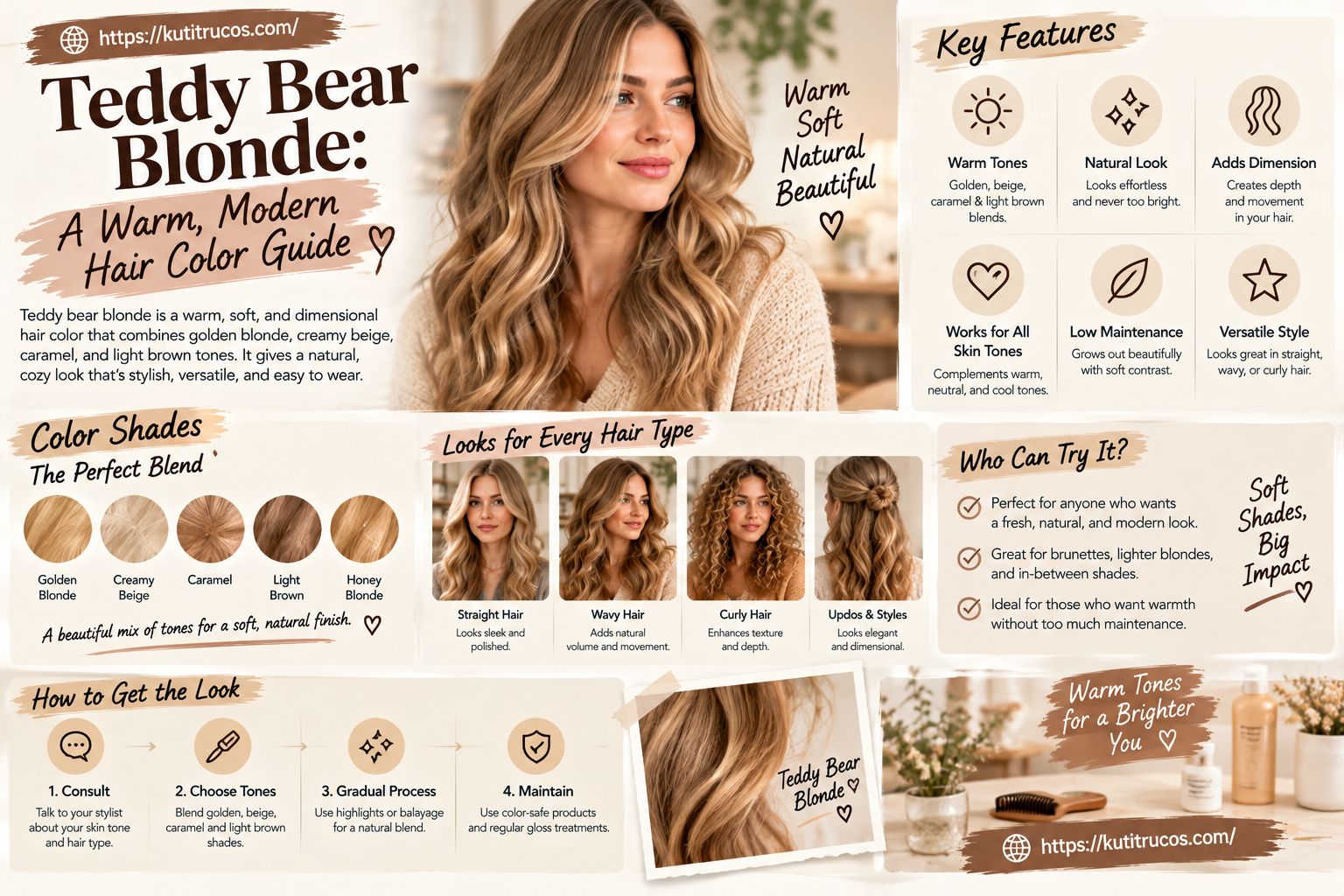
What Is Teddy Bear Blonde?
Teddy bear blonde is a warm, soft, and dimensional hair color that combines golden blonde, creamy beige, caramel, and light brown tones. The result is a cozy, natural-looking shade that resembles the gentle colors of a classic teddy bear. Instead of creating a bright, icy blonde appearance, this color focuses on warmth, softness, and subtle contrast.
Teddy bear blonde fits comfortably into this landscape because it offers a polished appearance without looking overly dramatic. It can be customized for someone who wants a noticeable blonde transformation or for someone who prefers a subtle change from their natural brunette hair.
One of the most appealing qualities of teddy bear blonde is its flexibility. A colorist can create a deeper version with honey and caramel tones or a lighter variation featuring creamy blonde ribbons. The final result depends on the starting hair color, skin tone, desired brightness, and maintenance preferences.
Unlike a single flat shade, teddy bear blonde usually works best when several complementary colors are blended together. A slightly darker root can provide depth, while lighter pieces around the face and through the lengths create movement. This combination helps the hair look multidimensional in natural daylight, indoor lighting, and photographs.
Whether someone is exploring a new look for fall, preparing for a summer refresh, or simply searching for a blonde shade that feels timeless, teddy bear blonde offers an inviting balance between sophistication and effortless beauty.
Creating a balanced lifestyle often means paying attention to both personal style and everyday comfort. While hair color trends offer ways to refresh your appearance, choosing supportive footwear can also make a difference in daily activities. Explore the On Cloud Cloudflyer running shoe guide to learn more about cushioning, stability, and comfort when selecting shoes for your routine.
Why Teddy Bear Blonde Is Appealing
Many people want blonde hair that looks soft and believable rather than excessively light or heavily processed. Teddy bear blonde answers that preference by combining different tones instead of relying on one uniform color.
Its warmth can make the hair appear rich and glossy, while the lighter sections help prevent the overall shade from looking too dark. The contrast is usually gentler than the sharp distinction found in traditional highlights.
Another advantage is that teddy bear blonde can be adapted to different lifestyles. Someone with a busy work schedule might choose a root-smudged version that grows out gradually. A person who enjoys regular salon appointments may prefer brighter blonde pieces and more pronounced dimension.
The shade also works across different lengths. Long hair provides plenty of space for blended ribbons of color, while medium-length cuts can showcase the contrast between caramel and blonde. Short bobs and layered hairstyles can use strategically placed highlights to create the impression of texture and fullness.
Its appeal comes from customization rather than strict rules. There is no single formula that every colorist must follow. The best version is the one that complements the wearer’s natural coloring, haircut, hair condition, and personal style.
The Main Colors Behind Teddy Bear Blonde
Understanding the colors involved can make a salon consultation easier. Although individual formulas differ, several shades commonly contribute to the teddy bear blonde effect.
Caramel Blonde
Caramel creates a bridge between brown roots and lighter blonde sections. Its slightly deeper appearance helps maintain richness and can be especially useful when transitioning from medium or dark brown hair.
Caramel ribbons also provide contrast without making the finished style look striped. When blended carefully, they create a natural flow between darker and lighter areas.
Creamy Beige Blonde
Creamy beige blonde introduces softness and balance. It is often useful when a person wants warmth without an excessively yellow result.
Depending on the formula, beige can lean slightly golden, neutral, or sandy. A professional colorist can select the appropriate direction based on the desired finish and the hair’s underlying pigment.
Light Brown and Bronde
Bronde describes a blend of brown and blonde. In teddy bear blonde, light brown or bronde tones may be used at the roots and throughout the lower layers to create depth.
This element is especially valuable for brunettes who want to move toward blonde gradually. Instead of removing all the darkness at once, a colorist can preserve some of the natural base and introduce lighter sections over several appointments if necessary.
Choosing Teddy Bear Blonde for Different Skin Tones
There is no universal rule that determines which blonde shade someone should wear. Skin undertones, eye color, natural hair color, personal preference, and lighting can all affect how a particular formula looks.
Fair Skin
People with fair skin may enjoy a soft combination of creamy beige and delicate honey blonde. A balanced shade can provide warmth without creating an overwhelming contrast.
Those who prefer a more neutral result can ask for restrained golden tones and a softly blended root. The goal is to create a harmonious overall appearance rather than match every color to a strict undertone category.
Medium Skin
Medium skin tones can work with a wide range of teddy bear blonde variations. Caramel, golden beige, and honey highlights can create a rich finish with plenty of dimension.
Olive Skin
Olive skin can look beautiful with beige, caramel, and carefully balanced golden tones. Some people prefer neutral warmth because an excessively yellow shade may not produce the finish they want.
A stylist should consider the person’s natural hair color and how the selected formula will look both indoors and outside. A consultation and strand test can help establish the most suitable direction.
Deep Skin
On deeper skin tones, teddy bear blonde can be adapted with rich caramel, warm bronze, golden brown, and brighter honey accents. These colors can create striking dimension while preserving a natural-looking foundation.
The placement of lighter pieces matters as much as the shade itself. Face-framing highlights, soft balayage, or blended ribbons through the ends can create different effects without requiring an all-over blonde transformation.
Teddy Bear Blonde for Brunettes
Brunettes often find teddy bear blonde appealing because it offers a gradual route toward lighter hair. The technique can preserve a portion of the natural brown base while introducing blonde and caramel tones in selected areas.
For someone with dark brown hair, the colorist may begin with subtle caramel highlights or a bronde transition. This approach can produce a noticeable refresh without attempting to reach a very light blonde in one appointment.
Medium brown hair may offer more flexibility, depending on its history and condition. A stylist can blend honey blonde through the lengths, brighten the face-framing sections, and keep the roots slightly deeper.
People with previously colored brunette hair should understand that artificial color can be more difficult to lighten than natural hair. The process may require multiple sessions, and rushing can increase the risk of dryness or breakage.
A good consultation should cover the desired brightness, previous dye history, expected maintenance, and the hair’s ability to tolerate lightening. The most attractive result is not necessarily the lightest one; it is the one that creates dimension while keeping the hair in good condition.
Teddy Bear Blonde for Natural Blondes
Natural blondes may achieve a teddy bear blonde appearance by adding depth rather than making the hair dramatically lighter.
For example, a person with naturally dark blonde hair might introduce caramel lowlights and creamy highlights. This combination can make the overall color look fuller and more dimensional.
Someone with very light blonde hair may prefer a slightly deeper root and honey-beige ribbons. The result can feel warmer and more relaxed than a uniform, icy shade.
The technique can also be useful between major color appointments. Instead of repeatedly lightening every section, a colorist may refresh the tone, add selective dimension, or soften the transition between the roots and previously colored lengths.
Natural blondes should still discuss toner selection and maintenance. Light hair can develop unwanted yellow, orange, or dull tones depending on its underlying pigment, products, water quality, and environmental exposure.
Popular Teddy Bear Blonde Techniques
The same color family can look quite different depending on how it is applied. Choosing a technique that suits the haircut and desired upkeep is an important part of planning the transformation.
Teddy Bear Blonde Balayage
Balayage involves painting lightener onto selected sections to create a blended, graduated effect. For teddy bear blonde, this can produce brighter ends with softer transitions near the roots.
It can be a good choice for people who want dimension without a highly uniform highlight pattern. Because the root area can remain relatively natural, the grow-out may appear softer than with traditional highlights.
However, balayage is not automatically maintenance-free. The frequency of appointments depends on how light the hair becomes, how quickly it grows, and whether the wearer wants to maintain a bright face frame.
Traditional Highlights
Traditional highlights use selected strands of hair to create a more structured distribution of lighter color. A colorist can combine honey, beige, and caramel tones to build the layered effect associated with teddy bear blonde.
This technique can work well for someone who wants more consistent brightness throughout the head. The result depends on highlight thickness, spacing, placement, and the relationship between the lighter strands and the base color.
Lowlights and Highlights
Combining lowlights with highlights can create particularly rich dimension. Lowlights introduce deeper tones, while highlights add brightness.
This method may be useful when previously lightened hair looks too uniform or lacks depth. A stylist can reintroduce selected darker strands and blend them with creamy blonde pieces to create a more balanced appearance.
Root Smudging
Root smudging softens the transition between the natural root color and the lighter hair. A stylist applies a compatible shade near the roots and blends it into the lengths.
For teddy bear blonde, this can make the result appear more natural and reduce the sharp line that sometimes develops as highlighted hair grows.
Root smudging does not eliminate every maintenance requirement, but it may extend the time between root-focused appointments.
Face-Framing Highlights
Face-framing highlights concentrate lighter pieces around the front of the hair. They can brighten the overall look without requiring every section to be equally light.
For someone who wants a modest transformation, a combination of subtle face-framing color and caramel dimension through the lengths may be sufficient.
The stylist should consider the haircut, hairline, natural base, and preferred contrast before deciding how bright those sections should be.
How to Ask Your Stylist for Teddy Bear Blonde
A clear salon consultation can help prevent misunderstandings. Since teddy bear blonde is a descriptive trend rather than one standardized formula, showing a few reference photographs is often more helpful than relying on the name alone.
Begin by explaining whether you want a warm, golden finish or a more neutral beige result. Mention how much contrast you prefer between the roots and the ends.
Next, describe your maintenance expectations. If you want a color that grows out softly, ask about a natural root, balayage, or blended highlights. If you prefer a brighter appearance from the roots through the lengths, ask what kind of upkeep that would require.
It is also important to share your hair-color history. Previous permanent dye, box color, henna, bleach, and chemical treatments can affect the result. Even if your hair currently looks healthy, earlier processing may influence how safely it can be lightened.
You can use the following description during your consultation:
“I would like a warm, dimensional teddy bear blonde with a blend of honey, caramel, and creamy beige tones. I want the color to look soft and natural, with a slightly deeper root and no harsh lines. Please recommend a level of brightness that works with my current hair color and keeps my hair healthy.”
Ask your stylist whether a strand test is appropriate, especially if your hair has been colored several times or you are planning a substantial change.
How Much Does Teddy Bear Blonde Cost in the USA?
The cost of teddy bear blonde varies across the United States. Salon location, stylist experience, hair length, density, starting color, and the complexity of the service all influence the final price.
As a broad planning estimate, a simple partial highlighting service may cost approximately $100 to $200, while a full highlighting or balayage appointment may range from $150 to $350 or more. Complex transformations involving dark, previously colored hair can cost considerably more, particularly when several appointments are needed.
Additional services may include toner or gloss, a root blend, a haircut, a bond-building treatment, and a blowout. Some salons include certain services in a package, while others charge for them separately.
Prices in major metropolitan areas such as New York City, Los Angeles, San Francisco, and other high-cost markets may be higher than prices in smaller cities or towns. These figures are general estimates, not verified quotes from individual salons.
Before booking, request an estimate that explains what is included. If you are moving from dark brunette to a lighter teddy bear blonde, ask whether the stylist expects the transformation to require more than one appointment.
It is also wise to ask about the cost of maintenance. A color that initially fits your budget may require frequent toning or highlighting if you want to preserve a very bright result.
Teddy Bear Blonde Maintenance at Home
Maintaining teddy bear blonde involves protecting the hair’s condition and keeping its tone attractive. The right routine depends on the level of lightening, the color formula, and the condition of the hair.
Use a Suitable Shampoo
Choose a gentle shampoo designed for color-treated hair. Frequent washing with a harsh cleanser can contribute to dryness and may shorten the life of certain salon toners.
Washing frequency should reflect your scalp’s needs rather than following a rigid schedule. Some people are comfortable washing several times per week, while others can go longer between washes.
If your water contains substantial mineral deposits, ask your stylist whether a suitable clarifying or chelating product could help. Such products should be used according to their directions because excessive cleansing may leave processed hair feeling dry.
Condition Regularly
Conditioner helps improve softness, manageability, and detangling. Apply it mainly to the lengths and ends if your roots become oily easily.
A weekly moisturizing mask may be helpful for hair that has been lightened. However, no conditioner can reverse all forms of chemical damage, so preventing unnecessary processing remains important.
Be Careful With Heat
Blow-dryers, curling irons, and flat irons can contribute to dryness and breakage, especially when used frequently on lightened hair.
Apply an appropriate heat-protectant product before styling and use the lowest effective temperature. Whenever possible, allow some of your hair to air-dry or choose heat-free styling methods.
Protect Your Hair From Sun Exposure
Outdoor activities are part of everyday life in many parts of the United States, especially during summer. Strong sunlight, swimming, and repeated exposure to environmental elements can affect both the appearance and condition of colored hair.
A hat provides a simple way to reduce direct sun exposure. Hair products designed for UV protection may also help, although their performance varies.
Before swimming, follow your stylist’s advice about protecting colored hair. Rinsing with clean water after swimming and using an appropriate cleansing routine can help remove residue.
Use Purple Shampoo Carefully
Purple shampoo is not essential for every teddy bear blonde formula. It is mainly intended to help reduce the appearance of unwanted yellow tones in sufficiently light hair.
A warm honey or caramel version of teddy bear blonde may look best when its golden character is preserved. Using purple shampoo too often can make the hair appear duller or cooler than intended.
Ask your colorist whether a purple or blue toning product is appropriate for your specific shade. Follow the product directions and avoid assuming that stronger toning always produces a better result.
How Often Should You Refresh Teddy Bear Blonde?
There is no single maintenance schedule that suits everyone. The right interval depends on the technique, natural root color, hair growth, and desired level of brightness.
A blended balayage with a natural root may remain attractive for several months before a major refresh is needed. Traditional highlights can require attention sooner if the wearer wants to keep the roots consistently bright.
Gloss or toner appointments may be useful when the color loses its intended balance. The timing varies, and not every person needs a separate toning service between major color appointments.
A practical strategy is to schedule the next appointment based on visible changes rather than automatically repeating the same treatment every few weeks. If the roots still blend well and the ends look healthy, a full lightening service may not be necessary.
Regular trims can also help maintain the appearance of the haircut and remove damaged ends. The ideal schedule depends on hair condition, length goals, and styling habits.
Teddy Bear Blonde Hairstyles to Consider
Teddy bear blonde can complement numerous hairstyles because the color relies on dimension rather than one particular cut.
Long, Layered Hair
Long layers provide room for different tones to blend gradually. Honey and beige highlights can catch the light, while deeper caramel pieces add richness underneath.
Loose waves can make the variation between shades more visible, but straight hair can showcase a smooth, polished blend just as effectively.
Shoulder-Length Hair
A shoulder-length cut can provide a balanced combination of movement and easy styling. Soft layers help distribute the color, while a slightly deeper root can keep the overall appearance grounded.
This length works well for people who want a noticeable change without committing to very long hair or a short cut.
The Modern Bob
A bob with teddy bear blonde can look sophisticated and contemporary. A colorist might use subtle highlights around the front and through the ends to emphasize the shape.
A blunt bob can display a clean color transition, while a layered bob can create a softer, more textured appearance.
Curtain Bangs
Curtain bangs can complement teddy bear blonde when lighter pieces are placed carefully around the face. The effect can draw attention to the haircut without requiring a large amount of additional color.
People who frequently style their bangs should discuss how the placement will look when the hair is worn naturally, tucked behind the ears, or parted differently.
Natural Curls
Teddy bear blonde can also work on curly and coily hair. Strategic color placement can emphasize the shape and movement of individual curls.
Because lightening may affect curl condition, preserving moisture and elasticity is particularly important. A colorist experienced with the person’s curl pattern and texture can help select a suitable technique and brightness level.
Common Mistakes to Avoid
One common mistake is choosing a reference photograph without considering the starting hair color. A shade that looks easy to achieve on naturally dark blonde hair may require a much longer process on previously dyed black or dark brown hair.
Another mistake is requesting excessive lightness in a single session. Hair condition, not just the desired photograph, should guide how much lightening is attempted at once.
Ignoring the difference between warm and cool tones can also create disappointment. Teddy bear blonde generally emphasizes warmth, but the exact balance of gold, beige, and caramel should reflect personal preference.
Home bleaching can introduce uneven patches, unwanted brassiness, and breakage. Correcting an uneven result may be more expensive and difficult than planning a professional service from the beginning.
Finally, do not assume that every product marketed for blonde hair is suitable for your particular color. A warm blonde routine may differ from the routine used for icy platinum hair. Choose products based on your colorist’s recommendations and your hair’s actual condition.
Is Teddy Bear Blonde Suitable for Every Hair Type?
Teddy bear blonde is adaptable to straight, wavy, curly, and coily hair. The important consideration is not whether a particular texture is allowed to wear the shade, but how the color should be applied and maintained.
Straight hair may reveal fine color transitions very clearly, so careful blending can be especially important. Wavy hair can show dimension through its natural bends and movement.
Curly hair may benefit from selective placement that follows the shape of the curls. The colorist should consider how the hair looks when dry and styled, rather than planning the entire placement around stretched or wet hair.
Hair that is already fragile, severely damaged, or affected by previous chemical treatments may need a gentler approach. In some cases, improving hair condition before substantial lightening is the most sensible decision.
A consultation should include an honest assessment of what the hair can tolerate. A beautiful color result should not come at the expense of avoidable damage.
Frequently Asked Questions
Is Teddy Bear Blonde the Same as Bronde?
Not exactly. Bronde generally describes a blend of brown and blonde, while teddy bear blonde usually emphasizes a warm, soft combination of honey, caramel, beige, and blonde tones. The two styles can overlap, and a teddy bear blonde formula may include a bronde base.
Does Teddy Bear Blonde Look Natural?
It can look very natural when the colorist blends the shades gradually and keeps the contrast appropriate for the starting hair color. A softly shaded root and carefully placed highlights can help create that effect.
Is Teddy Bear Blonde High Maintenance?
It depends on the technique. A blended root and balayage approach may allow for a softer grow-out, while bright traditional highlights may need more frequent root maintenance. Toner, gloss, and conditioning services may also be part of the routine.
Can I Get Teddy Bear Blonde on Dark Hair?
Yes, but the process depends on your natural color, previous dye history, and hair condition. Dark hair may require multiple appointments to reach the desired brightness safely. A colorist can recommend an achievable starting point.
Does Teddy Bear Blonde Work in Every Season?
Yes. Warmer caramel and honey variations can feel especially inviting during fall and winter, while lighter beige and golden pieces can provide a brighter look in spring and summer. Seasonal adjustments are optional rather than necessary.
Will Teddy Bear Blonde Cover Gray Hair?
It may blend gray hair, but the outcome depends on the amount of gray, the base color, and the chosen technique. Highlights alone do not provide the same coverage as a permanent color service designed specifically for gray coverage. A stylist can combine techniques if coverage and dimension are both important.
Can I Maintain Teddy Bear Blonde Without Frequent Salon Visits?
A root-blended technique, gentle home care, and realistic expectations can reduce the need for frequent appointments. However, some fading and regrowth are normal. Occasional professional maintenance may still be necessary to preserve the intended shade.
Final Thoughts
Teddy bear blonde offers a warm, dimensional alternative to extremely light or icy blonde hair. By combining caramel, honey, creamy beige, and carefully balanced brown tones, it creates a soft appearance that can be customized for different natural colors, skin tones, hair textures, and personal preferences.
For people in the United States considering a new hair color, the most important step is choosing a version that fits both their appearance goals and their maintenance budget. A well-planned salon consultation can establish the right technique, realistic brightness, and suitable care routine.
Whether you prefer a subtle bronde transition, a brighter balayage, or a creamy blonde finish with a deeper root, teddy bear blonde offers plenty of room for individual expression. With thoughtful color placement and consistent hair care, it can remain an attractive and versatile choice throughout the year.

