

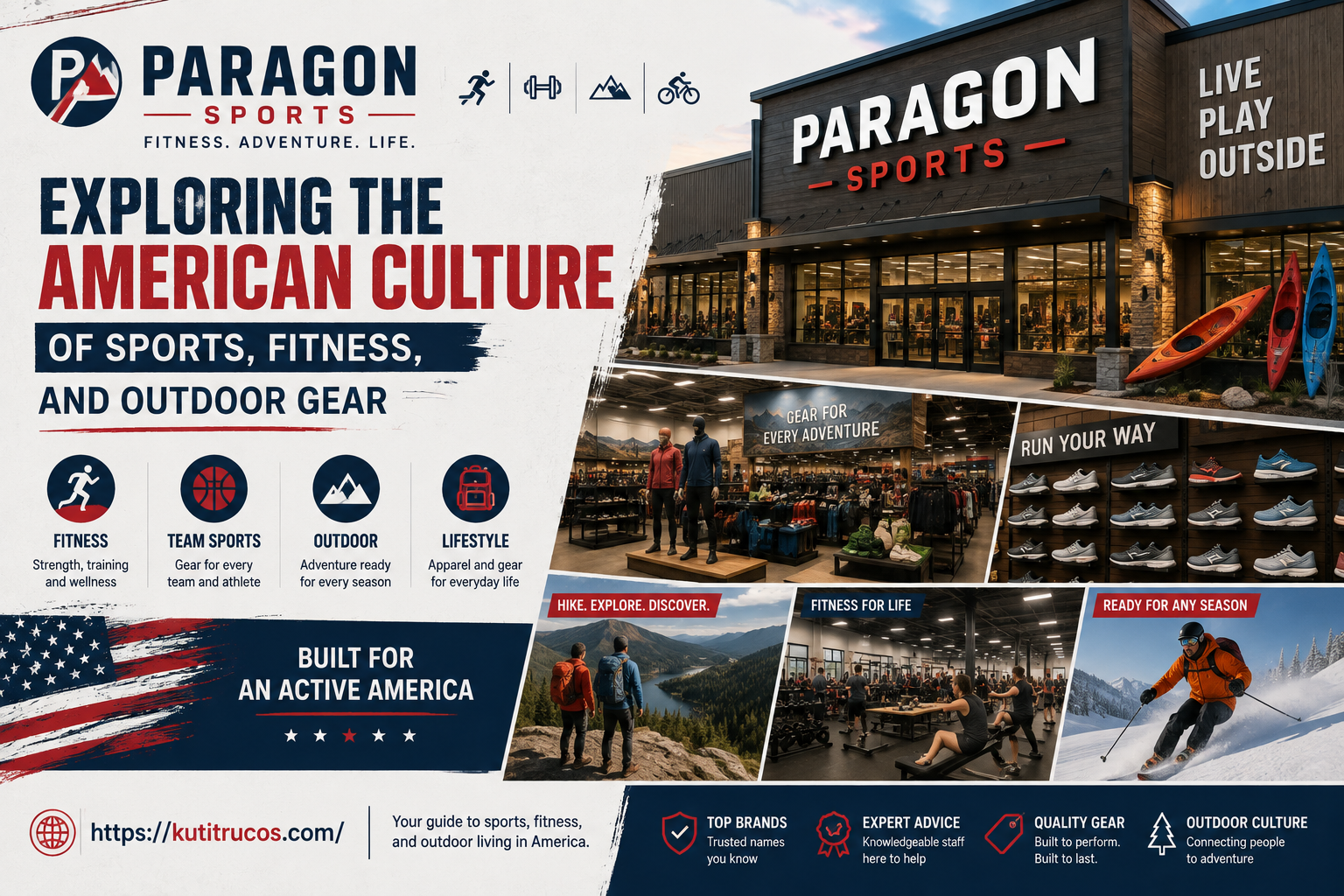
Sports have always been an important part of American life. From weekend games and school athletics to professional competitions and outdoor adventures, millions of people across the United States participate in some form of physical activity. This strong sporting culture has also created a growing demand for reliable equipment, athletic clothing, footwear, and outdoor gear.
Paragon Sports represents the kind of specialty sporting retailer that appeals to consumers who want more than ordinary sporting goods. For athletes, fitness enthusiasts, runners, outdoor explorers, and active families, a dedicated sports retailer can make it easier to discover equipment and apparel designed around specific activities.
The modern American sports market is diverse, and consumers increasingly expect products that combine performance, comfort, durability, and style. Understanding this shift helps explain why specialty sports stores continue to have an important place in the retail landscape.
The Importance of Sports in American Culture
The United States has a deeply established sporting tradition. Football, basketball, baseball, soccer, tennis, golf, hockey, running, and countless recreational activities attract participants of all ages.
Sports are not limited to professional stadiums. Local parks, school fields, gyms, fitness centers, community courts, hiking trails, and neighborhood streets are all part of America’s active lifestyle.
For many people, sports provide a way to stay physically active while also creating social connections. A weekend basketball game can bring friends together, while a morning run can become a personal routine. Families may spend holidays hiking, cycling, skiing, or exploring outdoor destinations.
This broad interest creates demand for specialized sporting products that support different activities.
Why Specialty Sports Retailers Matter
Buying sports equipment is different from purchasing ordinary clothing or household products. Athletes often need products designed for specific movements, environments, and performance requirements.
A runner may look for lightweight footwear with appropriate support. A cyclist may need a properly fitted helmet and performance clothing. Someone preparing for a hiking trip may need durable footwear, weather-resistant layers, a backpack, and other outdoor essentials.
Specialty sports retailers can help consumers navigate these choices by bringing multiple categories together in one shopping environment.
Instead of simply choosing an item based on appearance, shoppers can consider how a product fits their particular activity and lifestyle.
Athletic Footwear and Performance
Footwear is one of the most important categories in sports retail. Different sports place different demands on the feet, ankles, and legs, so athletes often search for footwear designed specifically for their activities.
Running shoes, training shoes, hiking footwear, court shoes, and casual athletic sneakers all have different purposes.
American consumers have also increasingly blurred the line between athletic and everyday fashion. Sneakers that were originally designed for exercise are now common parts of casual outfits. This trend has helped transform athletic footwear into both a performance product and a major fashion category.
For retailers, this creates an opportunity to serve customers who want shoes that look good while remaining suitable for active lifestyles.
Apparel for Active Lifestyles
Sports clothing has evolved significantly over the years. Modern consumers expect athletic apparel to be comfortable, functional, and visually appealing.
Moisture-managing fabrics, lightweight materials, stretch construction, breathable designs, and weather-resistant layers can make clothing more suitable for exercise and outdoor activities.
At the same time, athleisure has become a major part of American fashion. People increasingly wear leggings, performance shirts, sweatshirts, track pants, and athletic jackets outside the gym.
This means sports apparel is no longer limited to athletes. It has become part of everyday American style.
Outdoor Recreation Across the United States
One of the most interesting aspects of the American sports market is its connection to the outdoors. The country offers an enormous variety of landscapes, from mountains and forests to beaches, deserts, lakes, and national parks.
Outdoor enthusiasts participate in activities such as hiking, camping, climbing, cycling, skiing, snowboarding, kayaking, and trail running.
Each activity creates different equipment requirements. A winter athlete needs protection from cold temperatures, while a summer hiker may prioritize lightweight clothing and hydration. A climber needs specialized equipment, while a casual walker may simply want comfortable footwear.
This diversity makes outdoor retail a particularly specialized segment of the sports industry.
The Growth of Running Culture
Running has remained one of America’s most accessible forms of exercise. People can run almost anywhere without requiring expensive facilities, making the activity attractive to beginners and experienced athletes alike.
The popularity of community races has also helped strengthen running culture. Local 5K events, charity races, marathons, and trail competitions bring runners together throughout the year.
Running products have consequently become increasingly sophisticated. Consumers can choose from different shoe designs, technical clothing, hydration products, watches, recovery accessories, and other equipment.
A specialty sports retailer can serve both first-time runners and experienced athletes by offering products for different levels of performance.
Sports Equipment for Every Skill Level
Not every customer enters a sports store as an experienced athlete. Beginners need accessible products and clear information, while advanced participants may search for specialized equipment.
This creates an important challenge for sporting retailers: serving customers with very different levels of knowledge.
A beginner might need help choosing their first pair of running shoes, while an experienced athlete may already know exactly which specifications they want. A strong sports retail experience should accommodate both.
The goal should be to help consumers make informed decisions rather than simply encourage them to purchase the most expensive product.
The Connection Between Sports and Fashion
Modern sports retail exists at the intersection of performance and fashion. Athletic brands have become influential in mainstream American style, while traditional fashion companies increasingly borrow ideas from sportswear.
Sneakers, technical jackets, caps, sweatshirts, and performance-inspired clothing can now be seen in workplaces, airports, universities, and city streets.
Consumers often want products that can move between different parts of their lives. A jacket might be used for a morning walk, a commute, and a casual evening outing.
This versatility has changed what shoppers expect from sports apparel and footwear.
Shopping With Value in Mind
American consumers are also becoming more careful about purchasing decisions. Price remains important, but shoppers increasingly consider durability, usefulness, comfort, and long-term value.
A low-cost product that wears out quickly may not provide better value than a more durable alternative. Similarly, an expensive product is not automatically the right choice for every athlete.
Smart shopping means matching a product to actual needs.
For example, a casual walker may not require equipment designed for professional competition. On the other hand, someone participating in demanding outdoor activities may benefit from investing in products specifically designed for those conditions.
The Role of Customer Experience
Modern retail is not only about products. Customer experience can strongly influence whether shoppers return to a store.
Knowledgeable staff, organized product categories, useful information, appropriate sizing options, and an easy shopping process can all make a difference.
Specialty sports stores have an advantage because customers often appreciate advice when purchasing technical products. Choosing the right footwear, outdoor equipment, or sports apparel can sometimes involve considerations that are difficult to understand from a product photograph alone.
The Future of Sports Retail
The future of American sports retail will likely combine physical shopping with digital convenience. Consumers can research products online, compare specifications, read reviews, and check availability before visiting a store.
Technology is also changing how athletes track their activities. Fitness watches, smartphone applications, training platforms, and wearable devices provide information about workouts and performance.
However, physical retail remains valuable because customers can actually see and test products, compare different options, and receive personal assistance.
The most successful sports retailers will likely be those that understand both sides of modern shopping.
Conclusion
Paragon Sports reflects the broader evolution of American sports retail, where athletic performance, outdoor recreation, fashion, and everyday lifestyle increasingly overlap. Today’s consumers are not simply searching for sports equipment; they want products that support the activities they enjoy and fit naturally into their lives.
From running and cycling to hiking, fitness training, team sports, and everyday athletic fashion, America’s sporting culture continues to expand. Specialty retailers can help consumers navigate this large and sometimes confusing marketplace by providing variety, expertise, and products suited to different activities.
Ultimately, the value of sports retail goes beyond selling shoes, clothing, or equipment. It supports a culture in which people are encouraged to move, explore, compete, and enjoy active lifestyles. As American consumers continue to prioritize fitness, recreation, and outdoor experiences, the role of specialized sporting stores will remain an important part of the country’s active culture.

