

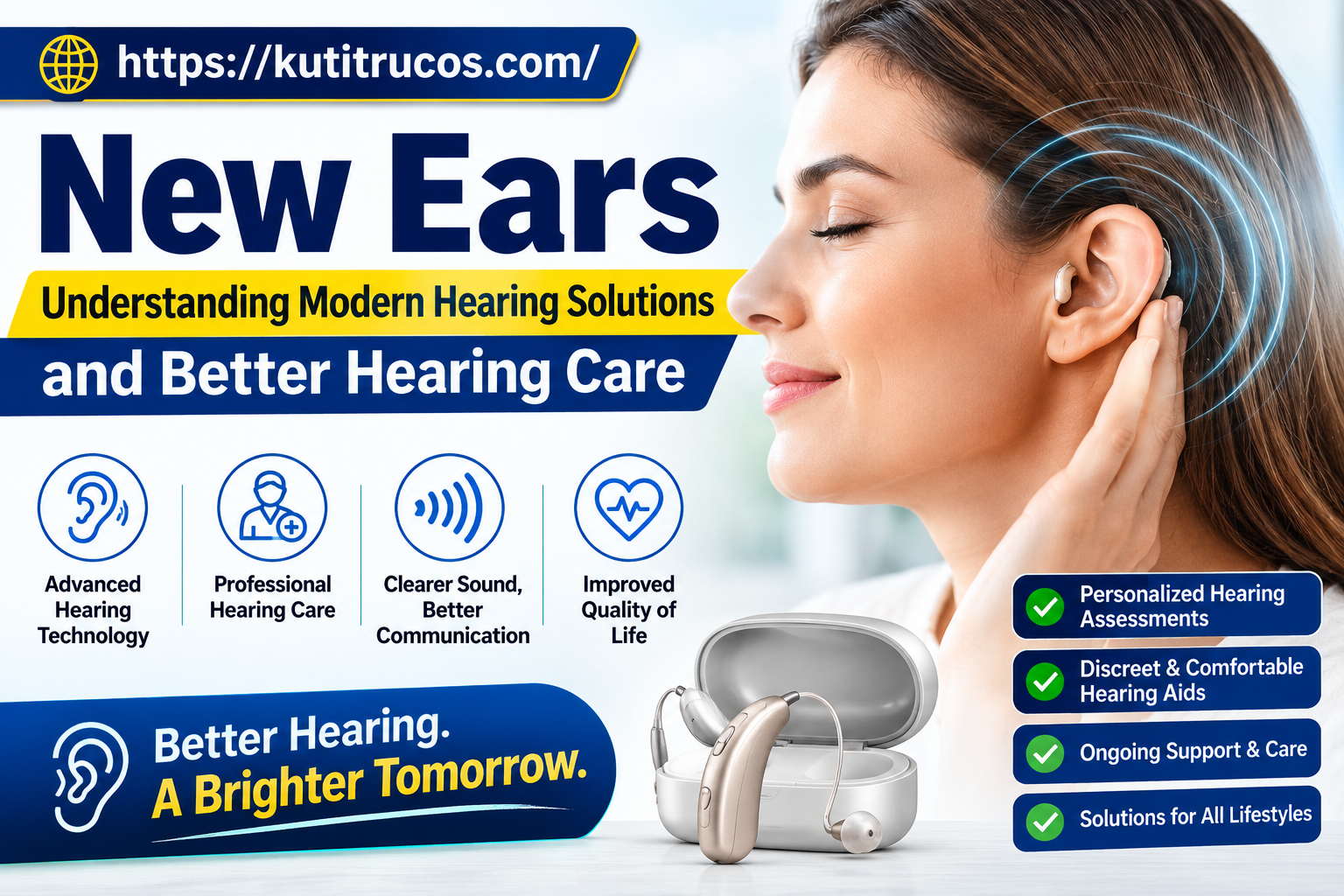
New Ears and the Future of Hearing Technology in the USA
Hearing plays an important role in everyday life. From conversations with family and friends to workplace communication, entertainment, education, and awareness of the surrounding environment, the ability to hear clearly influences many aspects of daily living. As technology continues to advance, people in the United States have access to more hearing solutions than ever before.
The phrase new ears can describe the broader idea of improving hearing through modern technology, hearing devices, medical care, and innovative solutions. While technology cannot simply replace a natural ear, modern hearing products can help many people manage hearing difficulties and participate more comfortably in everyday activities.
The hearing industry has changed significantly over the years. Traditional hearing aids have evolved into sophisticated digital devices with wireless connectivity, rechargeable batteries, automatic sound processing, and smartphone integration.
Understanding these developments can help consumers make better-informed decisions when exploring hearing care.
What Does “New Ears” Mean in Modern Hearing Care?
For some people, it may refer to a desire for improved hearing. For others, it may describe new hearing technology, modern hearing aids, or advances in hearing-related healthcare.
The underlying idea is simple: people want to hear more clearly and communicate with greater confidence.
Hearing Technology Has Come a Long Way
Older hearing devices were often larger and less sophisticated.
Modern hearing aids can be considerably smaller and may include advanced processing systems designed to distinguish speech from background sounds.
Some devices can connect directly to smartphones, allowing users to stream calls, music, podcasts, and other audio.
These improvements have made hearing technology more integrated into everyday life.
Why Hearing Health Matters
Hearing is connected to communication and social interaction.
Difficulty hearing conversations can make everyday situations more challenging, particularly in noisy environments such as restaurants, family gatherings, workplaces, or public spaces.
Recognizing Changes in Hearing
Hearing changes can happen gradually, which means some people may not immediately notice them.
Common signs can include frequently asking others to repeat themselves, increasing television volume, struggling to understand conversations in noisy environments, or feeling that people are speaking unclearly.
Anyone concerned about changes in hearing should consider discussing them with a qualified healthcare professional or hearing specialist.
Modern Hearing Aids
Hearing aids are among the most common technologies used to assist people with hearing loss.
They are electronic devices designed to amplify and process sound according to the user’s hearing needs.
Digital Sound Processing
Modern hearing aids can process incoming sound digitally.
Depending on the device, software may adjust amplification based on the surrounding environment.
The goal is to make important sounds, particularly speech, easier to hear while managing unwanted background noise.
Rechargeable Hearing Aids
Rechargeable models have become increasingly popular.
This can make daily use more convenient.
Consumers should compare battery performance, charging time, warranty coverage, and expected device lifespan before selecting a model.
Bluetooth and Connected Hearing Devices
Wireless connectivity is another major development in modern hearing technology.
Many hearing devices can connect with compatible smartphones and other electronics.
Streaming Calls and Entertainment
Depending on compatibility, connected hearing aids may allow users to stream phone calls, music, videos, and other audio directly to their devices.
This can reduce the need to use separate headphones in some situations.
Smartphone applications may also allow users to adjust settings, check battery levels, or customize listening preferences.
Hearing Solutions for Different Lifestyles
There is no single hearing device that works perfectly for everyone.
Lifestyle can influence what features are useful.
Active Professionals
People who work in offices, meetings, schools, or customer-facing environments may prioritize speech clarity.
A device designed to manage changing sound environments may be particularly useful for someone who regularly moves between quiet offices and busy public spaces.
Social and Family Activities
People who frequently attend family gatherings, restaurants, community events, or social activities may prioritize technology designed to handle background noise.
Being able to follow multiple speakers can be an important consideration.
People Who Enjoy Music
Music listeners may pay particular attention to sound quality.
Different hearing devices process music differently, so users should discuss their preferences with a qualified hearing professional.
Over-the-Counter Hearing Aids in the United States
The U.S. hearing market has also changed with the availability of over-the-counter hearing aids for certain adults with perceived mild to moderate hearing loss.
These products are designed to provide consumers with another option for accessing hearing technology.
OTC vs. Professionally Fitted Devices
Over-the-counter hearing aids and professionally fitted hearing aids are not identical approaches.
Professional hearing care can include hearing evaluation, personalized recommendations, fitting, adjustments, and follow-up support.
OTC products may appeal to adults who prefer a more direct purchasing experience.
Consumers should understand the product’s intended hearing-loss range and follow the manufacturer’s instructions.
Hearing Tests and Professional Evaluation
Technology is only one part of better hearing care.
A hearing evaluation can provide useful information about a person’s ability to hear different frequencies and sound levels.
Why Testing Matters
Hearing difficulties can have different causes.
A professional evaluation can help determine whether hearing loss is present and whether additional medical assessment may be appropriate.
Consumers should not assume that every hearing problem can be solved simply by purchasing a hearing device.
In some situations, medical attention may be necessary.
Cochlear Implants and Advanced Hearing Technology
For some individuals with severe or profound hearing loss, hearing aids may not provide enough benefit.
Cochlear implants are a different type of technology.
How Cochlear Implants Differ
A cochlear implant uses an implanted component and an external sound processor to provide electrical stimulation to the auditory system.
Unlike a conventional hearing aid, which primarily amplifies sound, a cochlear implant works through a different mechanism.
Candidacy is determined through specialized medical and audiological evaluation.
It is therefore important for individuals considering this option to consult qualified specialists.
Protecting Your Hearing
Better hearing is not only about treating existing hearing loss.
Protecting hearing can also be important.
Repeated exposure to loud sounds can contribute to noise-related hearing damage.
Everyday Hearing Protection
People may encounter loud noise at concerts, sporting events, workplaces, construction sites, or while using certain equipment.
Appropriate hearing protection can reduce exposure to excessive noise.
Turning down headphone volume and taking breaks from loud environments can also be sensible habits.
The appropriate level of protection depends on the situation.
Hearing Technology and Artificial Intelligence
Artificial intelligence and advanced software are influencing many areas of technology, including hearing devices.
Modern systems can use sophisticated algorithms to analyze sound environments and improve processing.
Smarter Sound Management
AI-assisted systems may help devices distinguish speech from background sounds or adapt processing to changing environments.
However, consumers should evaluate specific product capabilities rather than assuming every device offers the same technology.
Features vary significantly between manufacturers and models.
The Importance of Comfort and Fit
A hearing device can have impressive technical features, but comfort remains essential.
If a device is uncomfortable, difficult to use, or poorly fitted, a person may be less likely to wear it consistently.
Finding the Right Design
Hearing devices are available in different sizes and styles.
Some sit behind the ear, while others can be positioned partially or more deeply within the ear depending on the design.
The appropriate option can depend on hearing needs, ear anatomy, lifestyle, dexterity, cosmetic preferences, and professional recommendations.
Cost and Insurance Considerations
The price of hearing technology varies widely.
Basic options may cost less than advanced professionally fitted devices, while premium systems with sophisticated features can represent a significant investment.
Understanding the Total Cost
Consumers should consider more than the initial purchase price.
Potential expenses can include:
- Hearing evaluations
- Device fitting
- Follow-up appointments
- Accessories
- Replacement parts
- Batteries or charging equipment
- Repairs
- Extended warranties
Insurance coverage also varies.
Consumers should check their specific plan and ask providers what services or devices may be covered.
Choosing the Right Hearing Solution
Selecting a hearing solution should be based on individual needs rather than marketing claims.
Questions to Ask
Before purchasing a hearing device, consumers can ask:
- What type and degree of hearing loss do I have?
- Which device is appropriate for my hearing profile?
- Can the device connect to my phone?
- How long does the battery last?
- Is it rechargeable?
- What warranty is included?
- Are adjustments included?
- What happens if the device needs repair?
- Is professional follow-up available?
- What is the total expected cost?
Getting clear answers can make the decision easier.
The Future of Hearing Care in America
The future of hearing technology is likely to focus on greater personalization, connectivity, comfort, and accessibility.
Smaller components, better sound processing, rechargeable systems, wireless connectivity, remote support, and software improvements are already changing the consumer experience.
More Personalized Hearing Experiences
Future devices may become increasingly capable of adapting to individual preferences and environments.
Integration with smartphones and other wearable technologies may also continue expanding.
At the same time, professional hearing care will remain important because technology cannot replace individualized diagnosis and clinical judgment.
Final Thoughts
New ears is a useful way to think about the broader evolution of modern hearing solutions rather than a literal replacement for the natural ear. Advances in hearing aids, wireless connectivity, rechargeable technology, over-the-counter devices, cochlear implants, and digital sound processing are giving people in the United States more choices than previous generations had.
The right solution depends on the individual’s hearing needs, lifestyle, budget, comfort preferences, and professional evaluation.
Modern hearing aids can provide sophisticated sound processing and convenient features such as smartphone connectivity. Over-the-counter hearing aids offer another option for certain adults with mild to moderate hearing loss, while people with more significant hearing difficulties may require specialized professional care or advanced technologies.
Hearing protection is equally important. Preventing unnecessary exposure to excessive noise can help people protect their hearing for the future.
Most importantly, consumers should avoid choosing a hearing product based only on advertisements or a list of technical features. A hearing evaluation and conversation with a qualified professional can provide valuable guidance about what is appropriate.
The future of hearing care is moving toward technology that is smaller, smarter, more connected, and increasingly personalized. For Americans exploring better hearing, understanding these options is the first step toward finding a solution that fits both their hearing needs and their everyday lifestyle.

