

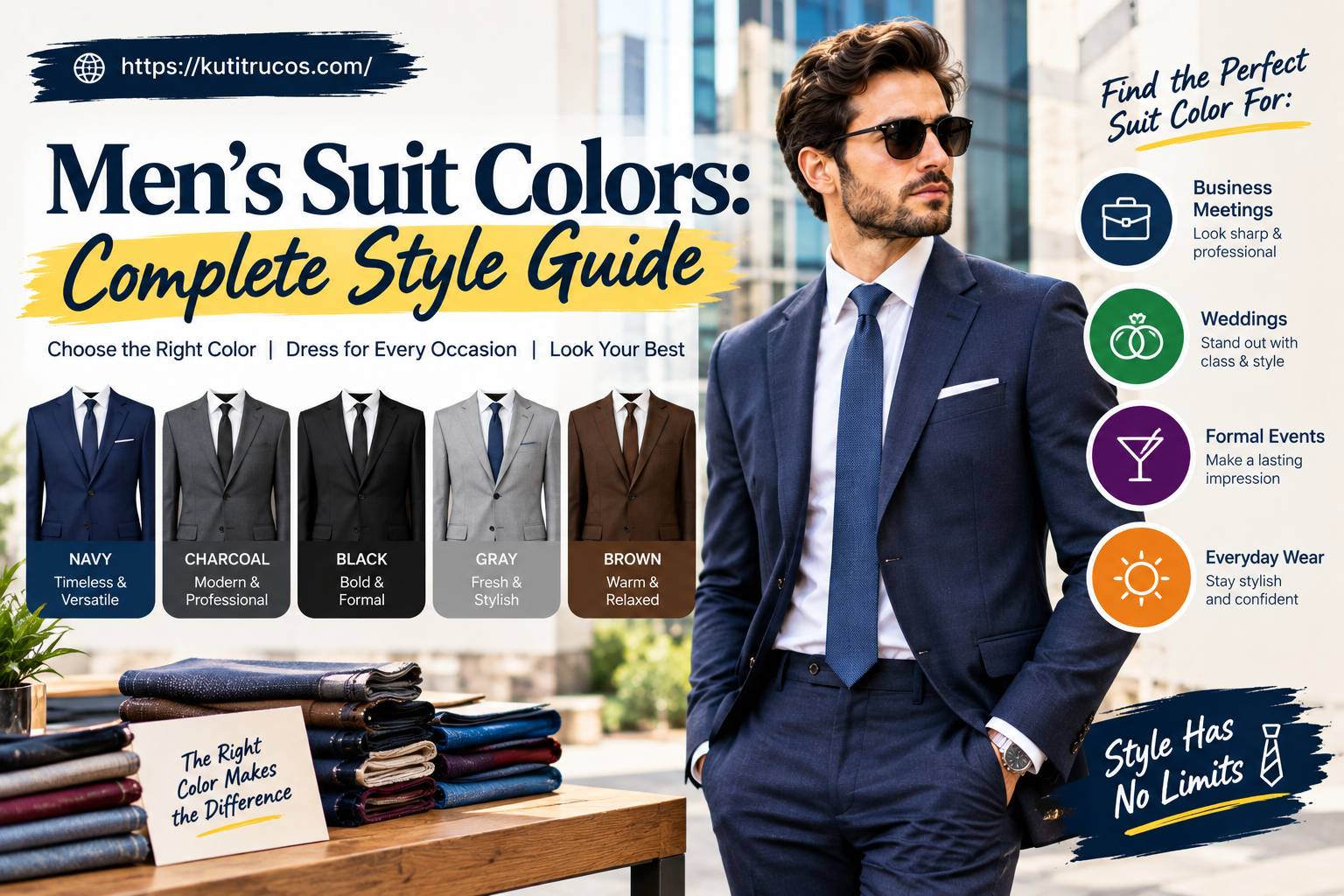
Choosing the right suit color can completely change the way an outfit looks. Two suits can have almost identical cuts and fits, yet one may feel appropriate for a business meeting while the other looks better at a wedding or evening event.
That is why men’s suit colors deserve more attention than they often receive.
For most men, the best starting point is not an unusual or highly fashionable shade. Classic colors such as navy, charcoal gray, and medium gray provide the most flexibility. Black has a more formal character, while brown, beige, light gray, green, and burgundy can add personality when the occasion allows it. Current menswear guides continue to place navy and charcoal near the top of the list for versatility.
The best color ultimately depends on the event, season, dress code, personal style, and the rest of the outfit.
Why Suit Color Matters
A suit is usually one of the most noticeable pieces of clothing a man wears.
Color affects how formal, relaxed, traditional, modern, or distinctive the entire outfit appears.
A dark navy suit can look professional in an office and polished at a wedding. A light beige suit can feel perfect for an outdoor summer event but inappropriate for a conservative business meeting.
The same principle applies to black, gray, brown, and more adventurous colors.
Before buying a suit, think about where you will wear it rather than choosing a color simply because it looks attractive on a store mannequin.
Choosing clothing colors is ultimately part of developing a personal lifestyle and fashion style. The right combination of colors, fits, and accessories can help create outfits that feel appropriate for different occasions while reflecting individual preferences. For more practical ideas and guides covering fashion and other everyday lifestyle topics, explore the Lifestyle section.
Best Men’s Suit Colors
Several colors have earned a permanent place in men’s wardrobes.
1. Navy Blue
Navy is arguably the most useful suit color for men.
It is dark enough to look professional without being as severe as black. It can work for interviews, offices, weddings, dinners, presentations, and many other occasions.
Navy also provides excellent flexibility when choosing shirts and accessories.
A navy suit can be worn with:
- White shirts
- Light-blue shirts
- Pale pink shirts
- Burgundy ties
- Navy ties
- Patterned ties
- Brown shoes
- Black shoes
If you are buying your first quality suit and do not know which color to choose, navy is usually the safest starting point. Current men’s style guides consistently rank it as one of the most versatile choices.
2. Charcoal Gray
Charcoal gray is another essential.
Compared with navy, charcoal often creates a more serious and conservative appearance. That makes it particularly useful for professional environments, formal meetings, presentations, interviews, and evening occasions.
A charcoal suit looks especially clean with:
- White dress shirts
- Light-blue shirts
- Black leather shoes
- Dark brown shoes
- Burgundy accessories
- Black or navy ties
For someone who already owns a navy suit, charcoal is an excellent second option.
3. Medium Gray
Medium gray offers a softer alternative to charcoal.
It can be dressed up for professional occasions or styled more casually for daytime events.
Gray suits are particularly useful because they can work across different seasons and can be combined with many shirt colors.
A medium-gray suit with a white shirt creates a classic appearance, while a light-blue shirt produces a more relaxed combination.
Brown or black shoes can both work depending on the desired level of formality.
4. Light Gray
Light gray is especially useful for daytime dressing.
It can look sharp at:
- Summer weddings
- Daytime celebrations
- Outdoor events
- Business-casual environments
- Brunch events
- Spring gatherings
The lighter shade generally feels less formal than charcoal or black.
For a summer wedding, a light-gray suit with a white or pale-blue shirt can create a clean, modern appearance without looking overly serious.
5. Black
Black is one of the most recognizable suit colors, but it is not necessarily the most versatile.
Black works particularly well for formal and evening occasions. It can also be appropriate for funerals and certain professional or ceremonial settings.
However, a black suit can feel too formal for some daytime social occasions.
If you already own navy and charcoal, adding black makes sense when your wardrobe or event calendar calls for more formal dressing.
For a classic black-suit combination, consider:
6. Brown
Brown is an excellent option for men who want something warmer and more distinctive.
Dark brown can look sophisticated without appearing overly traditional. Lighter brown shades are generally more relaxed.
Brown suits can work particularly well for:
- Fall weddings
- Dinner events
- Dates
- Outdoor celebrations
- Business-casual settings
- Social gatherings
Brown also works naturally with cream, white, light blue, burgundy, and darker brown accessories.
Current suit-color guides increasingly include brown among useful wardrobe colors, particularly for fall and less formal occasions.
Beige and Tan Suits
Beige and tan suits have a distinctly relaxed character.
They are especially attractive for warm-weather events, outdoor weddings, resort occasions, and daytime celebrations.
A beige suit can be paired with:
- White shirts
- Cream shirts
- Light-blue shirts
- Brown loafers
- Suede shoes
- Knit ties
- Minimal accessories
Because beige is lighter and less formal-looking than navy or charcoal, it is better suited to environments where a relaxed appearance is acceptable.
Green Suits
Green is not a traditional first-suit color, but it can be an interesting addition to a modern wardrobe.
Olive and forest green are easier to wear than extremely bright green.
These shades can work well for:
- Weddings
- Cocktail events
- Creative workplaces
- Fashion-forward social occasions
- Fall celebrations
Green suits usually make a stronger style statement, so the rest of the outfit should remain relatively simple.
A white shirt and dark brown shoes can keep the look balanced.
Burgundy and Wine
Burgundy is another statement color.
It has a rich appearance and can work particularly well during fall and winter.
Because the color itself is noticeable, accessories do not need to be equally dramatic.
A burgundy suit can be paired with a white or cream shirt and dark brown or black footwear.
This is a better choice for someone who already owns versatile suits and wants to expand into more expressive tailoring.
Midnight Blue
Midnight blue sits between traditional navy and black in appearance.
It can be particularly effective for evening events, weddings, formal dinners, and other occasions where a darker suit is appropriate.
Under certain lighting, midnight blue can appear almost black while retaining a subtle blue character.
It is an excellent choice for men who want something formal without simply choosing black.
Men’s Suit Colors for Business
For a professional wardrobe, versatility should usually come before experimentation.
The strongest choices are:
- Navy
- Charcoal gray
- Medium gray
- Dark blue
- Subtle gray patterns
Navy is especially useful because it can transition between professional and social environments.
Charcoal provides a more conservative appearance and is particularly useful when the workplace has a formal dress code. Current style guidance similarly places navy and charcoal among the core business suit colors.
Bright red, vivid green, white, or heavily patterned suits generally require a more specific setting.
Men’s Suit Colors for Weddings
Wedding attire depends heavily on the venue, season, time of day, and dress code.
Navy
Navy is one of the safest wedding choices.
It works for both daytime and evening celebrations and can be dressed up or down.
Gray
Gray is another strong option, especially for daytime weddings.
Light gray can work beautifully during spring and summer, while charcoal is better suited to formal or evening celebrations.
Brown
Brown can be excellent for autumn weddings and rustic venues.
Beige
Beige and tan work especially well for outdoor summer weddings and relaxed ceremonies.
Black
Black can work for formal evening weddings, especially when the dress code calls for a darker, more formal appearance.
The key is to follow the invitation rather than assuming that every wedding requires the same suit color.
Best Suit Colors for Interviews
A job interview is not the ideal occasion for experimenting with fashion.
Navy and charcoal are generally the strongest choices.
A navy suit communicates professionalism while remaining approachable. Charcoal creates a slightly more conservative and serious impression.
Pair either with a clean white or light-blue shirt and understated accessories.
The goal should be to make the interviewer remember your qualifications rather than an unusually bright suit.
Best Suit Colors for Summer
Summer generally opens the door to lighter colors.
Consider:
- Light gray
- Beige
- Tan
- Light blue
- Medium gray
- Soft brown
Fabric matters as much as color. A heavy dark suit can feel visually and physically uncomfortable in hot weather, while a lighter suit can create a more seasonal appearance.
For outdoor summer events, beige, tan, and light gray can be particularly effective.
Best Suit Colors for Winter
Winter allows darker and richer shades.
Good choices include:
- Charcoal
- Navy
- Black
- Dark brown
- Burgundy
- Forest green
- Midnight blue
Texture can also make winter suits more interesting.
Flannel, heavier wool, and textured fabrics can give darker colors additional depth.
Men’s Suit Colors by Occasion
| Occasion | Strong Color Choices |
| Job interview | Navy, charcoal |
| Business meeting | Navy, charcoal, medium gray |
| Office | Navy, gray, charcoal |
| Formal evening | Black, midnight blue, charcoal |
| Wedding | Navy, gray, brown, beige |
| Summer wedding | Light gray, beige, tan, light blue |
| Fall wedding | Navy, brown, charcoal, forest green |
| Dinner | Navy, charcoal, dark brown |
| Cocktail event | Navy, burgundy, brown, green |
| Outdoor event | Beige, tan, light gray |
These are guidelines rather than strict rules. The invitation’s dress code should always take priority.
Matching Shirts With Suit Colors
The shirt can completely change the appearance of a suit.
Navy Suit
Best shirt choices include:
- White
- Light blue
- Pale pink
- Cream
Charcoal Suit
Try:
- White
- Light blue
- Pale pink
Gray Suit
Gray works with:
- White
- Blue
- Pink
- Cream
Brown Suit
Consider:
- White
- Cream
- Light blue
- Pale beige
Black Suit
The classic choice is:
- White
Keeping the shirt simple allows the suit to remain the focal point.
Matching Shoes With Suit Colors
Shoes should complement the suit rather than compete with it.
Navy Suit
Brown and black shoes both work.
Dark brown creates a slightly warmer appearance, while black feels more formal.
Charcoal Suit
Black shoes are an especially classic choice.
Dark brown can work depending on the shade and formality.
Gray Suit
Brown and black shoes can both work.
Lighter gray generally allows more flexibility.
Brown Suit
Brown shoes create a coordinated appearance.
Dark brown is particularly easy to style.
Black Suit
Black shoes are the safest option.
How Skin Tone Can Influence Suit Color
Skin tone can be considered when choosing clothing color, but it should not become an overly restrictive rule.
The overall contrast between the suit, shirt, and face is often more important than trying to follow a rigid “color chart.”
Navy, charcoal, and medium gray are relatively adaptable choices.
Warm shades such as brown, tan, olive, and burgundy can also work particularly well when the overall combination is balanced.
If you are uncertain, try the suit under both indoor and natural lighting before buying it.
Should Your First Suit Be Navy?
For many men, yes.
A first suit should ideally be useful in multiple situations.
Navy can cover:
- Interviews
- Office meetings
- Weddings
- Dinners
- Presentations
- Networking events
- Semi-formal occasions
Once you own navy, charcoal is an excellent second suit. After that, medium or light gray can expand your options. This navy-first approach is also reflected in current 2026 men’s suit guides.
Building a Three-Suit Wardrobe
You do not need a closet full of suits to dress well.
A practical three-suit collection could be:
Suit 1: Navy
Your most versatile option.
Suit 2: Charcoal gray
Your professional and formal alternative.
Suit 3: Medium or light gray
Your lighter, daytime option.
After these three, consider brown, beige, black, green, or burgundy depending on your lifestyle.
Common Mistakes With Suit Colors
Buying Black as Your First Suit
Black looks classic, but it does not necessarily offer the versatility of navy.
Ignoring the Dress Code
A fashionable suit can still be wrong for an event.
Choosing Color Before Fit
A perfect color cannot rescue a poorly fitting suit.
Using Too Many Matching Colors
A navy suit does not require a navy shirt, navy tie, navy pocket square, and navy shoes.
Contrast usually makes the outfit more interesting.
Following Trends Too Literally
Fashion changes. A high-quality navy or charcoal suit can remain useful for many years.
Do Suit Colors Go Out of Style?
Some shades become more fashionable at different times, but classic colors tend to remain relevant.
Navy, charcoal, gray, and black have long histories in men’s tailoring.
At the same time, contemporary menswear continues to experiment with brown, green, burgundy, beige, and other shades. Current 2026 style coverage shows navy maintaining a particularly strong position while richer and seasonal colors provide alternatives.
A good strategy is to build your wardrobe around timeless colors and use trend-driven shades as additions rather than replacements.
Final Thoughts
The best men’s suit colors are not necessarily the brightest or most fashionable shades. They are the colors that work with your lifestyle and the occasions you actually attend.
For most men, navy is the best first suit, followed by charcoal gray. Medium gray adds flexibility, while black provides a formal option. Brown, beige, green, burgundy, and midnight blue can bring additional personality to a larger wardrobe.
The right choice also depends on the season, dress code, shirt, shoes, accessories, and—most importantly—the fit of the suit.
A well-fitted navy suit will usually outperform an expensive suit in a fashionable color that does not suit the occasion.
Frequently Asked Questions
What is the best suit color for men?
Navy is generally the most versatile choice. It works across professional, wedding, dinner, and many social settings.
What are the most professional suit colors?
Navy and charcoal gray are among the strongest choices for professional environments.
Is a black suit more formal than a navy suit?
Generally, yes. Black tends to create a more formal and evening-oriented appearance, while navy is more versatile.
What suit color is best for a wedding?
Navy and gray are reliable choices. Beige, tan, and light gray can work especially well for daytime or summer weddings, while charcoal and darker colors suit more formal evening celebrations.
What suit colors should every man own?
A practical foundation is navy, charcoal gray, and medium or light gray. Additional colors can be selected according to lifestyle and occasion.
Are brown suits still fashionable?
Yes. Brown is a useful modern option, particularly for fall events, dinners, weddings, and less formal settings.

