

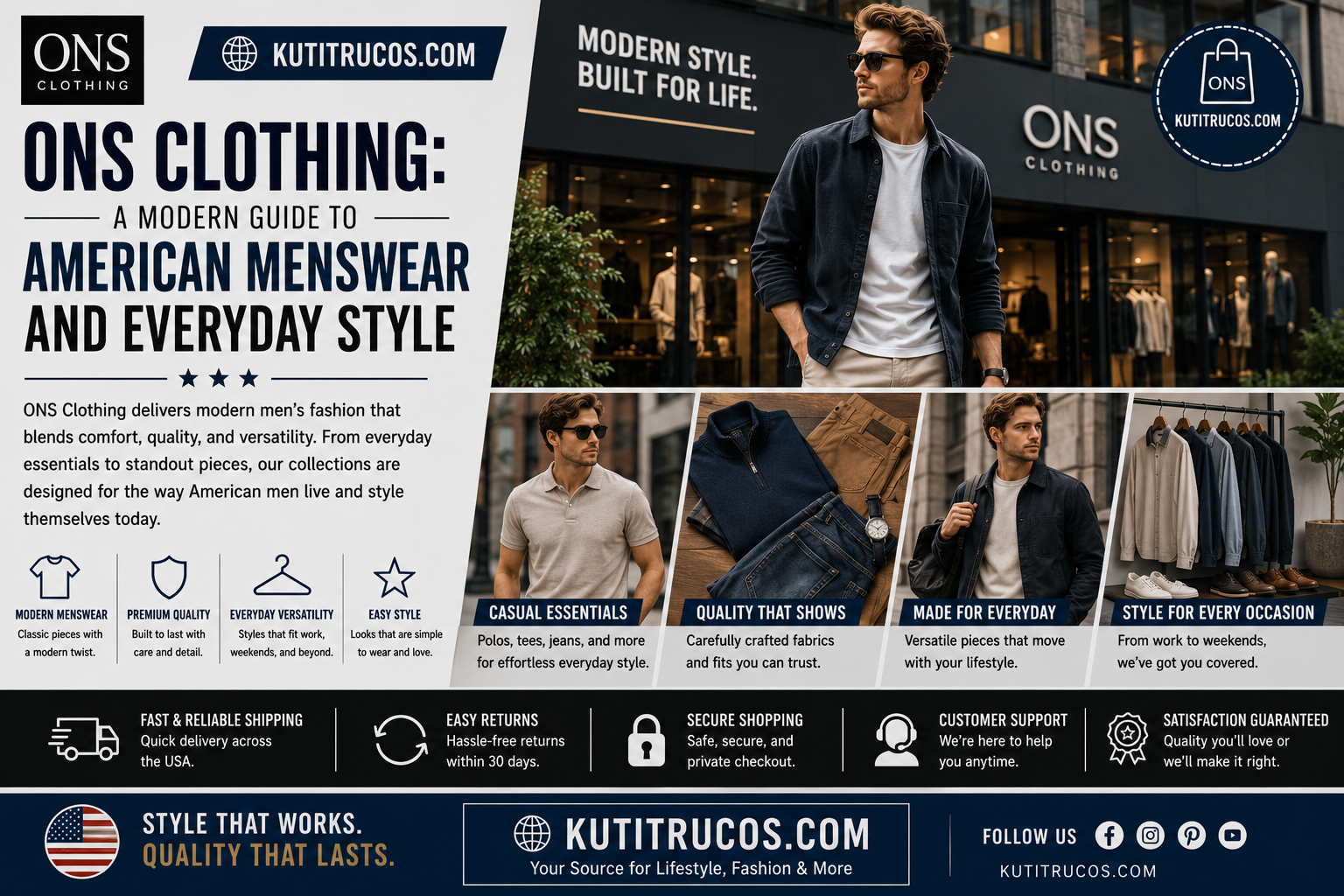
American menswear has changed considerably over the past decade. The traditional division between office clothing, weekend outfits, travel wear, and casual fashion has become increasingly flexible. Men today often want clothing that can move comfortably between different parts of their lives without sacrificing appearance. This shift has created opportunities for brands that focus on versatile, understated, and functional fashion.
ons Clothing, often recognized simply as ons, is part of this modern menswear movement. The brand has developed an identity around contemporary men’s clothing that combines relaxed design, practical details, and an urban lifestyle aesthetic. Rather than relying heavily on seasonal trends, ons focuses on pieces that can become useful foundations of an everyday wardrobe.
For American consumers, this approach is particularly relevant. From busy city streets to weekend road trips, modern menswear needs to provide comfort while maintaining a polished appearance.
Understanding the ons Clothing Philosophy
Many men prefer a smaller collection of reliable pieces that can be combined in different ways. This approach makes getting dressed easier while still allowing room for personal style.
ons Clothing fits into this concept by emphasizing versatile menswear. Its aesthetic generally leans toward clean silhouettes, contemporary casualwear, and practical pieces suitable for everyday life.
The appeal is not necessarily about making the loudest fashion statement. Instead, the focus is on clothing that works naturally within an existing wardrobe.
A good overshirt, for example, can be worn over a T-shirt during mild weather, layered underneath a jacket when temperatures fall, or combined with trousers for a more refined casual look. Similarly, well-designed pants can work with sneakers for a relaxed outfit or with cleaner footwear for a smarter appearance.
This versatility is one of the defining characteristics of contemporary American menswear.
The Rise of Modern American Casualwear
Casualwear has become increasingly important in the United States. Traditional dress codes have relaxed in many professional and social environments, creating greater demand for clothing that sits between formal and completely casual.
This has led to the popularity of smart-casual outfits.
Instead of wearing a full suit, a man might choose a lightweight jacket, clean shirt, tapered trousers, and sneakers. Another option could be a textured overshirt paired with denim and minimalist footwear.
ons Clothing’s aesthetic fits naturally into this environment because its pieces can be styled across several levels of formality.
The result is clothing that does not feel restricted to a particular occasion.
Versatility for the American Lifestyle
The size and diversity of the United States mean that American consumers have highly varied lifestyles. A person living in New York may have completely different clothing requirements from someone in Los Angeles, Austin, Seattle, or Chicago.
Despite these differences, versatility remains valuable.
Many men need clothing that can handle commuting, travel, casual workplaces, dinners, social events, and weekends. Instead of buying separate wardrobes for every situation, consumers increasingly look for adaptable pieces.
This is where modern brands such as ons can appeal to shoppers. A versatile wardrobe allows individual items to perform multiple roles.
A lightweight shirt can be worn independently during warmer weather or layered during cooler months. Casual trousers can work for travel and social occasions. A simple jacket can provide structure to an otherwise relaxed outfit.
Shirts as Everyday Essentials
Shirts remain an important part of men’s fashion because they can change the character of an outfit quickly.
A basic T-shirt creates a relaxed appearance, while a button-up shirt can immediately make an outfit look more refined. Overshirts occupy a useful middle ground.
The overshirt has become particularly popular in contemporary American fashion because it provides structure without the formality of a traditional jacket. It can be worn open over a T-shirt, buttoned as a standalone shirt, or layered under outerwear.
For men who value simplicity, versatile shirts can reduce the need for excessive wardrobe pieces.
Color also plays an important role. Neutral shades such as navy, olive, gray, black, beige, and white can be combined easily with denim and other trousers. More distinctive colors or patterns can then be introduced through selected statement pieces.
The Importance of Comfortable Trousers
Men’s trousers have also evolved beyond traditional formal pants and basic jeans.
Modern consumers increasingly expect pants to provide comfort while maintaining a clean silhouette. Stretch fabrics, relaxed cuts, tapered designs, and technical materials have contributed to this evolution.
For an American lifestyle, comfortable trousers can be particularly useful for travel. Long flights, road trips, commuting, and full days away from home require clothing that does not feel restrictive.
The best casual trousers can also transition into social settings. Pairing them with a clean shirt and minimalist shoes can create an outfit that feels polished without becoming formal.
This combination of comfort and appearance is central to contemporary menswear.
Layering and Seasonal Style
Layering is another important element of American fashion. Because different regions experience different temperatures throughout the year, men often need clothing that can adapt.
A simple layering system might begin with a T-shirt or lightweight shirt. An overshirt or sweater can provide additional warmth, while a jacket or coat can serve as the outer layer.
The advantage of layering is flexibility.
ons Clothing’s contemporary approach fits well with this styling method because versatile shirts, lightweight outerwear, and casual separates can work together without creating an overly complicated appearance.
For men who prefer minimalist wardrobes, layering also provides multiple outfit combinations from a relatively small number of pieces.
Travel-Friendly Menswear
Travel has become another major influence on American fashion. Modern travelers want clothing that is comfortable during transportation but presentable when they reach their destination.
This has encouraged the popularity of wrinkle-resistant materials, lightweight fabrics, versatile footwear, and clothing that can be worn in different settings.
A successful travel wardrobe often contains fewer items with greater versatility.
For example, one neutral jacket can work with several shirts. A pair of comfortable trousers can be worn during the journey and again for dinner. A lightweight overshirt can provide an extra layer without taking up too much luggage space.
This practical approach reflects a broader shift toward intentional wardrobes.
Minimalism and Personal Style
Minimalism does not mean that fashion has to be boring. Instead, it can mean choosing fewer pieces that work particularly well together.
A minimalist menswear wardrobe often relies on a foundation of neutral colors, clean silhouettes, and versatile garments. Personal character can then be introduced through footwear, accessories, texture, patterns, or occasional statement pieces.
ons Clothing’s understated aesthetic can work well for men who prefer this approach.
Rather than building an outfit around a highly recognizable logo or an extreme trend, the wearer can focus on fit, proportion, material, and combination.
This makes the clothing easier to incorporate into an existing wardrobe.
Dressing for Work in a Changing Environment
Workwear has experienced significant changes in the United States. While traditional business suits remain important in some industries, many workplaces have adopted more relaxed dress codes.
This has created demand for clothing that looks professional without feeling overly formal.
A modern work outfit might consist of tailored casual pants, a button-up shirt, a lightweight jacket, and clean sneakers. Another combination could involve dark denim, a structured overshirt, and leather footwear.
The goal is to look intentional without appearing overdressed.
This evolution has helped blur the line between traditional workwear and everyday menswear.
Building a Practical ons-Inspired Wardrobe
Men interested in this style can build a practical wardrobe around a few core categories.
Start with versatile shirts in neutral and complementary colors. Add comfortable trousers that can be dressed up or down. Include quality denim for casual days and an overshirt or lightweight jacket for layering.
Footwear should also be versatile. A clean sneaker can cover many casual situations, while a loafer, boot, or other refined option can provide an alternative for more polished occasions.
Accessories can remain simple. A functional watch, understated belt, sunglasses, or everyday bag can complete an outfit without overpowering it.
The key is coordination. Every new piece should ideally work with several items already owned.
Why ons Clothing Fits Contemporary American Fashion
The strength of ons Clothing’s overall aesthetic lies in its relationship with modern life. American menswear is increasingly moving away from rigid rules and toward flexibility.
Men want to feel comfortable, but they also want to look considered. They want clothing suitable for commuting, travel, work, restaurants, weekends, and social occasions.
This does not necessarily require a large wardrobe.
Instead, it requires thoughtful pieces that work together.
ons Clothing represents this broader philosophy through its contemporary approach to casual menswear. The brand’s appeal can be understood through three central ideas: versatility, comfort, and understated style.
These qualities are especially relevant to consumers who want fashion to support their lifestyle rather than dictate it.
The Future of American Menswear
American menswear will likely continue to evolve toward greater flexibility. Athletic influences, outdoor-inspired clothing, relaxed tailoring, minimalist fashion, and traditional garments are increasingly appearing together.
Consumers are also becoming more selective. Instead of automatically following every trend, many shoppers are looking for clothing that offers genuine value through wearability and versatility.
Brands that understand this shift can remain relevant by focusing on products that work beyond a single season.
The future of menswear may therefore be less about dramatic changes and more about improving everyday clothing better fabrics, more comfortable silhouettes, thoughtful details, and designs that can adapt to different situations.
Conclusion
ons Clothing reflects a significant direction in contemporary American men’s fashion: the movement toward clothing that is stylish without being complicated and comfortable without appearing careless.
Its modern menswear aesthetic fits naturally into the lifestyle of American consumers who move between work, travel, social activities, and relaxed weekends. Versatile shirts, casual trousers, layered pieces, and understated outerwear can form the foundation of a wardrobe that works throughout the year.
The most effective modern wardrobe is not necessarily the one with the most clothing. It is the one where individual pieces can be combined easily and worn confidently in different situations.
That philosophy makes ons Clothing an interesting example of how American menswear continues to evolve. By bringing together everyday practicality, contemporary design, and a relaxed attitude toward dressing, the brand fits into a fashion culture where comfort and style are no longer opposites they are increasingly part of the same outfit.

