

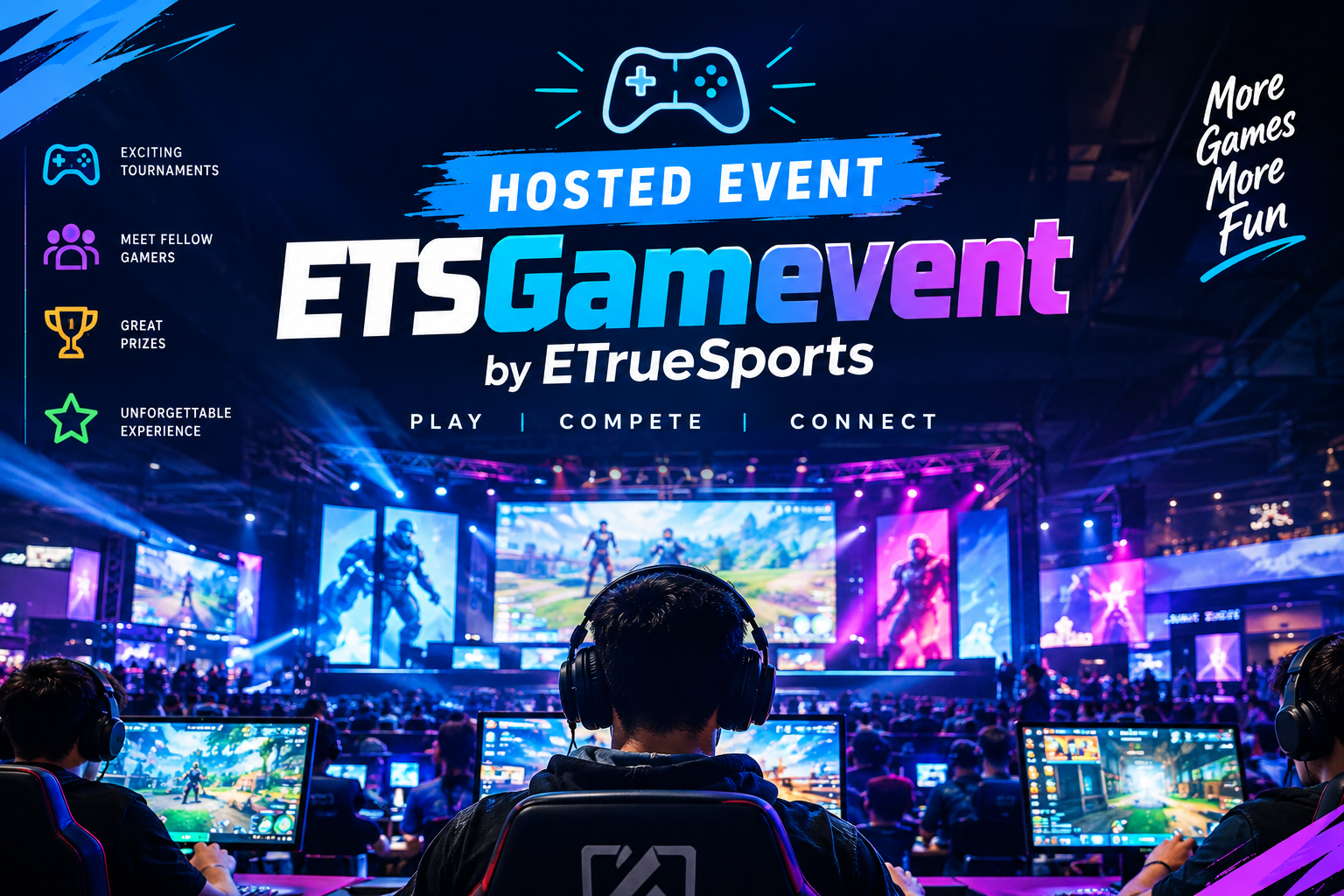
Competitive gaming has changed significantly over the past several years. What was once mainly considered a recreational activity has developed into a large digital entertainment industry involving players, teams, organizers, spectators, streamers, and gaming communities.
As online gaming continues to expand, organized events have become an important part of the experience. Players want structured competitions, clear schedules, fair rules, reliable communication, and opportunities to compete with people outside their usual gaming circles.
Hosted Event ETSGamevent by ETrueSports is presented as an organized gaming event designed around competitive matches, player participation, community interaction, and structured event management. Current descriptions of the event discuss scheduled competitions, gaming challenges, player engagement, and different forms of online participation.
For gamers interested in competitive environments, understanding how a hosted gaming event works can make participation easier and more enjoyable. This guide explains the concept of ETSGamevent, the role of ETrueSports, event organization, player preparation, technical requirements, community interaction, and other important aspects.
What Is ETSGamevent?
ETSGamevent is described as a gaming event centered on organized competitions and online participation.
The event concept combines scheduled matches with other forms of gaming-related interaction. Depending on the event structure, participants may encounter competitive matches, community sessions, challenges, discussions, or other activities.
The purpose of organizing an event in this way is to create a more structured environment than an ordinary casual gaming session.
Instead of simply opening a game and playing with random opponents, participants can enter an organized event where schedules, rules, match formats, and participation requirements are established in advance.
This structure can benefit both players and organizers.
Players understand what is expected from them, while organizers have a framework for managing registrations, schedules, matches, communication, and technical operations.
The Role of ETrueSports
ETrueSports is associated with hosting and organizing the ETSGamevent experience.
Current descriptions attribute several organizational responsibilities to ETrueSports, including event scheduling, registration management, tournament organization, technical support, and competitive standards.
Hosting a gaming event involves considerably more than putting players into a digital lobby.
Organizers need to coordinate multiple elements simultaneously.
These can include:
- Player registration
- Match scheduling
- Tournament formats
- Rules and guidelines
- Technical support
- Communication
- Referee or moderation responsibilities
- Streaming and broadcasting
- Match results
- Community management
A coordinated approach helps reduce confusion during the event.
Why Hosted Gaming Events Matter
Casual gaming and organized competitive gaming offer different experiences.
Casual gaming is usually flexible. Players can join or leave whenever they want and choose their opponents or activities according to their preferences.
A hosted event introduces a more structured environment.
Players may have scheduled matches, specific opponents, defined rules, and progression through different stages.
This structure can create additional motivation.
Players have a reason to practice before the event. They may study strategies, communicate with teammates, improve their equipment, and become familiar with the game’s mechanics.
For competitive players, this preparation can become part of the overall experience.
Competitive Gaming and Community
One of the important aspects of a gaming event is community.
Gaming communities bring together people who may live in completely different cities or countries but share an interest in the same games.
An organized event provides an opportunity for these players to interact.
Community interaction may happen through:
- Team communication
- Event chats
- Gaming groups
- Discussions
- Match commentary
- Social media
- Live streams
- Player communities
The social aspect can be just as important as the competition itself.
A player may enter an event primarily to compete but leave with new teammates, friends, strategies, or gaming connections.
Event Structure
A well-organized gaming event normally follows a defined structure.
The exact format can vary depending on the game, number of participants, and goals of the organizers.
However, an event may include several stages.
Registration
The first stage is usually registration.
Players provide the information required to participate and may select a particular game, category, team, or competition.
Registration requirements should be reviewed carefully because different events can have different eligibility rules.
Event Preparation
After registration, participants need to prepare their equipment and understand the rules.
Players may also receive information about match times, opponents, brackets, or other event details.
Qualifying Matches
Some tournaments use qualifying rounds to determine which players or teams progress.
Qualifiers can help organizers manage a large number of participants.
Main Competition
The main competition contains the scheduled matches that determine progression through the tournament.
The format can vary considerably.
Some events use single-elimination structures, while others may use group stages, round-robin systems, or other tournament formats.
Final Stage
Successful players or teams can progress to later rounds.
The final stage normally determines the top positions according to the rules established by the event organizers.
Importance of Clear Rules
Rules are one of the most important components of competitive gaming.
Without clear rules, disagreements can quickly arise.
Players need to know:
- Which games are included
- Match formats
- Allowed equipment
- Time limits
- Scoring systems
- Disconnection procedures
- Communication rules
- Conduct requirements
- Cheating policies
- Dispute procedures
Clear rules provide participants with a common understanding of how the competition operates.
They also give organizers a reference point when resolving disputes.
Fair Play in ETSGamevent
Competitive gaming depends heavily on fair play.
Players enter competitions expecting opponents to follow the same rules.
Fair competition can involve appropriate anti-cheat systems, clear regulations, consistent enforcement, and reliable match administration.
Current ETrueSports event descriptions specifically mention competitive standards and anti-cheat measures as part of the event-management concept.
Fair play is not only about preventing cheating.
It also involves respectful behavior toward opponents, teammates, referees, organizers, and spectators.
Good sportsmanship helps maintain a healthy gaming environment.
Preparing Before the Event
Preparation can make a major difference during a competitive gaming event.
Players should not wait until the first match begins to discover problems with their equipment.
A useful preparation checklist includes:
- Testing the gaming device
- Checking internet stability
- Updating required software
- Testing headphones
- Checking microphones
- Confirming keyboard and mouse settings
- Reviewing game controls
- Understanding tournament rules
- Checking the event schedule
- Preparing backup equipment where possible
Small technical problems can become significant during an important match.
Preparing in advance reduces unnecessary stress.
Internet Connection and Latency
For online gaming events, internet quality can be particularly important.
Latency affects how quickly information travels between a player’s device and the game server.
High latency can create delays that are especially noticeable in fast competitive games.
Players should therefore test their connection before participating.
It can also be useful to reduce unnecessary network activity during a match.
For example, large downloads, streaming on multiple devices, or other heavy network activity can consume available bandwidth.
Event organizers may also use dedicated servers and latency monitoring as part of their technical operations. Current ETrueSports descriptions mention server monitoring and technical support for hosted events.
Hardware Preparation
Players should make sure their hardware is suitable for the game they intend to play.
Important components can include:
Gaming Device
The computer or console should meet the game’s requirements.
Display
A reliable monitor or television can help players maintain clear visual information.
Audio
Headphones can be useful for hearing important in-game sounds and communicating with teammates.
Input Devices
Keyboard, mouse, controller, or other input devices should be tested before the event.
Backup Equipment
Where possible, having spare cables, controllers, or other accessories can be helpful if something fails.
Preparation does not guarantee that technical problems will never occur, but it can reduce preventable issues.
Streaming and Spectator Experience
Modern gaming events are not only designed for players.
Spectators are also an important part of esports.
People who cannot participate can watch matches through streaming platforms or event broadcasts.
A good broadcast can include:
- Live gameplay
- Commentary
- Match statistics
- Player information
- Scoreboards
- Brackets
- Interviews
- Match highlights
Current descriptions of ETSGamevent discuss streaming, audience interaction, live match information, and spectator features as parts of the broader event experience.
This transforms competitive gaming into a form of entertainment that can be followed even by people who are not competing.
The Role of Commentators
Commentators can make competitive matches easier to understand.
A skilled commentator explains what is happening and provides context about important decisions.
For viewers unfamiliar with a particular game, commentary can help explain:
- Player strategies
- Important objectives
- Tactical decisions
- Match momentum
- Key mistakes
- Significant plays
Commentary also adds energy to a broadcast.
Instead of watching raw gameplay, viewers receive an explanation of why particular moments matter.
Technical Support During Events
Technical support is another important part of hosted gaming events.
Problems can occur even when players prepare carefully.
Potential issues include:
- Server interruptions
- Connection problems
- Hardware failures
- Audio problems
- Login difficulties
- Software crashes
- Broadcast interruptions
Current ETrueSports event information describes technical teams, backup equipment, monitoring systems, and help-desk support as part of event operations.
A clear troubleshooting process allows organizers to respond more efficiently when something goes wrong.
Role of Event Staff
A large gaming event requires multiple responsibilities.
One person cannot realistically manage every part of a complex tournament.
Depending on the size of an event, staff responsibilities can include:
Tournament Manager
The tournament manager oversees the overall competition.
Referees
Referees help enforce event rules and resolve match-related issues.
Technical Staff
Technical personnel handle equipment, servers, networks, and other technical requirements.
Broadcast Team
Broadcast producers and commentators manage the viewing experience.
Volunteers
Volunteers may assist with registration, communication, participant support, and general event logistics.
A defined chain of responsibility makes it easier to identify who should handle a specific problem.
Teamwork in Competitive Gaming
Team-based games require communication and cooperation.
A highly skilled individual cannot always compensate for poor teamwork.
Teams need to develop:
- Clear communication
- Role awareness
- Strategy
- Timing
- Adaptability
- Trust
- Decision-making
Players should understand their responsibilities before entering a competitive match.
Good teams also learn how to respond when a strategy fails.
Instead of blaming one teammate, they can analyze what happened and adjust their approach.
Learning From Competitive Matches
One advantage of organized gaming events is the opportunity to learn.
Players can review their own performance after a match.
Questions worth asking include:
- What went well?
- Where did the team lose control?
- Were communication problems involved?
- Did the strategy work?
- Were resources used effectively?
- Which decisions created problems?
- What could be changed next time?
Reviewing mistakes can be more valuable than simply focusing on the final score.
Some players also watch recordings of their matches to identify patterns they did not notice while playing.
Community Interaction
Community engagement can make gaming events more memorable.
Players can discuss strategies, exchange experiences, and communicate with other participants.
Community interaction may also provide opportunities for newer players to learn from experienced competitors.
However, healthy communities require responsible behavior.
Participants should avoid harassment, personal attacks, cheating discussions, or disruptive behavior.
Respectful communication helps create an environment where beginners can participate without unnecessary pressure.
Beginners and Experienced Players
Competitive gaming events can attract players with very different skill levels.
Experienced competitors may enter with tournament experience and established strategies.
Beginners may participate mainly to learn and gain experience.
This difference does not necessarily reduce the value of the event for new players.
A beginner can use the experience to understand competitive formats, practice communication, observe advanced players, and identify areas for improvement.
Players should set realistic expectations.
The goal does not always have to be winning the entire tournament.
Learning how competitive events operate can itself be valuable.
Importance of Scheduling
Time management becomes particularly important during organized events.
Players should know when they need to be available.
Missing a scheduled match can create complications for both participants and organizers.
A simple strategy is to record:
- Registration deadline
- Check-in time
- Match start time
- Break periods
- Qualifier dates
- Final rounds
- Broadcast times
Players should also consider their local time zone if an event includes participants from different regions.
Event Communication
Reliable communication helps keep players informed.
Organizers may need to communicate schedule changes, technical issues, rule updates, bracket information, and other announcements.
Participants should regularly check the official communication channels associated with the event.
They should also avoid relying entirely on information shared by random users.
If a schedule changes, the organizer’s official announcement should generally be treated as the primary reference.
Rewards and Recognition
Competitive events may use different forms of recognition.
Depending on the event, participants may receive:
- Rankings
- Awards
- Badges
- Prizes
- Recognition
- Featured highlights
Current third-party descriptions of ETSGamevent mention recognition and rankings among possible event elements, but specific rewards can vary between events.
Participants should therefore check the rules and announcements for the particular edition they intend to join rather than assuming that every event has identical rewards.
Benefits for Organizers
Hosted gaming events can also provide advantages for organizers.
Managing a tournament independently can require significant planning.
A structured event-management approach can help organize:
- Registration
- Match schedules
- Brackets
- Staff
- Technical support
- Broadcasting
- Communication
- Results
Current descriptions of ETrueSports’ hosted-event model specifically discuss tournament software, staffing, streaming templates, technical operations, and event logistics.
This allows organizers to focus on the overall experience while using established systems for operational tasks.
Benefits for Spectators
Spectators can enjoy competitive gaming without participating directly.
They can follow favorite players, learn new strategies, watch important matches, and interact with other fans.
Live statistics and commentary can make broadcasts more informative.
For people interested in improving their own gameplay, watching experienced competitors can also provide useful examples of positioning, communication, decision-making, and strategy.
The Future of Gaming Events
The continued growth of online gaming has created new possibilities for event organizers.
Modern competitions can combine online participation with live broadcasts, community activities, digital statistics, and social interaction.
Players no longer have to be physically present in the same location to participate in a competitive event.
This makes it possible for gaming communities to connect across geographical boundaries.
Hosted events such as ETSGamevent represent this broader shift toward organized digital competition.
Safety and Responsible Participation
Gaming events should also be approached responsibly.
Players should protect their account credentials and avoid sharing passwords.
They should be careful when clicking unfamiliar links or downloading unknown software.
Participants should also verify registration instructions through legitimate event channels.
For younger players, parental guidance may be appropriate depending on the event, game, communication features, and applicable age requirements.
Responsible participation helps protect both players and organizers.
Common Mistakes Players Should Avoid
Several mistakes can make an event experience more difficult.
Ignoring the Rules
Players should read the rules before competing.
Arriving Late
Missing check-in or match times can create unnecessary problems.
Failing to Test Equipment
A microphone or controller should not be tested for the first time during a tournament.
Overlooking Internet Problems
Players should test connection stability before important matches.
Poor Communication
Team members should establish basic communication expectations.
Taking Losses Personally
Competitive games naturally include wins and losses. Players can use losses as opportunities to identify areas for improvement.
Frequently Asked Questions
What is ETSGamevent by ETrueSports?
ETSGamevent is described as an organized gaming and esports event associated with ETrueSports, featuring scheduled competitions, player participation, and community-oriented activities.
Who can participate?
Participation requirements depend on the particular event and its rules. Current descriptions present the event as being relevant to both newer and experienced gamers.
Is ETSGamevent only for professional players?
No. Available descriptions discuss participation across different skill levels, including players interested in learning, competing, and interacting with the gaming community.
What should I do before joining?
Check the event rules and schedule, test your gaming equipment and internet connection, and make sure you understand the registration and check-in process.
Does the event include competitive matches?
Yes. Competitive matches and scheduled gaming challenges are central elements described for ETSGamevent.
Are spectators able to follow matches?
Current descriptions of the event discuss streaming and spectator-oriented features, although specific broadcast arrangements can vary by event.
Why is technical support important?
Online competitions depend on servers, internet connections, gaming devices, and software. Technical support helps organizers respond when problems occur.
Can beginners learn from the event?
Yes. Beginners can use organized competitions as an opportunity to learn about competitive gaming, observe experienced players, practice communication, and understand tournament structures.
Final Thoughts
The Hosted Event ETSGamevent by ETrueSports represents an organized approach to competitive gaming, combining scheduled matches with player participation, technical operations, community interaction, and event management.
The current descriptions emphasize the importance of tournament organization, clear rules, reliable technical systems, staff coordination, and communication.
For players, preparation is an important part of the experience. Testing equipment, checking internet stability, understanding the rules, monitoring schedules, and communicating effectively can help avoid preventable problems.
For beginners, an organized gaming event can provide an opportunity to experience competitive gaming in a structured environment. For experienced players, it can provide another setting in which to test strategies and compete with other participants.
Ultimately, the value of a gaming event extends beyond its final results. Competition, learning, teamwork, community interaction, and the experience of participating in an organized event can all contribute to the overall gaming experience.

