

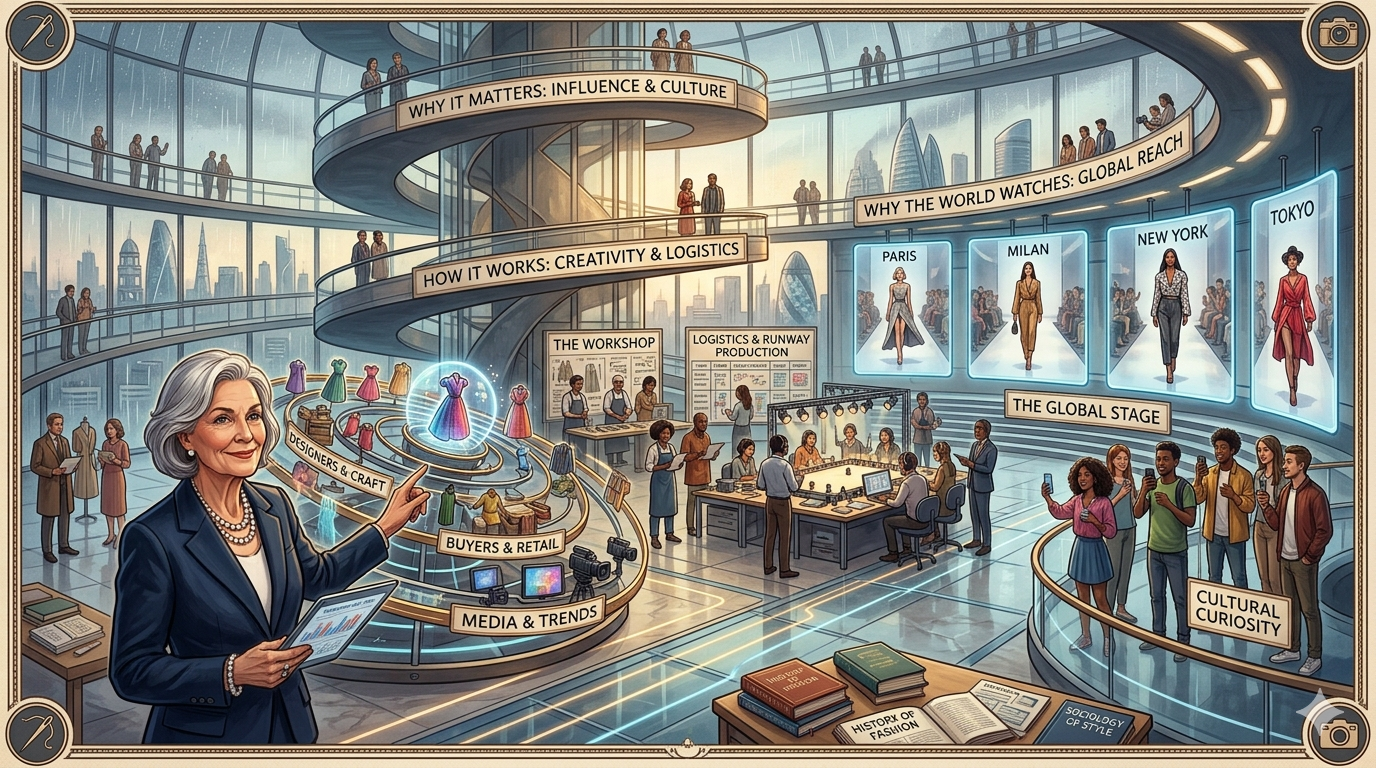
Fashion is much more than clothing. It influences culture, entertainment, business, social media, technology, and consumer behavior around the world. At the center of this global industry sits one of fashion’s most recognizable events: Fashion Week.
Every year, millions of people search for runway highlights, celebrity appearances, designer collections, street style trends, and upcoming fashion movements. Yet many people still wonder what Fashion Week actually is and why it receives so much attention.
Fashion Week is more than a collection of runway shows. It is where trends are introduced, brands build influence, buyers make decisions, and designers shape what consumers may wear in the future.
This guide explores what Fashion Week is, why it matters, how it works, and why it continues to dominate conversations worldwide.
What Is Fashion Week?
Fashion Week is a series of events where designers and fashion houses present upcoming collections to industry professionals, media organizations, buyers, celebrities, influencers, and consumers.
These events generally showcase:
- New clothing collections
- Accessories
- Footwear
- Beauty trends
- Styling concepts
- Creative direction
Instead of simply displaying clothes, these events communicate ideas, identity, and future trends.
Why Fashion Week Became So Important
Fashion Week evolved because designers needed a structured way to present new collections.
Over time, these events became important because they influence:
Consumer Trends
Many popular styles begin appearing during runway presentations.
Retail Buying Decisions
Stores and buyers use these events to decide what products to stock.
Brand Visibility
Large events create global exposure.
Media Attention
Fashion journalism relies heavily on these presentations.
Today, Fashion Week affects much more than luxury fashion.
Its influence often reaches mainstream retail.
How Fashion Week Typically Works
Fashion Week is not a single event.
Instead, it usually involves multiple activities over several days.
Common elements include:
Runway Shows
Models present collections while photographers, buyers, and guests observe.
Presentations
Brands sometimes showcase collections in alternative formats.
Industry Meetings
Buyers and brands discuss future partnerships.
Media Coverage
Journalists analyze trends and collections.
Social Events
Networking plays a major role.
The structure may vary depending on organizers and locations.
Why Designers Use Fashion Week
Designers invest significant resources into these events because visibility matters.
Fashion Week allows designers to:
- Introduce new collections
- Generate publicity
- Attract retailers
- Build brand image
- Reach global audiences
For emerging designers, exposure can be especially valuable.
Strong presentations sometimes change careers.
The Role of Buyers During Fashion Week
Consumers often focus on celebrities and models.
However, buyers play a major role.
Buyers evaluate:
- Commercial potential
- Consumer demand
- Pricing opportunities
- Seasonal trends
Their decisions influence what eventually appears in stores.
Without buyers, runway visibility alone rarely creates business success.
Media Influence and Fashion Coverage
Fashion journalism significantly shapes public perception.
Coverage includes:
- Trend analysis
- Collection reviews
- Celebrity appearances
- Designer interviews
- Industry commentary
Modern media coverage now extends far beyond magazines.
Digital platforms dominate much of today’s fashion conversation.
Social Media Changed Fashion Week Completely
Social media transformed Fashion Week from an industry-only experience into global entertainment.
Today, audiences consume fashion content through:
- Short videos
- Livestreams
- Influencer content
- Behind-the-scenes footage
- Street style photography
This digital shift changed how fashion spreads.
Consumers now see trends almost instantly.
Street Style Became an Event of Its Own
Interestingly, many people now watch what guests wear outside venues as much as runway collections themselves.
Street style became important because it often reflects:
- Wearable fashion
- Personal expression
- Emerging trends
- Influencer culture
Photographers frequently capture attendees alongside models and celebrities.
For many audiences, street style feels more relatable.
Celebrity Influence in Fashion Week
Celebrities contribute enormous attention.
Their participation creates:
- Media coverage
- Viral content
- Brand visibility
- Consumer interest
When celebrities attend shows, discussions expand beyond fashion enthusiasts.
This broader attention benefits brands significantly.
Fashion Week and Business Impact
Fashion Week is also a business event.
These events generate economic activity through:
- Tourism
- Hospitality
- Retail spending
- Advertising
- Partnerships
- Sponsorships
The financial impact extends beyond clothing companies.
Many industries benefit.
How Trends Move From Runway to Consumers
Fashion Week introduces ideas long before products reach consumers.
The process often looks like this:
Step 1
Designers reveal collections.
Step 2
Media coverage increases visibility.
Step 3
Retail buyers place orders.
Step 4
Brands adapt styles for broader markets.
Step 5
Consumers begin purchasing influenced designs.
This process explains why trends appear gradually.
Sustainability Discussions in Modern Fashion
Modern fashion conversations increasingly include sustainability.
Topics frequently discussed include:
- Responsible production
- Material choices
- Waste reduction
- Ethical manufacturing
Consumers increasingly expect transparency.
Fashion Week discussions now often extend beyond aesthetics.
Technology Is Changing Fashion Presentations
Technology continues reshaping fashion experiences.
Examples include:
- Virtual presentations
- Digital collections
- Interactive experiences
- Livestream events
- AI-assisted design tools
Technology makes events more accessible to wider audiences.
Why People Outside Fashion Still Follow Fashion Week
Even people who rarely buy luxury clothing often follow Fashion Week because it combines:
- Entertainment
- Celebrity culture
- Visual creativity
- Social media trends
- Cultural influence
Fashion increasingly overlaps with broader entertainment industries.
This expands audience interest.
Common Misunderstandings About Fashion Week
Several misconceptions exist.
Myth: Fashion Week Only Matters for Luxury Brands
Many mainstream trends originate from these events.
Myth: Everything Seen on Runways Becomes Popular
Many concepts remain artistic rather than commercial.
Myth: Fashion Week Is Only About Clothes
Business, media, and marketing play major roles.
Understanding these differences provides clearer context.
The Future of Fashion Week
Fashion Week continues evolving.
Future changes may include:
- Greater digital integration
- More sustainable practices
- Increased global accessibility
- Hybrid physical and virtual formats
Consumer behavior continues shaping the industry.
Fashion events must evolve alongside audiences.
Why Fashion Week Still Matters Today
Despite changing technology and shifting consumer habits, Fashion Week remains influential because it combines creativity, commerce, media, and culture into a single experience.
These events help determine:
- Upcoming trends
- Brand direction
- Consumer interests
- Industry conversations
Fashion Week remains relevant because fashion itself remains closely connected to identity and self-expression.
Final Thoughts
Fashion Week is far more than glamorous runways and celebrity appearances.
It is a global system that connects designers, buyers, retailers, media organizations, influencers, and consumers.
From business decisions to viral trends, these events shape much of what eventually reaches mainstream fashion.
Whether viewed as entertainment, art, business, or cultural expression, Fashion Week continues to influence how the world thinks about style and creativity.

