

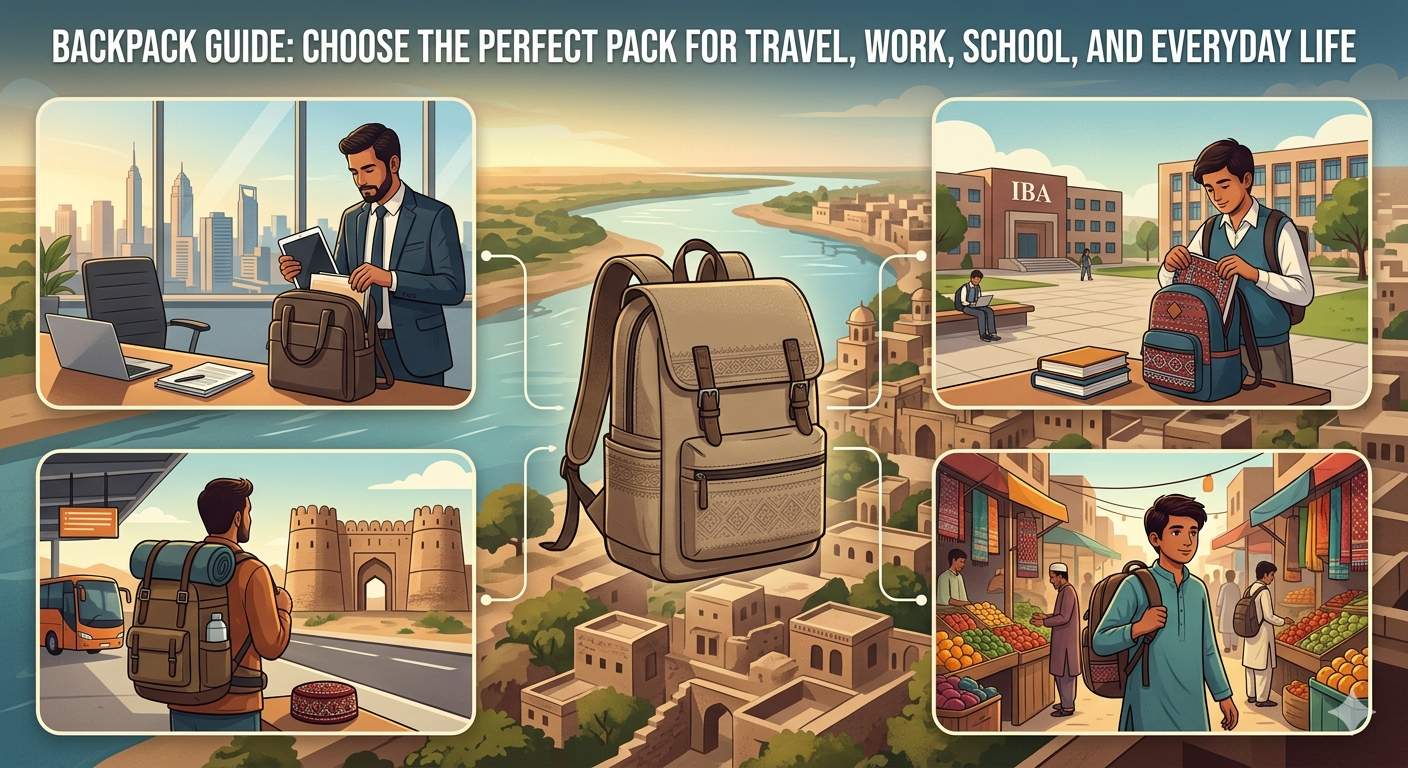
Introduction
From students carrying textbooks to professionals transporting laptops and travelers exploring new destinations, backpacks provide convenience, organization, and mobility.
However, choosing the right backpack is more complicated than simply selecting a design that looks attractive. The wrong backpack can create discomfort, reduce storage efficiency, and wear out quickly. The right backpack, on the other hand, improves organization, protects belongings, and makes everyday activities easier.
In the United States, backpack searches continue growing because consumers want products that combine comfort, durability, style, and functionality.
This complete backpack guide explains everything you need to know before purchasing a backpack, including types, materials, sizes, features, comfort factors, maintenance tips, and buying strategies.
What Is a Backpack?
A backpack is a portable bag carried on the back using shoulder straps. Unlike handbags or traditional luggage, backpacks distribute weight across the shoulders and back, making them more comfortable for carrying heavier loads.
Modern backpacks are used for:
- School and education
- Office commuting
- Travel
- Hiking and outdoor activities
- Sports and fitness
- Everyday use
Backpacks have evolved significantly over time and now include advanced designs for specialized purposes.
Why Choosing the Right Backpack Matters
Many buyers focus only on appearance, but functionality matters far more.
A good backpack can provide:
- Better comfort
- Improved organization
- Longer product lifespan
- Reduced physical strain
- Better protection for belongings
A poor-quality backpack may create discomfort and require replacement much sooner.
Types of Backpacks
Different backpacks serve different purposes. Understanding categories helps buyers make better decisions.
Everyday Backpacks
These backpacks are designed for general daily use.
Common uses:
- Commuting
- Shopping
- Daily errands
- Casual activities
Features often include:
- Medium storage capacity
- Lightweight construction
- Simple compartments
School Backpacks
Students need backpacks designed for books, electronics, and daily transportation.
Typical features:
- Laptop sleeves
- Multiple compartments
- Water bottle holders
- Reinforced straps
Travel Backpacks
Travel backpacks prioritize storage and mobility.
Benefits include:
- Large capacity
- Organization compartments
- Comfortable carrying systems
- Security features
Travel backpacks are often preferred over rolling luggage for flexibility.
Hiking Backpacks
Outdoor activities require specialized backpacks.
These backpacks usually provide:
- Support systems
- Weather resistance
- Adjustable straps
- Weight distribution features
Laptop Backpacks
Professionals increasingly choose backpacks specifically designed for electronics.
Features include:
- Padded laptop compartments
- Organizational pockets
- Professional appearance
- Cable storage areas
Sports Backpacks
Athletes often need separate compartments for equipment and clothing.
These bags focus on:
- Ventilation
- Durability
- Lightweight materials
Understanding Backpack Sizes
Choosing the correct size is extremely important.
Small Backpacks
Usually best for:
- Short trips
- Minimal carrying
- Daily essentials
Medium Backpacks
Ideal for:
- School
- Work
- Daily commuting
Large Backpacks
Suitable for:
- Travel
- Outdoor adventures
- Heavy loads
Buying larger than necessary often creates discomfort.
Backpack Materials Explained
Material quality determines durability and performance.
Polyester
Advantages:
- Lightweight
- Affordable
- Water resistant
Disadvantages:
- Less durable than premium materials
Nylon
Advantages:
- Strong construction
- Lightweight
- Flexible
Widely used for modern backpacks.
Canvas
Advantages:
- Durable
- Stylish appearance
- Long lifespan
Often preferred for casual and travel use.
Leather
Advantages:
- Premium appearance
- Long-lasting
Disadvantages:
- Higher cost
- Heavier weight
Features to Look for Before Buying
Many consumers regret purchases because they ignore essential features.
Comfortable Shoulder Straps
Good straps reduce pressure on shoulders.
Look for:
- Padding
- Adjustable design
- Wide construction
Back Support
Back panels improve comfort during long use.
Useful features include:
- Breathable mesh
- Foam padding
- Ergonomic design
Storage Organization
Good organization improves usability.
Consider:
- Main compartments
- Laptop sleeves
- Small accessory pockets
- Hidden storage
Zipper Quality
Weak zippers are one of the biggest reasons backpacks fail.
Choose:
- Smooth operation
- Strong stitching
- Durable hardware
Water Resistance
Water-resistant materials protect electronics and important items.
This feature becomes important for commuters and travelers.
Backpack Buying Guide for Students
Students require backpacks that balance comfort and storage.
Things to prioritize:
- Book capacity
- Laptop protection
- Comfortable straps
- Lightweight construction
Heavy school loads make ergonomic design important.
Backpack Buying Guide for Professionals
Professionals often want backpacks that combine appearance with functionality.
Look for:
- Clean design
- Laptop storage
- Organized compartments
- Comfortable carrying system
Many workers now prefer backpacks over traditional briefcases.
Backpack Buying Guide for Travelers
Travelers need flexibility.
Important travel features include:
- Large compartments
- Security pockets
- Comfortable support
- Carry-on compatibility
Travel backpacks are especially useful for:
- Weekend trips
- International travel
- Business travel
How Weight Distribution Affects Comfort
Many people underestimate backpack ergonomics.
Poor weight distribution may cause:
- Shoulder pain
- Back discomfort
- Poor posture
- Fatigue
To improve comfort:
- Place heavy items close to the back
- Use both shoulder straps
- Avoid unnecessary weight
Common Backpack Buying Mistakes
Consumers frequently make avoidable mistakes.
Examples include:
Buying Based Only on Appearance
Style matters, but function matters more.
Ignoring Capacity Requirements
Too little storage creates frustration.
Choosing Cheap Construction
Low-quality materials often fail quickly.
Forgetting Comfort Features
Even attractive backpacks become unpleasant if uncomfortable.
How to Maintain Your Backpack
Maintenance increases lifespan significantly.
Clean Regularly
Remove dust and dirt before buildup occurs.
Avoid Overloading
Too much weight damages seams and straps.
Store Properly
Keep backpacks dry and protected.
Check Zippers and Straps
Small repairs prevent bigger problems later.
Why Backpack Demand Continues Growing
Backpacks remain popular because they provide:
- Mobility
- Organization
- Comfort
- Versatility
- Multi-purpose use
Modern lifestyles increasingly require portable storage solutions.
Future Trends in Backpack Design
Backpack innovation continues evolving.
Emerging trends include:
- Sustainable materials
- Smart storage systems
- Anti-theft technology
- USB charging ports
- Lightweight designs
Consumers increasingly want functionality combined with convenience.
Conclusion
A backpack is more than a storage accessory—it is something many people use every day for work, education, travel, and daily activities.
Choosing the right backpack requires considering comfort, size, materials, organization, and durability rather than simply focusing on appearance.
The ideal backpack is the one that fits your lifestyle, supports your daily activities, and remains comfortable over long periods of use.
As consumer preferences continue evolving, backpacks are becoming smarter, more functional, and more versatile.
Investing time in choosing carefully usually leads to better comfort, longer product life, and greater satisfaction.
Frequently Asked Questions
What size backpack should I buy?
Choose based on how much you carry daily and your intended use.
Are expensive backpacks worth it?
Higher-quality backpacks often provide better durability and comfort.
Which material is best?
The best material depends on your needs, but nylon, canvas, and polyester remain popular choices.
Are backpacks better than shoulder bags?
For heavier loads and long-term comfort, backpacks often provide better weight distribution.
How long should a quality backpack last?
With proper maintenance, a good backpack can remain useful for many years.

