

Introduction
Millions of websites are created every year, but only a small percentage of them receive meaningful traffic. The main difference between high-traffic websites and invisible ones is often their SEO capabilities.
SEO (Search Engine Optimization) capabilities refer to the tools, strategies, technical setup, and content optimization techniques that help a website rank higher on search engines like Google. Strong SEO capabilities determine how easily users can find your website when they search for relevant topics.
For businesses, bloggers, e-commerce stores, and content creators targeting audiences in the United States or globally, understanding SEO capabilities is essential for long-term success.
This article provides a complete, unique, and detailed explanation of SEO capabilities, including how they work, key components, benefits, challenges, and future trends that shape search engine visibility.
What Are SEO Capabilities?
SEO capabilities refer to a website’s ability to perform well in search engine rankings. It includes everything that influences how search engines discover, analyze, and rank web pages.
These capabilities include:
- On-page SEO optimization
- Technical SEO structure
- Content quality and relevance
- Backlink profile strength
- User experience (UX) signals
- Mobile optimization
- Website speed and performance
In simple terms, SEO capabilities determine whether a website can compete for visibility in search results or remain buried on later pages.
Why SEO Capabilities Are Important
Search engines are the primary source of website traffic for most online platforms. Without strong SEO capabilities, even high-quality websites struggle to reach users.
1. Increased Organic Traffic
Websites with strong SEO capabilities attract more free traffic from search engines without paid advertising.
2. Higher Search Rankings
Better optimization improves visibility on Google search results, especially on the first page.
3. Better User Experience
SEO improvements often enhance website speed, design, and usability.
4. Increased Credibility
Users trust websites that appear at the top of search results.
5. Long-Term Growth
Unlike paid ads, SEO provides long-term traffic benefits.
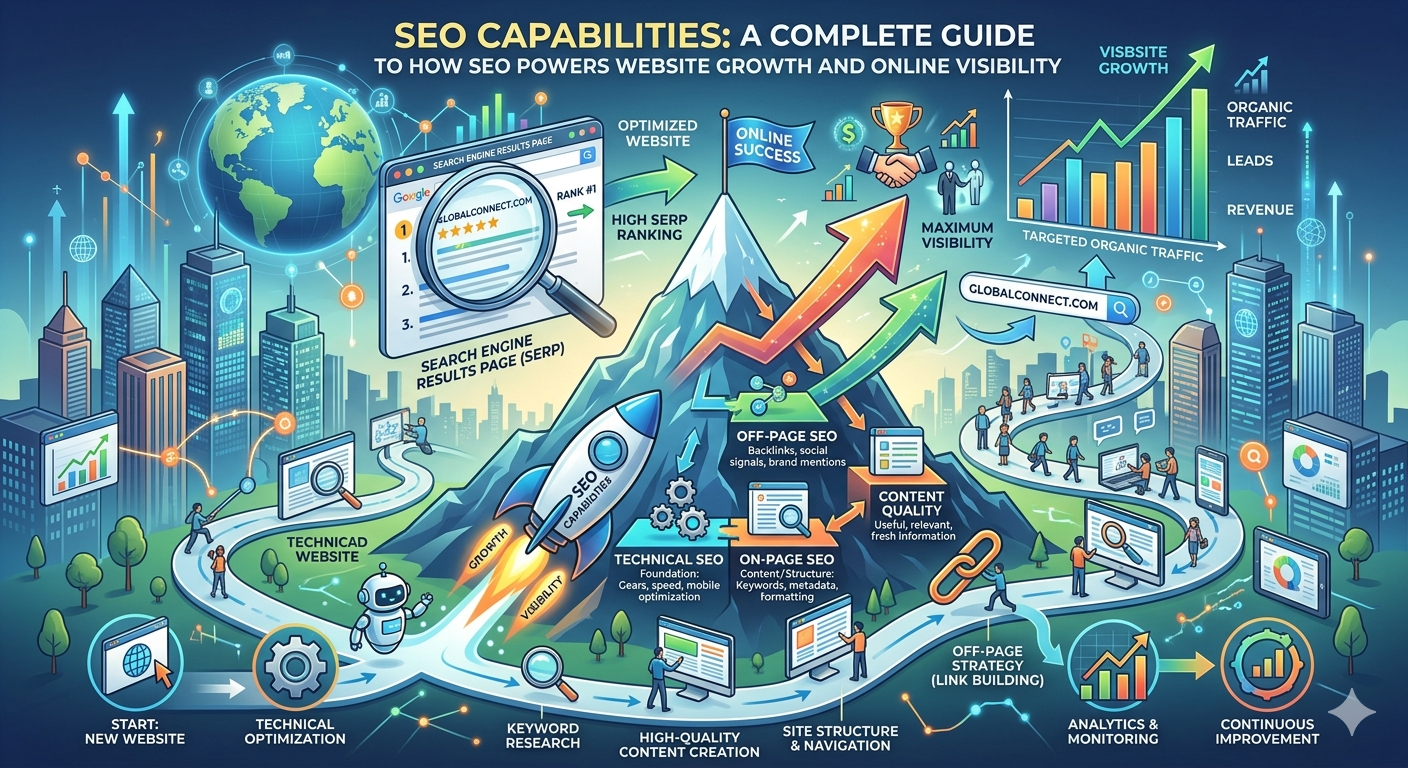
Key Components of SEO Capabilities
SEO capabilities are built from several interconnected elements.
1. On-Page SEO Capabilities
On-page SEO refers to optimization within individual web pages.
Important elements include:
Keyword Optimization
Using relevant keywords naturally within content helps search engines understand page topics.
Meta Tags
Meta titles and descriptions influence click-through rates from search results.
Content Quality
High-quality, informative, and original content improves rankings significantly.
Internal Linking
Linking between pages helps search engines understand site structure.
2. Technical SEO Capabilities
Technical SEO helps search engines crawl and index a website effectively.
Website Speed
Fast-loading websites rank higher and provide better user experience.
Mobile Optimization
Since most users browse on mobile devices, mobile-friendly design is essential.
Site Architecture
A well-organized structure helps search engines navigate pages efficiently.
Indexing and Crawling
Search engines must be able to access and index website pages easily.
Secure Website (HTTPS)
Security is a ranking factor and builds user trust.
3. Off-Page SEO Capabilities
Off-page SEO involves external signals that impact a website’s search rankings.
Backlinks
Backlinks from trusted websites increase authority.
Domain Authority
A strong domain reputation improves ranking potential.
Social Signals
Engagement on social media platforms can indirectly influence SEO.
Brand Mentions
Mentions of your brand across the internet help build credibility.
4. Content SEO Capabilities
Content is the core of SEO success.
Relevance
Content must match user search intent.
Depth
Detailed content performs better in search rankings.
Originality
Unique content avoids duplication penalties and improves trust.
Freshness
Updated content ranks better over time.
Readability
Clear structure improves engagement and reduces bounce rate.
5. User Experience (UX) SEO Capabilities
Search engines favor websites that deliver a strong user experience.
Page Layout
Clean design improves engagement.
Navigation
Easy navigation helps users find information quickly.
Engagement Time
Longer time spent on pages signals valuable content.
Low Bounce Rate
Users staying longer improves SEO performance.
How SEO Capabilities Affect Website Ranking
They consider:
- Content relevance
- Keyword usage
- Website authority
- User engagement
- Technical performance
A website with strong SEO capabilities has a higher chance of appearing on the first page of Google.
SEO Capabilities for E-Commerce Websites
For online stores, SEO capabilities are even more important.
Key areas include:
Product Optimization
Each product page must be optimized with keywords and descriptions.
Category Pages
Well-structured categories help search engines index products.
Image SEO
Optimized images help improve visibility in Google Image Search.
Customer Reviews
User-generated content improves trust and SEO signals.
SEO Capabilities for Blogs and Content Websites
For blogs, SEO depends heavily on content strategy.
Topic Clustering
Grouping related topics improves authority.
Long-Form Content
Detailed articles often rank higher.
Keyword Strategy
Targeting both short-tail and long-tail keywords improves reach.
Consistency
Regular publishing strengthens domain authority over time.
Common SEO Capability Mistakes
Many websites fail due to avoidable mistakes.
Keyword Stuffing
Overusing keywords harms readability and ranking.
Poor Content Quality
Thin or low-value content reduces credibility.
Ignoring Mobile Optimization
Non-mobile-friendly websites lose traffic.
Slow Loading Speed
Slow websites increase bounce rate.
Lack of Backlinks
Without authority, ranking becomes difficult.
Advanced SEO Capabilities in Modern Websites
Modern SEO goes beyond basic optimization.
Artificial Intelligence in SEO
AI tools help analyze keywords, user behavior, and content performance.
Voice Search Optimization
With smart assistants, voice search is becoming more common.
Semantic SEO
Search engines now understand meaning rather than just keywords.
Structured Data (Schema Markup)
Helps search engines understand website content better.
Core Web Vitals
Google uses performance metrics like loading speed and interactivity for ranking.
SEO Capabilities in the United States Market
The US digital market is highly competitive.
Websites targeting US audiences must focus on:
- High-quality content
- Fast website performance
- Strong backlink profiles
- Mobile-first design
- User intent optimization
Competition is strong, so SEO quality directly impacts success.
Future of SEO Capabilities
SEO continues to evolve rapidly.
1. AI-Driven Search Engines
Search engines will rely more on AI understanding.
2. Personalized Search Results
Users will see more customized search results.
3. Zero-Click Searches
More answers will appear directly on search results pages.
4. Video SEO Growth
Video content will play a larger role in rankings.
5. Experience-Based Ranking
User satisfaction will become a major ranking factor.
How to Improve SEO Capabilities
To build strong SEO performance, websites should focus on:
- High-quality content creation
- Technical optimization
- Mobile responsiveness
- Fast loading speed
- Strong internal linking
- Consistent updates
Improvement is a continuous process, not a one-time task.
Conclusion
SEO capabilities are the backbone of online visibility. Without them, even the best-designed websites struggle to attract traffic.
Strong SEO ensures that websites rank higher, attract more visitors, and build long-term authority in competitive digital markets like the United States.
From technical SEO to content strategy, every element plays a role in determining success.
In a world where millions of websites compete for attention, SEO capabilities are what separate successful platforms from invisible ones.
Businesses, bloggers, and digital creators who invest in SEO today build a foundation for sustainable growth in the future.
Ultimately, mastering SEO capabilities is not just about ranking higher-it is about creating better digital experiences for users while building long-term online success.

