

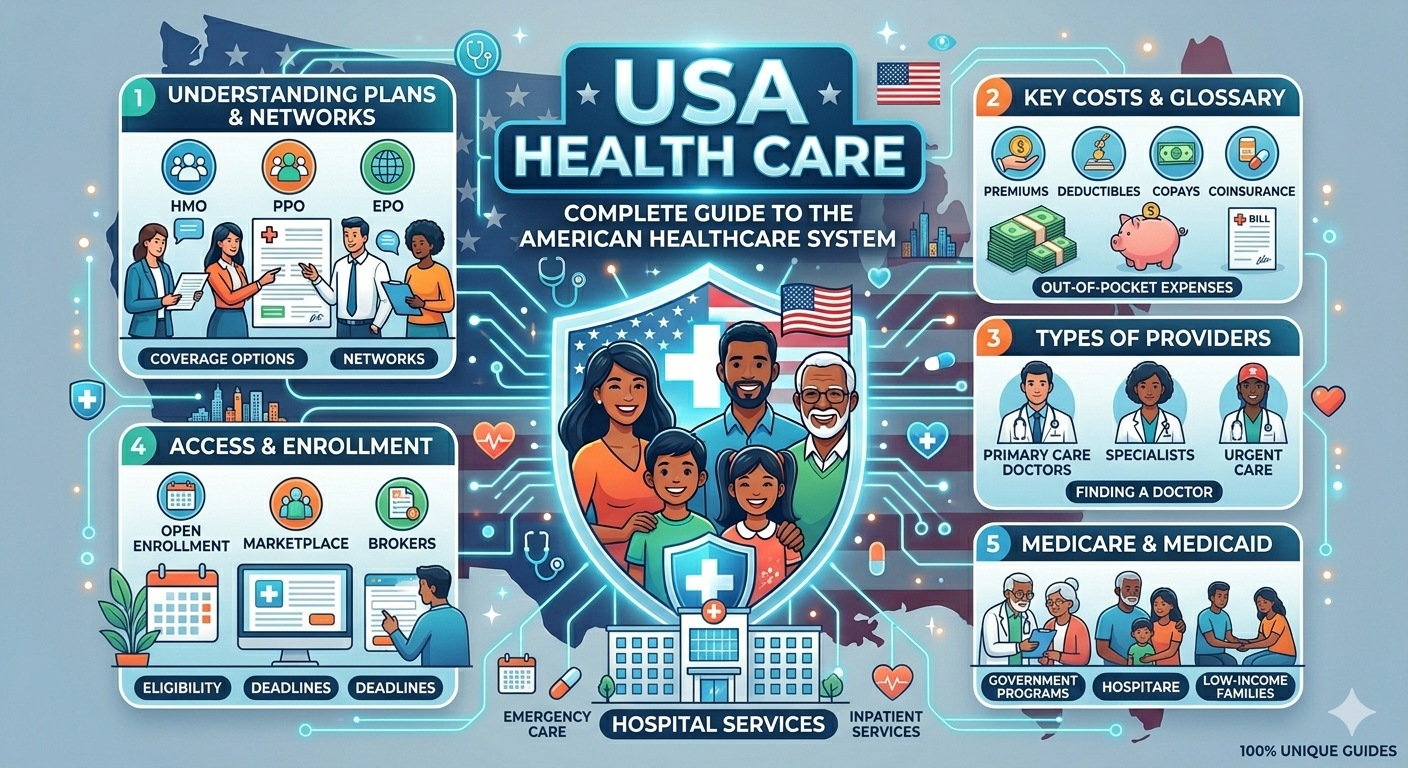
The healthcare system in the United States is one of the most advanced and complex systems in the world. Millions of people across the country depend on hospitals, doctors, insurance providers, clinics, and healthcare professionals for medical treatment and long-term wellness support. The USA healthcare industry includes public and private services that help individuals receive preventive care, emergency treatment, surgeries, rehabilitation, and specialized medical attention.
Healthcare is considered one of the most important sectors in America because it directly impacts quality of life, financial stability, and overall public health. With modern medical technology, advanced research facilities, and highly trained healthcare professionals, the United States continues to lead in medical innovation and treatment options.
This article explains how the USA healthcare system works, the major healthcare services available, healthcare insurance, challenges in the industry, and the future of American healthcare.
What Is the USA Healthcare System?
The USA healthcare system is a combination of public and private healthcare services designed to provide medical care to citizens and residents. Unlike many countries with government-funded universal healthcare systems, healthcare in the United States is largely based on private insurance coverage and employer-sponsored plans.
The healthcare system includes:
- Hospitals
- Clinics
- Health insurance companies
- Government healthcare programs
- Pharmaceutical companies
- Medical research institutions
- Emergency medical services
Americans may receive healthcare through private insurance, government programs, or direct payments for medical services.
Importance of Healthcare in the USA
Healthcare is essential because it helps people maintain physical and mental well-being while reducing the risks associated with diseases, injuries, and medical emergencies.
The healthcare system supports individuals by:
- Providing emergency treatment
- Preventing serious illnesses
- Offering medical diagnoses
- Managing chronic diseases
- Supporting mental health
- Improving life expectancy
Modern healthcare services also help communities control disease outbreaks and improve public health awareness.
Major Components of the USA Healthcare System
Hospitals and Medical Centers
Hospitals are one of the most important parts of the healthcare system. They provide emergency services, surgeries, specialized treatment, and inpatient care.
US hospitals are known for advanced medical technology and highly skilled healthcare professionals. Many hospitals also specialize in areas such as:
- Cardiology
- Cancer treatment
- Neurology
- Orthopedic surgery
- Pediatric care
Teaching hospitals and research centers also contribute to medical innovation and healthcare education.
Primary Care Services
Primary care doctors are usually the first point of contact for patients seeking medical help. These physicians provide routine checkups, preventive care, vaccinations, and basic treatment.
Primary care services help identify health issues early before they become serious medical problems.
Specialist Healthcare Services
Specialists focus on specific areas of medicine and provide advanced treatment for complex health conditions.
Common specialists include:
- Cardiologists
- Dermatologists
- Orthopedic surgeons
- Neurologists
- Oncologists
- Psychiatrists
Patients are often referred to specialists after evaluation by primary care physicians.
Emergency Medical Services
Emergency healthcare services are designed to provide immediate medical attention during serious accidents, injuries, or life-threatening conditions.
Emergency departments operate 24/7 and handle situations such as:
- Heart attacks
- Severe injuries
- Stroke symptoms
- Breathing difficulties
- Traumatic accidents
Ambulance services and emergency response teams also play a major role in saving lives.
Health Insurance in the USA
Health insurance is a critical part of the American healthcare system because medical treatment can be very expensive.
Insurance helps cover:
- Hospital bills
- Doctor visits
- Prescription medications
- Surgeries
- Diagnostic tests
- Preventive care
Without insurance, healthcare expenses can create significant financial hardship for families.
Employer-Sponsored Insurance
Employers often share premium costs with employees, making coverage more affordable.
Private Health Insurance
Individuals who are self-employed or not covered by employers may purchase private insurance plans from insurance companies or healthcare marketplaces.
Government Healthcare Programs
The US government also provides healthcare support through programs such as:
- Medicare for senior citizens and certain disabled individuals
- Medicaid for low-income families and individuals
- Children’s Health Insurance Program (CHIP)
These programs help millions of Americans access affordable medical services.
Benefits of the USA Healthcare System
Advanced Medical Technology
The United States is known for modern healthcare technology and medical research. Hospitals often use advanced equipment for diagnosis and treatment.
Highly Skilled Medical Professionals
US healthcare professionals receive extensive education and training in specialized medical fields.
Access to Specialized Care
Patients can access advanced treatment options and specialized healthcare services for complex medical conditions.
Medical Innovation
The USA leads in pharmaceutical research, biotechnology, and medical innovation.
Emergency Care Availability
Emergency healthcare services are available around the clock in most cities and regions.
Challenges in the American Healthcare System
Although the USA healthcare system offers advanced medical care, it also faces several challenges.
High Healthcare Costs
Medical treatment in the United States is among the most expensive in the world.
Insurance Complexity
Understanding insurance policies, deductibles, and coverage terms can be confusing for many consumers.
Unequal Access to Care
Some individuals face difficulties accessing healthcare because of financial limitations or lack of insurance coverage.
Rising Prescription Drug Prices
Medication costs continue to increase, creating financial pressure for patients.
Administrative Complexity
Healthcare paperwork and billing systems can be difficult to manage for both patients and providers.
Mental Health Services in the USA
Mental health has become an important focus within the healthcare industry. More healthcare providers now offer mental health services such as:
- Counseling
- Therapy
- Psychiatric treatment
- Substance abuse support
- Stress management programs
Improved awareness about mental health is encouraging more people to seek professional support.
Technology and Digital Healthcare
Technology is rapidly transforming healthcare services in the United States.
Modern healthcare innovations include:
- Telemedicine services
- Electronic medical records
- AI-powered diagnostics
- Wearable health devices
- Online appointment systems
- Mobile healthcare applications
Telehealth services became especially popular because they allow patients to consult doctors remotely.
Artificial intelligence is also improving diagnosis accuracy, patient monitoring, and healthcare management.
Preventive Healthcare and Wellness
Preventive healthcare focuses on reducing disease risks before serious health conditions develop.
Preventive services include:
- Vaccinations
- Health screenings
- Annual checkups
- Nutrition counseling
- Exercise programs
Preventive care helps lower healthcare costs and improves long-term health outcomes.
Future of USA Healthcare
The future of American healthcare is expected to focus on technology, personalized medicine, and expanded healthcare access.
Emerging trends include:
- AI-driven healthcare systems
- Personalized treatment plans
- Robotic surgeries
- Digital patient monitoring
- Improved telehealth services
- Advanced medical research
Healthcare reforms may also continue to improve affordability and access for more Americans.
Importance of Choosing the Right Healthcare Provider
Selecting the right doctor, hospital, or insurance plan is important for receiving quality medical care.
Patients should consider:
- Provider experience
- Hospital reputation
- Insurance network coverage
- Customer reviews
- Specialist availability
Good healthcare decisions can improve treatment outcomes and long-term wellness.
Final Thoughts
The USA healthcare system is one of the most advanced healthcare networks in the world, offering high-quality medical services, modern technology, and specialized treatment options. Despite challenges such as rising costs and insurance complexity, healthcare providers continue working to improve patient care and expand access to medical services.
Understanding how the American healthcare system works can help individuals make informed decisions about insurance, treatment options, and preventive care. As technology and medical innovation continue to evolve, the future of healthcare in the United States is expected to become more efficient, personalized, and accessible for millions of people.
Healthcare remains one of the most important investments individuals can make for their physical well-being, financial protection, and long-term quality of life.

