

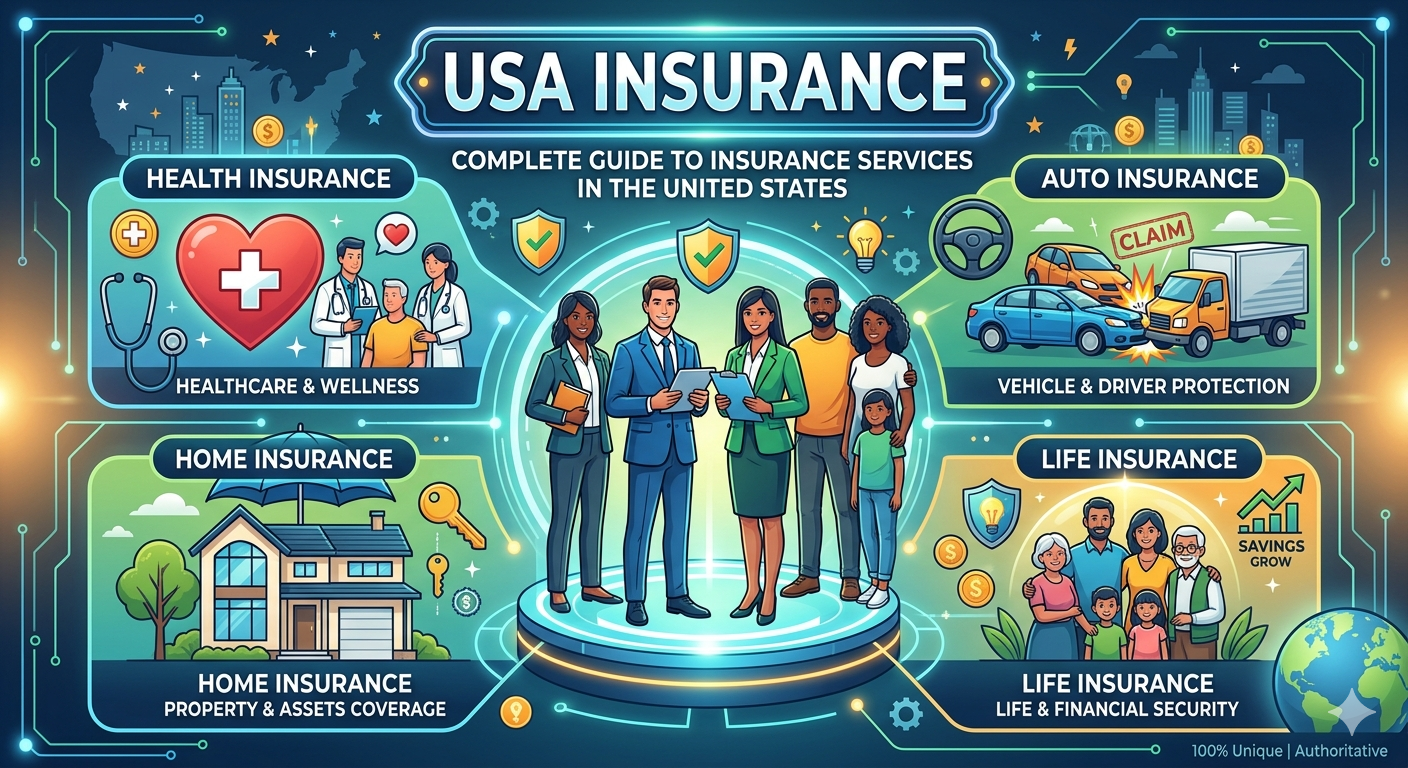
Insurance plays a major role in financial protection and long-term security in the United States. From health coverage and auto insurance to life and property protection, insurance policies help individuals and businesses manage unexpected financial risks. In today’s uncertain world, having the right insurance plan is essential for protecting assets, income, health, and family stability.
The insurance industry in the USA is one of the largest and most advanced in the world. Millions of Americans rely on insurance companies to cover medical expenses, vehicle damages, property losses, legal liabilities, and future financial planning.
This article explains the importance of USA insurance, major types of insurance policies, benefits of coverage, factors affecting premiums, and tips for selecting the best insurance plan.
What Is Insurance?
In exchange for regular payments known as premiums, the insurance provider agrees to offer financial compensation for covered losses or damages.
Insurance reduces financial risks by helping people recover from accidents, illnesses, natural disasters, theft, lawsuits, and other unexpected situations.
The main purpose of insurance is to provide financial security and peace of mind during difficult times.
Importance of Insurance in the USA
The cost of healthcare, property damage, legal claims, and accidents in the United States can be extremely high. Without proper insurance, individuals may face serious financial hardship.
Insurance helps Americans by:
- Covering emergency expenses
- Protecting homes and vehicles
- Supporting families after unexpected events
- Providing medical care access
- Reducing financial stress
- Protecting businesses from legal and operational risks
Many types of insurance are also legally required in certain situations, such as auto insurance for drivers.
Major Types of Insurance in the USA
Health Insurance
Health insurance is one of the most important forms of coverage in the United States. Medical treatments, surgeries, hospital stays, and prescription medications can be very expensive.
Health insurance policies help cover:
- Doctor visits
- Emergency treatment
- Hospitalization
- Prescription drugs
- Preventive care
- Surgical procedures
Health coverage may be provided through employers, private insurance companies, or government programs.
Auto Insurance
Auto insurance protects drivers financially after vehicle accidents, theft, or damage. Most US states legally require drivers to carry minimum liability insurance.
Auto insurance policies may include:
- Liability coverage
- Collision coverage
- Comprehensive coverage
- Uninsured motorist protection
- Medical payment coverage
Premium costs often depend on driving history, age, vehicle type, and location.
Homeowners Insurance
Homeowners insurance protects residential properties against risks such as fire, theft, storms, and natural disasters.
Coverage usually includes:
- Structural damage
- Personal belongings
- Liability protection
- Temporary living expenses
Mortgage lenders often require homeowners insurance before approving home loans.
Life Insurance
Life insurance provides financial support to family members after the death of the policyholder. It helps beneficiaries manage expenses and maintain financial stability.
Life insurance can help cover:
- Funeral costs
- Mortgage payments
- Daily living expenses
- Education costs
- Outstanding debts
Business Insurance
Businesses face various risks, including lawsuits, property damage, employee injuries, and cyber threats. Business insurance helps companies reduce financial losses and continue operations during difficult situations.
Common business policies include:
- General liability insurance
- Workers’ compensation insurance
- Commercial property insurance
- Professional liability insurance
- Cyber insurance
Travel Insurance
Travel insurance protects travelers from financial losses related to trip cancellations, medical emergencies, lost luggage, or travel delays.
International travelers often purchase insurance for medical protection abroad.
How Insurance Works
Insurance works by spreading financial risk among many policyholders. Customers pay premiums regularly, and the insurance company uses these funds to cover claims made by insured individuals.
The process generally includes:
- Purchasing a policy
- Paying monthly or annual premiums
- Filing a claim after a covered loss
- Insurance company investigation
- Claim approval and compensation payment
Policy terms and coverage limits vary depending on the type of insurance plan.
Factors Affecting Insurance Premiums
Insurance premiums are influenced by several factors. Insurance companies calculate risks before determining policy prices.
Age
Younger drivers and older individuals may pay higher premiums in certain insurance categories.
Medical History
Health conditions can impact health and life insurance costs.
Driving Record
Drivers with accidents or traffic violations often face higher auto insurance premiums.
Location
Living in areas with high crime rates or natural disaster risks may increase insurance costs.
Benefits of Having Insurance Coverage
Financial Protection
Insurance reduces the financial burden caused by accidents, illnesses, or disasters.
Peace of Mind
Knowing that financial support is available during emergencies helps reduce stress and uncertainty.
Legal Compliance
Certain insurance types, such as auto insurance and workers’ compensation, are legally required.
Access to Better Healthcare
Health insurance allows individuals to receive quality medical treatment without excessive financial pressure.
Business Stability
Business insurance helps companies recover from unexpected operational disruptions and lawsuits.
Common Insurance Claim Process
When policyholders experience covered losses, they can file claims with their insurance providers.
The claim process usually involves:
- Reporting the incident
- Submitting required documents
- Investigation by insurance adjusters
- Damage evaluation
- Settlement approval and payment
Keeping accurate records and evidence helps speed up claim processing.
Challenges in the Insurance Industry
Although insurance provides important benefits, policyholders sometimes face challenges such as:
- Delayed claim processing
- Denied claims
- Complex policy terms
- Rising premium costs
- Coverage limitations
Reading policy details carefully and consulting professionals can help consumers avoid misunderstandings.
Tips for Choosing the Best Insurance Policy
Compare Multiple Providers
Researching different insurance companies helps customers find better rates and coverage options.
Understand Policy Terms
Always review exclusions, deductibles, and coverage limits before purchasing insurance.
Choose Adequate Coverage
Selecting the right coverage amount is important for complete financial protection.
Maintain Good Records
Accurate documentation can simplify future claim processes.
Work With Trusted Agents
Professional insurance advisors can explain policy details and recommend suitable plans.
Technology and the Future of USA Insurance
Technology is transforming the insurance industry across the United States. Many companies now offer:
- Online policy management
- Mobile claim filing
- AI-powered customer support
- Digital risk assessment
- Fast online quotes
Insurtech companies are improving efficiency and making insurance services more accessible to customers.
Artificial intelligence and data analytics are also helping insurers detect fraud and personalize policy pricing.
Final Thoughts
Insurance is an essential part of financial planning and risk management in the United States. Whether protecting health, vehicles, homes, businesses, or family finances, insurance coverage provides valuable security during unexpected situations.
Understanding different insurance types, policy terms, and claim procedures can help individuals make informed decisions and avoid financial hardship. Choosing the right insurance provider and maintaining proper coverage ensures long-term protection and peace of mind.
As the insurance industry continues to evolve with technology and modern services, consumers now have more options and easier access to reliable financial protection than ever before.

