

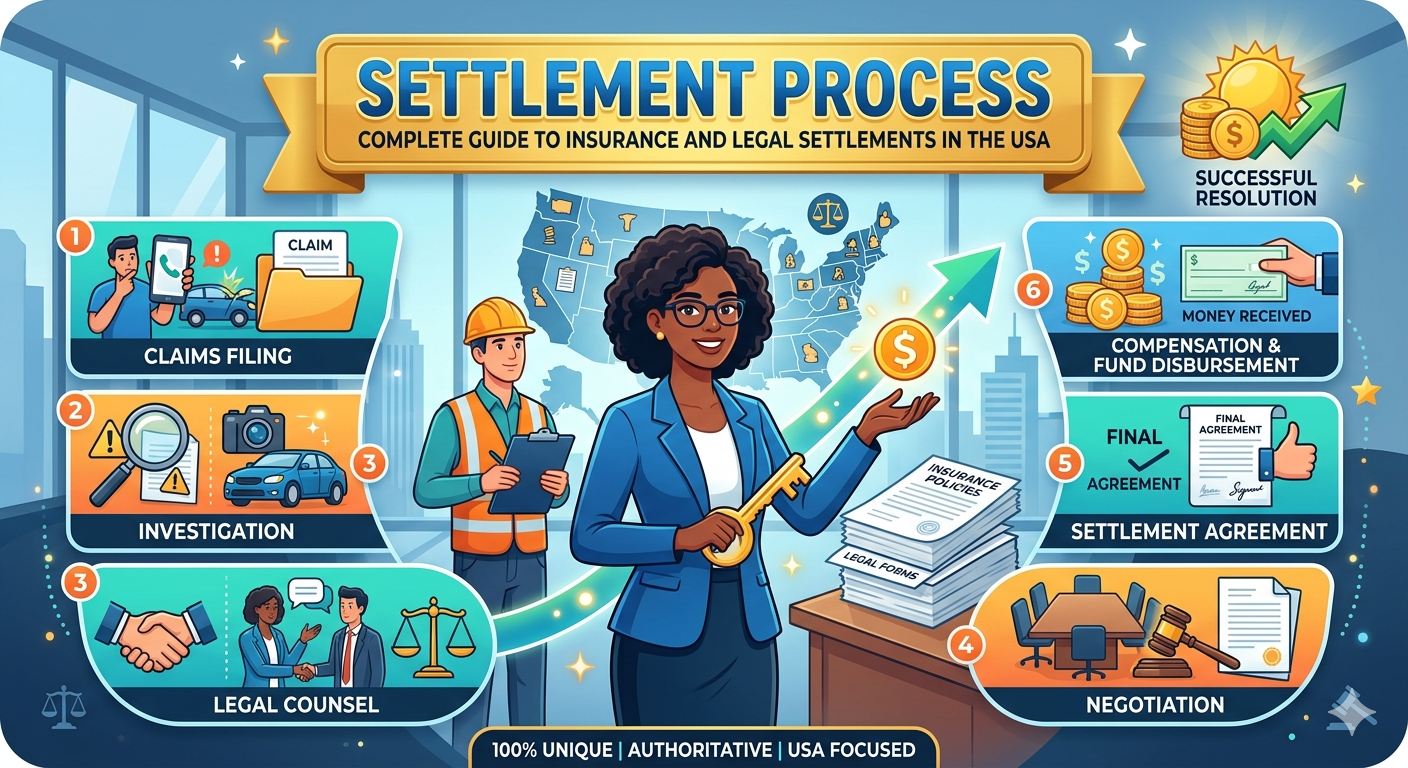
The settlement process is an important part of insurance claims and personal injury cases in the United States.
A settlement allows parties to resolve disputes without lengthy court trials. In many situations, settlements provide faster financial recovery and reduce legal stress for everyone involved. However, insurance companies and opposing parties often try to minimize payouts, making it important for claimants to understand each stage of the process.
This article explains the settlement process in detail, including how claims are investigated, negotiated, and finalized. It also highlights the importance of legal representation and provides tips for achieving fair compensation.
What Is the Settlement Process?
The settlement process is the legal and financial procedure through which a dispute is resolved between two parties. In most personal injury and insurance cases, the settlement involves financial compensation paid to a victim for injuries, damages, or losses.
Once the agreement is signed, the case is officially closed.
Settlements are commonly used in:
- Personal injury cases
- Car accident claims
- Workers’ compensation cases
- Medical malpractice claims
- Property damage disputes
- Insurance claims
The main purpose of the settlement process is to provide fair compensation while avoiding the time and expense of court litigation.
Importance of the Settlement Process
The settlement process plays a major role in helping victims recover financially after unexpected accidents or losses. Serious injuries and damages often create emotional stress and financial pressure.
A successful settlement can help individuals cover:
- Medical expenses
- Lost income
- Property repairs
- Rehabilitation costs
- Emotional suffering
- Future medical care
Settlements also reduce uncertainty because court trials can sometimes take years to complete.
Step-by-Step Settlement Process
Reporting the Incident
The settlement process usually begins immediately after an accident or incident occurs. The injured party must report the situation to the insurance company, employer, or responsible authority.
For example:
- Car accidents are reported to insurers and police
- Workplace injuries are reported to employers
- Property damage claims are reported to insurance providers
Timely reporting is essential because delays may affect the claim’s validity.
Medical Treatment and Documentation
Medical records are among the most important pieces of evidence in settlement cases.
Doctors’ reports, prescriptions, test results, and treatment plans help prove:
- The severity of injuries
- The connection between the accident and injuries
- The cost of medical care
Keeping proper records strengthens the settlement claim.
Investigation Stage
After receiving the claim, insurance companies or legal representatives begin investigating the incident. This stage helps determine liability and estimate compensation.
Investigators may review:
- Police reports
- Witness statements
- CCTV footage
- Photographs
- Medical records
- Repair estimates
Insurance adjusters often conduct interviews and evaluate all available evidence before making settlement offers.
Determining Liability
Liability refers to legal responsibility for the accident or damage. During this stage, insurers and lawyers analyze who caused the incident and whether negligence was involved.
In some cases, multiple parties may share fault. Certain US states apply comparative negligence laws, which may reduce compensation if the claimant is partially responsible.
Calculating Damages
After liability is established, the value of the claim is calculated. Compensation depends on financial losses and the overall impact of the accident.
Damages may include:
- Current medical expenses
- Future medical treatment
- Lost wages
- Reduced earning ability
- Pain and suffering
- Emotional distress
- Property damage
Severe injuries usually result in higher settlement values.
Negotiation Process
Initial Settlement Offer
Insurance companies often make an initial settlement offer after reviewing the case. However, these offers are frequently lower than the actual value of the claim.
The insurer’s goal is usually to settle quickly while minimizing financial payouts.
Negotiating for Fair Compensation
Claimants or their attorneys negotiate with insurance companies to secure better compensation. This stage may involve multiple discussions and counteroffers.
Experienced lawyers use medical records, expert opinions, and legal knowledge to support higher settlement demands.
Strong negotiation skills can significantly increase the final settlement amount.
Mediation and Alternative Dispute Resolution
In some disputes, mediation may be used before going to court. A neutral third party helps both sides reach an agreement.
Mediation is often faster and less expensive than litigation.
Settlement Agreement
Once both parties agree on compensation, a formal settlement agreement is prepared. This legal document outlines:
- The settlement amount
- Payment terms
- Legal conditions
- Waiver of future claims
After signing the agreement, the claimant usually receives payment within a specified timeframe.
Accepting the settlement typically prevents future lawsuits related to the same incident.
When Cases Go to Court
Although many claims settle outside court, some disputes require litigation. Court trials may become necessary when:
- Liability is disputed
- Settlement offers are unfair
- Evidence is contested
- Serious injuries are involved
Litigation involves presenting evidence before a judge or jury. Court cases can result in higher compensation, but they also require more time and legal expenses.
Importance of Hiring a Settlement Lawyer
Many people underestimate the complexity of the settlement process. Insurance companies often employ experienced legal teams and adjusters trained to reduce payouts.
Benefits of Legal Representation
An attorney can help by:
- Investigating the case
- Gathering evidence
- Handling paperwork
- Negotiating with insurers
- Calculating fair damages
- Representing clients in court
Lawyers understand legal procedures and know how to protect clients from unfair settlement tactics.
Common Challenges During the Settlement Process
Delayed Insurance Responses
Some insurance companies intentionally delay claims to pressure victims into accepting lower offers.
Disputed Liability
The opposing party may deny responsibility or blame the claimant.
Low Settlement Offers
Insurance adjusters often start negotiations with minimal compensation offers.
Lack of Evidence
Insufficient documentation can weaken settlement claims.
Emotional Pressure
Victims dealing with pain and financial stress may struggle during lengthy negotiations.
Professional legal guidance can help overcome these challenges more effectively.
Tips for a Successful Settlement
Seek Immediate Medical Care
Medical treatment creates important documentation for injury claims.
Preserve Evidence
Take photos, collect witness information, and save receipts and reports.
Avoid Speaking Carelessly
Do not admit fault or provide recorded statements without legal advice.
Be Patient During Negotiations
Quick settlements are not always fair settlements.
Consult an Experienced Attorney
Legal professionals can maximize compensation and protect legal rights.
Modern Technology and the Settlement Process
Technology is changing how settlements are managed in the legal and insurance industries. Many firms now use:
- Online consultations
- Digital document management
- Electronic claim filing
- Virtual legal meetings
- AI-based claim evaluation systems
These innovations improve efficiency and speed up communication between clients and legal professionals.
Final Thoughts
The settlement process is an essential part of resolving insurance and personal injury claims in the United States. From reporting the incident to negotiating compensation, every step plays an important role in determining the outcome of a claim.
Understanding the process helps victims avoid common mistakes and protect their legal rights. Strong evidence, proper documentation, and experienced legal representation can significantly improve settlement results.
Whether dealing with a car accident, workplace injury, property damage, or medical negligence case, pursuing a fair settlement can provide financial recovery, peace of mind, and long-term stability for victims and their families.

