

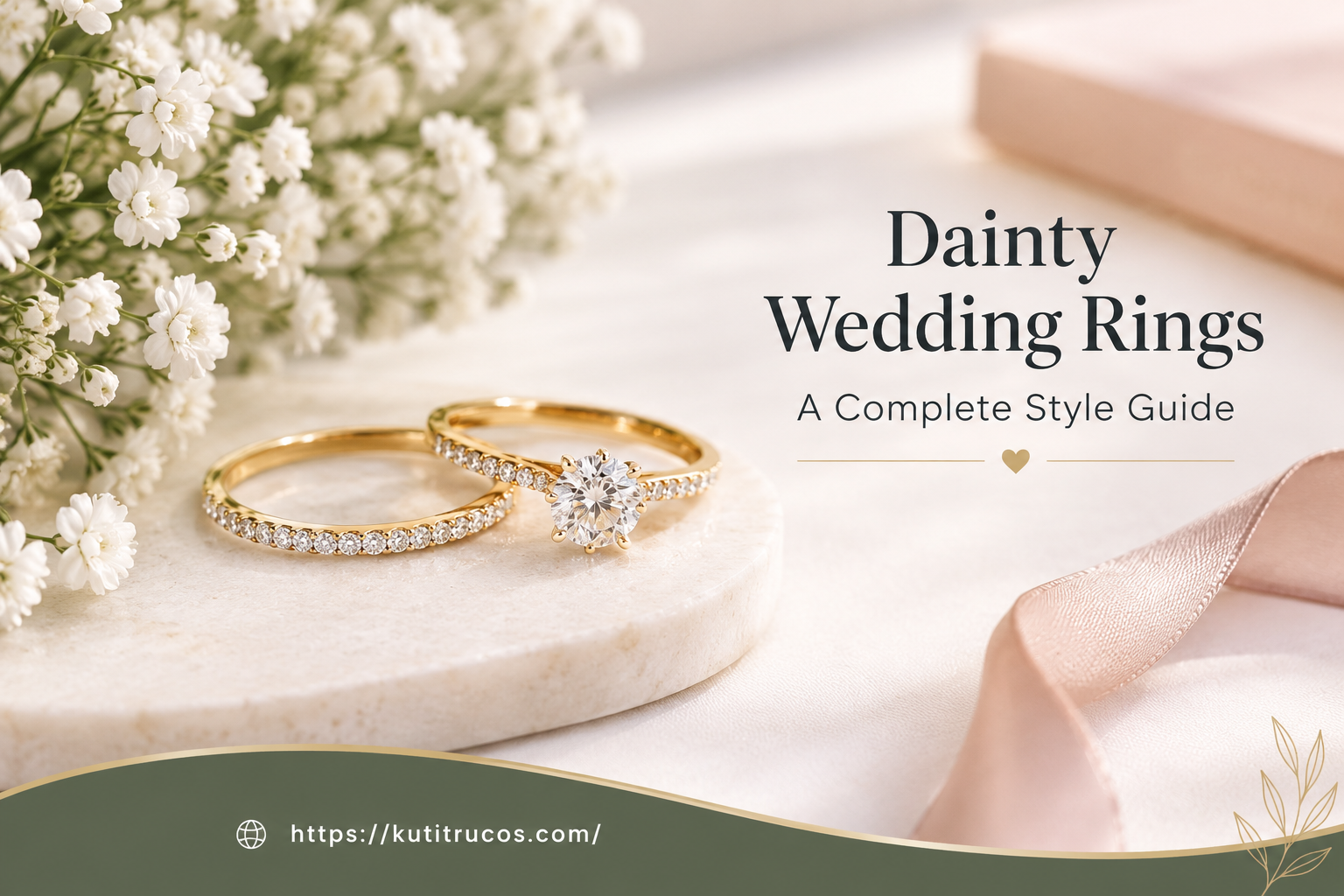
Dainty wedding rings have a quiet kind of beauty. Instead of relying on a wide band, large gemstones, or elaborate decoration, they use delicate proportions and carefully chosen details to create an elegant look. For brides who prefer jewelry that feels refined rather than overwhelming, a dainty wedding ring can be an especially appealing choice.
These rings are also remarkably versatile. A slim band can sit beside a statement engagement ring, work as part of a stacked set, or look beautiful by itself. Current wedding jewelry trends have also made room for both delicate and more substantial bands, giving couples more freedom to choose based on personal style rather than following a single definition of what a wedding ring should look like.
For many shoppers, however, choosing a delicate ring raises practical questions. How thin is too thin? Which metal is best? Should you choose diamonds or a plain band? Will a dainty ring survive everyday wear?
This guide explores those questions and explains what to consider before choosing a dainty wedding ring.
What Are Dainty Wedding Rings?
A dainty wedding ring is generally characterized by a slim, delicate appearance. The effect can come from the width of the band, the size of the gemstones, the setting, or the overall proportions of the design.
Thin wedding bands commonly fall around 1mm to 3mm, although the exact definition varies between jewelers.
It is important to understand that “dainty” and “thin” are not necessarily identical.
A ring can be thin but still look bold if it carries a large gemstone or dramatic setting. Conversely, a slightly wider ring can still appear delicate if it has understated details and balanced proportions.
The goal is an overall feeling of lightness and refinement.
Why Are Dainty Rings So Popular?
One of the biggest attractions of dainty wedding rings is their versatility.
A delicate band can complement rather than compete with an engagement ring. This is particularly useful when the engagement ring has a prominent center stone or an elaborate setting.
Dainty bands can also be easier to combine with other jewelry. A bride might eventually add an anniversary ring, another stacking band, or a sentimental piece without making the overall combination appear excessively heavy.
Their understated appearance also works well for people who prefer minimalist jewelry.
Instead of making the ring the most noticeable object on the hand, the design becomes part of the overall look.
Popular Dainty Wedding Ring Styles
There is no single design that defines the dainty category. Several different styles can create the delicate appearance.
Plain Dainty Bands
The simplest option is a narrow metal band without gemstones.
A plain band can be surprisingly elegant because there are no decorative elements competing for attention. The beauty comes from the metal, shape, finish, and proportions.
This can be a good choice for someone who wants a wedding ring that feels timeless and easy to wear.
Dainty Diamond Bands
Small diamonds can add sparkle while maintaining a delicate silhouette.
Instead of one large stone, these rings often use several small diamonds distributed along part or all of the band.
Pavé settings are particularly popular for creating this effect because the stones can produce continuous sparkle without making the ring visually bulky.
Dainty wedding rings are also part of the wider world of luxury jewelry, where timeless craftsmanship continues to blend with modern design preferences. From understated diamond bands to contemporary stacking pieces, today’s jewelry styles offer many ways to balance elegance, individuality, and everyday wearability. For a broader look at evolving jewelry styles and timeless design, explore this luxury jewelry guide.
Milgrain Dainty Rings
Milgrain refers to tiny bead-like details along the edge of a ring.
This technique can give a delicate wedding band a vintage-inspired character without requiring large gemstones.
It can be especially attractive for someone who likes antique jewelry but wants a ring with a modern, wearable profile.
Curved or Contoured Bands
Not every engagement ring sits comfortably beside a straight wedding band.
A curved or contoured dainty band can be designed to follow the shape of the engagement ring, helping the two pieces sit together more naturally.
This can be particularly useful when the engagement ring has a low-set or unusually shaped center stone.
Bezel-Set Dainty Rings
A bezel setting surrounds a gemstone with metal rather than holding it primarily with exposed prongs.
This can provide a clean, modern appearance while offering additional protection around a small stone.
For people who want delicate jewelry but also care about everyday practicality, the setting deserves as much attention as the ring’s width.
Vintage-Inspired Bands
Dainty rings can also feature vintage-inspired details such as milgrain, engraved patterns, or antique-style diamond cuts.
These designs offer more personality while keeping the overall ring relatively delicate.
Choosing the Right Width
Width is one of the first specifications to examine when shopping for a dainty wedding ring.
A 1.5mm band will have a noticeably lighter visual presence than a 3mm band. Current jewelry collections commonly describe widths around 1.3mm to 2mm as particularly refined and delicate.
But the smallest possible width isn’t automatically the best choice.
Consider how the ring will be worn.
If you have an active lifestyle or regularly use your hands for physical work, an extremely delicate band may require more care. A slightly wider design can provide additional material while still maintaining a graceful appearance.
The ideal width is therefore a balance between aesthetics, comfort, durability, and your everyday routine.
Dainty Gold Wedding Rings
Gold remains one of the most popular materials for wedding jewelry.
Yellow gold provides a warm, traditional appearance and can make a very slim ring feel visually distinctive.
White gold offers a cooler appearance and pairs naturally with many diamond engagement rings.
Rose gold introduces a pinkish tone that can make a delicate design feel romantic and contemporary.
For everyday jewelry, 14K gold is often considered a practical option because it contains a mixture of gold and other metals that contributes to durability. Platinum is another popular choice when someone wants a precious metal with a naturally white appearance and substantial durability.
The right choice ultimately depends on your preferences, budget, skin sensitivity, lifestyle, and existing jewelry.
Dainty Platinum Wedding Rings
Platinum can be an excellent choice for a delicate wedding ring.
It has a naturally white appearance and is known for its durability. It is also commonly used for fine jewelry intended for everyday wear.
A platinum dainty ring can therefore combine a minimalist appearance with a substantial precious-metal construction.
The downside is typically cost. Platinum rings can be more expensive than comparable gold designs because of the material and manufacturing considerations.
For couples with a larger jewelry budget, however, platinum can be an attractive long-term option.
Should You Choose Diamonds?
Diamonds are not necessary for a dainty wedding ring.
A plain metal band can be just as elegant.
However, small diamonds can add visual interest without changing the minimalist character of the ring.
Think about how much sparkle you actually want.
A single small accent diamond can create a subtle focal point. Pavé stones can provide more continuous sparkle. A half-eternity design can offer brilliance while leaving part of the band plain.
A full eternity design places gemstones around the entire circumference, creating a much more noticeable effect.
The choice should reflect your personal style rather than simply following what is popular.
Dainty Wedding Rings and Engagement Rings
Perhaps the biggest advantage of a dainty wedding ring is how easily it can complement an engagement ring.
If your engagement ring has a large center diamond, a slim band can provide balance without competing with the stone.
For example, a solitaire engagement ring can look elegant with a simple gold band. A halo setting might pair nicely with a narrow pavé band. A vintage engagement ring could work beautifully with a milgrain wedding band.
The physical fit matters just as much as appearance.
Place the two rings together and check whether they sit comfortably. Look for gaps, rubbing, awkward angles, or pressure points.
A beautiful combination is not successful if the two rings constantly interfere with each other.
Creating a Dainty Ring Stack
Dainty wedding rings are particularly suited to stacking.
A simple stack might include:
- Engagement ring
- Dainty wedding band
- Anniversary band
Another approach is to combine different metals or textures.
For example, a yellow-gold wedding band can be paired with a white-gold engagement ring for contrast.
Mixed-metal stacking can make a simple collection of rings look intentionally styled rather than mismatched.
The key is proportion.
If every ring is extremely thin, the stack may look delicate and subtle. Adding one slightly wider band can create visual structure.
Are Dainty Wedding Rings Durable?
This is one of the most important questions to ask before buying.
A delicate ring can absolutely be suitable for everyday wear, but extremely thin designs have less material than substantial bands.
The durability of a dainty ring depends on more than width. The metal, thickness, setting, gemstone placement, and construction all matter.
For diamond rings, the setting is particularly important.
Fine prongs can create a very delicate appearance, but they should be inspected periodically. Flush and bezel settings can reduce some of the concerns associated with exposed prongs.
Someone who works with their hands every day may want to prioritize durability over choosing the thinnest possible band.
How to Make a Dainty Ring Last
A wedding ring is normally worn frequently, so maintenance matters.
Take the ring to a qualified jeweler periodically for inspection.
Pay attention to:
- Loose gemstones
- Bent or worn prongs
- Scratches
- Changes in the ring’s shape
- Damage around the setting
- Excessive thinning
You should also follow the care recommendations appropriate for the specific metal and gemstones.
When doing activities that could expose the ring to strong chemicals, heavy impact, or unnecessary abrasion, removing the ring may be sensible.
A little care can make a significant difference over many years.
Comfort Matters
A dainty ring should not only look good; it should feel good.
Consider the interior profile of the band.
Some rings have rounded or comfort-fit interiors that can make them easier to wear throughout the day.
Pay attention to how the ring feels between your fingers and next to your engagement ring.
If you are ordering online, confirm the retailer’s sizing and return policies before purchasing.
Finger size can also change with temperature, activity, and time of day, so a professional fitting can be useful for an important purchase.
Matching Dainty Wedding Rings for Couples
Dainty wedding rings are not limited to women’s jewelry.
Couples can choose matching or complementary bands while allowing each person to have a slightly different width or design.
For example, one partner might choose a 2mm gold band while the other selects a wider version in the same metal.
Matching does not have to mean identical.
Using the same metal, finish, engraving, or design element can create a connection while still allowing each ring to suit the wearer.
Dainty Rings for Different Personal Styles
Minimalist
Choose a plain polished band with very little decoration.
Romantic
Look for rose gold, tiny diamonds, curved profiles, or delicate engraved details.
Vintage
Consider milgrain, engraved patterns, or antique-inspired stone cuts.
Modern
Try mixed metals, geometric shapes, bezel settings, or unusual band profiles.
Classic
A simple yellow-gold, white-gold, or platinum band can provide a timeless appearance.
What Is the Right Metal for Everyday Wear?
There is no universal answer.
14K gold: A practical balance between gold content and durability.
18K gold: Higher gold content with a richer appearance, although it is generally softer than 14K gold.
Platinum: Naturally white and highly durable, but usually more expensive.
Rose gold: Warm and distinctive, with its color created through the alloy composition.
When comparing metals, don’t focus only on appearance. Think about your lifestyle and how much maintenance you are willing to provide.
Are Dainty Wedding Rings a 2026 Trend?
Yes, delicate wedding rings remain an established option, although the broader wedding-ring market in 2026 is not limited to minimalism.
Current trend reporting shows that wedding bands are moving in several directions at once. Some couples are choosing sculptural, substantial, or statement designs, while delicate bands continue to appeal to people who prefer understated jewelry.
That is actually good news for shoppers.
Instead of trying to identify one “correct” wedding-ring trend, couples can choose a design that fits their personality.
A dainty ring can look contemporary today while still remaining simple enough to feel timeless years later.
How Much Should You Spend?
There is no fixed amount that every couple should spend on a wedding band.
A plain dainty band may cost considerably less than a diamond-covered platinum ring.
The final price depends on:
- Metal
- Ring width
- Ring thickness
- Diamond or gemstone quality
- Number of stones
- Setting style
- Brand
- Craftsmanship
- Customization
- Engraving
Rather than choosing a budget based on a popular rule, decide what the ring means to you and what comfortably fits your finances.
A small, thoughtfully selected ring can have enormous sentimental value regardless of its price.
Custom Dainty Wedding Rings
Custom jewelry can be particularly appealing when an engagement ring has unusual dimensions.
A jeweler can design a band specifically around the existing ring.
Customization may allow you to choose:
- Exact width
- Metal
- Stone type
- Diamond placement
- Ring profile
- Engraving
- Curvature
- Finish
This can be especially useful when a standard straight band leaves an unwanted gap around the engagement ring.
Custom work can cost more, but it gives you greater control over the final proportions.
What to Check Before Buying
Before purchasing a dainty wedding ring, ask yourself a few practical questions.
Will I wear it every day?
If yes, prioritize construction and durability.
Does it fit my engagement ring?
Check both the visual appearance and physical fit.
Do I want sparkle?
Choose between plain metal, one accent stone, pavé, or more extensive gemstone coverage.
Which metal suits me?
Consider color, durability, maintenance, and budget.
Is the ring too thin for my lifestyle?
The smallest ring is not necessarily the best ring.
Can it be resized?
Some delicate and heavily stone-set designs can have limitations when resizing. Confirm this before purchasing.
What is the return policy?
Especially important when buying online.
Frequently Asked Questions
What makes a wedding ring dainty?
A dainty wedding ring usually has delicate overall proportions, often including a narrow band, small gemstones, fine detailing, or a low-profile setting.
What width is considered dainty?
There is no universal standard, but many thin wedding bands fall between about 1mm and 3mm. Some jewelers describe approximately 1.3mm to 2mm as particularly delicate.
Are dainty wedding rings durable?
They can be, but durability depends on the metal, thickness, construction, setting, and lifestyle. Extremely thin designs may require more care than wider bands.
Can a dainty wedding ring have diamonds?
Absolutely. Small pavé, flush-set, bezel-set, or accent diamonds can add sparkle while preserving a delicate appearance.
Can I stack a dainty wedding ring?
Yes. Their slim proportions make them particularly suitable for stacking with engagement rings, anniversary bands, or other delicate jewelry.
What metal is best for a dainty wedding ring?
14K gold, 18K gold, and platinum can all work well. The best option depends on your desired appearance, lifestyle, budget, and durability requirements.
Should a dainty wedding band match my engagement ring?
It does not have to match exactly. Complementary metals, shapes, textures, or gemstone styles can create a coordinated appearance without making the rings identical.
Final Thoughts
Dainty wedding rings prove that a wedding band does not need to be large to make a meaningful statement.
Their appeal comes from proportion, detail, and simplicity. A slim gold band can feel timeless. A tiny diamond band can add understated sparkle. A curved design can create a seamless engagement-ring combination. A vintage-inspired band can bring personality without becoming visually heavy.
The best choice is not necessarily the thinnest ring available or the design currently receiving the most attention. It is the ring that feels comfortable, suits your lifestyle, works with your engagement ring, and still feels like something you will enjoy wearing years from now.
For couples who appreciate understated jewelry, dainty wedding rings offer a beautiful balance between elegance, versatility, and everyday wearability.

