

A well-designed winter coat does more than protect a man from cold weather. It can define an outfit, create a polished silhouette, and provide a practical layer that works across different occasions. Among the many styles available today, the men’s peacoat remains one of the most recognizable and versatile choices.
The peacoat has a distinctive appearance that separates it from ordinary winter jackets. Its traditional design features a short length, double-breasted front, broad collar, and substantial wool construction. The style developed from maritime clothing and eventually moved from naval environments into everyday civilian wardrobes.
Today, American men can find peacoats in traditional navy wool, modern blends, contemporary colors, slimmer silhouettes, relaxed fits, and updated materials. Some versions preserve the classic military-inspired appearance, while others are designed for modern city wardrobes.
Whether worn with jeans and boots or layered over a suit, a men’s peacoat can provide a combination of warmth, structure, and timeless style.
What Is a Men’s Peacoat?
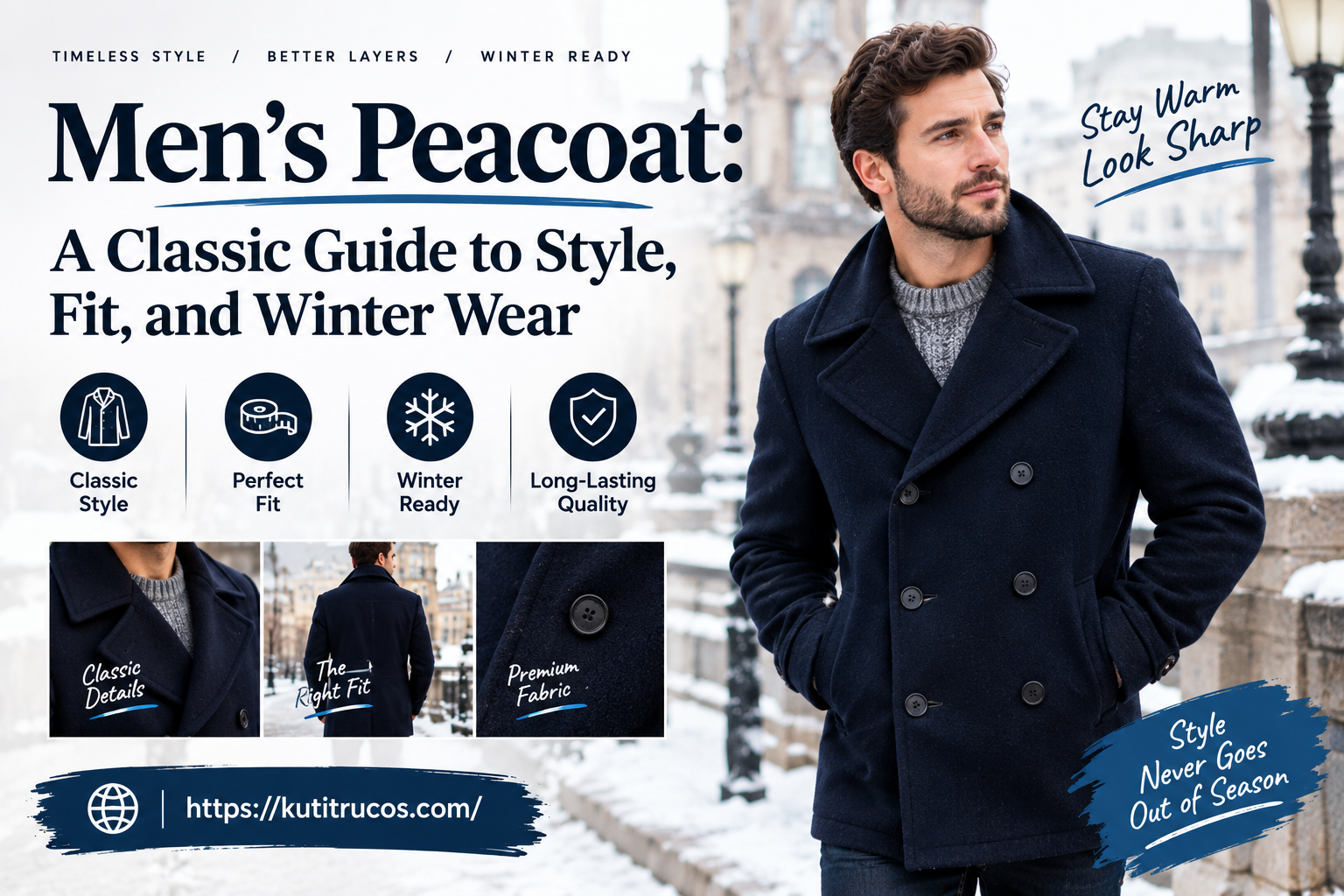
A men’s peacoat is traditionally a relatively short, double-breasted outer coat made from heavy wool or a wool-rich fabric.
The classic design typically includes:
- Double-breasted buttons
- A wide collar
- Broad lapels
- A relatively short body
- Heavy fabric
- Vertical or slanted hand pockets
- A structured silhouette
- A navy or dark color palette
The short length is one of its defining characteristics. Unlike a traditional overcoat that can extend toward the knees, a peacoat generally finishes around the hips or upper thighs. This shorter construction was practical for sailors who needed warmth without restricting movement.
Modern fashion brands have modified these features in different ways, but the basic identity of the garment remains recognizable.
The Naval History Behind the Peacoat
The history of the peacoat is closely connected to maritime clothing.
Sailors needed garments capable of handling cold temperatures, strong winds, and demanding physical work. A short, heavy wool coat offered insulation while allowing greater freedom of movement than a long coat.
The precise origin of the name “peacoat” is debated. One widely cited explanation connects it to the Dutch word pijjekker or pijjakker, referring to a short coat made from a coarse type of cloth. Another explanation connects the term with “pilot cloth,” a heavy material historically associated with maritime outerwear.
Regardless of which explanation is preferred, the maritime connection is well established.
The design eventually became associated with European and American naval uniforms. The U.S. Navy’s use of the style helped establish the recognizable navy-blue version that many people still associate with the word peacoat.
From Naval Uniform to American Fashion
The peacoat eventually moved beyond ships and military uniforms.
After the Second World War, surplus military clothing became available to civilians, helping introduce practical military garments to a broader audience. The peacoat was particularly easy to incorporate into everyday clothing because its structured appearance worked with both casual and more formal outfits.
American students, workers, musicians, and fashion-conscious consumers gradually adopted the style.
Over time, designers began producing their own interpretations. Some preserved the traditional navy color and heavy wool construction, while others experimented with length, buttons, fabrics, and fit.
This transition helped turn the peacoat from a functional naval garment into a recognizable menswear classic.
Why Navy Blue Remains Popular
Navy blue is the traditional peacoat color and remains one of the easiest choices for everyday wear.
The reason is simple: navy works with a wide range of clothing.
A navy peacoat can be paired with:
- Blue jeans
- Black jeans
- Gray trousers
- Khaki pants
- Chinos
- Wool trousers
- Suit separates
It also works with many colors.
Gray, white, cream, brown, burgundy, olive, black, and denim can all complement navy.
For men purchasing their first peacoat, navy can therefore provide considerable wardrobe flexibility.
Black Men’s Peacoats
Black offers a more modern interpretation of the traditional style.
A black peacoat can create a sharper appearance, particularly when combined with dark trousers, black boots, or minimalist clothing.
Men who prefer a monochromatic wardrobe may find a black peacoat particularly easy to integrate.
However, black does not necessarily need to be reserved for formal clothing. A black peacoat can also be worn with jeans and casual footwear.
Gray Peacoats
Gray is another useful alternative.
A gray peacoat can feel softer and more contemporary than a dark navy version while remaining easy to style.
Light gray can create contrast with dark trousers, while charcoal gray can provide a more understated appearance.
Gray also pairs naturally with black, navy, white, cream, and denim.
For men who already own a navy winter coat, gray can provide a useful second option.
Choosing the Right Peacoat Material
Material has a major influence on how a peacoat performs.
Traditional versions are associated with heavy wool because wool provides warmth and has long been used for cold-weather outerwear.
Modern peacoats may also contain blends involving synthetic fibers, recycled wool, cashmere, or other materials.
A higher percentage of wool does not automatically mean that every coat will be perfect for every person. Construction, lining, weight, fit, and intended use all matter.
Consumers should read the fabric composition rather than judging quality solely by appearance.
Understanding Wool
Wool has several characteristics that make it useful for winter clothing.
It can provide warmth while remaining breathable, and dense wool fabrics can help block cold air.
Traditional peacoats are often made from dense wool fabrics such as melton. Modern versions may use different weights and blends depending on the desired balance between warmth, weight, softness, and cost.
For men living in colder areas of the United States, heavier wool can be attractive.
For people in milder climates, a lighter fabric may be more comfortable.
Peacoat Fit Matters
Even an expensive peacoat can look awkward if it does not fit correctly.
Because the garment has a structured silhouette, fit is especially noticeable around the shoulders and chest.
The shoulder seams should generally sit close to the natural shoulder line.
The sleeves should extend far enough to provide coverage without swallowing the hands.
A classic peacoat should look structured rather than shapeless.
Slim Versus Classic Fit
Modern brands often offer different fits.
A slim peacoat creates a closer silhouette and can work particularly well with fitted trousers and streamlined clothing.
A classic fit provides more room and may be more comfortable when layering heavy sweaters.
Neither option works for every body type or wardrobe.
Men should consider how they normally dress during winter before choosing a silhouette.
If the coat will usually be worn over a thin shirt, a slimmer fit may work.
If it will be worn over thick knitwear, additional room may be useful.
How Long Should a Men’s Peacoat Be?
Traditional peacoats are shorter than standard overcoats.
The shorter design is part of the garment’s identity and provides freedom of movement.
Modern versions vary in length.
Some end around the hips, while contemporary designs may extend farther down the upper thigh.
The ideal length depends partly on height and body proportions.
A very short coat can appear unbalanced on a tall man, while an excessively long version can begin to resemble a different type of overcoat.
The best approach is to consider the complete silhouette rather than focusing only on a measurement.
Men’s Peacoat With Jeans
One of the easiest ways to wear a peacoat is with jeans.
A navy wool peacoat, crew-neck sweater, dark denim, and boots creates a classic casual winter outfit.
For a more contemporary appearance, men can choose a slim or straight-leg pair of jeans.
Black jeans can make the outfit feel sharper, while medium or dark blue denim creates a more traditional casual look.
The key is balance.
Because the peacoat has a structured shape, very oversized clothing underneath can sometimes create unnecessary bulk.
Peacoat With Chinos
Chinos provide another versatile option.
A navy peacoat with khaki chinos creates a contrast between dark outerwear and lighter trousers.
For a more understated outfit, gray or olive chinos can also work.
A sweater, Oxford shirt, or casual knit can complete the combination.
This style is particularly useful for business-casual environments where a full suit would be too formal.
Peacoat With a Suit
Although the peacoat has casual roots, its structured shape allows it to work with certain formal outfits.
Men can wear a peacoat over a suit when commuting to work or attending an event during cold weather.
The most important consideration is length.
Because the peacoat is relatively short, the suit jacket may extend below the coat.
Some men prefer this layered appearance, while others may choose a longer overcoat for a more traditional formal silhouette.
For highly formal events, a dedicated overcoat may provide a more conventional appearance.
Peacoat With a Sweater
Sweaters and peacoats are naturally compatible.
A crew-neck sweater can create a simple casual outfit.
A turtleneck can provide a more sophisticated winter appearance.
A cable-knit sweater can create a traditional cold-weather look.
However, the thickness of the sweater should be considered when selecting the coat size.
A peacoat that fits perfectly over a T-shirt may become restrictive over a thick winter knit.
Peacoat With a Hoodie
A hoodie provides a more contemporary approach.
The contrast between the structured wool coat and relaxed hoodie can create a modern streetwear-inspired outfit.
Dark jeans and sneakers can keep the look casual.
Men who prefer a more traditional style may choose a crew-neck sweater instead, but a hoodie demonstrates how easily the classic coat can adapt to modern wardrobes.
Choosing the Right Buttons
Buttons are a highly visible part of a peacoat.
Traditional naval versions often feature anchor-related designs, reflecting the garment’s maritime history.
Contemporary versions may use:
- Metal buttons
- Horn-style buttons
- Plastic buttons
- Leather-covered buttons
- Minimalist dark buttons
The choice can significantly influence the appearance.
Decorative anchor buttons emphasize the heritage of the style, while simple dark buttons can create a cleaner modern aesthetic.
Collar and Lapel Design
The wide collar is another defining feature.
Historically, a broad collar could provide additional protection against wind and cold when raised.
Today, the collar also contributes strongly to the coat’s appearance.
A wide collar can create a dramatic upper silhouette, while a narrower collar may make the garment appear more contemporary.
When shopping, men should examine how the collar sits both open and closed.
Pockets and Practicality
A good winter coat should not only look good.
Pockets are essential for everyday use.
Traditional peacoats commonly include hand-warmer pockets that allow the wearer to protect their hands from cold weather.
Modern designs may add interior pockets for wallets, phones, keys, or other small items.
Men who commute or travel on foot may want to pay particular attention to pocket placement.
Men’s Peacoat for American Winters
The United States contains several different climate zones, so the ideal winter coat depends heavily on location.
A man living in New England may need substantial insulation for cold winters.
Someone in the Pacific Northwest may care more about moisture resistance.
A person in the South may need only a lighter winter coat.
A heavy wool peacoat can be excellent for cold and windy weather, but it may be too warm for mild winter climates.
This is why buyers should think about their actual environment rather than choosing a coat solely because it looks stylish.
Peacoat Versus Overcoat
The peacoat and overcoat are related but distinct.
A peacoat is generally:
- Shorter
- Double-breasted
- More structured
- Traditionally made from heavy wool
- Inspired by naval clothing
An overcoat is usually longer and may be single- or double-breasted.
An overcoat can provide greater coverage because it extends farther down the body.
For commuting in very cold weather, a longer coat may provide more protection.
For everyday city wear and easier movement, the shorter peacoat can be practical.
Peacoat Versus Puffer Jacket
A puffer jacket prioritizes insulation and often uses synthetic or down-filled construction.
A peacoat prioritizes a structured appearance while still providing substantial warmth when properly constructed.
The choice depends on the situation.
A puffer may be more practical for outdoor activities, extended exposure to freezing temperatures, or highly casual environments.
A peacoat may be more suitable when the wearer wants a polished appearance.
Some men keep both in their wardrobes and use each for different situations.
Peacoat Versus Parka
Parkas are designed for cold-weather protection and commonly include longer bodies, hoods, insulation, and weather-resistant shells.
A peacoat has a cleaner and more formal silhouette.
If a man spends significant time outdoors during severe winter weather, a parka may provide more practical protection.
If he wants a coat that can move from a casual daytime outfit to dinner or the office, a peacoat can be more versatile.
How to Care for a Wool Peacoat
Proper care can extend the life of a peacoat.
Wool should generally not be treated like ordinary washable clothing.
Men should follow the manufacturer’s care instructions.
Helpful habits can include:
- Allowing the coat to air after wearing
- Using a suitable hanger
- Avoiding unnecessary washing
- Removing surface lint carefully
- Keeping the coat dry when possible
- Storing it in a suitable garment bag during warmer months
- Using professional cleaning when recommended
Heavy wool garments can retain their shape for many years when handled properly.
Storing a Peacoat During Summer
Once winter ends, proper storage becomes important.
The coat should be clean and completely dry before long-term storage.
A sturdy hanger can help preserve the shoulders.
The garment should have enough space around it to avoid excessive compression.
Storage in a cool, dry environment can help protect the fabric.
Consumers should also follow the care label rather than relying on generic advice.
Buying a New Men’s Peacoat
When shopping for a new peacoat, men should consider more than the brand name.
Important factors include:
- Fabric composition
- Coat weight
- Shoulder fit
- Sleeve length
- Overall length
- Button quality
- Lining
- Pocket construction
- Weather conditions
- Intended use
A coat that looks attractive online may feel very different when worn.
Whenever possible, trying on the coat with the type of layers normally worn underneath can provide a better idea of the fit.
Buying a Vintage Peacoat
Vintage military peacoats can be appealing because they provide a direct connection to the history of the garment.
Older examples may have different fabrics, cuts, labels, buttons, and construction details.
However, sizing can be inconsistent.
Vintage clothing should ideally be purchased using actual measurements rather than relying solely on the size printed on the label.
Buyers should also inspect:
- Wool condition
- Lining
- Buttons
- Seams
- Collar
- Pockets
- Odor
- Signs of moth damage
A vintage coat can be excellent, but condition matters considerably.
Sustainable Considerations
Buying fewer, longer-lasting garments can be one approach to building a more considered wardrobe.
A durable wool peacoat that remains useful for years can serve many purposes.
Consumers can also consider secondhand and vintage options instead of automatically purchasing new clothing.
The best choice depends on the individual’s budget, preferences, and clothing needs.
Current Peacoat Trends
The fundamental peacoat design remains remarkably consistent, but modern designers continue to reinterpret it.
Current men’s fashion coverage includes traditional wool peacoats alongside contemporary versions from heritage brands and fashion labels. GQ’s 2026 guide highlights the continued presence of the style across both classic and modern menswear.
Some current variations include:
- Oversized silhouettes
- Slim cuts
- Longer lengths
- Textured wool
- Herringbone patterns
- Recycled wool
- Wool-cashmere blends
- Alternative colors
- Minimalist buttons
These changes allow the style to remain relevant without abandoning its recognizable identity.
Why the Peacoat Remains Relevant
Fashion changes quickly, but some garments survive because their original design solves practical problems.
The peacoat is one of those garments.
Its relatively short length provides mobility.
Its double-breasted front provides substantial overlap.
Its broad collar offers additional coverage.
Its wool construction provides warmth.
And its structured shape works with many types of clothing.
The combination of function and appearance helps explain why the peacoat has remained recognizable for generations.
Frequently Asked Questions About Men’s Peacoats
What is a men’s peacoat?
A men’s peacoat is traditionally a short, double-breasted wool coat associated with naval clothing. Its classic features include a broad collar, substantial buttons, and a structured silhouette.
Are men’s peacoats warm?
A well-made wool peacoat can provide significant warmth, although warmth depends on fabric weight, lining, construction, layering, and weather conditions.
What color peacoat should a man buy?
Navy is the traditional option and is highly versatile. Black, gray, charcoal, and other colors can provide alternative looks.
Can you wear a peacoat with jeans?
Yes. A peacoat with jeans, a sweater, and boots is a classic casual winter combination.
Can you wear a peacoat over a suit?
Yes, although the shorter length may leave some of the suit jacket visible. A longer overcoat may be preferable for highly formal situations.
Is wool the best material for a peacoat?
Wool is traditional and provides warmth, but modern coats are available in various blends. The right material depends on climate, budget, desired weight, and personal preference.
How should a wool peacoat be cleaned?
Follow the garment’s care label. Many wool coats require professional cleaning rather than ordinary machine washing.
Final Thoughts
The men’s peacoat has traveled an impressive distance from its maritime origins to the modern American wardrobe.
What began as practical cold-weather clothing for sailors eventually became a recognizable piece of civilian menswear. Its defining characteristics—a short body, double-breasted front, broad collar, substantial fabric, and structured shape—remain visible in modern versions.
For American men, the peacoat can provide a useful middle ground between casual jackets and longer formal overcoats. It can be worn with jeans, chinos, sweaters, boots, sneakers, and even certain suits.
The most important factors when choosing one are fit, fabric, length, climate, and intended use. A heavy wool version may be appropriate for a cold northern winter, while a lighter modern blend may work better in a milder climate.
Navy remains the classic choice, but black, gray, charcoal, and contemporary patterns offer additional possibilities.
Ultimately, the enduring appeal of the men’s peacoat comes from its combination of history, practicality, and adaptable style. It is a coat with a recognizable identity, but it does not require a strictly traditional wardrobe. Whether worn casually on a weekend, during a city commute, or over smart clothing for an evening out, a well-fitting peacoat can remain a useful part of a man’s winter wardrobe for years.

