

Introduction
Solar energy has become an increasingly important part of New York’s clean-energy strategy. With homeowners, businesses, and communities looking for ways to manage energy costs and reduce dependence on conventional electricity sources, solar power offers an attractive renewable-energy option.
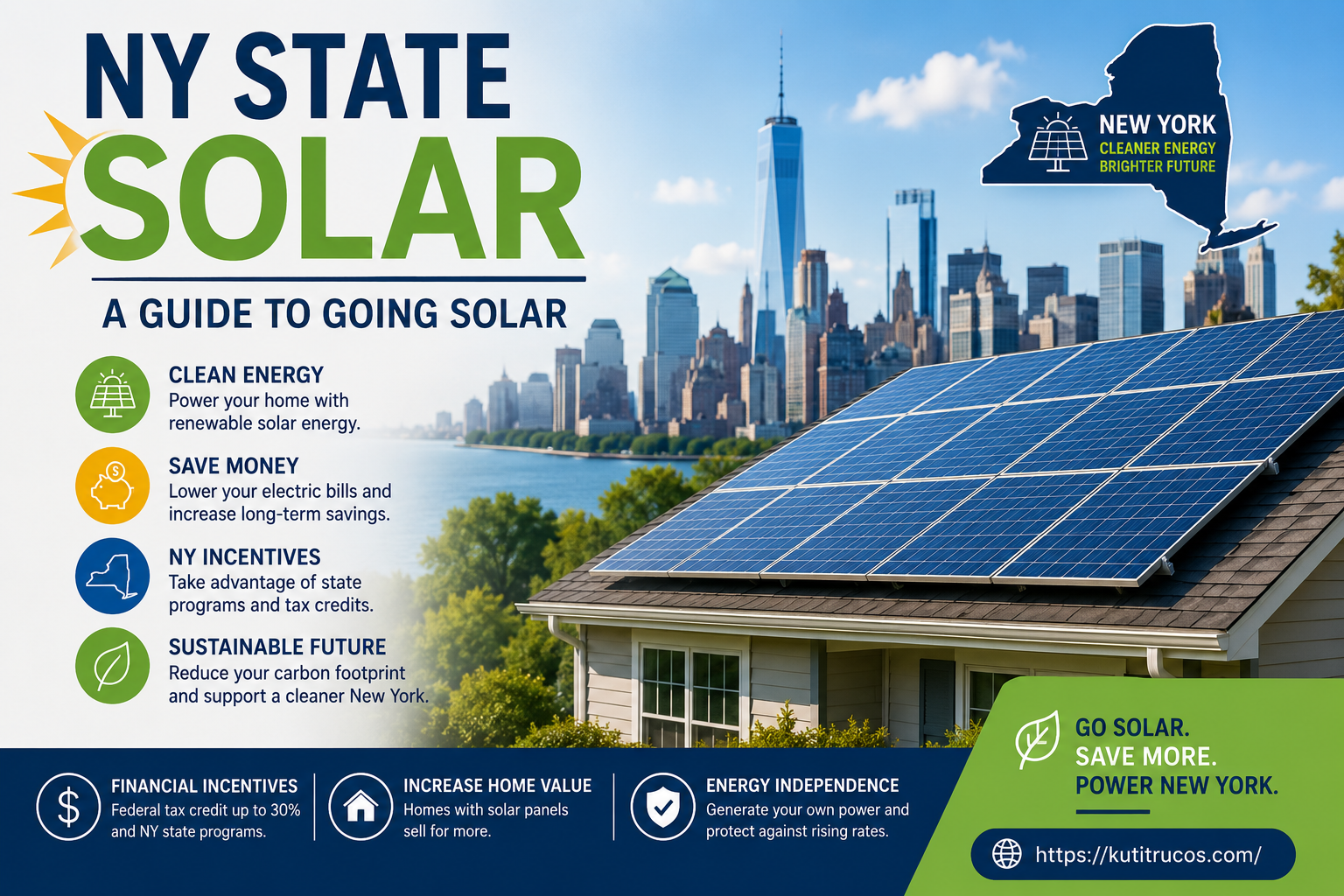
NY State Solar refers broadly to the growing solar-energy market across New York, including residential rooftop systems, commercial installations, community solar projects, financing options, incentives, and state-supported clean-energy programs.
New York has ambitious renewable-energy goals, making solar power an important component of its long-term energy transition. For property owners considering solar, understanding available programs, system types, costs, and potential benefits is an important first step.
Why Solar Energy Matters in New York
New York has traditionally relied on a diverse electricity system that includes natural gas, nuclear generation, hydroelectric power, and other energy sources. Solar adds another renewable resource to this mix.
Solar panels convert sunlight into electricity without producing direct emissions during operation. Once installed, a solar system can generate electricity for many years, helping property owners produce a portion of the power they consume.
New York’s climate may seem challenging for solar, particularly because of cold winters and cloudy periods. However, solar panels do not require hot weather to generate electricity. They primarily need available sunlight.
This means properly designed solar systems can remain productive throughout the year.
How Solar Panels Work
A residential solar installation generally consists of several major components.
Solar Panels
Photovoltaic panels capture sunlight and convert it into direct-current electricity.
Inverter
An inverter converts the electricity produced by the panels into alternating-current electricity that can be used by household appliances and electrical systems.
Mounting System
Mounting equipment secures the panels to a roof or another suitable structure.
Monitoring Equipment
Many modern systems include monitoring technology that allows property owners to track electricity production and system performance.
Battery Storage
Some homeowners also choose battery storage. Batteries can store electricity generated by solar panels and make that energy available later, depending on the system configuration.
Residential Solar in New York
For homeowners, rooftop solar can provide a way to generate electricity directly at the property where it is consumed.
The suitability of a solar system depends on several factors, including roof orientation, available sunlight, roof condition, shading, household electricity consumption, and local regulations.
A professional installer can evaluate these factors before recommending a system.
Roof Condition Matters
Homeowners should consider the age and condition of their roof before installing solar panels.
If a roof is approaching the end of its useful life, replacing it before solar installation may be more practical than removing and reinstalling panels later.
Shade Can Affect Production
Trees, neighboring buildings, chimneys, and other structures can reduce the amount of sunlight reaching solar panels.
A proper site assessment can help determine whether shading will significantly affect system performance.
Community Solar Opportunities
Not every New York resident owns a suitable home for rooftop solar. Renters, apartment residents, homeowners with shaded roofs, and people living in buildings with unsuitable structures may have difficulty installing traditional solar panels.
Community solar provides another possibility.
A community solar project allows multiple customers to benefit from electricity generated by a shared solar installation. Instead of putting panels directly on their own roof, eligible customers can participate in a larger solar project.
This model can expand access to renewable energy beyond traditional rooftop installations.
NYSERDA and New York’s Solar Market
The New York State Energy Research and Development Authority (NYSERDA) plays an important role in supporting clean-energy development throughout the state.
NYSERDA provides information and resources related to energy efficiency, renewable energy, clean transportation, and other areas of New York’s energy transition.
For consumers researching solar, official state resources can be useful when comparing programs, understanding requirements, and learning about clean-energy opportunities.
Because incentives and programs can change, homeowners should verify current information through official New York resources before making financial decisions.
Solar Incentives and Tax Benefits
One of the biggest questions for people considering solar is the overall cost.
Solar incentives can potentially reduce the financial burden of installing a system. Depending on eligibility and the specific project, incentives may include state programs, federal tax benefits, utility-related opportunities, or local programs.
The federal Residential Clean Energy Credit has historically been an important incentive for eligible residential clean-energy projects. However, tax legislation and program rules can change, so consumers should verify current eligibility and deadlines with official federal sources or a qualified tax professional.
New York also has its own solar-related incentives and programs.
Because incentive availability can depend on project type, location, ownership structure, and installation date, homeowners should avoid assuming that every program applies to every solar project.
Net Metering and Solar Electricity
Solar customers may produce more electricity than they immediately use, particularly during periods of strong sunlight.
New York’s distributed-energy policies have provided mechanisms allowing eligible solar customers to receive value for electricity sent back to the grid, although compensation structures and utility rules can vary.
This is one reason understanding the local utility’s requirements is important before installing a solar system.
Homeowners should ask their installer how electricity exported to the grid will be treated and what billing arrangement applies to their specific property.
Battery Storage and Solar
Solar panels produce electricity when sunlight is available. Battery storage can help homeowners use more of their solar-generated electricity at other times.
For example, solar panels may produce significant electricity during the afternoon while household demand is relatively low. A battery can potentially store some of that energy for later use.
Battery storage can also provide additional resilience during certain power interruptions when configured with the appropriate equipment.
However, batteries add cost and complexity, so they are not automatically necessary for every solar installation.
Commercial Solar in New York
Businesses can also benefit from solar energy.
Commercial buildings often have large electricity requirements, making solar an option worth evaluating for offices, warehouses, retail locations, manufacturing facilities, and other properties.
A commercial solar project can potentially reduce electricity expenses while helping a company demonstrate environmental responsibility.
Businesses should evaluate factors such as building ownership, electricity consumption, available roof or ground space, financing, tax treatment, and expected project lifespan before moving forward.
Choosing a Solar Installer
Selecting an experienced installer is one of the most important decisions in the solar process.
Consumers should compare multiple companies rather than choosing an installer based solely on advertising or the lowest initial quote.
Important questions include:
- How long has the company operated?
- Is it properly licensed for the work required?
- What equipment does it use?
- What warranties are included?
- Who handles permits and inspections?
- What financing options are available?
- How will system performance be monitored?
- What happens if the company stops operating?
- Are maintenance services included?
Written proposals should clearly explain equipment, estimated production, costs, financing terms, warranties, and other important conditions.
Understanding Solar Costs
The cost of a solar installation varies considerably.
System size, equipment selection, roof characteristics, labor, permitting, electrical upgrades, battery storage, and installation complexity can all influence the final price.
A larger home does not necessarily require the largest possible solar system. The appropriate size depends partly on electricity consumption and the property’s solar potential.
Homeowners should compare the total project cost rather than focusing only on monthly financing payments.
A low monthly payment can sometimes result from a longer financing period, so consumers should understand the complete financial terms before signing a contract.
Maintenance Requirements
Solar panels generally require less maintenance than many conventional energy systems because they have relatively few moving parts.
However, that does not mean solar installations should be completely ignored.
Homeowners should monitor system performance and investigate unexpected drops in electricity production.
Snow, dirt, debris, equipment faults, or shading changes can potentially affect production.
Professional maintenance may be appropriate when electrical or equipment problems occur.
Solar and New York’s Future
Solar energy is expected to remain an important part of New York’s broader clean-energy transition.
As technology develops, solar panels, batteries, smart energy-management systems, and grid infrastructure can work together in increasingly sophisticated ways.
The expansion of community solar can also help make renewable electricity accessible to consumers who cannot install rooftop systems.
For homeowners and businesses, this evolving market creates opportunities to participate in renewable-energy development while potentially improving long-term energy management.
Benefits of Going Solar
Solar energy can offer several potential advantages.
Renewable Electricity
Solar power uses sunlight, a renewable energy resource, rather than relying exclusively on finite fuels.
Potential Energy Savings
Generating electricity on-site may reduce the amount of electricity a property needs to purchase from the grid.
Long-Term Investment
A properly designed solar system can operate for many years, making it a long-term energy investment.
Environmental Benefits
Solar electricity does not produce direct emissions while generating electricity, which can contribute to lower operational emissions compared with fossil-fuel-based generation.
Energy Awareness
Solar monitoring systems can help homeowners understand how and when their property consumes and produces electricity.
Final Thoughts
NY State Solar represents more than rooftop panels. It includes a growing ecosystem of residential solar, commercial installations, community solar, battery storage, incentives, installers, and clean-energy programs.
For New York homeowners and businesses, going solar can be an opportunity to generate renewable electricity and potentially reduce long-term energy expenses. However, every property is different, so factors such as sunlight exposure, roof condition, electricity usage, financing, incentives, and local utility requirements should be carefully evaluated.
The best approach is to research current state and federal programs, compare qualified installers, review contracts carefully, and calculate the expected financial and energy benefits before making a decision.
As New York continues developing its clean-energy infrastructure, solar power will remain an important technology for creating a more diverse and renewable electricity system.

