

Introduction
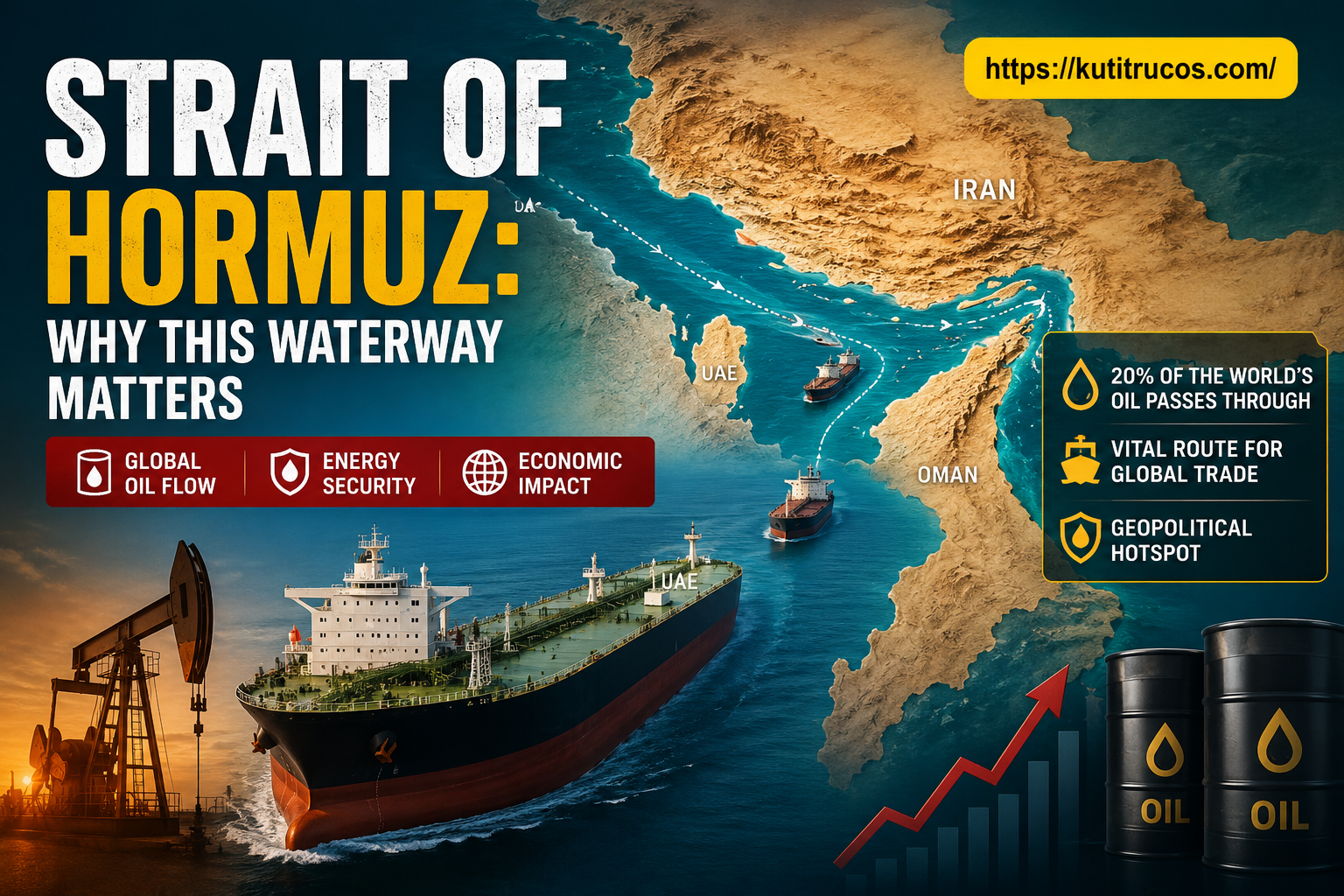
The Strait of Hormuz is one of the world’s most strategically important maritime passages. Located between the Persian Gulf and the Gulf of Oman, this narrow waterway connects the energy-rich Gulf region with international shipping routes leading toward the Arabian Sea and beyond.
Despite its relatively limited width, the strait has an enormous influence on global energy markets, international trade, maritime security, and geopolitical relations. Large quantities of crude oil, petroleum products, and liquefied natural gas move through the region, making the waterway important to countries far beyond the Middle East.
Understanding the Strait of Hormuz helps explain why developments in the surrounding region can have consequences for fuel prices, shipping costs, energy security, and global markets.
Where Is the Strait of Hormuz?
The Strait of Hormuz lies between Iran to the north and Oman and the United Arab Emirates to the south.
It connects the Persian Gulf with the Gulf of Oman, which opens into the Arabian Sea and ultimately provides access to the wider Indian Ocean.
Its geographical position makes it a natural maritime gateway for countries located around the Persian Gulf.
Major energy-producing states in the region depend on maritime routes through or around this area to reach international customers.
Why Is the Strait of Hormuz Important?
The primary reason for the strait’s global importance is energy transportation.
Several major oil-producing countries are located around the Persian Gulf. Their exports need reliable transportation routes to reach international markets.
A Major Energy Corridor
Large volumes of crude oil and petroleum products pass through the broader Strait of Hormuz shipping corridor.
Countries in Asia, Europe, and other regions depend on energy supplies originating from the Gulf.
Any significant disruption could therefore affect international supply chains.
Importance for Natural Gas
The strait is also important for liquefied natural gas transportation.
Qatar is one of the world’s major LNG exporters, and maritime routes through the Gulf are essential for moving energy products toward international buyers.
This makes the waterway important not only for oil markets but also for global natural-gas supplies.
The Strait and Global Oil Prices
Oil is traded in a global market, meaning events affecting a major supply route can influence prices even when consumers are located thousands of miles away.
If traders believe that shipping through the Strait of Hormuz could become restricted, markets may react to the possibility of reduced supply.
This can contribute to higher oil-price volatility.
Higher crude-oil prices can eventually influence gasoline, diesel, transportation, manufacturing, and other costs.
The actual impact depends on the duration and severity of any disruption, available alternative supplies, inventories, and market expectations.
Geopolitical Importance
The Strait of Hormuz is also significant because of the complex political relationships among countries in the Middle East.
Iran has repeatedly emphasized the strategic importance of the waterway, while the United States and other international powers have maintained a strong interest in freedom of navigation and maritime security in the region.
Because multiple countries have economic and security interests connected to the strait, even relatively small incidents can attract international attention.
Maritime Security
Ships traveling through the region operate within an environment where geopolitical tensions can affect maritime security.
Commercial vessels may face concerns involving military activity, regional conflicts, attacks, seizures, or other disruptions.
For shipping companies, these risks can influence decisions about insurance, routing, security procedures, and operating costs.
International naval forces have historically operated in the broader region to protect maritime navigation and respond to security concerns.
Why Alternative Routes Matter
One of the major challenges associated with the Strait of Hormuz is the limited availability of alternative export routes.
Some Gulf countries have pipelines capable of transporting part of their energy exports without using the strait.
However, alternative infrastructure generally cannot replace the entire volume of maritime shipments that could be affected by a major disruption.
This is why the waterway remains a central consideration in global energy-security planning.
Impact on International Shipping
The importance of the strait extends beyond energy markets.
Shipping companies transporting oil, LNG, and other goods must consider regional security conditions when planning voyages.
Higher perceived risks can increase insurance expenses and operational costs.
If vessels are required to take longer routes because of security concerns, transportation times and fuel consumption can also increase.
These additional costs can eventually affect international supply chains.
Impact on Consumers
Most consumers never interact directly with the Strait of Hormuz, but its importance can still affect everyday life.
Energy prices influence transportation and production costs throughout the economy.
For example, changes in crude-oil prices can affect the cost of:
- Gasoline
- Diesel
- Air travel
- Shipping
- Manufacturing
- Plastics and chemicals
- Agricultural production
- Consumer products
The exact effect varies depending on market conditions and how long energy prices remain elevated.
Economic Importance for Gulf Countries
The economies of several Gulf states depend significantly on energy exports.
Reliable maritime transportation is therefore essential for maintaining international trade.
Oil and gas revenues support government budgets, infrastructure development, employment, investment, and other economic activities in energy-producing countries.
The Strait of Hormuz consequently has importance not only as a shipping route but also as a major component of regional economic stability.
Environmental Considerations
Maritime transportation through the region also creates environmental risks.
Large oil tankers carry significant quantities of petroleum products. A major maritime accident could result in an oil spill with serious consequences for marine ecosystems and coastal communities.
For this reason, safe navigation, effective emergency response, and strong maritime standards are important for protecting the region’s environment.
The Persian Gulf itself is a relatively enclosed body of water, making environmental incidents particularly concerning.
The Strait of Hormuz in Global Energy Security
Energy security means having reliable access to affordable energy while managing risks associated with supply disruptions.
The Strait of Hormuz is central to this discussion because of the volume of energy transported through the region.
Governments and energy companies therefore monitor developments around the waterway closely.
Strategic petroleum reserves, alternative pipelines, diversified energy sources, renewable power, and improved energy efficiency can all help reduce vulnerability to potential supply disruptions.
The Future of the Strait of Hormuz
The importance of the Strait of Hormuz is unlikely to disappear quickly.
Global energy markets are gradually changing as renewable electricity, electric vehicles, energy storage, and other technologies expand.
However, oil and natural gas remain important components of the global energy system.
As a result, the strait is likely to remain strategically important for years to come.
At the same time, changes in global energy demand could gradually alter the types and volumes of commodities transported through the region.
Why the Strait Matters Beyond the Middle East
The Strait of Hormuz demonstrates how geography can influence the global economy.
A relatively narrow maritime passage can affect energy supplies, financial markets, shipping companies, governments, and consumers around the world.
Its significance is a reminder that international trade depends on a network of critical transportation corridors.
Other strategic waterways, including the Suez Canal, Bab el-Mandeb, and the Panama Canal, similarly demonstrate how disruptions at key maritime chokepoints can create consequences far beyond their immediate geographic locations.
Final Thoughts
The Strait of Hormuz is much more than a narrow waterway connecting the Persian Gulf with the Gulf of Oman. It is a critical component of the global energy and transportation system.
Its location near some of the world’s largest energy-producing countries gives it exceptional economic and strategic importance. Oil and LNG shipments passing through the region connect Gulf producers with consumers across the world.
For governments, shipping companies, energy producers, investors, and consumers, developments surrounding the strait can therefore have significant consequences.
As global energy systems evolve, the Strait of Hormuz will continue to be closely watched because its geography, economic importance, and strategic position make it one of the world’s most consequential maritime corridors.

