

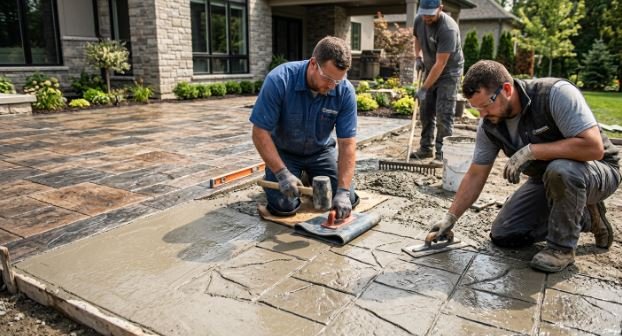
Homeowners across Oklahoma City are rethinking what a patio, driveway, or walkway can look like. Plain gray slabs are giving way to something far more striking: surfaces that mimic brick, slate, cobblestone, and even natural wood, all while delivering the durability concrete is known for. This shift isn’t just a passing trend. It reflects a growing demand for outdoor spaces that look custom-designed without the custom price tag.
If you’ve been weighing your options for a new driveway, pool deck, or backyard patio, there’s a good chance you’ve come across this technique and wondered if it’s worth the investment. The short answer is yes, and the reasons go well beyond curb appeal. From long-term durability to lower maintenance demands, this approach to decorative concrete checks boxes that traditional materials simply can’t match.
At Oklahoma City Concrete Pros LLC, we’ve helped countless homeowners and business owners reimagine their outdoor and indoor concrete surfaces. This post breaks down what makes this technique so popular, where it works best, and what you should know before starting your next project.
What Makes This Decorative Concrete Technique So Popular?
The appeal comes down to versatility. Instead of settling for a flat, uniform slab, property owners can choose from dozens of patterns and textures that replicate the look of premium materials like flagstone, natural stone, or herringbone brick. A specialized stamping process presses these patterns into freshly poured concrete, and color hardeners or stains add depth and realism that’s hard to distinguish from the real thing.
This combination of beauty and practicality is rare. Natural stone and brick require ongoing maintenance, can shift over time, and often come with a much steeper price tag. Decorative concrete delivers a similar aesthetic with far less upkeep and a lower overall cost, which makes it an easy choice for homeowners trying to balance style and budget.
Where Is It Commonly Used?
This technique shows up in more places than most people expect. Some of the most popular applications include:
- Patios and outdoor living areas — creating a cohesive, upscale look that complements landscaping and outdoor furniture
- Pool decks — offering slip-resistant textures that stay cooler underfoot compared to traditional pavers
- Driveways — adding architectural interest to a home’s exterior while standing up to daily vehicle traffic
- Walkways and entryways — setting a welcoming tone before guests even reach the front door
- Commercial spaces — giving retail centers, restaurants, and office complexes a polished, professional appearance
Each of these applications benefits from the same core advantages: durability, design flexibility, and a finished look that elevates the overall property.
Why Durability Matters as Much as Design
It’s easy to get caught up in the visual appeal of decorative concrete, but durability is where this material really earns its reputation. A properly installed and sealed surface can withstand Oklahoma’s temperature swings, from scorching summers to occasional winter freezes, without cracking or fading prematurely.
Choose this option if you want a surface that holds up to heavy foot traffic, resists weather damage, and requires minimal repairs over time. Compare that to pavers, which can shift and settle unevenly, or natural stone, which may crack under freeze-thaw cycles, and the advantages become clear.
Sealing plays a major role in this longevity. A quality sealant protects against moisture penetration, UV fading, and surface stains, which means homeowners can expect their investment to look sharp for years with only periodic resealing, typically every two to three years depending on traffic and exposure.
How Does Maintenance Compare to Other Materials?
One of the biggest draws for property owners is how little ongoing maintenance this surface requires compared to alternatives. There’s no need to pull weeds between joints like you would with pavers, and there’s no risk of individual stones shifting or sinking over time.
Routine care typically involves:
- Sweeping or rinsing off debris and dirt regularly
- Resealing every few years to maintain color and protect against moisture
- Addressing small cracks or chips promptly to prevent them from spreading
- Avoiding harsh deicing chemicals that can damage the sealed surface
This low-maintenance profile makes it an especially smart choice for busy households or commercial properties that don’t have time for constant upkeep.
How Color and Pattern Choices Shape the Final Look
Part of what makes this decorative option so appealing is the sheer range of customization available. Property owners can select from patterns like ashlar slate, running bond brick, cobblestone, wood plank, and more, then pair those patterns with color options ranging from earthy browns and tans to richer, more dramatic tones.
Choose warmer, neutral tones if you want the surface to blend seamlessly with natural landscaping and traditional home exteriors. Choose bolder colors or contrasting borders if you want the space to stand out as a design feature in its own right. Either way, the ability to coordinate concrete finishes with existing architecture gives homeowners a level of design control that’s difficult to achieve with other materials.
Borders and accent bands are another popular customization. Many homeowners choose a contrasting color or pattern around the perimeter of a patio or driveway to frame the space and add a finished, professional touch.
What Should You Expect During the Installation Process?
Understanding the installation process helps set realistic expectations for timeline and preparation. The process generally involves site preparation, pouring the concrete base, applying color hardener, pressing in the stamped pattern while the concrete is still workable, and finally sealing the surface once it has cured.
Timing matters significantly here. Because the stamping has to happen before the concrete sets, experienced installers need to work efficiently without sacrificing precision. This is one of the main reasons working with a seasoned team makes such a difference. Poor timing or technique can result in uneven patterns, weak spots, or premature cracking.
Weather also plays a role in scheduling. In Oklahoma, extreme heat can cause concrete to set faster than expected, while cold temperatures can slow curing time. A knowledgeable contractor will plan around these conditions to ensure the best possible outcome.
Ready to Upgrade Your Property with a Durable, Custom-Designed Surface?
Offering a stylish and long-lasting alternative to traditional paving materials, Stamped Concrete has become one of the most requested services at Oklahoma City Concrete Pros LLC, and it’s easy to see why. Whether you’re planning a backyard transformation, a new driveway, or a commercial walkway, this technique delivers the look of premium materials without the long-term maintenance headaches.
Our team handles every step of the process, from initial design consultation to final sealing, ensuring your new surface is built to last through Oklahoma’s unpredictable weather. We work closely with each client to select patterns and colors that complement their property and match their vision.
If you’re ready to see what this technique could do for your home or business, reach out to Oklahoma City Concrete Pros LLC today. We’ll walk you through your options, answer your questions, and help you plan a project that adds lasting value to your property.
FAQ
How long does a stamped concrete surface typically last?
With proper installation and routine sealing, these surfaces commonly last 25 years or more, making them one of the more durable options for driveways, patios, and walkways.
Is this type of concrete surface slippery when wet?
Most sealers used today include additives that improve traction, and textured patterns naturally reduce slipperiness compared to smooth concrete, especially around pool decks.
Can an existing plain concrete slab be converted to a decorative finish?
In many cases, yes. Overlay systems can be applied to existing concrete to add texture and color without a full tear-out and replacement, though a professional assessment is needed to confirm the slab is in suitable condition.
How does the cost compare to natural stone or pavers?
This option generally costs less than natural stone and is often comparable to or less expensive than pavers, while still delivering a similar upscale appearance.

