

Introduction
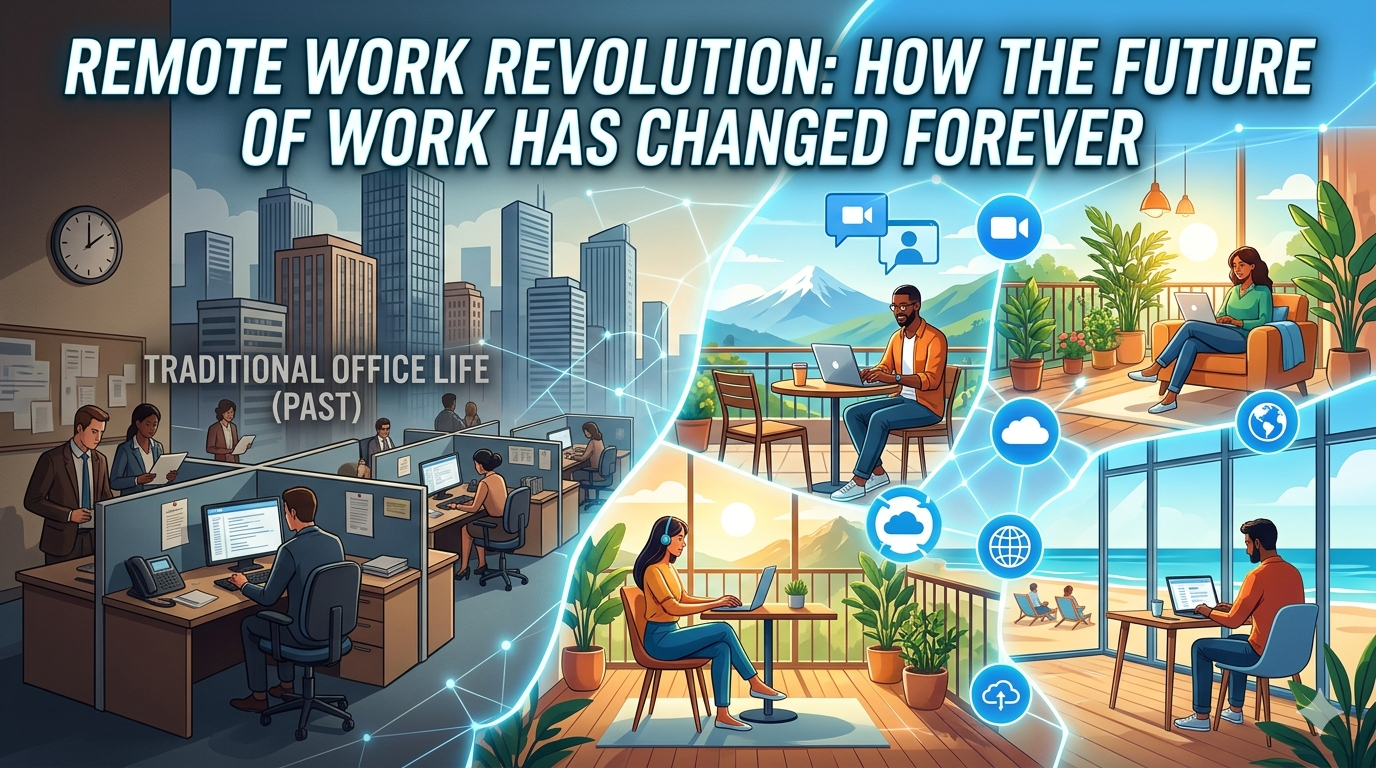
The way people work has changed more in the last decade than in the previous century. Traditional office-based jobs, fixed working hours, and daily commuting routines are no longer the only standard model of employment. Instead, a new system has emerged that allows people to work from almost anywhere in the world.
This shift is widely known as the Remote Work Revolution.
Remote work refers to a working style where employees perform their job duties outside a traditional office environment. This can include working from home, coworking spaces, cafes, or even while traveling. Powered by digital tools, cloud systems, and global connectivity, remote work has become a major transformation in modern employment culture.
Today, remote work is not just a temporary trend. It has become a long-term global shift that is reshaping industries, companies, and employee lifestyles.
What Is Remote Work?
Remote work is a professional arrangement where employees are not required to be physically present in an office to complete their tasks.
Instead, they use:
- Internet connections
- Digital communication tools
- Cloud-based software
- Project management platforms
This allows teams to collaborate effectively from different locations.
Remote work is also known by several names, such as:
- Work from home (WFH)
- Telecommuting
- Distributed work
- Digital nomad lifestyle
The core idea is flexibility-work is no longer tied to a physical location.
The Evolution of Remote Work
Remote work did not appear suddenly. It evolved over time through technological and cultural changes.
Early Stage
In the early days, remote work was rare and limited to freelancers or specific industries like writing and consulting.
Technology Expansion
With the rise of the internet, email, and online communication tools, companies started allowing limited remote arrangements.
Cloud Computing Era
Cloud storage and collaboration tools made it easier for teams to share files and work together in real time.
Global Shift During Pandemic
The COVID-19 pandemic accelerated remote work adoption worldwide. Companies were forced to adopt digital systems almost overnight.
After this period, many organizations realized that remote work can be efficient, cost-effective, and productive.
Key Drivers Behind the Remote Work Revolution
Several factors contributed to the rise of remote work across the globe.
Advancements in Technology
Modern tools such as video conferencing, cloud platforms, and instant messaging make remote communication simple and effective.
High-Speed Internet Access
Reliable internet connections allow employees to work from almost any location.
Changing Work Culture
Employees increasingly value flexibility, independence, and work-life balance.
Cost Reduction for Businesses
Organizations save money on office space, utilities, and infrastructure.
Benefits of Remote Work
Remote work offers benefits to both employees and employers.
1. Improved Work-Life Balance
Employees can manage personal and professional responsibilities more effectively.
They spend less time commuting and more time with family or personal activities.
2. Increased Productivity
Many studies suggest that employees often become more productive in remote environments due to fewer office distractions.
3. Flexibility in Working Hours
Remote jobs often allow flexible schedules, helping employees work during their most productive hours.
4. Cost Savings
Employees save money on transportation, meals, and daily office-related expenses.
5. Access to Global Opportunities
People can apply for jobs worldwide without relocating.
This opens more career opportunities than traditional office jobs.
Benefits for Employers
Remote work is not only beneficial for employees-it also helps organizations.
Larger Talent Pool
Companies can hire professionals from anywhere in the world.
Lower Operational Costs
Reduced need for office space leads to significant savings.
Higher Employee Retention
Flexible work arrangements increase job satisfaction.
Business Continuity
Remote systems allow companies to continue operations during emergencies or disruptions.
Challenges of Remote Work
Despite its benefits, remote work also comes with several challenges.
Communication Gaps
Without face-to-face interaction, misunderstandings can occur more easily.
Isolation and Loneliness
Employees may feel disconnected from their teams.
Time Management Issues
Some workers struggle with maintaining discipline at home.
Cybersecurity Risks
Remote systems can increase exposure to data breaches if not properly secured.
Work-Life Boundaries
It can become difficult to separate work time from personal life.
Essential Tools for Remote Work
Technology plays a central role in making remote work successful.
Communication Tools
Platforms like video conferencing and messaging apps help teams stay connected.
Project Management Tools
These tools help track tasks, deadlines, and overall project progress.
Cloud Storage Systems
Cloud platforms allow employees to store and access files securely from anywhere.
Collaboration Software
Real-time document editing and teamwork tools improve efficiency.
Cybersecurity Tools
VPNs, authentication systems, and encryption all help protect sensitive information.
Remote Work and Work-Life Balance
One of the biggest advantages of remote work is improved work-life balance.
Employees can:
- Spend more time with family
- Avoid long commutes
- Work in comfortable environments
- Manage personal schedules more easily
However, maintaining balance still requires discipline. Without boundaries, work can easily extend into personal time.
The Rise of Digital Nomads
Remote work has created a new lifestyle known as digital nomadism.
They rely on:
- Stable internet access
- Portable devices
- Online communication tools
This lifestyle offers freedom, but it also requires strong time management and adaptability.
Remote Work in Different Industries
Remote work is not restricted to a single field. It has spread across multiple industries.
IT and Software Development
One of the most remote-friendly industries due to the digital nature of work.
Marketing and Content Creation
Digital marketing teams often work remotely using online tools.
Education
Online teaching and e-learning platforms have grown significantly.
Customer Support
Many companies now operate remote support centers.
Finance and Consulting
Data analysis, consulting, and financial services are increasingly remote-enabled.
Impact on Global Economy
Remote work is influencing the global economy in several ways.
Redistribution of Jobs
Work is no longer limited to specific geographic regions.
Growth of Freelancing Economy
More professionals are working independently.
Reduced Urban Pressure
Less commuting reduces traffic and pollution in major cities.
Increased Digital Infrastructure Demand
Countries are investing more in internet and technology systems.
Security and Privacy Concerns
As remote work grows, cybersecurity becomes more important.
Key concerns include:
- Data theft
- Unauthorized access
- Phishing attacks
- Weak home network security
Companies must implement strong security policies, including:
- Multi-factor authentication
- Encrypted communication
- Secure cloud platforms
- Employee training
Future of Remote Work
Remote work is expected to continue evolving in the coming years.
Hybrid Work Models
Many companies are adopting a mix of remote and in-office work.
AI Integration
Artificial intelligence will help manage tasks, scheduling, and productivity tracking.
Virtual Workspaces
Advanced virtual reality tools may create digital office environments.
Global Workforce Expansion
Companies will increasingly hire talent without location limitations.
The future workplace will likely be flexible, digital, and globally connected.
Is Remote Work Here to Stay?
Evidence suggests that remote work is not a temporary trend. Instead, it represents a long-term shift in how organizations operate.
While not every job can be fully remote, a large portion of modern work can be done digitally.
The balance between office work and remote work will continue evolving based on industry needs and technological advancements.
Conclusion
The Remote Work Revolution has fundamentally changed the meaning of work in the modern era.
It has created new opportunities, improved flexibility, and allowed people to work beyond traditional office boundaries. At the same time, it introduces challenges related to communication, productivity, and security.
As technology continues to advance, remote work will likely become even more integrated into everyday professional life.
The future of work is no longer tied to a single location-it is connected, digital, and globally accessible.

