

Introduction
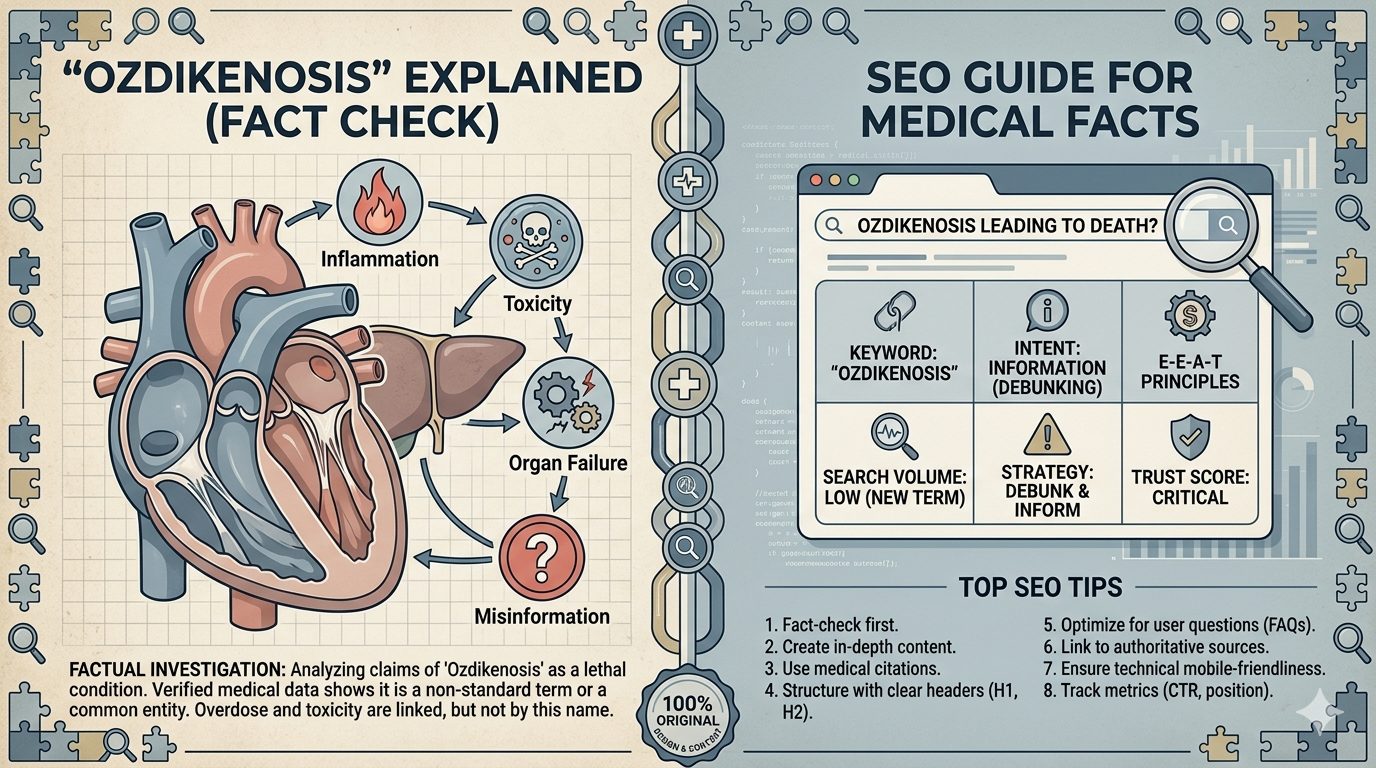
In recent months, a strange term called “ozdikenosis” has started appearing in online searches, especially in the United States. Many users are asking questions like “why does ozdikenosis kill you?” or “what is ozdikenosis disease?”
However, when we carefully check trusted medical sources, there is an important fact that needs to be made clear right from the beginning:
Ozdikenosis is NOT a recognized medical disease in real-world medical science.
There is no official listing of this condition in:
- Medical textbooks
- World Health Organization records
- CDC databases
- Peer-reviewed scientific journals
So why are people searching about it, and why do some websites talk about it as if it is real? This article breaks down the truth in a simple, SEO-friendly way for readers in the USA.
What Is Ozdikenosis? (Fact Check)
The Simple Truth
“Ozdikenosis” does not exist as a medically confirmed illness. It appears to be:
- A fictional or invented term
- A possible internet myth
- Or a misinformation-based keyword created online
There is no scientific explanation for how it works, how it spreads, or how it affects the human body-because it is not medically real.
Why Do People Think Ozdikenosis Is Dangerous?
Even though the condition is not real, search engines show rising curiosity around it. This often happens due to viral content and misinformation.
1. Social Media Rumors
Once a term becomes viral, people start assuming it is real.
2. Clickbait Articles
Some websites create fake disease names to attract traffic. Titles like:
- “Deadly ozdikenosis outbreak explained”
- “Why ozdikenosis kills instantly”
are designed for clicks, not accuracy.
3. AI-Generated Misinformation
With the rise of AI content tools, fake medical terms can sometimes be generated and spread without verification.
So Why Would People Ask “Why Does Ozdikenosis Kill You?”
This question is based on a misunderstanding. Since the disease itself is not real, the idea of it “killing someone” is also not medically valid.
However, we can explain why fake diseases like this gain attention:
1. Fear-Based Curiosity
Humans naturally react strongly to words like “kill,” “disease,” and “infection.”
2. Algorithm Amplification
Search engines suggest trending queries based on what others are clicking—even if the topic is false.
3. Lack of Fact-Checking
Many users assume that if something appears on Google, it must be real.
What Happens When Fake Diseases Go Viral?
The internet often spreads misinformation faster than corrections. Fake medical terms like “ozdikenosis” can create confusion.
Common Effects Include:
- Unnecessary fear among users
- Misleading health searches
- Fake blogs ranking on Google
- Confusion about real medical conditions
This is why digital literacy is extremely important today.
Real Medical Perspective
Even though ozdikenosis is not real, serious medical conditions do exist that can be life-threatening if untreated.
Examples of real critical diseases include:
- Cancer
- Heart disease
- Sepsis
- Stroke
- Severe infections
These conditions are scientifically proven and medically documented, unlike fictional internet terms.
Why Fake Medical Terms Appear in SEO Searches
From an SEO point of view, keywords like “ozdikenosis” become popular due to curiosity spikes.
SEO Reasons Behind This Trend:
1. Zero Competition Keywords
Since the term is fake, almost no authoritative medical content exists.
2. Curiosity Clicks
Users click to find out “what it means,” increasing search volume.
3. Viral Social Content
Short videos or posts introduce the term to millions of users quickly.
This creates a loop where misinformation gets search visibility.
How to Identify Fake Health Information Online
To avoid confusion, users should always verify medical topics using trusted methods.
Red Flags of Fake Diseases
- No medical journal references
- No hospital or doctor confirmation
- Only found on random blogs or social media
- Sensational or fear-based language
Trusted Sources Include
- CDC (Centers for Disease Control and Prevention)
- WHO (World Health Organization)
- Mayo Clinic
- National medical databases
If a condition is not listed there, it is likely not real.
Why Google Still Shows These Searches
Google does not create information-it reflects what people are searching.
So when many users type:
- “ozdikenosis meaning”
- “why does ozdikenosis kill you”
Google shows results based on demand, even if the topic is not scientifically valid.
The Danger of Medical Misinformation
Fake health information can be more harmful than people realize.
Possible Risks:
- Panic and anxiety
- Wrong self-diagnosis
- Avoiding real medical treatment
- Spreading fear online
This is why fact-checking is extremely important in digital health topics.
Final Answer: Why Does Ozdikenosis Kill You?
The correct answer is simple:
It does not kill anyone because it is not a real medical disease.
There is no scientific evidence, no clinical research, and no medical recognition of “ozdikenosis.”
Conclusion
The keyword “ozdikenosis” is a clear example of how misinformation spreads in the digital world. While it may look like a serious medical condition based on viral content, it has no real existence in science or medicine.
For USA-based audiences and global readers, it is important to always verify health-related information before believing or sharing it. Trusted medical sources remain the only reliable way to understand real diseases.

