

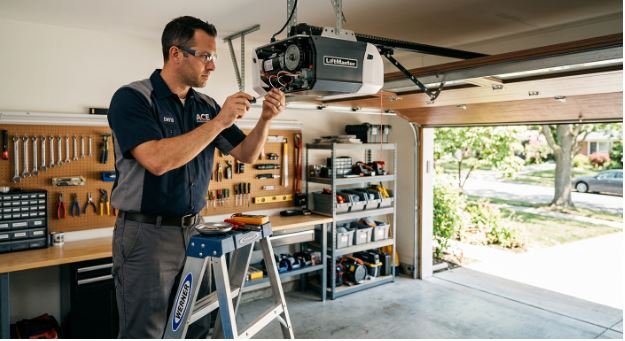
A garage door that won’t respond to the remote is more than a minor inconvenience. It can leave your car trapped, disrupt your morning routine, and signal a problem that only gets worse with time. The good news? Most opener issues have clear causes, and understanding them puts you in a better position to get things fixed quickly and correctly.
At ProStar Garage Doors, we see the same handful of opener problems again and again. Dead batteries get blamed for issues that are actually electrical. Worn gears get ignored until they strip completely. Sensor misalignment gets mistaken for a dying motor. Each of these has a specific fix, and knowing what you’re dealing with saves you time, money, and unnecessary stress.
This post walks through the most common reasons garage door openers fail, how to spot the warning signs early, and when it makes sense to call in a professional rather than troubleshoot on your own.
Why Is My Garage Door Opener Not Working?
There are several reasons a garage door opener might stop responding, and the symptoms often overlap. A door that won’t open could stem from a dead remote battery, a tripped circuit breaker, misaligned safety sensors, worn-out gears inside the motor unit, or a disconnected drive mechanism. Pinpointing the exact cause usually starts with the simplest explanations before moving to more involved mechanical checks.
The Remote or Keypad Isn’t Communicating
Before assuming the worst, check the basics. Remote batteries die more often than people expect, and a weak signal can look identical to a motor failure. Try replacing the batteries first. If that doesn’t work, check whether the remote needs to be reprogrammed to the opener’s frequency, especially after a power outage.
Wall-mounted keypads can also lose their connection to the main unit. A quick reset, following the manufacturer’s instructions, often resolves this without any tools involved.
The Safety Sensors Are Misaligned
Modern garage door openers include infrared safety sensors near the bottom of the track on each side of the door. These sensors must be perfectly aligned to let the door close. If something has bumped one of them, even slightly, the door may refuse to close or reverse unexpectedly partway through its cycle.
A blinking light on either sensor typically indicates misalignment. Gently adjusting the sensor housing until both lights turn solid often resolves the issue in minutes.
The Gears Have Worn Down
Inside most chain-drive and belt-drive openers sits a plastic or nylon gear that transfers motor power to the drive mechanism. Over years of regular use, this gear wears down and eventually strips. When this happens, you’ll typically hear the motor running, but the door won’t move at all.
This is one of the most common reasons homeowners call for repair, and it’s not something that can be fixed with a quick adjustment. The gear needs to be replaced, which usually requires opening the motor housing and understanding how the internal components fit together.
The Opener Has Lost Power
Garage door openers run on standard household electricity, and anything that interrupts that power supply will stop the unit cold. Check whether the opener is plugged in securely, whether a breaker has tripped, or whether a GFCI outlet near the garage has been reset. These checks take seconds but rule out one of the most common and most overlooked causes of opener failure.
How Can I Tell If the Problem Is the Opener or the Door Itself?
Garage door opener problems and garage door problems often get confused because the symptoms look similar from the outside. The easiest way to tell them apart is to disconnect the opener using the manual release cord and try moving the door by hand.
If the door moves smoothly and evenly when operated manually, the opener is likely the source of the problem. If the door feels heavy, uneven, or won’t budge at all, the issue is probably mechanical. These issues could involve the springs, tracks, or rollers rather than the motor unit itself.
This distinction matters because opener repairs and door repairs involve different parts, different tools, and different levels of risk. Torsion springs, in particular, are under extreme tension and should never be adjusted without proper training.
What Happens If I Ignore a Failing Garage Door Opener?
Ignoring early warning signs rarely makes the problem go away. It usually makes the eventual repair more expensive. A gear that’s partially worn will eventually strip completely. A motor that’s straining will eventually burn out. What starts as a $150 part replacement can turn into a full opener replacement costing several times more.
There’s also a safety dimension here. A door with failing sensors or unreliable auto-reverse function puts people, pets, and vehicles at risk. If your door has ever come down without warning, or hasn’t reversed properly when something was in its path, that’s not a problem to wait out.
When Should You Call a Professional for Opener Repairs?
Some fixes are genuinely simple. Replacing batteries, realigning sensors, or resetting a breaker are tasks most homeowners can handle safely without any special tools. But once the problem moves into the motor housing, involves wiring, or requires disassembling the drive mechanism, it’s worth bringing in someone with the right experience.
Choose a DIY approach if the issue is limited to remote programming, sensor alignment, or basic power troubleshooting. Choose professional repair if the opener runs but the door doesn’t move, if you hear grinding or clicking from the motor, or if you’re not confident diagnosing which specific component has failed. Attempting a gear or motor replacement without the right background can lead to further damage or personal injury, particularly around spring tension and electrical components.
Professional, reliable garage door opener repair gives you the certainty that the right part gets diagnosed and replaced the first time, without the guesswork or risk of taking it apart yourself. At ProStar Garage Doors, our technicians carry the most common replacement parts on their trucks, which means most opener repairs get completed in a single visit.
We also inspect the surrounding hardware during every service call. Catching a frayed cable or a worn roller while we’re already there can prevent a second, unrelated breakdown down the road.
Keep Your Garage Door Running Smoothly
A garage door opener that stops working is rarely a mystery once you know where to look. Weak batteries, misaligned sensors, worn gears, and power interruptions account for the vast majority of service calls, and each has a clear, specific fix.
Trying to diagnose the issue yourself can save time on simple problems, but knowing when to step back and call in an expert protects both your safety and your wallet. If your opener has been acting up, grinding, or ignoring your remote altogether, ProStar Garage Doors is ready to help you get it running reliably again.
Reach out to ProStar Garage Doors today to schedule a service visit and get your garage door opener back to working the way it should.
Frequently Asked Questions
How much does garage door opener repair typically cost?
Costs vary depending on the specific part that needs replacement, but gear and sensor repairs are generally more affordable than a full opener replacement. A technician can provide an exact quote after diagnosing the issue.
Can I repair a garage door opener myself?
Simple fixes like replacing batteries, reprogramming a remote, or realigning sensors are safe to attempt on your own. Motor repairs, gear replacements, and anything involving the drive mechanism are best left to a professional.
How long does a typical opener repair take?
Most opener repairs are completed within a single visit, often in under an hour, since common replacement parts are usually carried on hand.
What’s the average lifespan of a garage door opener?
Most openers last between 10 and 15 years with regular maintenance, though usage frequency and climate conditions can shorten or extend that range.

