

Introduction
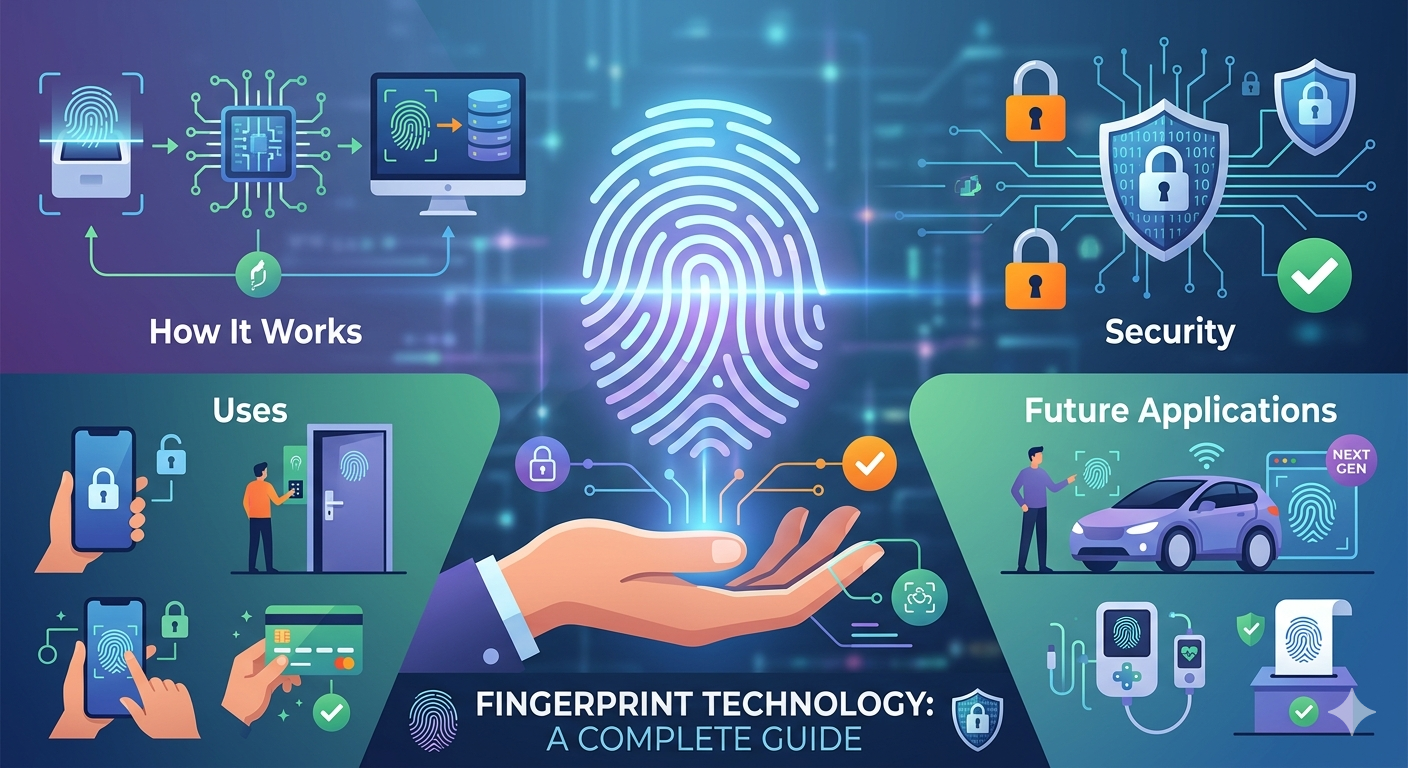
Fingerprint technology is one of the oldest yet most advanced forms of biometric identification used in the modern world. While it may seem like a simple concept-using the unique patterns on a person’s fingertips to identify them-its applications today extend far beyond basic identification.
From unlocking smartphones and securing banking apps to border control systems and law enforcement databases, fingerprint recognition has become a foundational technology in digital security. Across the United States and other technologically advanced regions, fingerprint-based systems are widely used in government services, financial systems, healthcare, and everyday consumer devices.
As digital transformation continues, fingerprint technology is playing an increasingly important role in authentication, fraud prevention, and identity verification systems.
What Is Fingerprint Technology?
Fingerprint technology is a biometric identification method that uses the unique patterns found on human fingertips to verify identity.
Each person’s fingerprint is unique-even identical twins do not share the same fingerprint patterns. This makes fingerprint recognition one of the most reliable forms of identity verification.
Fingerprint systems work by capturing, analyzing, and comparing fingerprint patterns to stored data for authentication or identification purposes.
In simple terms:
Fingerprint technology verifies identity based on unique ridge patterns on human fingertips.
How Fingerprint Recognition Works
Fingerprint systems operate through a multi-step process involving scanning, processing, and matching.
Step 1: Fingerprint Capture
A sensor captures the fingerprint using one of several technologies:
- Optical scanners
- Capacitive sensors
- Ultrasonic sensors
The fingerprint image or pattern is recorded digitally.
Step 2: Feature Extraction
The system analyzes key fingerprint features such as:
- Ridge endings
- Ridge bifurcations
- Patterns and curves
Step 3: Template Storage
Instead of storing raw images, systems store encrypted templates.
This improves:
- Privacy
- Security
- Storage efficiency
Step 4: Matching Process
When a user attempts authentication, a new scan is compared with stored data.
If enough similarities are detected, access is granted.
Step 5: Verification or Identification
- Verification confirms identity (1:1 match)
- Identification searches across multiple records (1 match)
Types of Fingerprint Scanning Technologies
Different systems use different scanning methods.
Optical Fingerprint Sensors
These use light to capture fingerprint images.
Advantages:
- Low cost
- Easy implementation
Limitations:
- Less secure against fake fingerprints
Capacitive Sensors
Advantages:
- High accuracy
- Common in smartphones
Ultrasonic Sensors
These use sound waves to map fingerprint details.
Advantages:
- High security
- Works even with moisture or dirt
Thermal Sensors
These detect heat differences across fingerprint ridges.
Less common in modern devices.
Why Fingerprint Technology Is So Popular
Fingerprint recognition remains widely used due to several advantages.
Uniqueness
Every fingerprint is unique, making duplication extremely difficult.
Convenience
Users do not need passwords or PINs.
Speed
Authentication takes only seconds.
Wide Availability
Most smartphones and security systems include fingerprint scanners.
Applications of Fingerprint Technology
Fingerprint systems are used across multiple industries.
Smartphones and Consumer Devices
Applications include:
- Phone unlocking
- App authentication
- Mobile payments
Banking and Financial Services
Banks use fingerprint systems for:
- Account login
- ATM verification
- Fraud prevention
- Mobile banking security
Government and Law Enforcement
Fingerprint databases are used for:
- Criminal identification
- Background checks
- Border security
- National ID systems
Healthcare Industry
Applications include:
- Patient identification
- Medical record access
- Insurance verification
Workplace Security
Many organizations use fingerprint access for:
- Office entry systems
- Attendance tracking
- Secure facility access
Travel and Immigration
Airports increasingly use fingerprint-based systems for:
- Passenger verification
- Border control
- Fast-track immigration systems
Advantages of Fingerprint Technology
Fingerprint systems offer several benefits.
High Accuracy
Fingerprint patterns are highly reliable.
Strong Security
Difficult to replicate or forge.
Fast Authentication
Quick identity verification process.
User-Friendly
No need to remember passwords.
Cost-Effective at Scale
Widely deployable across industries.
False Rejections
Sometimes legitimate users may be denied access.
Environmental Issues
Moisture, dirt, or injuries can affect scanning.
Privacy Concerns
Storage of biometric data raises security questions.
Spoofing Risks
Advanced fake fingerprint methods exist, though modern systems reduce this risk.
Hardware Dependence
Requires specialized sensors.
Fingerprint Security and Data Protection
Modern fingerprint systems use:
- Encryption algorithms
- Secure hardware storage
- Token-based authentication
- Multi-factor authentication systems
Important principle:
Most systems do not store actual fingerprint images but encrypted templates.
Fingerprint Technology vs Other Biometrics
| Feature | Fingerprint | Face Recognition | Iris Scan |
| Cost | Low | Medium | High |
| Accuracy | High | High | Very High |
| Convenience | High | High | Medium |
| Speed | Fast | Fast | Moderate |
Fingerprint technology remains one of the most widely used due to balance of cost and performance.
Role of Artificial Intelligence in Fingerprint Systems
AI improves fingerprint recognition by:
- Enhancing image quality
- Reducing false matches
- Detecting spoofing attempts
- Improving pattern recognition
Machine learning continues to improve accuracy over time.
Future of Fingerprint Technology
Fingerprint systems continue evolving.
Integration with AI and Biometrics
Future systems may combine multiple biometric methods.
Contactless Fingerprint Scanning
New technologies allow non-touch fingerprint recognition.
Improved Security Algorithms
Stronger encryption will protect biometric data.
Wider Use in Digital Payments
Fingerprint authentication may become standard in payment systems.
Expansion in Smart Cities
Fingerprint systems may support identity verification in urban infrastructure.
Ethical and Privacy Considerations
As fingerprint systems grow, ethical questions become more important.
Key concerns include:
- Data ownership
- Surveillance risks
- Storage security
- Consent management
Governments are developing regulations to protect users.
Why Fingerprint Technology Matters Today
Fingerprint technology plays a critical role in modern digital security systems.
It enables:
- Faster authentication
- Reduced fraud
- Better user experience
- Secure digital ecosystems
From smartphones to government systems, fingerprint technology is deeply integrated into daily life.
Final Thoughts
Fingerprint technology remains one of the most reliable and widely used biometric systems in the world. Its combination of simplicity, speed, affordability, and accuracy makes it a core component of modern security infrastructure.
While challenges such as privacy concerns and environmental limitations exist, continuous improvements in AI, encryption, and sensor technology are strengthening its effectiveness.
As digital identity becomes increasingly important, fingerprint recognition will continue to play a central role in securing personal, financial, and organizational data across the United States and beyond.
Frequently Asked Questions
What is fingerprint technology?
It is a biometric system that identifies individuals using unique fingerprint patterns.
Is fingerprint technology secure?
Yes, it is considered highly secure when properly implemented.
Where is fingerprint technology used?
It is used in smartphones, banking, government systems, healthcare, and security access systems.
Can fingerprints be copied?
While possible in theory, modern systems use advanced protections to prevent spoofing.
Will fingerprint technology be replaced?
It will likely evolve alongside other biometric systems rather than being fully replaced.

