

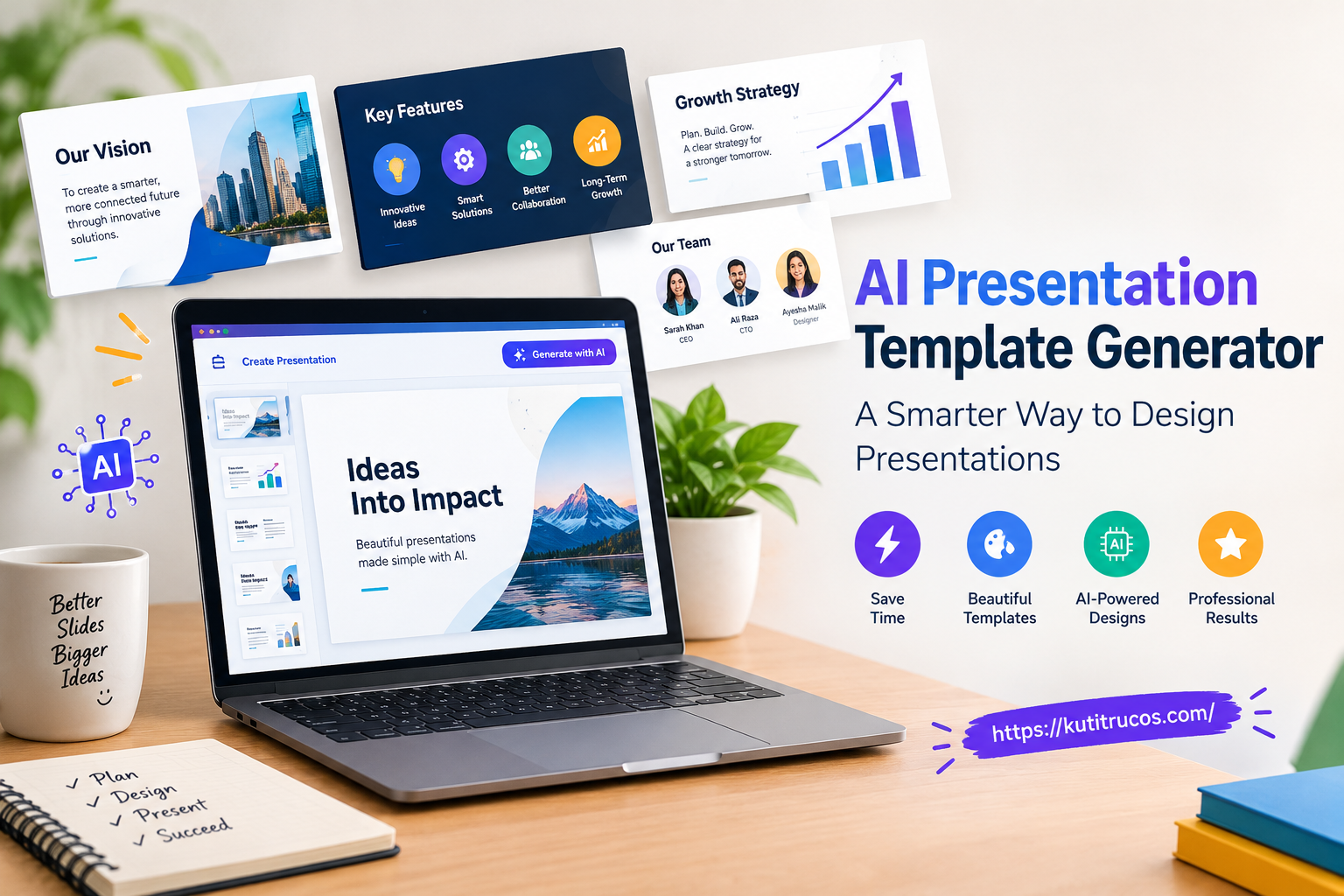
Creating an engaging presentation requires more than placing text and images on slides. A successful presentation needs a clear structure, consistent design, useful visuals, and content that communicates ideas effectively. Whether preparing a business proposal, educational lesson, marketing report, or sales pitch, designing every slide manually can take considerable time and effort.
An AI presentation template generator offers a smarter way to approach this process. By using artificial intelligence to organize information, suggest layouts, and generate initial slide designs, these tools help users transform ideas into professional presentations more efficiently. They also make it easier to maintain a consistent visual style across multiple projects.
Modern presentation workflows can also benefit from interactive presentation tools, which help users create more engaging experiences through clickable elements, audience participation, animations, and other interactive features. Combining AI-assisted design with interactive elements allows presenters to build presentations that are visually appealing, informative, and suitable for different audiences.
What Is an AI Presentation Template Generator?
An AI presentation template generator is a digital tool that uses artificial intelligence to assist with creating presentation outlines, slide layouts, and visual designs. Instead of starting with a blank slide, users can provide a topic, enter a prompt, or supply notes and documents supported by the platform.
The tool then interactive presentation tools draft based on the provided information. Depending on its capabilities, it may suggest slide titles, organize content into sections, recommend images, and arrange information into suitable layouts.
For example, a business professional preparing a presentation about a new marketing strategy might need slides covering business objectives, target customers, promotional channels, budgets, and expected outcomes. An AI-powered tool can help organize these topics into a logical sequence.
Users can then review the draft, edit the content, change the design, and add relevant examples. This approach reduces the amount of manual work required during the initial design stage.
The primary goal is not to eliminate human creativity but to make presentation creation more efficient and flexible.
Why AI Is Changing Presentation Design
Traditional presentation design often involves several repetitive tasks. Users must organize their ideas, choose a suitable template, format headings, adjust images, and ensure that every slide follows a consistent style.
AI tools can simplify many of these activities by generating an initial structure and providing design suggestions.
Faster Presentation Creation
One of the main advantages of AI-powered presentation tools is the ability to generate a starting point quickly.
Users can describe their topic and presentation goals instead of manually creating every slide from scratch. The tool can help divide the subject into sections and suggest content for each part.
This is particularly useful for professionals who regularly prepare reports, proposals, training materials, or client presentations.
Although the generated draft still requires review, it can reduce the time spent organizing information and formatting slides.
Better Content Organization
A presentation should guide the audience from one idea to the next. Poorly organized slides can make even valuable information difficult to understand.
AI tools can help structure content into introductions, main points, supporting details, examples, and conclusions.
For instance, a product presentation might begin with the problem customers face, introduce the product as a potential solution, explain its features, highlight its benefits, and finish with the next steps.
This logical sequence makes the presentation easier to follow.
Consistent Visual Design
Professional presentations usually follow a recognizable visual style.
AI presentation generators can help users maintain consistent fonts, colors, spacing, and slide layouts throughout a deck. This creates a more polished appearance and reduces the need to format every slide individually.
Businesses can further customize their templates with brand colors, logos, and preferred typography.
Flexible Customization
Every presentation has a different purpose. A business report may require charts and statistics, while a classroom lesson may benefit from illustrations and explanatory diagrams.
AI-generated designs can provide a starting point that users adapt according to their specific requirements.
The ability to modify layouts and replace content makes these tools useful for both individual projects and recurring presentation tasks.
How to Create Professional Presentations with AI
Getting useful results from an AI presentation generator begins with a clear plan. The following steps can help users create presentations that are relevant, visually consistent, and easy to understand.
Step 1: Define the Presentation Objective
Start by identifying what the presentation should accomplish.
You might want to explain a complicated topic, introduce a product, present research findings, or persuade potential customers to consider a service.
A clearly defined objective helps determine which information belongs in the presentation and which details can be removed.
Step 2: Understand Your Audience
Consider who will view the slides and what they already know about the subject.
A presentation for senior executives may require concise summaries, business metrics, and recommendations. A presentation for beginners may need definitions, practical examples, and step-by-step explanations.
Understanding your audience helps you choose the right tone, level of detail, and visual approach.
Step 3: Prepare a Detailed Prompt
The quality of the generated presentation often depends on the instructions provided.
Instead of entering a general topic, describe the intended audience, purpose, slide count, and preferred style.
For example:
“Create a 10-slide presentation explaining digital marketing strategies for small businesses. Include an introduction, audience research, content marketing, search engine optimization, social media, email marketing, performance measurement, and recommendations. Use concise text, clear headings, relevant examples, and a modern professional design.”
Detailed instructions give the AI tool a clearer understanding of the desired result.
Step 4: Generate the Initial Slide Structure
After entering the prompt, review the proposed outline and slide sequence.
Check whether the content covers the most important topics and whether the information follows a logical order.
Remove unnecessary sections, combine repeated ideas, and add missing details before focusing on visual design.
Step 5: Customize the Template
Select a design that suits the presentation’s purpose.
Adjust colors, fonts, layouts, images, and spacing to create a consistent visual identity. If the presentation belongs to a company, use its established branding guidelines.
Keep the design simple enough that the audience can focus on the message rather than the decorative elements.
Step 6: Add Interactive Elements Where Appropriate
Some presentations benefit from features that allow the audience to participate rather than simply view slides.
Depending on the platform, users may add clickable navigation, quizzes, polls, embedded media, or links between different sections.
These features can make educational presentations, product demonstrations, and workshops more engaging.
The key is to use interaction when it supports the presentation’s objective, rather than adding effects that distract from the content.
Step 7: Review and Finalize the Presentation
AI-generated content should always be checked before it is shared.
Verify factual claims, statistics, names, and other important details. Review the text for clarity and remove unnecessary wording.
Finally, check that the slides display correctly and that any interactive elements work as intended.
The Role of Interactive Presentation Tools
While AI can simplify the design process, audience engagement remains an important part of effective communication.
Interactive presentation tools can help transform a one-way presentation into an experience where viewers actively participate. These tools may include clickable navigation, audience polls, knowledge checks, embedded videos, or interactive diagrams.
Their usefulness depends on the presentation’s purpose and the audience’s needs.
Encourage Audience Participation
Interactive elements give viewers opportunities to respond to questions, share opinions, or participate in activities.
For example, a presenter introducing a new marketing strategy might ask the audience to vote on which promotional channel they believe would be most effective.
The results can create discussion and help the presenter understand the audience’s perspective.
Improve Learning Experiences
Teachers and trainers can use quizzes, knowledge checks, and clickable diagrams to help learners engage with educational content.
Instead of presenting information continuously, they can pause at important points and invite participants to test their understanding.
This approach can make lessons more active and help identify topics that require further explanation.
Make Complex Information Easier to Explore
Some topics contain multiple processes, categories, or relationships that are difficult to explain on a single slide.
Interactive diagrams or clickable sections can allow viewers to explore specific details when needed.
For example, a company explaining its services could create a main overview slide with clickable categories that lead to additional information about each service.
This structure keeps the main presentation organized while allowing interested viewers to explore further.
Support Product Demonstrations
Businesses can use interactive elements to guide customers through product features, service options, and different use cases.
A product presentation might include a clickable menu that directs viewers to relevant features or demonstrations.
This allows the audience to focus on the information most important to them.
Best Practices for Designing Effective AI Presentations
AI-generated slides can save time, but good design still requires careful decisions. The following practices can improve the final result.
Keep Each Slide Focused
Every slide should communicate one main idea.
Avoid placing several unrelated topics on the same slide. If a subject requires extensive explanation, divide it into smaller sections.
Concise content helps audiences understand the message without struggling through long paragraphs.
Use Visuals Strategically
Images, charts, icons, and diagrams should support the information being presented.
For example, a chart may communicate a sales trend more effectively than a paragraph describing the same figures.
Choose visuals that add meaning instead of including graphics merely to fill empty space.
Maintain Readable Typography
Select fonts that remain readable when projected on a screen or viewed on a smaller device.
Use clear headings, consistent font sizes, and sufficient contrast between text and background.
Avoid using too many different fonts within the same presentation.
Apply Consistent Branding
Businesses should maintain consistent brand colors, typography, logos, and design elements.
A reusable AI-generated template can help teams follow these standards across presentations prepared by different employees.
Consistency makes presentations appear more professional and recognizable.
Use Interactive Features Carefully
Not every presentation requires polls, animations, or clickable elements.
Choose interactive features based on the audience and the subject. An educational workshop may benefit from quizzes, while a brief executive report may work better with straightforward charts and concise recommendations.
Effective interaction should improve understanding rather than interrupt the flow of information.
Common Mistakes to Avoid
Although AI presentation generators offer several advantages, users can still encounter problems when they rely too heavily on automation.
Using generated content without editing: AI may produce generic explanations or include information that does not match the presentation’s purpose. Review and personalize the content.
Adding too much text: Long paragraphs make slides difficult to scan. Focus on the most important points and provide additional explanation verbally or in supporting materials.
Choosing inconsistent designs: Different layouts can be useful, but unrelated fonts, colors, and spacing can make a presentation appear disorganized.
Ignoring the audience: A technically accurate presentation may still be ineffective if it uses unfamiliar terminology or includes unnecessary detail.
Adding unnecessary interactive effects: Too many animations, quizzes, and clickable elements can distract viewers from the main message.
Failing to test the final presentation: Always verify that charts, images, slide transitions, and interactive features work correctly before presenting.
Avoiding these mistakes helps users combine the efficiency of AI with the judgment required for effective communication.
Who Can Benefit from AI Presentation Generators?
AI presentation tools can support a wide range of professional and educational activities.
Business Owners and Entrepreneurs
Business owners can prepare company introductions, investor pitch decks, product presentations, and strategic plans.
Reusable templates help maintain consistent branding and simplify the process of updating presentations as the business grows.
Marketing Professionals
Marketing teams can use AI-generated presentations for campaign proposals, audience research, performance reports, and content strategies.
Interactive elements may also help them demonstrate campaign ideas or encourage client participation during meetings.
Teachers and Students
Educators can create lesson slides, classroom activities, and training materials. Students can use AI to organize research findings and structure academic presentations.
Interactive quizzes and visual explanations can make educational presentations more engaging.
Freelancers and Consultants
Freelancers and consultants frequently prepare proposals, project updates, and client reports.
AI-generated templates can reduce repetitive design work while helping them maintain a professional appearance across different projects.
Corporate Teams
Organizations can use standardized templates for internal communication, employee training, progress reports, and business reviews.
When combined with appropriate collaboration and interactive features, these presentations can make information sharing more consistent and engaging.
How to Choose the Right AI Presentation Tool
The best tool depends on your specific goals, budget, and preferred working style.
Before selecting a platform, evaluate the following features:
- AI content generation: Look for tools that can turn prompts, notes, or supported documents into structured slide content.
- Template customization: Check whether you can adjust colors, fonts, layouts, and branding.
- Interactive capabilities: Determine whether the platform supports quizzes, polls, clickable elements, or embedded media if you need them.
- Editing flexibility: Make sure you can revise generated content and rearrange slides easily.
- Reusable templates: Look for options to save, duplicate, or adapt existing presentation designs.
- Export and sharing: Check whether the presentation can be exported or shared in a format that suits your workflow.
- Collaboration features: Teams may benefit from shared editing, comments, and review options.
- Privacy and security: Review how the platform handles uploaded documents and sensitive business information.
Compare available features with your actual requirements instead of choosing a platform based solely on its visual examples.
Conclusion
An AI presentation template generator provides a practical way to organize ideas, create professional slide layouts, and reduce the time required for presentation design. By automating parts of the initial workflow, these tools allow users to concentrate on content quality, audience needs, and effective communication.
Combining AI-generated layouts with interactive presentation tools can make presentations more flexible and engaging. Features such as clickable navigation, quizzes, polls, and interactive diagrams can encourage participation when they are appropriate for the audience and presentation goals.
The most effective approach is to use AI as a starting point, customize the design carefully, verify the content, and add interactive elements only when they improve understanding. With a clear objective and a reusable template, users can create polished presentations that communicate information efficiently and support a wide range of professional and educational needs.

