

Introduction
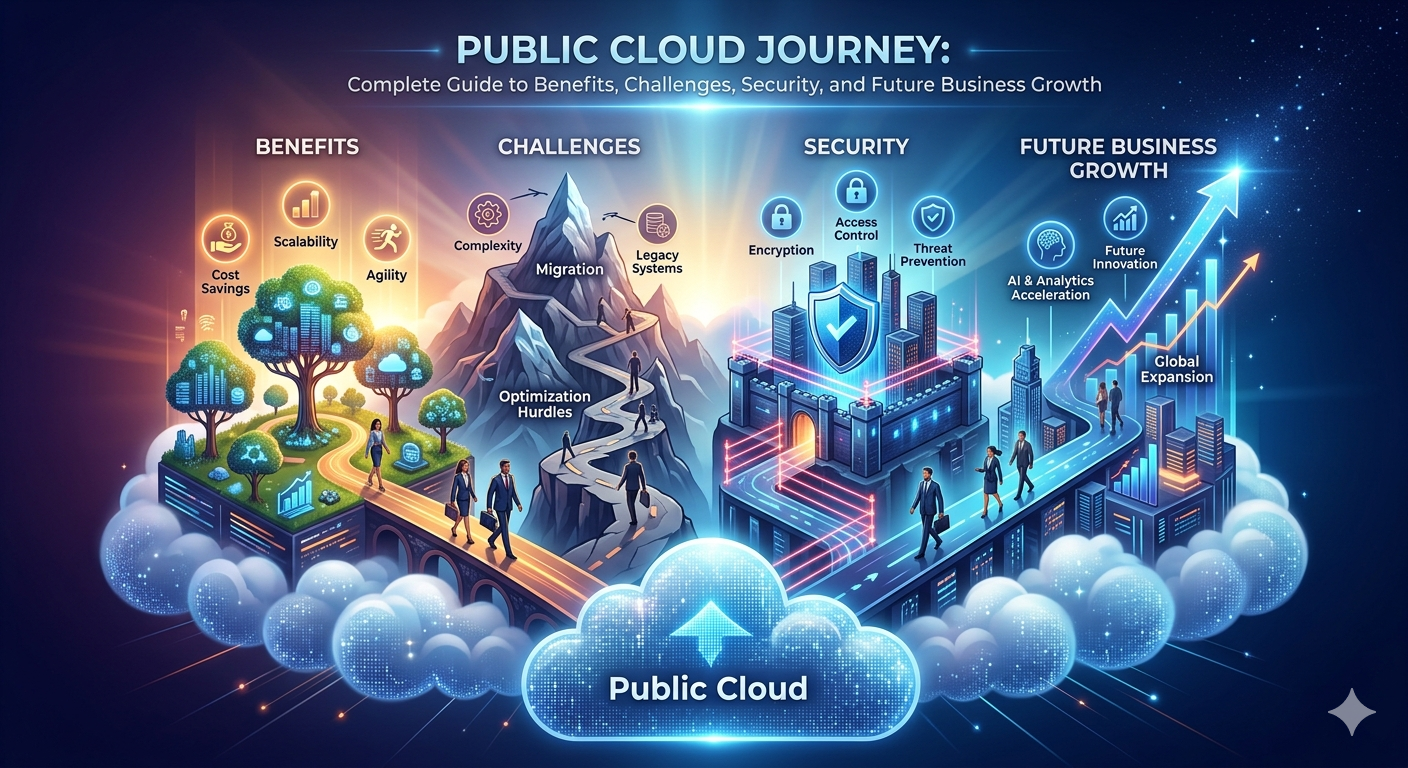
The digital economy has changed how businesses store data, run applications, and scale operations. Organizations that once relied heavily on physical servers and expensive on-site infrastructure are increasingly shifting toward cloud-based environments that provide flexibility, scalability, and cost efficiency.
Among modern cloud computing models, public cloud has become one of the most important technologies driving digital transformation across industries. From startups and small businesses to enterprise organizations and government services, public cloud infrastructure now powers millions of applications and services worldwide.
As businesses in the United States continue investing heavily in digital transformation, searches related to public cloud platforms, cloud security, scalability, and cloud migration continue increasing.
This guide explains what public cloud is, how it works, major advantages and disadvantages, security considerations, cost structures, business use cases, and future industry trends.
What Is Public Cloud?
Public cloud refers to computing resources delivered through internet-based infrastructure managed by cloud service providers.
These resources typically include:
- Computing power
- Storage systems
- Networking services
- Databases
- Development tools
- Application hosting
Instead of owning physical infrastructure, organizations rent resources when needed.
How Public Cloud Works
Public cloud environments operate using shared infrastructure.
The process generally works as follows:
- Providers maintain data centers
- Users purchase resources on demand
- Applications run through internet-connected infrastructure
- Customers pay only for usage
This model reduces hardware ownership requirements.
Why Businesses Are Moving to Public Cloud
Organizations increasingly adopt cloud infrastructure for several reasons.
Lower Infrastructure Costs
Traditional infrastructure requires:
- Server purchases
- Hardware maintenance
- Cooling systems
- Physical facilities
Public cloud reduces many upfront expenses.
Greater Flexibility
Organizations can scale resources rapidly.
Businesses can:
- Increase capacity
- Reduce resources
- Expand globally
- Launch faster
Faster Deployment
New infrastructure can often be deployed quickly.
This improves:
- Innovation speed
- Development cycles
- Operational efficiency
Reduced Maintenance Burden
Cloud providers manage:
- Hardware maintenance
- Updates
- Physical security
- Infrastructure reliability
Key Components of Public Cloud
Several technologies work together.
Compute Services
These provide processing power for applications.
Examples include:
- Virtual machines
- Containers
- Serverless computing
Storage Services
Storage systems manage:
- Files
- Backups
- Databases
- Archives
Networking Services
Networking enables:
- Connectivity
- Traffic management
- Security controls
Database Services
Cloud databases simplify:
- Scaling
- Management
- Availability
Major Benefits of Public Cloud
Organizations adopt cloud solutions because of numerous advantages.
Scalability
Resources can expand rapidly.
Benefits include:
- Handling traffic spikes
- Seasonal flexibility
- Faster growth
Cost Efficiency
Businesses avoid:
- Large capital expenditures
- Excess hardware purchases
Pay-as-you-go pricing improves efficiency.
Accessibility
Teams can access systems from nearly anywhere.
Remote work accelerated this benefit significantly.
Innovation Speed
Developers deploy applications faster.
This improves competitiveness.
Public Cloud Security Explained
Security remains one of the biggest discussion topics.
Modern security includes:
- Encryption
- Identity management
- Monitoring systems
- Access controls
- Threat detection
Security responsibilities are often shared between providers and customers.
Common Security Concerns
Despite improvements, organizations remain cautious.
Data Privacy
Companies worry about sensitive information.
Misconfigured Systems
Human errors remain common risks.
Compliance Requirements
Some industries require strict controls.
Access Management Problems
Poor permissions create vulnerabilities.
Public Cloud vs Private Cloud
These models differ significantly.
Public Cloud
Characteristics:
- Shared infrastructure
- Lower upfront costs
- Faster scaling
Private Cloud
Characteristics:
- Dedicated environments
- Greater customization
- Higher control levels
Organizations choose based on requirements.
Public Cloud vs Hybrid Cloud
Hybrid approaches combine multiple environments.
Advantages include:
- Greater flexibility
- Workload optimization
- Better migration strategies
Many businesses now adopt mixed environments.
Industries Using Public Cloud
Cloud adoption affects nearly every industry.
Healthcare
Uses include:
- Records management
- Analytics
- Telehealth systems
Finance
Applications include:
- Data processing
- Customer services
- Fraud detection
Retail
Businesses use cloud systems for:
- E-commerce
- Inventory management
- Customer analytics
Education
Cloud services support:
- Remote learning
- Collaboration tools
- Research environments
Cloud Migration Challenges
Migration creates opportunities and difficulties.
Legacy Systems
Older infrastructure complicates migration.
Cost Management
Poor planning increases expenses.
Skills Gaps
Cloud expertise remains valuable.
Downtime Risks
Migration requires careful planning.
Public Cloud Cost Models
Pricing structures vary.
Common models include:
Pay-As-You-Go
Users pay only for consumption.
Reserved Resources
Long-term commitments reduce costs.
Subscription Models
Predictable pricing simplifies budgeting.
Why Cloud Skills Are Increasingly Valuable
Cloud adoption created strong demand for technical skills.
Popular skill areas include:
- Cloud architecture
- Security
- Automation
- Infrastructure management
Cloud careers continue growing rapidly.
Emerging Trends in Public Cloud
Several developments continue shaping the market.
Artificial Intelligence Integration
AI increasingly relies on cloud infrastructure.
Multi-Cloud Strategies
Organizations increasingly use multiple providers.
Edge Computing
Processing moves closer to users.
Automation
Infrastructure management becomes increasingly automated.
Environmental Impact and Sustainability
Cloud providers increasingly prioritize:
- Energy efficiency
- Renewable energy
- Lower emissions
- Sustainable infrastructure
Sustainability now influences purchasing decisions.
Future of Public Cloud
Most analysts expect continued expansion.
Future developments likely include:
- Faster infrastructure
- Improved automation
- Greater security
- Better cost optimization
- Increased global adoption
Cloud computing will likely remain central to digital transformation.
Final Thoughts
Public cloud technology fundamentally changed how organizations build, scale, and operate digital services.
Businesses increasingly choose cloud infrastructure because it offers flexibility, scalability, cost efficiency, and faster innovation compared with traditional systems.
Although challenges remain-including security, migration complexity, and cost management-the advantages continue driving adoption throughout the United States and globally.
As digital transformation accelerates, public cloud will remain one of the most important technologies shaping business growth and technological innovation.
Frequently Asked Questions
What is public cloud?
Public cloud provides internet-based computing resources managed by external providers.
Why do businesses use public cloud?
For scalability, flexibility, cost savings, and faster deployment.
Is public cloud secure?
Security depends on both provider protections and customer practices.
What industries use cloud computing?
Nearly all industries including healthcare, retail, finance, and education.
Will cloud adoption continue growing?
Yes. Most organizations continue increasing cloud investments.

