

Introduction
Machine learning has become one of the most important technologies of the modern era. From recommendation systems and voice assistants to healthcare diagnostics and financial forecasting, machine learning is transforming how businesses operate and how people interact with technology.
As organizations generate larger amounts of data, traditional methods of analysis are no longer enough. Machine learning allows computers to identify patterns, make predictions, and improve performance without being explicitly programmed for every scenario.
In the United States, machine learning has become a major driver of innovation across industries including healthcare, finance, retail, manufacturing, cybersecurity, and transportation.
As artificial intelligence continues evolving, machine learning sits at the center of technological advancement, creating opportunities for businesses, researchers, and consumers alike.
This guide explains machine learning, how it works, its types, applications, benefits, challenges, and future trends shaping intelligent systems.
What Is Machine Learning?
Machine learning is a branch of artificial intelligence that allows computer systems to learn from data and improve performance through experience.
Instead of relying entirely on fixed programming instructions, machine learning systems:
- Analyze data
- Identify patterns
- Build predictive models
- Improve decision making
- Adapt over time
Simply put:
Machine learning enables computers to learn from information rather than only following predefined rules.
Why Machine Learning Matters
Modern businesses and organizations generate enormous amounts of data.
Machine learning helps transform this data into useful insights.
Benefits include:
- Faster decision making
- Improved automation
- Better predictions
- Reduced operational costs
- Increased productivity
Without machine learning, analyzing large datasets would become increasingly difficult.
How Machine Learning Works
Machine learning follows several basic steps.
Step 1: Data Collection
Systems gather information from sources such as:
- Databases
- Sensors
- User interactions
- Business transactions
Step 2: Data Preparation
Raw data is cleaned and organized.
This step improves model accuracy.
Step 3: Model Training
Algorithms learn patterns from historical data.
Step 4: Testing and Evaluation
Performance is measured using test datasets.
Step 5: Deployment
The model begins making predictions or decisions.
Step 6: Continuous Improvement
Models improve as additional data becomes available.
Types of Machine Learning
Machine learning contains several major approaches.
Supervised Learning
Supervised learning uses labeled datasets.
Examples include:
- Spam detection
- Price prediction
- Fraud identification
The system learns from known examples.
Unsupervised Learning
Unsupervised learning identifies patterns without labeled outputs.
Examples include:
- Customer segmentation
- Pattern discovery
- Data clustering
Reinforcement Learning
Systems learn through trial and error.
Common applications include:
- Robotics
- Gaming systems
- Autonomous vehicles
Semi-Supervised Learning
Combines labeled and unlabeled data.
This approach reduces training costs.
Machine Learning vs Traditional Programming
Traditional programming follows predefined rules.
Machine learning creates rules automatically through data analysis.
Traditional approach:
Input → Rules → Output
Machine learning approach:
Input + Output Examples → Learning → Predictive Model
This difference makes machine learning more adaptable.
Common Machine Learning Algorithms
Various algorithms power machine learning systems.
Examples include:
- Decision Trees
- Neural Networks
- Linear Regression
- Random Forests
- Support Vector Machines
- Clustering Algorithms
Different problems require different algorithms.
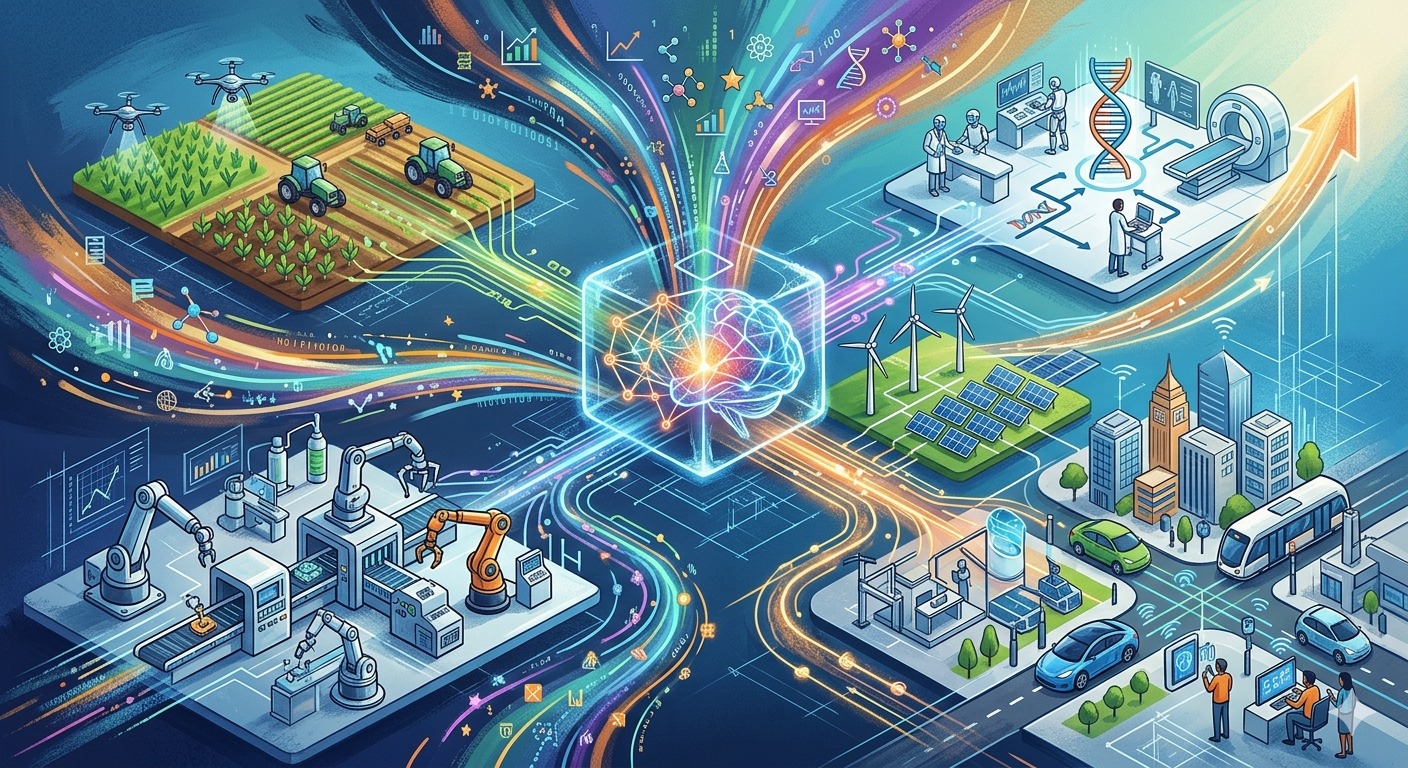
Machine Learning Applications Across Industries
Machine learning affects nearly every major industry.
Healthcare
Applications include:
- Medical image analysis
- Disease prediction
- Drug discovery
- Patient monitoring
Machine learning improves diagnosis speed and accuracy.
Finance
Financial institutions use machine learning for:
- Fraud detection
- Risk analysis
- Trading systems
- Credit scoring
Retail and E-Commerce
Businesses use machine learning for:
- Product recommendations
- Customer analysis
- Inventory optimization
- Pricing strategies
Manufacturing
Factories apply machine learning for:
- Predictive maintenance
- Quality control
- Production optimization
Transportation
Applications include:
- Navigation systems
- Traffic prediction
- Autonomous vehicles
Machine Learning and the United States Economy
The United States has become a global leader in machine learning development.
Reasons include:
- Large technology ecosystems
- Strong research institutions
- Significant investment capital
- High adoption rates
American companies increasingly integrate machine learning into products and services.
Benefits of Machine Learning
Machine learning offers multiple advantages.
Increased Efficiency
Automation reduces repetitive tasks.
Better Predictions
Models identify patterns humans may miss.
Faster Decision Making
Large datasets can be analyzed rapidly.
Improved Customer Experiences
Personalized services improve satisfaction.
Cost Reduction
Automation lowers operational expenses.
Challenges of Machine Learning
Despite benefits, machine learning presents challenges.
Data Quality Problems
Poor data reduces accuracy.
High Development Costs
Advanced systems require significant investment.
Bias and Fairness Issues
Biased datasets create biased predictions.
Privacy Concerns
Large datasets raise security questions.
Skill Shortages
Organizations need specialized talent.
Machine Learning and Big Data
Machine learning depends heavily on data availability.
Large datasets improve:
- Accuracy
- Prediction quality
- Model performance
Machine Learning and Artificial Intelligence
Machine learning is closely connected to AI.
Artificial intelligence is the broader concept.
Machine learning is one method used to create intelligent systems.
Relationship:
Artificial Intelligence → Machine Learning → Deep Learning
Deep Learning and Neural Networks
Deep learning is a specialized area of machine learning.
It uses neural networks inspired by the human brain.
Applications include:
- Image recognition
- Speech processing
- Natural language systems
- Computer vision
Deep learning has accelerated recent AI progress.
Future Trends in Machine Learning
Machine learning continues evolving rapidly.
Generative AI Growth
AI systems increasingly create content automatically.
Edge Computing
Models increasingly operate on local devices.
Automated Machine Learning
Automation reduces development complexity.
Greater Industry Adoption
More industries integrate intelligent systems.
Responsible AI Development
Organizations focus more on fairness and transparency.
Skills Required for Machine Learning Careers
Common skills include:
- Mathematics
- Statistics
- Programming
- Data analysis
- Problem solving
Machine learning careers continue growing rapidly.
Why Machine Learning Will Continue Expanding
Several factors support future growth:
- Increasing data generation
- Automation demand
- Better computing power
- Business competitiveness
- AI adoption
Machine learning increasingly influences decision making everywhere.
Conclusion
Machine learning has become one of the most transformative technologies shaping the modern economy. By enabling systems to learn from data, improve predictions, and automate decisions, machine learning creates new opportunities across industries.
From healthcare and finance to manufacturing and transportation, intelligent systems continue changing how organizations operate.
Although challenges such as bias, privacy, and implementation complexity remain important concerns, the benefits of machine learning continue driving adoption worldwide.
As computing power increases and data availability expands, machine learning will likely become even more integrated into everyday life.
Understanding machine learning is therefore essential for businesses, students, professionals, and anyone preparing for the future digital economy.
Frequently Asked Questions
What is machine learning?
Machine learning is a technology that enables computers to learn patterns from data and improve performance automatically.
Is machine learning the same as artificial intelligence?
No. Machine learning is a subset of artificial intelligence.
What industries use machine learning?
Healthcare, finance, retail, manufacturing, transportation, and many others.
Why is machine learning important?
It improves automation, predictions, efficiency, and decision making.
Will machine learning continue growing?
Yes, increasing data availability and AI adoption suggest continued growth.

