

Introduction
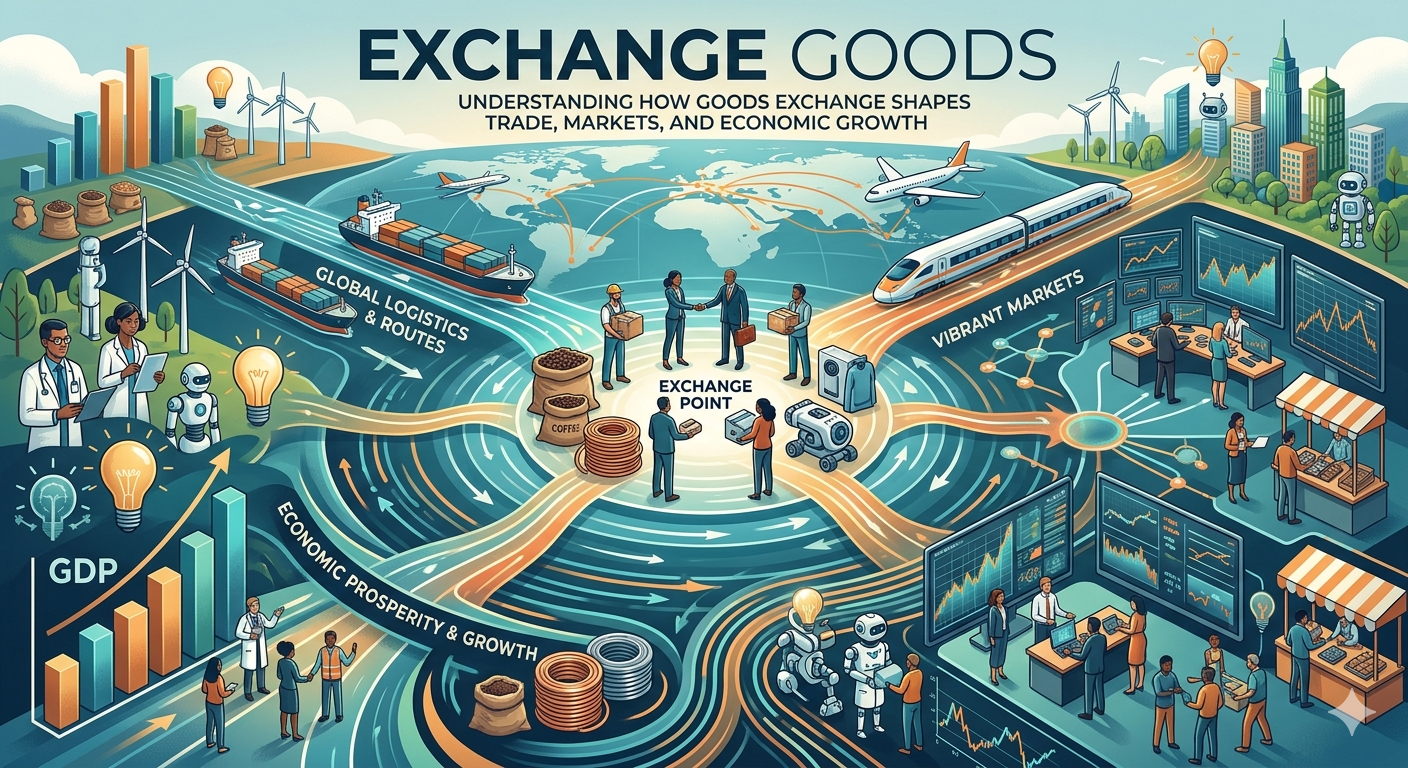
The exchange of goods is one of the oldest and most important activities in human civilization. From ancient barter systems to modern global commerce, exchanging goods allows societies to access products, improve living standards, and support economic growth.
Every economy depends on the movement and exchange of goods. Consumers buy products, businesses trade resources, countries import and export commodities, and digital marketplaces connect buyers and sellers worldwide.
Today, exchange goods systems have evolved dramatically. Modern technology, transportation networks, global trade agreements, and digital platforms have transformed how goods move across cities, countries, and continents.
Understanding how goods exchange works is essential because it influences businesses, employment, production systems, pricing, and economic development.
This guide explains what exchange goods means, how exchange systems function, types of goods exchanges, benefits, challenges, and future trends shaping modern commerce.
What Does Exchange Goods Mean?
Exchange goods refers to the process where products, resources, or commodities are transferred between individuals, businesses, or countries in return for something of value.
This value may include:
- Money
- Services
- Other products
- Digital payments
- Financial assets
Simply put:
Goods exchange allows people and organizations to obtain products they need without producing everything themselves.
Examples include:
- Buying groceries
- International trade
- Retail purchases
- Wholesale transactions
- Online shopping
Goods exchange is therefore a fundamental part of economic activity.
Why Exchange of Goods Is Important
Modern economies depend heavily on goods exchange.
The exchange process creates:
- Economic growth
- Better resource allocation
- Higher productivity
- Increased consumer choice
- Business opportunities
Without exchange systems, economies would become inefficient and isolated.
Historical Development of Goods Exchange
Goods exchange has evolved significantly throughout history.
Barter Systems
Early societies exchanged products directly.
Examples:
- Grain for livestock
- Tools for clothing
- Food for services
Introduction of Money
Money simplified exchange dramatically.
Benefits included:
- Standard pricing
- Easier transactions
- Greater market expansion
Industrial Revolution
Mass production increased the volume of exchanged goods.
Transportation improvements accelerated commerce.
Digital Commerce Era
Today, goods exchange increasingly happens online.
Consumers can purchase products globally within minutes.
How Goods Exchange Works
The exchange process generally follows several steps.
Step 1: Production
Businesses or individuals create goods.
Step 2: Market Availability
Products become available through retailers, wholesalers, or marketplaces.
Step 3: Buyer Demand
Consumers seek products that satisfy needs or wants.
Step 4: Transaction
Payment or value exchange occurs.
Step 5: Distribution
Goods move to consumers or businesses.
This cycle repeats continuously throughout economies.
Types of Goods Exchange
There are multiple forms of exchange systems.
Direct Exchange
Direct exchange involves immediate trading between parties.
Examples:
- Farmer markets
- Person-to-person sales
- Barter transactions
Market Exchange
Most modern commerce uses market exchange systems.
These involve:
- Retail stores
- Online platforms
- Commercial transactions
International Exchange
Countries exchange goods globally.
Examples include:
- Imports
- Exports
- Global supply chains
Digital Exchange Systems
Online marketplaces increasingly dominate product exchanges.
Examples:
- E-commerce platforms
- Digital marketplaces
- Mobile commerce systems
Exchange Goods and Economic Growth
Goods exchange directly supports economic expansion.
Benefits include:
Increased Production
Businesses produce more when demand exists.
Job Creation
Exchange systems create employment opportunities.
Higher Consumer Spending
Spending stimulates economic activity.
Greater Innovation
Competition encourages better products.
Resource Efficiency
Exchange allows specialization and better allocation.
Exchange Goods in the United States Economy
The United States economy depends heavily on large-scale goods exchange.
Important characteristics include:
- Strong consumer spending
- Large retail markets
- Advanced logistics systems
- Extensive international trade
Goods exchange influences nearly every major American industry.
Retail, manufacturing, logistics, technology, and agriculture all depend on efficient exchange systems.
The Role of Supply and Demand in the Exchange of Goods
Supply and demand strongly influence exchange systems.
Supply
Supply refers to product availability.
Higher supply generally increases market options.
Demand
Demand represents consumer interest.
Greater demand often increases prices.
Market Equilibrium
Exchange becomes efficient when supply and demand balance.
International Exchange of Goods
Global commerce relies on international exchange systems.
Countries trade products because:
- Resources vary
- Production costs differ
- Specialization improves efficiency
Examples include:
- Agricultural products
- Technology products
- Energy resources
- Consumer goods
International trade significantly increases economic opportunities.
Benefits of Exchange Goods Systems
Goods exchange creates numerous advantages.
More Consumer Choices
Consumers access wider product selections.
Lower Production Costs
Specialization improves efficiency.
Higher Living Standards
Access to products improves quality of life.
Business Expansion
Companies reach larger markets.
Faster Innovation
Competition encourages product improvements.
Challenges in Goods Exchange Systems
Exchange systems also face difficulties.
Supply Chain Disruptions
Transportation problems create shortages.
Inflation
Rising prices affect purchasing power.
Trade Restrictions
Government policies may limit exchanges.
Market Volatility
Changing demand creates uncertainty.
Logistics Challenges
Moving goods efficiently remains difficult.
Technology Transforming Goods Exchange
Technology has changed commerce dramatically.
E-Commerce Platforms
Consumers increasingly buy products online.
Digital Payments
Electronic payments accelerate transactions.
Artificial Intelligence
AI improves:
- Inventory management
- Pricing systems
- Demand forecasting
Automation
Automation improves logistics and distribution.
Exchange Goods and Business Strategy
Businesses carefully manage exchange systems.
Important strategies include:
- Supply chain optimization
- Inventory control
- Pricing strategies
- Distribution management
Efficient exchange systems often create competitive advantages.
Sustainability and Goods Exchange
Environmental concerns increasingly influence exchange systems.
Businesses now focus more on:
- Sustainable packaging
- Efficient transportation
- Reduced waste
- Circular economy models
Consumers increasingly prefer environmentally responsible products.
Future Trends in Goods Exchange
Several trends will shape future exchange systems.
Faster Digital Commerce
Online shopping continues expanding.
Smart Supply Chains
AI-driven logistics improve efficiency.
Automation Growth
Automation reduces operational costs.
Global Market Expansion
Cross-border commerce continues increasing.
Personalized Commerce
Businesses increasingly tailor products to individual consumers.
Why Exchange Goods Remains Essential
Modern civilization depends on exchange systems.
Goods exchange supports:
- Businesses
- Consumers
- Governments
- Employment
- Economic growth
Without efficient exchange systems, modern economies would struggle to function.
Conclusion
The exchange of goods remains one of the most important activities supporting modern economies. From local transactions to international trade networks, exchange systems connect producers and consumers while driving economic growth.
Understanding how exchange goods systems work provides valuable insight into how modern commerce functions and why trade remains essential for economic development.
The future of goods exchange will likely become even more connected, efficient, and technology-driven.
Frequently Asked Questions
What does exchange goods mean?
Exchange goods means transferring products or commodities between parties in return for value.
Why is exchanging goods important?
It supports trade, economic growth, consumer choice, and business activity.
What is the difference between barter and modern exchange?
Barter uses direct product trading while modern exchange usually uses money.
How does technology affect goods exchange?
Technology improves speed, efficiency, logistics, and digital commerce.
Why is international exchange important?
International exchange allows countries to specialize and access products from global markets.

