

Introduction
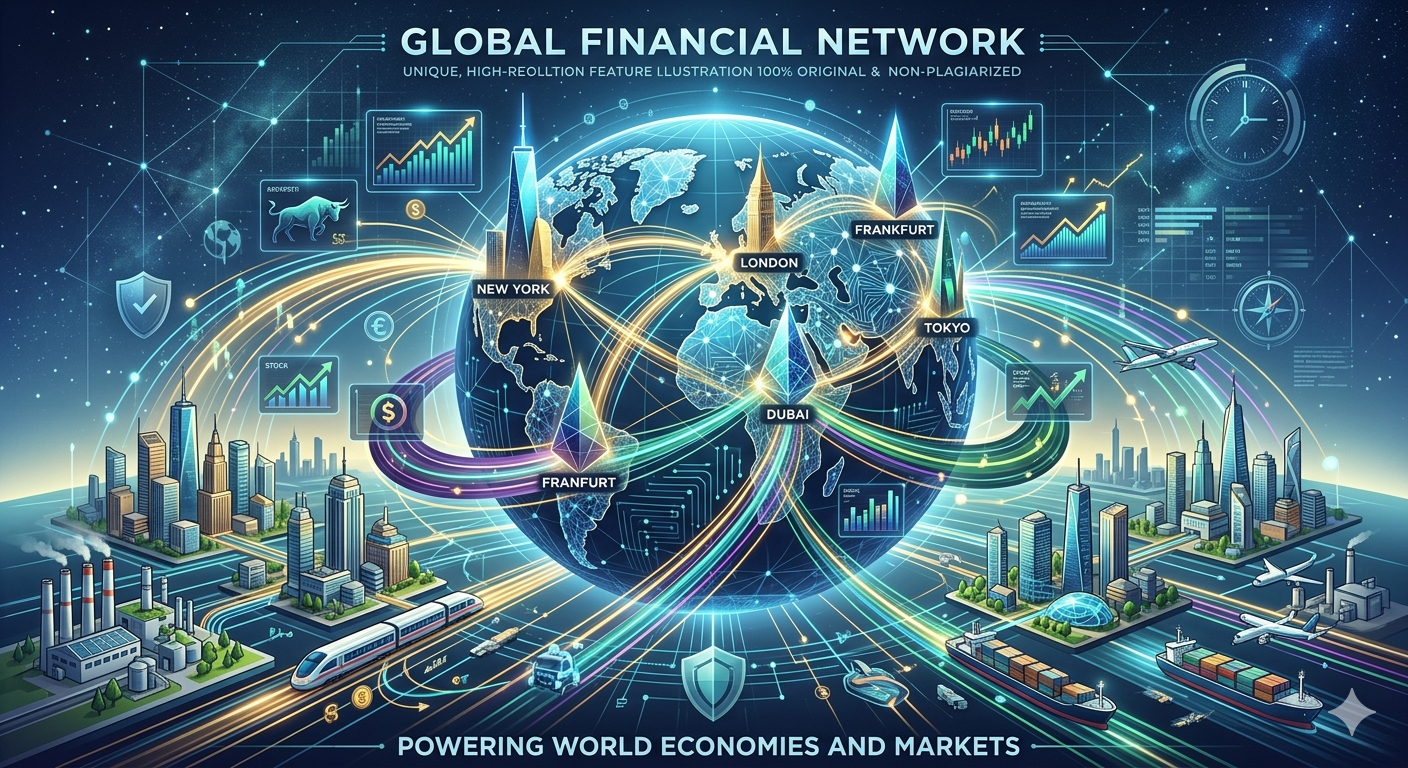
The global financial system is one of the most powerful structures shaping modern economies. Every day, trillions of dollars move across countries through banks, businesses, investors, governments, and digital payment networks. From international trade and stock markets to personal banking and business investments, almost every financial activity is connected to this enormous system.
Without a functioning global financial system, modern economies would struggle to support trade, investment, technological innovation, and economic growth. Countries rely on international financial networks to exchange goods, transfer capital, stabilize markets, and manage economic development.
As globalization expands and digital technology transforms finance, understanding the global financial system has become increasingly important for businesses, investors, students, and consumers.
This guide explains how the global financial system works, its components, functions, challenges, risks, and future developments shaping the world economy.
What Is the Global Financial System?
The global financial system refers to the worldwide network of financial institutions, markets, regulations, technologies, and participants that facilitate the movement of money and capital across countries.
It includes:
- Banks
- Financial markets
- Investment institutions
- Governments
- Central banks
- Payment systems
- Financial regulations
The system enables individuals, companies, and governments to borrow, invest, save, trade, and transfer money internationally.
Simply put, it acts as the infrastructure that keeps global finance moving.
Why the Global Financial System Matters
Modern economies depend heavily on efficient financial systems.
The global financial system supports:
- International trade
- Economic growth
- Capital investment
- Currency exchange
- Business expansion
- Consumer finance
Without financial connectivity, global commerce would become slow, expensive, and highly inefficient.
Major Components of the Global Financial System
Several interconnected components work together to create global financial operations.
Financial Institutions
Examples include:
- Commercial banks
- Investment banks
- Insurance companies
- Asset management firms
- Credit institutions
These institutions provide financial services and move capital throughout economies.
Financial Markets
These markets include:
Stock Markets
Companies raise money while investors purchase ownership shares.
Bond Markets
Governments and businesses borrow funds.
Currency Markets
Foreign exchange markets facilitate global trade.
Commodity Markets
Resources such as energy and agricultural products are traded globally.
Central Banks
Central banks manage national monetary systems.
Their responsibilities include:
- Controlling inflation
- Managing interest rates
- Stabilizing currencies
- Regulating banking systems
Central banks strongly influence global financial conditions.
International Payment Systems
Financial systems require infrastructure for transactions.
Payment systems help:
- Transfer funds globally
- Process transactions
- Support banking operations
These systems allow international financial activity to function efficiently.
How the Global Financial System Works
The system operates through constant interactions between participants.
A simplified process looks like this:
Step 1: Capital Generation
Individuals, businesses, and governments generate savings or investment funds.
Step 2: Financial Intermediation
Banks and financial institutions distribute capital.
Step 3: Investment and Lending
Funds are used for:
- Business expansion
- Infrastructure projects
- Consumer borrowing
- Government spending
Step 4: Economic Activity
Investment creates production, employment, and economic growth.
Step 5: Continuous Financial Circulation
Money continues circulating through markets and institutions.
Role of the Global Financial System in International Trade
Global trade depends heavily on financial infrastructure.
Financial systems help businesses:
- Exchange currencies
- Finance imports and exports
- Reduce transaction risk
- Access international capital
Without global finance, international commerce would become much more difficult.
The United States and the Global Financial System: An Overview
Several reasons explain this importance:
- Large financial markets
- Strong banking institutions
- Global investment influence
- High international trade participation
The US financial sector significantly influences worldwide financial conditions.
Changes in American financial policies often affect international markets.
Functions of the Global Financial System
The financial system performs several critical functions.
Capital Allocation
Money moves from savers to borrowers.
This supports:
- Business growth
- Innovation
- Infrastructure development
Risk Management
Financial institutions help manage risks through:
- Insurance
- Diversification
- Financial instruments
Price Discovery
Markets determine prices through supply and demand.
Liquidity Creation
Financial systems allow assets to be converted into cash quickly.
Economic Stability Support
Financial institutions help maintain economic confidence.
Benefits of a Strong Global Financial System
An effective system creates many advantages.
Faster Economic Growth
Capital moves efficiently to productive areas.
Increased Investment Opportunities
Investors access global markets.
Business Expansion
Companies can scale internationally.
Consumer Financial Access
Individuals gain access to loans, mortgages, and credit.
Greater Innovation
Funding supports technological progress.
Risks Within the Global Financial System
Large interconnected systems also create risks.
Financial Crises
Problems in one region can spread globally.
Market Volatility
Financial markets fluctuate constantly.
Currency Instability
Exchange rate changes create uncertainty.
Debt Problems
Excessive borrowing creates systemic risk.
Cybersecurity Threats
Digital financial systems face growing cyber risks.
Globalization and Financial Integration
Globalization has accelerated financial interconnectedness.
Today:
- Capital moves faster
- Investments cross borders easily
- Businesses operate internationally
- Consumers access global services
Financial integration creates opportunities but also increases complexity.
Technology Transforming Global Finance
Technology is reshaping financial systems rapidly.
Artificial Intelligence
AI improves:
- Risk analysis
- Fraud detection
- Investment strategies
Digital Payments
Cashless transactions continue growing globally.
Blockchain Technology
Blockchain may improve:
- Transparency
- Efficiency
- Security
Cloud Computing
Cloud systems support large-scale financial operations.
Future Trends in the Global Financial System
Several developments will shape future financial systems.
Greater Digitalization
Financial services will become increasingly online.
Central Bank Digital Currencies
Governments are exploring digital versions of national currencies.
Increased Automation
Automation will reduce operational costs.
Sustainable Finance Growth
Environmental and social investing continues expanding.
Greater Financial Inclusion
Technology may provide access to underserved populations.
Challenges Facing the Future Financial System
Future growth also creates challenges.
These include:
- Regulatory complexity
- Cybersecurity risks
- Geopolitical uncertainty
- Climate-related financial risks
- Economic inequality
Managing these challenges will require global coordination.
Why Understanding the Global Financial System Matters
Even individuals who never invest directly are affected by financial systems.
Financial systems influence:
- Employment
- Prices
- Interest rates
- Housing markets
- Consumer spending
Understanding finance helps individuals make better economic decisions.
Conclusion
The global financial system is one of the most important structures supporting modern civilization. It connects countries, businesses, investors, and consumers through networks of banks, markets, institutions, and technology.
Without this system, global trade, investment, innovation, and economic growth would become significantly more difficult.
As technology, globalization, and digital finance continue transforming economies, financial systems will become even more interconnected and influential.
For businesses, investors, students, and everyday consumers, understanding how global finance works is increasingly valuable in an economy that is more connected than ever before.
Ultimately, the future of the world economy depends heavily on the stability, efficiency, and adaptability of the global financial system.
Frequently Asked Questions
What is the global financial system?
It is the worldwide network of financial institutions, markets, regulations, and technologies that move money and capital globally.
Why is the global financial system important?
It supports trade, investments, economic growth, and financial stability.
How does globalization affect financial systems?
Globalization increases financial integration and international capital movement.
What are the biggest risks in global finance?
Financial crises, debt problems, cyber risks, and market volatility are major concerns.
What is the future of global finance?
The future is expected to include more digital payments, automation, AI integration, and financial innovation.

