

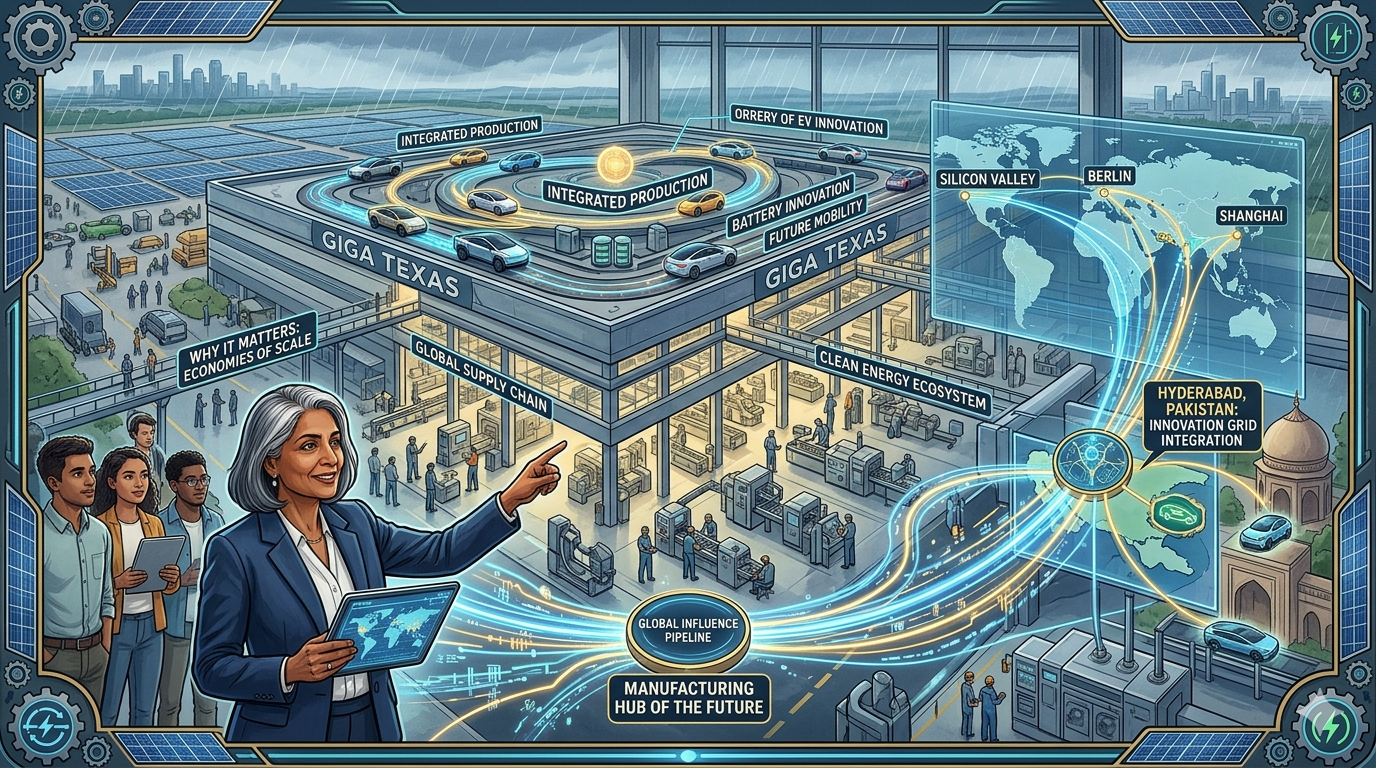
Electric vehicles moved from niche products to mainstream transportation, forcing manufacturers to rethink how cars are designed, produced, and delivered. One of the biggest examples of this shift is the massive manufacturing facility commonly known as Giga Texas Factory.
Built at an enormous scale and designed to support next-generation vehicle production, Giga Texas has become one of the most discussed industrial projects in the automotive world. Beyond simply building vehicles, the factory represents changes in manufacturing strategy, supply chains, automation, and the future direction of electric transportation.
Many people know the factory by name but may not fully understand why it receives so much attention.
This guide explores what Giga Texas Factory is, why it matters, how it operates, and what role it plays in the future of vehicle production.
What Is Giga Texas Factory?
The term Giga Texas Factory generally refers to the large manufacturing facility operated by Tesla in the area around Austin.
The facility was created to support large-scale manufacturing operations for electric vehicles and related technologies.
Its goals include:
- Increasing production capacity
- Improving manufacturing efficiency
- Supporting supply chain integration
- Expanding electric vehicle output
- Reducing logistics complexity
The factory quickly became one of the most significant industrial developments in modern automotive manufacturing.
Why Large Manufacturing Facilities Matter
Modern vehicle production requires enormous coordination.
Manufacturers must manage:
- Raw materials
- Batteries
- Electronics
- Supply chains
- Software integration
- Assembly processes
Large facilities help companies centralize operations and reduce inefficiencies.
Bigger factories can create advantages through:
- Higher production capacity
- Faster manufacturing
- Reduced transportation costs
- Greater automation opportunities
Scale matters significantly in automotive production.
Why Texas Became an Attractive Location
Location plays a major role in manufacturing decisions.
Several factors make Texas attractive for industrial expansion.
These may include:
Transportation Infrastructure
Large manufacturing operations require strong transportation networks.
Land Availability
Large-scale manufacturing requires significant physical space.
Business Environment
Operational costs and logistics influence decisions.
Choosing the right location affects long-term efficiency.
How Modern Vehicle Factories Differ From Older Manufacturing Plants
Traditional automotive factories focused primarily on assembly.
Modern facilities operate differently.
Today’s factories often integrate:
- Software systems
- Robotics
- Advanced automation
- Battery production
- Real-time manufacturing data
- Vertical integration strategies
Manufacturing increasingly depends on technology rather than labor alone.
Vehicle Production Inside Large EV Factories
Electric vehicle production differs from conventional manufacturing in several ways.
Major production areas may include:
Body Construction
Vehicle structures are assembled using automated systems.
Battery Integration
Battery systems become central components.
Paint Operations
Protective coatings and finishes are applied.
Final Assembly
Interior systems, electronics, and software integration occur.
Testing Procedures
Vehicles undergo inspections before delivery.
Large-scale production requires coordination across thousands of processes.
Automation and Robotics in Manufacturing
Automation plays a major role inside modern factories.
Benefits may include:
- Faster production
- Consistent quality
- Reduced repetitive labor
- Improved efficiency
Robotics are commonly used for:
- Welding
- Material handling
- Assembly processes
- Inspection tasks
Automation does not eliminate human involvement.
Instead, factories increasingly combine human workers with advanced machinery.
Why Battery Production Is So Important
Electric vehicles depend heavily on battery technology.
Battery manufacturing affects:
- Vehicle cost
- Production speed
- Range capabilities
- Supply chain reliability
Large facilities increasingly attempt to integrate battery operations closer to vehicle assembly.
This reduces transportation complexity and improves coordination.
Supply Chain Advantages of Large Facilities
Large integrated facilities may help by:
- Reducing transportation distances
- Increasing operational control
- Improving inventory management
- Reducing delays
Supply chain efficiency strongly influences production stability.
Economic Impact on Local Communities
Large factories affect more than vehicle production.
Economic effects often include:
Employment Opportunities
Factories create direct and indirect jobs.
Infrastructure Development
Roads and services may expand.
Local Business Growth
Nearby businesses often benefit from increased activity.
Tax Revenue Effects
Large projects may influence local economies.
Industrial expansion frequently reshapes surrounding communities.
Environmental Discussions Around Large Manufacturing Projects
Large industrial projects often generate environmental discussions.
Common topics include:
- Energy consumption
- Water usage
- Land development
- Sustainability goals
Electric vehicle production aims to support cleaner transportation, but manufacturing itself still requires substantial resources.
Balancing growth and sustainability remains important.
Why Manufacturing Scale Matters for Electric Vehicles
Scaling production is critical because electric vehicle demand continues growing.
Higher production capacity may contribute to:
- Increased availability
- Faster deliveries
- Lower production costs
- Greater market expansion
Manufacturing scale often determines whether new technologies become mainstream.
Technology Integration Beyond Vehicle Assembly
Modern factories increasingly rely on digital systems.
Examples include:
- Production monitoring software
- AI-assisted quality checks
- Predictive maintenance systems
- Data-driven manufacturing decisions
Manufacturing now combines software and hardware more than ever before.
Challenges Large Factories Face
Despite advantages, large facilities face challenges.
Common issues include:
Supply disruptions
Parts shortages can slow production.
Workforce challenges
Hiring and training thousands of employees requires time.
Production scaling difficulties
Increasing output while maintaining quality is difficult.
Infrastructure requirements
Large facilities need extensive support systems.
Rapid expansion creates operational complexity.
How Large Factories Influence Competition
When manufacturers expand production, competitors often respond.
This creates:
- Faster innovation
- Higher production investment
- Technology improvements
- More consumer choices
Competition influences the pace of industry growth.
Future Expansion Possibilities
Large manufacturing projects rarely remain static.
Future developments may include:
- Additional production lines
- Expanded battery operations
- New technologies
- Increased automation
Factories often evolve as market demands change.
Why Consumers Care About Manufacturing Facilities
Consumers may wonder why factory discussions matter.
Manufacturing directly affects:
- Vehicle availability
- Pricing
- Delivery times
- Product quality
- Technology development
Production capacity influences the ownership experience.
The Bigger Picture of Giga Texas Factory
The importance of Giga Texas goes beyond buildings and machinery.
It reflects broader trends such as:
- Electric vehicle growth
- Advanced manufacturing
- Supply chain transformation
- Increased automation
- Industrial modernization
Factories increasingly become technology centers rather than simple production plants.
Final Thoughts
Giga Texas Factory represents more than a large industrial project. It demonstrates how automotive manufacturing is changing as electric vehicles become more common and production methods continue evolving.
Large-scale facilities influence economics, employment, technology, supply chains, and future transportation systems.
Whether viewed from a business perspective, technology perspective, or automotive perspective, the rise of massive manufacturing hubs shows how rapidly the transportation industry continues to transform.
As production scales and technology advances, facilities like Giga Texas will likely remain important parts of the conversation around the future of mobility.

