

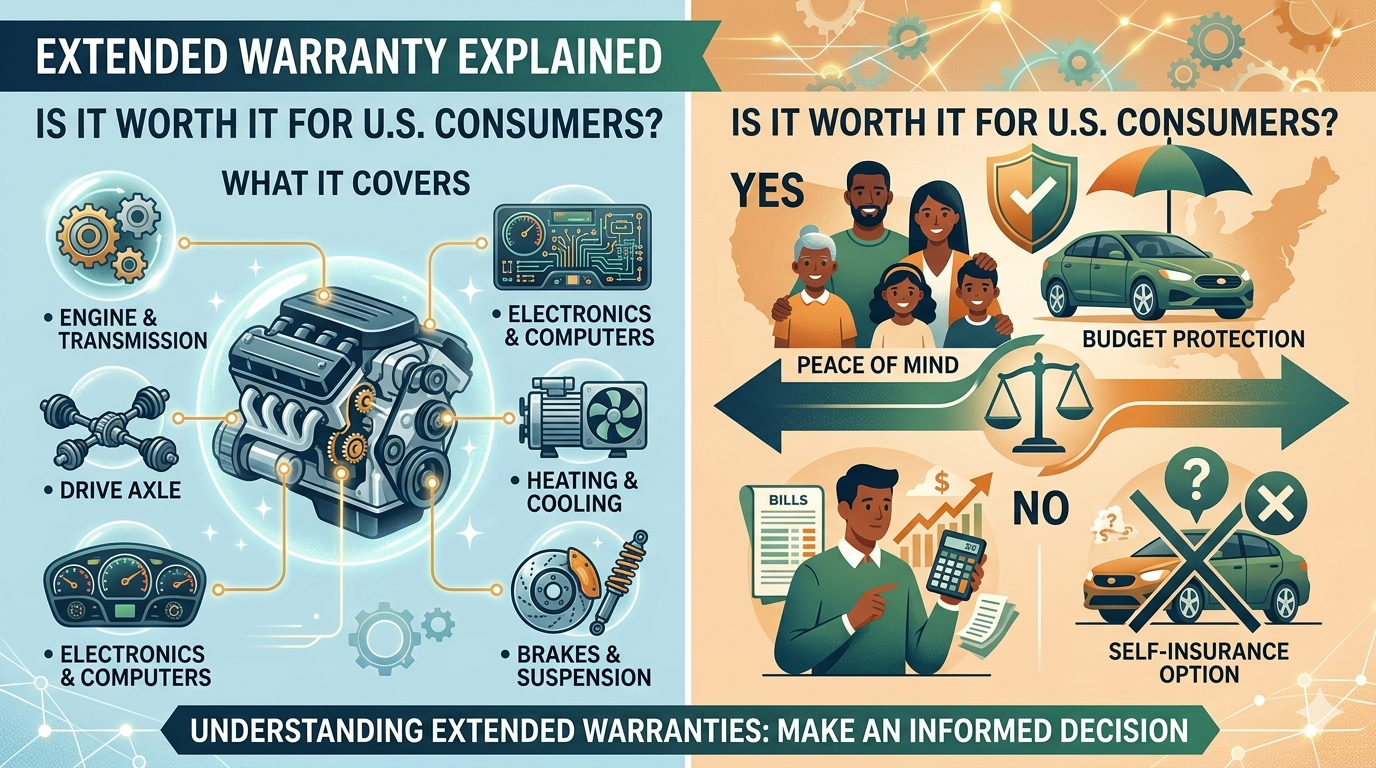
Buying a vehicle in the United States is a major financial decision. With rising car prices, expensive repair costs, and increasingly complex automotive technology, many drivers look for ways to protect themselves from unexpected expenses. One of the most common solutions is an extended warranty.
But despite its popularity, many people still ask the same question: Is an extended warranty really worth it?
This guide breaks down what extended warranties are, how they work, what they cover, and whether they make sense for your situation.
What Is an Extended Warranty?
An extended warranty is a service contract that helps cover the cost of certain vehicle repairs after the manufacturer’s original warranty expires.
The main idea is simple: instead of paying large repair bills out of pocket, you pay a monthly or upfront fee to reduce financial risk in the future.
However, it’s important to understand that an extended warranty is not technically a “warranty” in the legal sense. It is a vehicle service contract with specific terms, conditions, and limitations.
Why Extended Warranties Are Popular in the U.S.
American drivers are keeping their vehicles longer than ever before. At the same time, modern vehicles are becoming more advanced and expensive to repair.
Here are some key reasons extended warranties are widely used:
1. Rising Repair Costs
Even basic repairs can cost hundreds or thousands of dollars. Complex components like transmissions, turbochargers, and electronic modules can lead to even higher expenses.
2. Complex Vehicle Technology
Today’s vehicles include:
- Advanced driver assistance systems (ADAS)
- Computer-controlled engines
- Hybrid and electric power systems
- Sensitive electronic sensors
While these features improve safety and performance, they also increase repair complexity.
3. Long-Term Vehicle Ownership
Many Americans now keep vehicles for 8-15 years. Once the factory warranty expires, the financial risk of repairs increases significantly.
What Does an Extended Warranty Cover?
However, most extended warranties fall into a few main categories.
Powertrain Coverage
This is usually the most basic level of protection. It covers major mechanical components such as:
- Engine
- Transmission
- Driveshaft
- Differential
Powertrain plans are generally more affordable but offer limited protection.
Stated Component Coverage
This type of plan lists exactly what is covered. Common components may include:
- Cooling system
- Fuel system
- Air conditioning
- Electrical components
- Steering and suspension parts
Anything not listed is usually not covered.
Comprehensive Coverage
Often called “bumper-to-bumper” protection, this type of plan covers most parts of the vehicle except exclusions listed in the contract.
Typically excluded items include:
- Routine maintenance parts (brakes, tires, oil changes)
- Cosmetic damage
- Wear-and-tear items
- Pre-existing issues
This is the most extensive but also the most expensive option.
What Extended Warranties Do NOT Cover
One of the biggest misunderstandings about extended warranties is that they cover everything. In reality, there are many exclusions.
Common exclusions include:
- Regular maintenance services
- Brake pads and rotors
- Tires and alignment
- Battery replacement (in some cases)
- Damage from accidents or neglect
- Aftermarket modifications
Reading the contract carefully is essential before purchasing any plan.
How Much Does an Extended Warranty Cost?
The cost of an extended warranty varies widely depending on several factors:
- Vehicle make and model
- Age and mileage
- Coverage level
- Deductible amount
- Contract length
On average in the U.S., extended warranties may range from:
- $1,000 to $4,000 for basic coverage
- $3,000 to $7,000+ for comprehensive plans
Monthly payment options are often available, making them easier to budget.
However, the total cost should always be compared against potential repair risks.
Pros of Buying an Extended Warranty
Extended warranties can offer several advantages, especially for certain drivers.
Financial Protection
A single major repair – such as a transmission replacement – can cost thousands of dollars. An extended warranty helps reduce this financial shock.
Peace of Mind
Knowing that unexpected repairs may be covered provides confidence, especially for drivers who rely heavily on their vehicles.
Budget Predictability
Instead of unpredictable repair bills, drivers pay a fixed monthly or upfront cost.
Added Benefits
Some plans include:
- Roadside assistance
- Rental car reimbursement
- Trip interruption coverage
- Towing services
Cons of Extended Warranties
Despite the benefits, extended warranties are not perfect for everyone.
High Overall Cost
Some drivers may end up paying more in premiums than they receive in repair benefits.
Coverage Limitations
Not all repairs are covered, and exclusions can be strict.
Claim Approval Issues
Some customers report difficulties in claim approvals due to contract conditions or maintenance requirements.
Overlapping Coverage
New vehicles often already have manufacturer warranties, making extended coverage unnecessary in early years.
When Is an Extended Warranty Worth It?
An extended warranty may be a good choice if:
- You plan to keep your car long-term
- Your vehicle has high repair costs
- You want predictable monthly expenses
It is especially useful for luxury vehicles or models known for expensive repairs.
When You Might Not Need One
- Your car is new and under factory warranty
- You have savings set aside for repairs
- Your vehicle has a strong reliability record
In these cases, self-insuring through savings may be more cost-effective.
Tips for Choosing the Right Extended Warranty
Before buying any plan, consider the following:
1. Compare Multiple Providers
Do not rely on a single quote. Compare coverage, pricing, and reputation.
2. Read the Fine Print
Understand exclusions, deductibles, and claim procedures.
3. Check Claim Reputation
Customer experiences matter. Look for consistent feedback on claim approvals and service quality.
4. Understand Deductibles
Lower monthly payments may come with higher out-of-pocket costs later.
5. Avoid Pressure Sales
Take time to evaluate options instead of making quick decisions.
Final Thoughts
An extended warranty can be a valuable financial tool for some drivers, but it is not a one-size-fits-all solution. The real value depends on your vehicle, driving habits, financial situation, and risk tolerance.
Before purchasing, it is important to compare providers, understand contract terms, and evaluate whether the potential repair savings justify the cost.
For many U.S. consumers, the best decision comes down to balance – between peace of mind and practical financial planning.

