

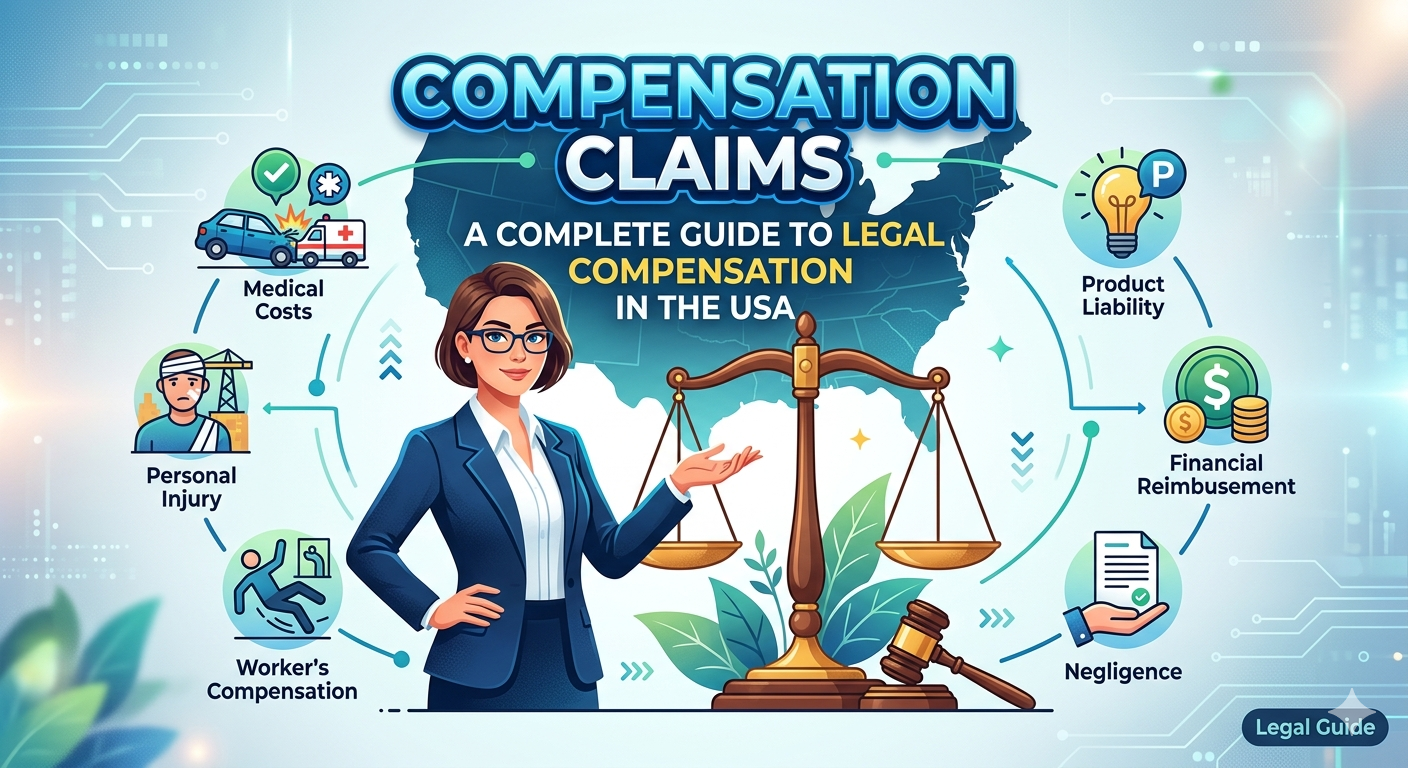
Accidents and unexpected injuries can change a person’s life within seconds. Medical expenses, emotional stress, lost wages, and long recovery periods often create financial pressure for victims and their families. In such situations, compensation claims play an important role in helping injured individuals recover financial support and justice.
Understanding how compensation claims work is essential for anyone dealing with personal injury, workplace accidents, medical negligence, or property damage. In the United States, compensation laws are designed to protect victims and ensure they receive fair financial recovery for losses caused by another party’s negligence.
This guide explains everything about compensation claims, including their types, legal process, benefits, and why hiring an experienced lawyer can improve the chances of success.
What Are Compensation Claims?
A compensation claim is a legal request made by an individual seeking financial recovery after suffering injury, loss, or damage due to another party’s actions or negligence. These claims are commonly filed against individuals, companies, employers, insurance providers, or organizations responsible for causing harm.
Compensation claims are intended to cover different types of losses, including:
- Medical bills
- Hospital expenses
- Lost income
- Rehabilitation costs
- Emotional suffering
- Property damage
- Future treatment expenses
The purpose of compensation is to help victims return to financial stability after an accident or injury.
Common Types of Compensation Claims
Personal Injury Claims
Personal injury claims are among the most common legal compensation cases in the USA. These claims arise when someone suffers injuries because of another person’s careless behavior.
Examples include:
- Car accidents
- Motorcycle crashes
- Slip and fall incidents
- Pedestrian accidents
- Dog bites
- Defective product injuries
Victims can seek compensation for medical treatment, pain and suffering, and lost wages.
Workplace Injury Claims
Employees injured during work may qualify for workers’ compensation benefits. Workplace accidents can happen in construction sites, factories, warehouses, offices, and industrial environments.
Common workplace injuries include:
- Back injuries
- Head trauma
- Burns
- Fractures
- Repetitive strain injuries
Workers’ compensation claims help employees recover financial support while they are unable to work.
Medical Negligence Claims
Medical malpractice or negligence occurs when healthcare professionals fail to provide proper treatment or make serious mistakes during medical procedures.
Examples include:
- Surgical errors
- Misdiagnosis
- Delayed treatment
- Medication mistakes
- Birth injuries
These claims can be complex and usually require strong legal evidence and expert medical opinions.
Road Traffic Accident Claims
Road accidents are a leading cause of injury claims in the United States. Drivers, passengers, cyclists, and pedestrians injured in traffic accidents may file compensation claims against responsible parties.
Compensation can include:
- Vehicle repair costs
- Medical treatment expenses
- Loss of earnings
- Emotional distress damages
Wrongful Death Claims
When negligence causes the death of a family member, surviving relatives may file a wrongful death claim. These claims help families recover financial support after losing a loved one.
Damages may include:
- Funeral expenses
- Loss of future income
- Emotional suffering
- Loss of companionship
Why Compensation Claims Are Important
Compensation claims provide financial relief during difficult times. Serious injuries often result in long hospital stays, surgeries, rehabilitation, and inability to work. Without compensation, victims may struggle to manage daily expenses and medical bills.
A successful claim can help individuals:
- Recover financially
- Access quality medical treatment
- Support their families
- Reduce emotional stress
- Secure future financial stability
Compensation laws are designed to hold negligent parties accountable and protect victims’ rights.
The Compensation Claim Process
Initial Consultation
The process usually begins with a consultation with a personal injury lawyer or compensation specialist. During this stage, the attorney reviews accident details, medical reports, witness statements, and available evidence.
Most law firms offer free consultations to evaluate whether the claim has legal merit.
Investigation and Evidence Collection
After accepting the case, lawyers gather important evidence to support the claim. This may include:
- Medical records
- Police reports
- CCTV footage
- Witness statements
- Expert opinions
- Accident scene photographs
Strong evidence increases the chances of receiving fair compensation.
Negotiation With Insurance Companies
Insurance companies often attempt to reduce settlement amounts or reject claims. Experienced lawyers negotiate with insurers to ensure victims receive fair compensation.
Many compensation cases are resolved through settlements without going to court.
Filing a Lawsuit
If negotiations fail, the lawyer may file a lawsuit and take the case to court. During litigation, both sides present evidence before a judge or jury.
The court then decides whether compensation should be awarded and determines the settlement amount.
Factors That Affect Compensation Amounts
Several factors influence the value of a compensation claim, including:
Severity of Injuries
Serious injuries usually result in higher compensation because they involve expensive medical treatment and long recovery periods.
Medical Expenses
Current and future medical costs are important when calculating compensation.
Lost Income
Victims unable to work due to injuries may recover compensation for lost wages and reduced earning capacity.
Emotional Suffering
Pain, stress, anxiety, and emotional trauma can also impact compensation amounts.
Evidence Strength
Strong evidence significantly improves the chances of a successful claim.
Importance of Hiring a Compensation Lawyer
Many people underestimate the importance of professional legal representation. Insurance companies often use legal teams to protect their financial interests, making it difficult for victims to negotiate fair settlements alone.
An experienced compensation lawyer can:
- Protect legal rights
- Handle paperwork and deadlines
- Gather strong evidence
- Negotiate settlements
- Represent clients in court
- Maximize compensation amounts
Legal professionals understand state laws and legal procedures, helping clients avoid mistakes that may weaken their claims.
Tips for a Successful Compensation Claim
Victims can improve their chances of success by following important steps after an accident:
Seek Medical Attention Immediately
Medical records are critical evidence in compensation cases. Delayed treatment can weaken a claim.
Collect Evidence
Take photographs, gather witness details, and save medical reports and receipts.
Avoid Admitting Fault
Do not admit responsibility before consulting a lawyer.
Follow Legal Advice
Working closely with an experienced attorney helps strengthen the case.
File Claims Quickly
Missing deadlines may prevent victims from receiving compensation.
Challenges in Compensation Claims
Some claims become difficult because of:
- Lack of evidence
- Insurance company disputes
- Shared fault arguments
- Delayed medical treatment
- Complex legal procedures
Professional legal guidance can help overcome these challenges and improve case outcomes.
Future of Compensation Claims in the USA
The legal industry continues to evolve with new technologies and digital systems. Many law firms now use online consultations, digital case tracking, and electronic evidence management to improve efficiency.
As awareness about legal rights increases, more victims are seeking professional legal support for compensation claims.
Final Thoughts
Compensation claims are an essential part of the legal system in the United States. They provide financial protection and justice for victims suffering from injuries, workplace accidents, medical negligence, and wrongful death situations.
Understanding the claims process, gathering strong evidence, and hiring an experienced lawyer can make a major difference in the outcome of a case. Whether the injury is minor or life-changing, pursuing fair compensation helps victims rebuild their lives and recover from financial hardship.
For anyone dealing with an accident or injury caused by negligence, seeking professional legal advice is one of the most important steps toward securing justice and financial recovery.

