

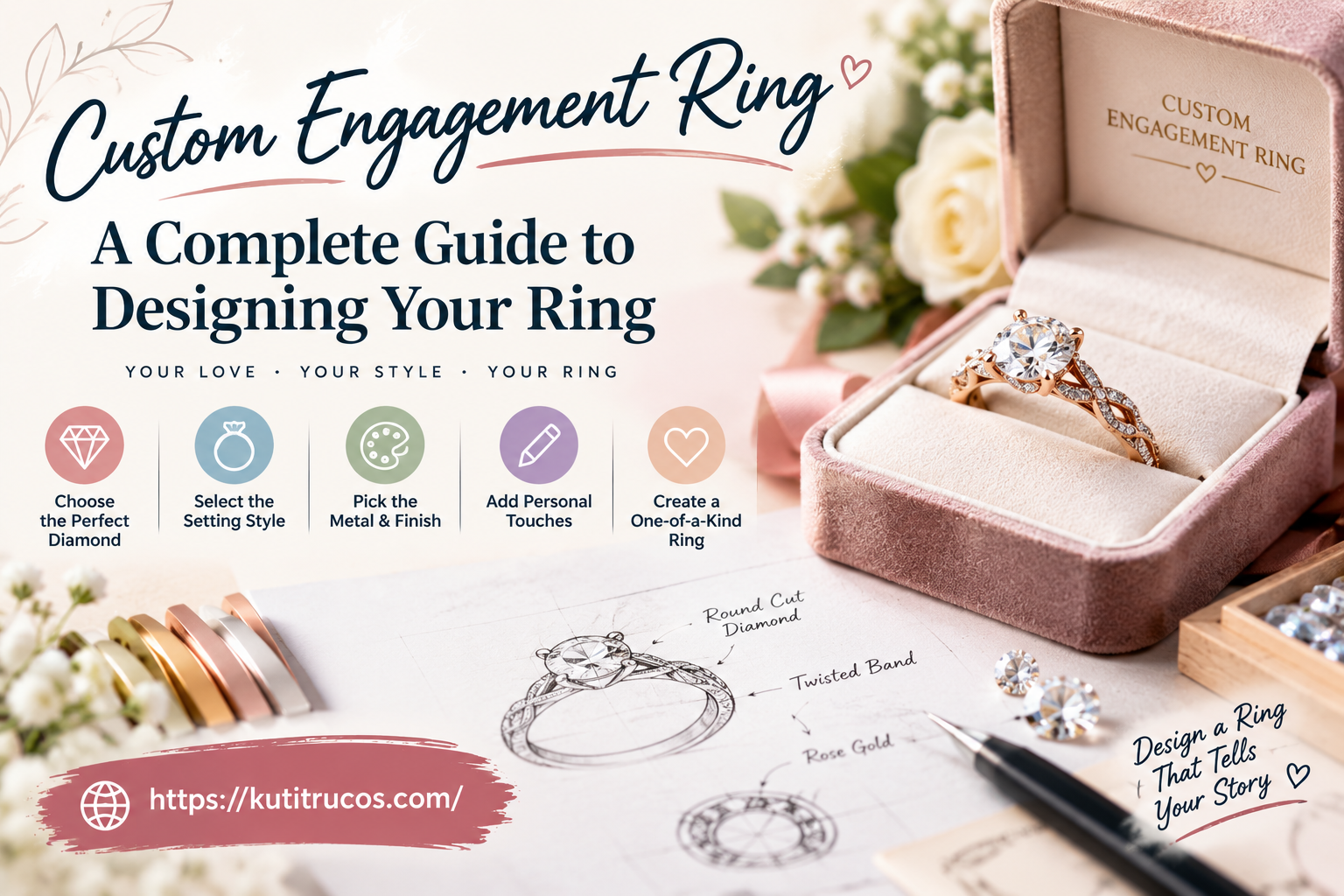
For many couples, it represents a major personal milestone, a shared story, and the beginning of a new chapter. While ready-made rings offer convenience, a custom engagement ring gives couples the opportunity to create something specifically around their preferences, lifestyle, budget, and relationship.
Custom ring design allows you to choose individual details instead of accepting a design exactly as it appears in a jewelry case. The center stone, metal, setting, band shape, side stones, engraving, proportions, and other elements can be considered together.
The process can feel exciting, but it can also become overwhelming because there are many decisions involved. Understanding the major choices before meeting a jeweler can make the experience much easier.
From selecting a gemstone to approving the final design, a custom engagement ring requires both creativity and practical planning.
What Is a Custom Engagement Ring?
A custom engagement ring is a ring designed specifically for an individual rather than selected entirely from an existing finished collection.
Customization can range from relatively simple changes to a completely bespoke design.
For example, a customer might start with an existing ring style and change the:
- Center diamond
- Metal color
- Band width
- Gemstone
- Setting
- Side stones
- Engraving
- Ring size
A completely custom project can go much further. The jeweler may create an original design based on sketches, reference photographs, measurements, and discussions about the wearer’s lifestyle.
Modern custom workflows can also involve computer-aided design, commonly called CAD, which allows the customer to review a three-dimensional representation before manufacturing begins.
Why Choose a Custom Engagement Ring?
One of the biggest advantages of customization is personal expression.
A ready-made ring has already been designed according to someone else’s specifications. A custom ring allows the couple to decide which characteristics matter most.
For example, one person might want a very simple solitaire while another may prefer a vintage-inspired design with intricate detailing.
Someone who works with their hands every day might prioritize a protected gemstone setting. Another person might care more about maximizing the visible size and brilliance of the center stone.
Customization can accommodate both situations.
Start With the Story
Before thinking about diamonds or gold, consider the story behind the ring.
Think about places that are meaningful to the relationship.
Maybe the couple met near the ocean, traveled together through a particular city, shared an important experience in the mountains, or has a favorite architectural or natural motif.
These details can inspire subtle design elements.
For example, a ring might include:
- A hidden engraving
- A birthstone
- A specific geometric pattern
- A nature-inspired detail
- Two different metals
- A meaningful symbol
- A hidden gemstone beneath the center stone
The most personal customization does not necessarily have to be visible from across the room.
Establish a Budget First
A custom engagement ring should begin with a realistic budget.
Customization does not automatically mean spending an enormous amount of money. The final cost depends on the gemstone, metal, craftsmanship, complexity, number of stones, and other specifications.
A defined budget gives the jeweler a useful starting point.
Instead of simply saying, “I want a beautiful ring,” explain the approximate amount you are comfortable spending.
This allows the jeweler to recommend realistic combinations of stone size, metal, setting, and design complexity.
It can also prevent the design process from becoming focused on options that are outside the intended budget.
Choose the Center Stone
The center stone is usually the visual focus of an engagement ring.
Diamonds remain a traditional choice, but custom designs can use many other gemstones.
Potential center stones include:
- Natural diamonds
- Lab-grown diamonds
- Sapphires
- Rubies
- Emeralds
- Morganite
- Tourmaline
- Other colored gemstones
The right choice depends on appearance, symbolism, durability, budget, and personal preference.
A custom design can also combine different types of gemstones.
Natural vs. Lab-Grown Diamonds
For shoppers considering diamonds, one of the major decisions is whether to choose a natural diamond or a laboratory-grown diamond.
Natural diamonds form naturally underground over geological periods.
Lab-grown diamonds are produced through technological processes that create diamonds with essentially the same basic chemical composition as natural diamonds.
The decision can affect budget and purchasing priorities.
Instead of assuming that one option is automatically right for everyone, compare the characteristics that matter most to you, including certification, appearance, size, budget, and personal preferences.
Understanding Diamond Shape
Diamond shape and diamond cut are related but not identical concepts.
Common engagement-ring shapes include:
- Round
- Oval
- Cushion
- Princess
- Emerald
- Radiant
- Pear
- Marquise
- Asscher
- Heart
Round brilliant diamonds are traditionally associated with strong sparkle.
Oval diamonds can create an elongated visual appearance.
Emerald cuts emphasize broad, clean reflections rather than the intense sparkle associated with brilliant cuts.
Pear and marquise shapes can produce distinctive silhouettes.
A custom ring gives the wearer freedom to move beyond conventional proportions and create a design around a less common stone shape.
Current jewelry coverage has also highlighted increased interest in unconventional geometric diamond shapes, including triangular and trapezoid forms.
The Importance of Diamond Cut
When selecting a diamond, the word “cut” refers to how the diamond has been proportioned and finished to interact with light.
This should not be confused with the shape of the diamond.
For example, two round diamonds can have the same general shape but different cut quality.
Cut can influence brightness, sparkle, and overall visual performance.
If choosing a diamond, request appropriate documentation and discuss grading information with a qualified jeweler.
The Gemological Institute of America notes that a GIA Diamond Report can verify a diamond’s identity and quality characteristics.
Choose the Ring Setting
The setting is one of the most important decisions in a custom engagement ring.
It holds the gemstone and contributes heavily to the ring’s appearance.
According to GIA, settings can be understood in terms of both how a gemstone is secured and the overall arrangement or style of the ring.
Popular choices include:
- Prong
- Bezel
- Halo
- Pavé
- Channel
- Cathedral
- Three-stone
- Solitaire
- Cluster
- Trellis
- Toi et moi
Each design creates a different balance between appearance, protection, and wearability.
Solitaire Engagement Rings
A solitaire ring features one primary center stone with little or no additional decoration.
Its simplicity allows the center gemstone to remain the main attraction.
Solitaire designs are especially useful for people who prefer clean, timeless jewelry.
They can also provide flexibility when selecting a wedding band because there are fewer surrounding stones and design elements competing for space.
A custom solitaire can still be highly distinctive through the choice of metal, prong shape, band profile, engraving, or unusual center stone.
Prong Settings
Prongs are small pieces of metal that hold the gemstone in place.
Four-prong and six-prong configurations are common.
A prong setting leaves much of the gemstone exposed, allowing light to interact with it while maintaining a relatively minimal appearance.
However, exposed settings require appropriate maintenance.
GIA recommends checking prongs periodically because damaged or loose prongs can affect gemstone security.
Bezel Settings
A bezel setting surrounds the gemstone with a rim of metal.
This creates a distinctive modern appearance while providing additional protection around the stone.
Bezel settings can be especially attractive for people with active lifestyles.
The metal border helps protect the edges of the gemstone from direct contact.
The trade-off is that more of the gemstone can be surrounded by metal compared with an open prong setting.
For a custom engagement ring, a jeweler can adjust the bezel’s thickness and profile to achieve a specific visual effect.
Halo Settings
A halo places smaller gemstones around the center stone.
The surrounding stones can increase the visual presence of the center and create additional sparkle.
Halos can be designed in different shapes.
A round center stone might have a circular halo, while an oval center can use a matching elongated halo.
A custom halo also allows the designer to experiment with colored gemstones, mixed diamond shapes, or unusual proportions.
Three-Stone Rings
A three-stone engagement ring features a central gemstone accompanied by two side stones.
The three stones can match or contrast with one another.
For example, a diamond center could be paired with sapphire side stones.
The design offers opportunities for symbolism and visual balance.
GIA identifies three-stone designs among the established engagement-ring styles and notes that side stones can add color and sparkle.
Toi Et Moi Rings
A toi et moi design places two primary gemstones next to each other.
The concept can be especially meaningful for couples because the two stones can represent two individuals coming together.
The stones do not necessarily have to be identical.
A diamond and sapphire combination, for example, can create a strong contrast.
The style has also received attention in current 2026 jewelry discussions.
Choosing the Metal
The metal determines much of the ring’s color and character.
Common choices include:
- Yellow gold
- White gold
- Rose gold
- Platinum
Yellow gold provides a warm traditional appearance.
White gold creates a bright, neutral look.
Rose gold adds pink or reddish warmth.
Platinum has a naturally white appearance and is commonly associated with fine jewelry.
The decision should consider the wearer’s existing jewelry collection.
If someone usually wears yellow gold watches, necklaces, or bracelets, a yellow-gold engagement ring may coordinate naturally.
Yellow Gold Custom Engagement Rings
Yellow gold has remained popular for people who want a warm and traditional appearance.
It can provide an attractive contrast against colorless diamonds.
It can also complement warmer gemstones particularly well.
Modern yellow-gold engagement rings can range from minimalist solitaires to elaborate vintage-inspired designs.
The karat level should also be discussed with the jeweler because gold purity affects the metal’s composition and characteristics.
White Gold Engagement Rings
White gold provides a clean appearance that can resemble platinum visually.
It is often chosen for modern engagement rings.
Depending on the alloy and finishing process, white gold may receive rhodium plating to enhance its bright white surface.
Ask the jeweler about maintenance requirements and whether future replating may be necessary.
Rose Gold Engagement Rings
Rose gold uses a warmer color that can create a romantic and contemporary appearance.
It can work especially well with:
- Pink gemstones
- Morganite
- Warm diamonds
- Vintage-inspired designs
- Mixed-metal rings
A custom rose-gold design can also include white or yellow gold details for contrast.
Platinum Engagement Rings
Platinum is naturally white and is widely used in fine jewelry.
It has a substantial feel and can be an attractive option for people who want a premium white-metal appearance.
The cost and characteristics differ from gold, so a buyer should compare the two based on lifestyle and budget rather than appearance alone.
Designing the Band
The band is often overlooked because attention naturally goes toward the center stone.
However, the band strongly influences comfort and appearance.
Important choices include:
- Band width
- Rounded or flat profile
- Plain or pavé surface
- High or low profile
- Tapered shoulders
- Split shank
- Decorative engraving
A narrow band can make the center stone appear more prominent.
A wider band creates a stronger visual presence.
The correct proportion depends partly on the size and shape of the center gemstone.
Pavé Details
Pavé involves small gemstones set closely together along part of the ring.
This can add substantial sparkle without requiring large additional stones.
Pavé can be used along the shoulders, around a halo, or throughout parts of the band.
Because intricate settings can collect dirt and require additional maintenance, buyers should understand the care requirements before choosing a highly detailed design. GIA notes that rings with many small stones and detailed settings may need more frequent cleaning.
Hidden Details
One of the most enjoyable aspects of a custom engagement ring is adding details that are meaningful but not immediately obvious.
Possibilities include:
- A hidden birthstone
- An engraved date
- Initials
- A short message
- A tiny gemstone
- A symbolic shape
- A hidden halo
These details can turn an attractive ring into a deeply personal object.
Custom Engraving
Engraving can be placed inside the band or, depending on the design, in another discreet location.
Possible ideas include:
- A proposal date
- A nickname
- Initials
- Coordinates of a meaningful location
- A short phrase
- A personal symbol
Keep the engraving short enough to remain readable.
The jeweler can explain how many characters the ring can accommodate.
Ring Size
Getting the ring size correct is essential.
If the proposal is a surprise, determining the size can be difficult.
Possible approaches include borrowing a ring the recipient already wears and having a jeweler measure it, asking a close friend or family member for help, or using other discreet methods.
However, remember that ring sizes can differ between fingers.
A ring worn on the right hand may not fit identically on the left hand.
A professional jeweler can also discuss how the ring’s width and shape affect fit.
Consider the Wedding Band Early
A common mistake is designing an engagement ring without considering the future wedding band.
Some engagement rings sit relatively low against the finger.
If the setting extends downward, a straight wedding band may not sit flush beside it.
A custom jeweler can design the engagement ring and wedding band together.
Potential solutions include:
- Contoured wedding bands
- Curved bands
- Notched bands
- Matching custom bands
- Flush-fit settings
Planning both rings together can prevent compatibility problems later.
Creating a CAD Model
CAD can be particularly helpful for custom jewelry.
Instead of relying only on a two-dimensional sketch, a jeweler can create a digital three-dimensional model.
This can allow the customer to examine:
- Stone proportions
- Band thickness
- Setting height
- Side profile
- Overall dimensions
- Decorative details
The customer can then request changes before manufacturing.
This stage can be especially valuable for a completely original ring because small proportion changes can significantly affect the final appearance.
Approving the Design
Do not rush the approval stage.
Review the design from multiple angles.
Look at the ring from:
- Top
- Side
- Front
- Back
Ask questions about the thickness of the band and the security of the gemstone.
Confirm the final stone dimensions and metal.
Make sure the written specifications match the design you approved.
Once production begins, major changes may become more difficult or expensive.
Choosing a Jeweler
The jeweler plays a major role in the final result.
Look for someone who can explain the process clearly and provide detailed information about:
- Gemstone quality
- Metal composition
- Setting construction
- Manufacturing process
- Warranty
- Resizing
- Repairs
- Cleaning
- Insurance documentation
- Delivery schedule
Ask to see examples of previous custom work.
A strong portfolio can tell you more about a jeweler’s craftsmanship than a simple promotional description.
Ask About Certifications
If purchasing a significant diamond, ask whether it comes with a grading report from a recognized gemological laboratory.
A report can provide information about the diamond’s characteristics and identity.
Do not confuse a jewelry store’s internal description with an independent grading report.
If the stone is a major part of the budget, documentation becomes particularly important.
Custom Engagement Ring Timeline
Custom jewelry generally requires more time than buying a finished ring.
The process may include:
- Initial consultation
- Budget discussion
- Gemstone selection
- Design concept
- CAD modeling
- Customer revisions
- Final approval
- Manufacturing
- Stone setting
- Quality inspection
- Delivery
The exact timeline depends on the complexity of the project and the jeweler’s workflow.
Current custom-ring guides commonly describe CAD and design approval as distinct stages before final manufacturing.
If the ring is needed for a specific proposal date, begin early rather than assuming the process will take only a few days.
Custom Does Not Mean Unlimited
A common misconception is that custom jewelry means absolutely anything is possible.
In reality, jewelry must obey practical constraints.
The band must be strong enough for its intended use.
The gemstone must be held securely.
The setting must be appropriately proportioned.
The ring must be comfortable.
Decorative elements cannot interfere with the wearer’s normal activities.
A good jeweler should explain when an attractive design creates practical problems.
Designing for Everyday Wear
Think about how the ring will actually be used.
If the wearer works in an office and has relatively low-impact daily activities, a delicate design may be practical.
If the wearer works with their hands, plays sports, works outdoors, or frequently uses tools, the design should account for those conditions.
A lower-profile setting may be easier to manage.
A bezel can offer additional protection.
A very delicate pavé band may require more attention than a simpler design.
There is no universally perfect setting. The best construction depends on the person wearing it.
Caring for a Custom Engagement Ring
Regular care can help maintain the ring’s appearance and condition.
Basic maintenance can include:
- Removing the ring during activities that could damage it
- Cleaning it according to the jeweler’s instructions
- Checking prongs periodically
- Keeping the ring away from harsh chemicals
- Scheduling professional inspections
- Storing it safely when not being worn
GIA recommends regular cleaning and professional attention for intricate designs, while noting that ultrasonic cleaning should be approached carefully if stones are already loose.
Insuring the Ring
A custom engagement ring can represent a substantial financial investment.
After purchasing it, consider appropriate insurance coverage.
Keep copies of:
- Purchase documentation
- Diamond grading report
- Appraisal
- Photographs
- Receipts
- Warranty information
These documents can be useful if the ring is lost, stolen, or damaged.
Ask an insurer about the exact coverage before assuming a homeowners or renters policy automatically provides sufficient protection.
Common Custom Engagement Ring Mistakes
Choosing Style Before Lifestyle
A beautiful design may not be practical for everyday wear.
Ignoring the Wedding Band
The engagement ring should ideally work with the future wedding band.
Skipping Documentation
For a significant gemstone purchase, documentation is important.
Focusing Only on Carat Weight
A larger stone is not automatically a better choice. Shape, cut quality, color, clarity, setting, and personal preference also matter.
Making the Ring Too Complicated
More details do not necessarily create a better design.
Forgetting Maintenance
Intricate designs can require additional care.
Current Custom Ring Design Directions
Contemporary engagement-ring design is becoming increasingly diverse.
Classic solitaires remain relevant, but couples are also exploring distinctive shapes, mixed metals, colored gemstones, sculptural details, and unusual settings.
Recent jewelry coverage has highlighted unconventional geometric cuts, while 2026 setting guides have also discussed bezel, toi et moi, colored gemstone, and other contemporary directions.
This does not mean traditional designs have disappeared.
Instead, custom jewelry gives buyers the opportunity to combine classic foundations with personal details.
For example, a traditional solitaire can have an unusual band.
A vintage-inspired ring can contain a modern laboratory-grown diamond.
A classic yellow-gold setting can hold a nontraditional gemstone.
The possibilities are broad.
Custom Engagement Ring vs Ready-Made Ring
A ready-made ring offers speed and simplicity.
You can see the finished product before purchasing it.
A custom ring offers greater control.
| Feature | Custom Ring | Ready-Made Ring |
| Personalization | High | Limited |
| Design control | Extensive | Predetermined |
| Production time | Usually longer | Usually shorter |
| Design revisions | Often possible | Usually limited |
| Fit customization | More flexible | Based on existing design |
| Unique details | Easy to incorporate | Depends on available styles |
| Convenience | Requires planning | Faster purchase |
Neither approach is inherently right for every couple.
The decision depends on how important customization, timing, convenience, and personal design are to the buyer.
Questions to Ask a Custom Jeweler
Before approving a project, ask:
- What is included in the quoted price?
- Which gemstone will be used?
- Is the center stone certified?
- What metal purity will be used?
- How will the stone be secured?
- Will I receive a CAD rendering?
- How many design revisions are included?
- How long will production take?
- What happens if the ring does not fit?
- Is resizing included?
- What warranty is provided?
- How should the ring be maintained?
- Is insurance documentation available?
- What happens if a stone becomes loose?
- What is the cancellation or return policy?
Getting clear answers before production begins can reduce misunderstandings.
Final Thoughts
A custom engagement ring offers an opportunity to create jewelry that reflects far more than a particular fashion trend.
The process starts with a concept and gradually becomes a physical object through choices about the gemstone, setting, metal, band, proportions, engraving, and craftsmanship.
The center stone may be a traditional diamond, a lab-grown diamond, or a colored gemstone. The setting might be a simple solitaire, protective bezel, classic prong design, halo, three-stone arrangement, or a more unusual contemporary configuration. GIA’s current guidance emphasizes that setting choice affects both the gemstone’s appearance and its practical wearability.
The most successful custom designs balance three things: personal meaning, practical durability, and thoughtful craftsmanship.
Take time to establish a budget before making design decisions. Consider the recipient’s lifestyle instead of choosing purely from photographs. Think about the future wedding band. Request appropriate gemstone documentation. Review CAD designs carefully when available, and ask questions about maintenance and repairs.
Most importantly, remember that customization does not have to mean complexity.
A simple ring with a meaningful engraving can be just as personal as an elaborate design with multiple gemstones.
The goal is not simply to create a ring that looks impressive on the day of the proposal. A well-planned custom engagement ring should be comfortable enough to wear, durable enough for everyday life, and meaningful enough to remain special long after the proposal itself becomes a memory.

